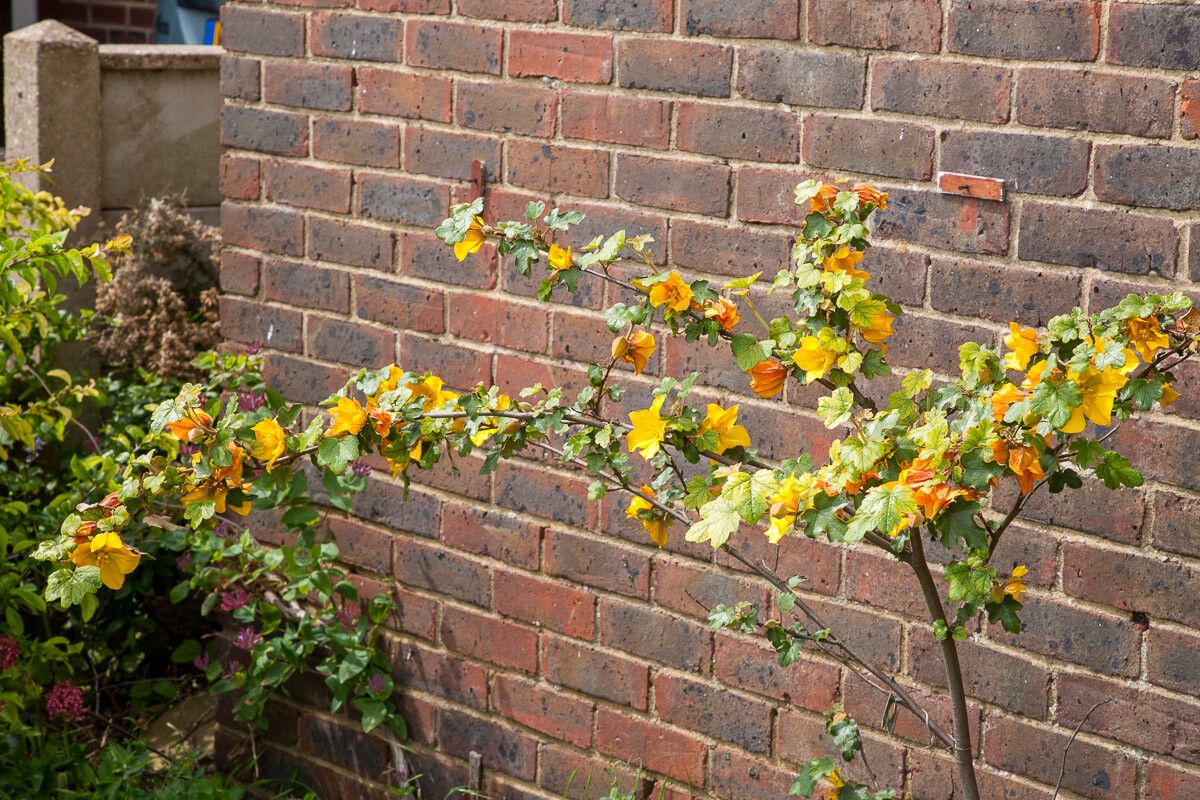
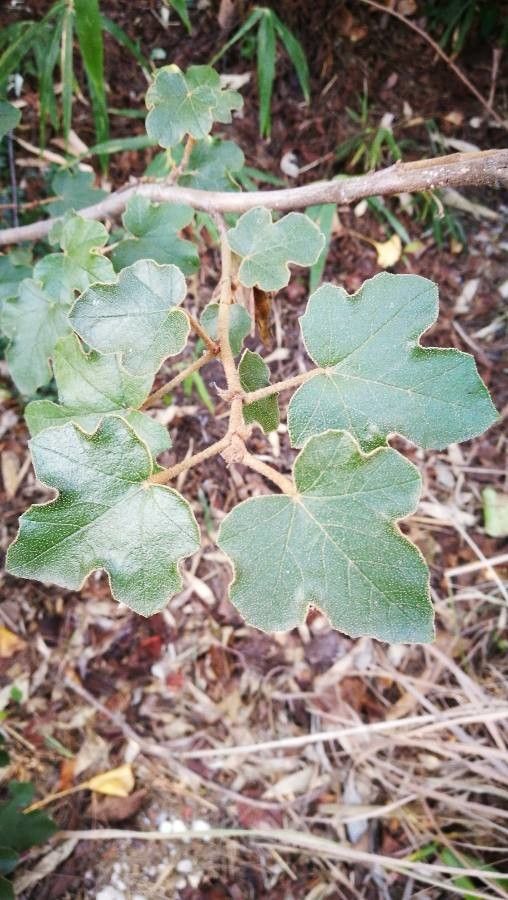
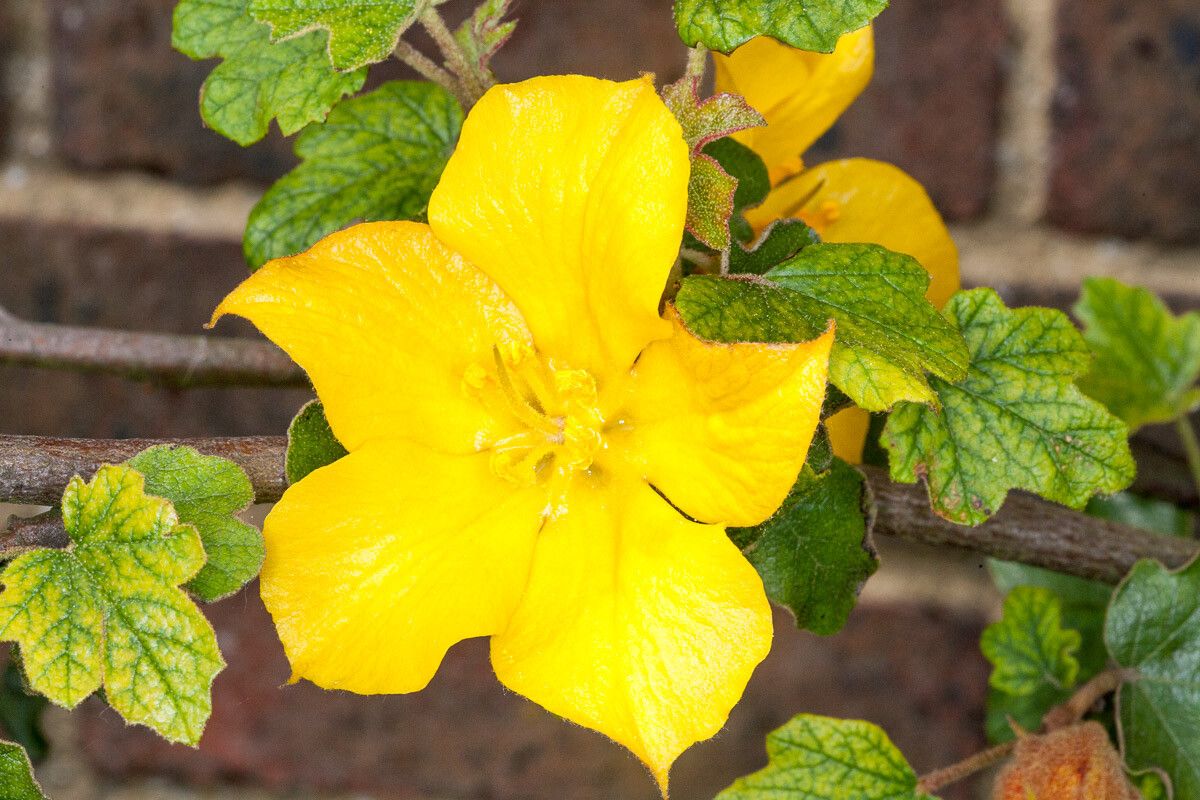
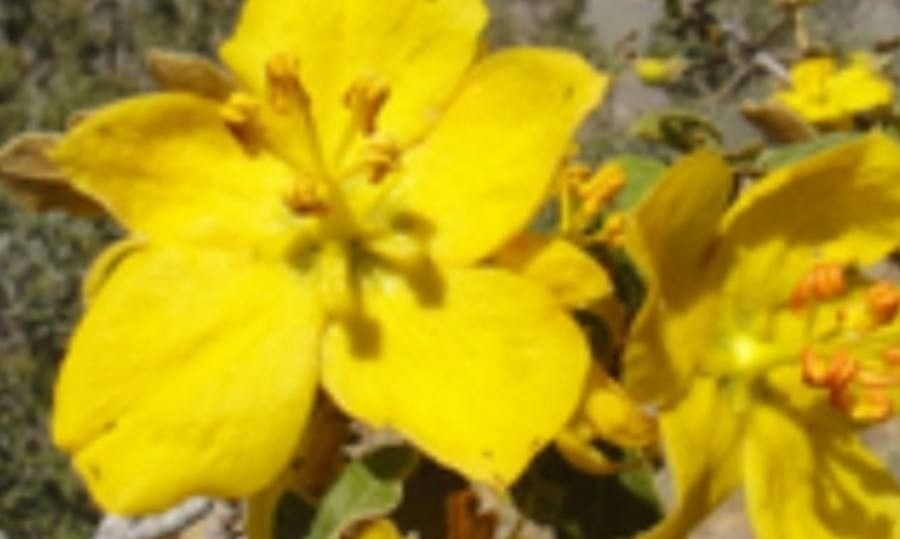
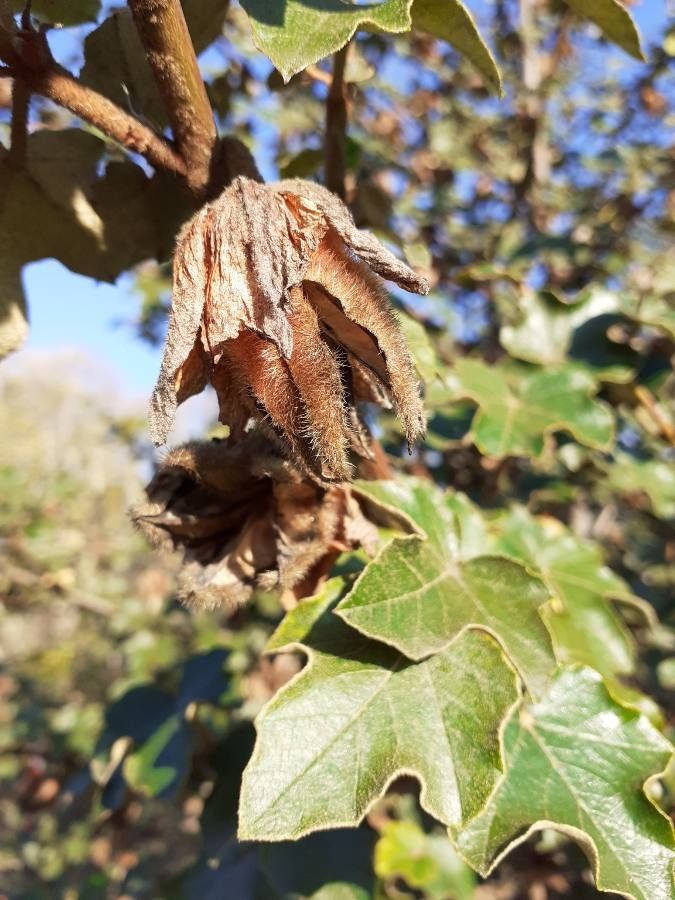
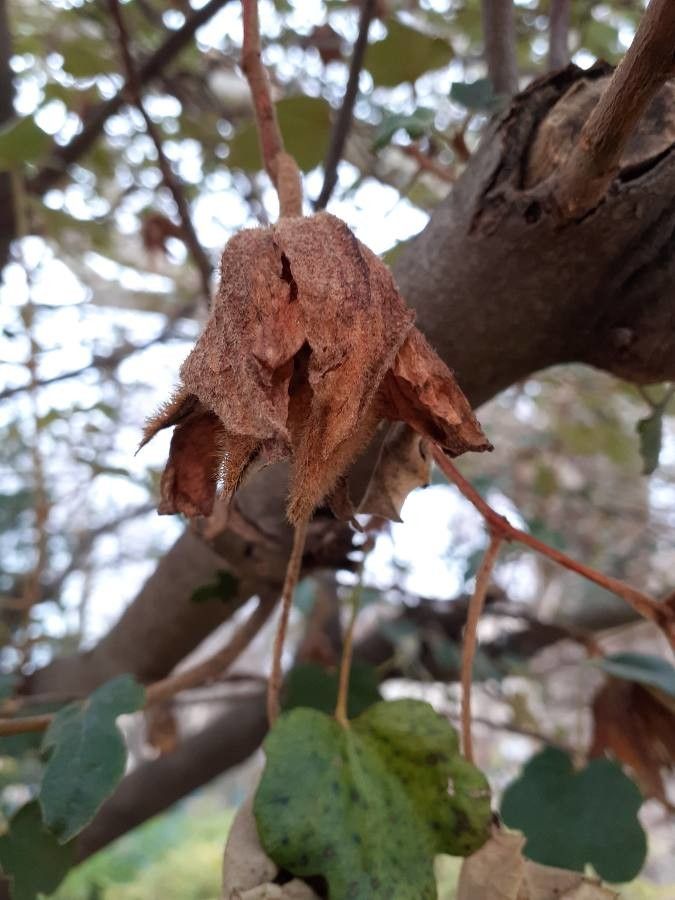
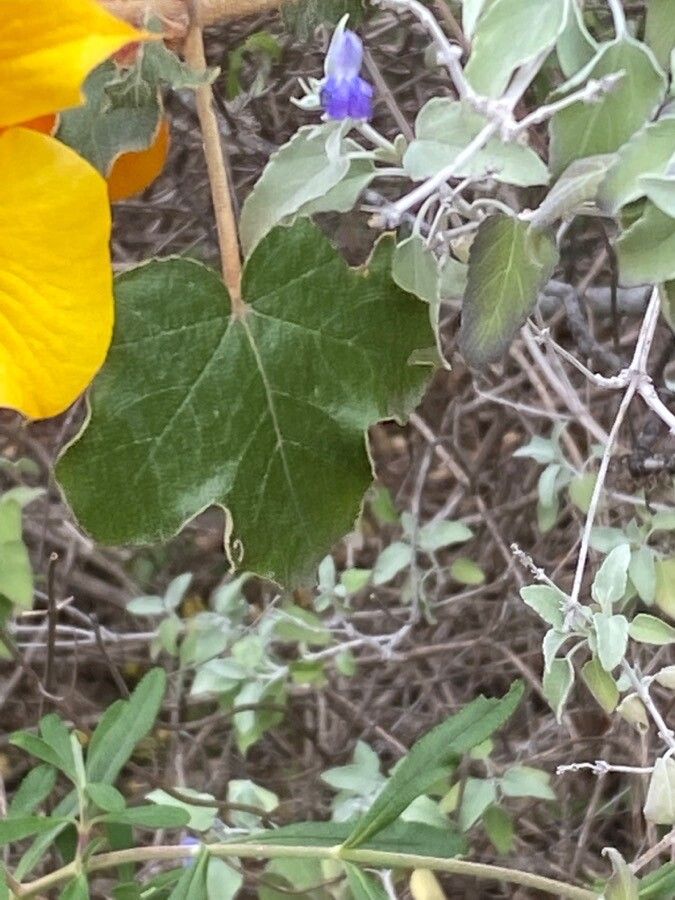
Fremontodendron californicum, commonly known as California flannelbush, is a shrub native to California and Baja California. Belonging to the family Malvaceae, it can grow up to 20 feet tall. The plant features large, bright yellow flowers that bloom during the spring and summer months. Its leaves are soft and fuzzy, with a grayish-green coloration. Fremontodendron californicum is drought-tolerant but requires well-draining soil for optimal growth.
This shrub is often used in landscaping for its attractive flowers and foliage. However, it should be planted away from high-traffic areas due to the sharp thorns on its stems. Additionally, Native Americans have used the plant medicinally to treat various ailments such as coughs, colds, and skin irritations, leveraging the anti-inflammatory properties found in its bark.
Flannel Bush shows good resistance to disease and is generally not susceptible to illnesses. As for care, this plant is fairly low-maintenance. When grown outdoors it needs little watering, and larger specimens usually do not require pruning. Smaller plants, however, should be pruned after they have finished blooming. Flannel Bush is suitable for anyone with outdoor space, such as a garden or deck, and does not require much care experience.
How to keep Fremontodendron Californicum.
Light
Flannel Bush is a plant that prospers under intense sunlight. This light exposure supports its healthy development and growth. Found mainly in areas with abundant sun, flannel bush can experience stunted growth and leaf discoloration if it lacks sufficient light.
Water
Flannel Bush, native to arid regions, thrives in conditions with low water availability. It requires watering only every two weeks. This plant prefers well-draining soil and is usually grown outdoors, where it benefits from deep watering that mimics natural rainfall patterns without causing soil saturation.
Temperature
Flannel Bush is a plant native to environments with regulated temperatures. Its preferred ambient temperature range is 50 to 95 °F (10 to 35 ℃). In particularly cold or hot seasons, it's advisable to adjust the thermostat settings as needed to keep conditions within its comfort range.
Fertilizer
Timing is important when fertilizing Flannel Bush. Begin fertilizing in early spring and continue once a month through early summer. Fertilizer encourages attractive blooms and supplies energy during both dormant and active growth periods.
Pruning
The Flannel Bush is appreciated for its vibrant yellow flowers and soft, woolly leaves. To maintain its health, prune the plant from early to late winter while it is dormant. During this time, remove any dead branches and thin out crowded areas to improve air circulation. Be careful not to over-prune, as this can hinder flowering. For detailed pruning techniques, refer to gardening guides.
Pot & Repot
Repot the flannel bush every 2 to 3 years in early spring, using a well-draining pot that is 20 to 25% larger than the root ball. Place the plant in a location with bright, indirect light and water it carefully to prevent root rot. When handling the flannel bush, be sure to wear gloves to avoid skin irritation caused by its unique velvety texture.
Botanical profile.
- Plant Type
- Tree
- Life Cycle
- Perennial
- Genus
- Fremontodendron
- Family
- Malvaceae
- Hardiness Zone
- 6-10
- Mature Height
- 2.44 m to 5.49 m
- Mature Spread
- 1.83 m to 3.05 m
- Leaf Color
- Green, Gray
- Leaf Type
- Evergreen
- Flower Color
- Gold, Yellow
- Flower Size
- 3.56 cm to 6.35 cm
- Bloom Time
- Late spring, Early summer, Mid summer
- Planting Time
- Spring, Summer, Autumn
- Harvest Time
- Mid summer
- Native Area
- Mexico
Other names.
Reader questions.
How should I water my Flannel Bush plant?
Your Flannel Bush is not very particular about how you water it. You can use any common watering tool such as watering cans, hoses, or even cups. It is important to directly apply the water to the soil and make sure all areas of the soil are evenly moistened to provide sufficient water to all parts of the root system. Using filtered water is helpful as tap water may contain harmful particles for plants. Additionally, using water that is at or slightly above room temperature is beneficial as colder or hotter water can be somewhat shocking to the Flannel Bush. However, the Flannel Bush generally responds well to any type of water you give it.
Why do I have to add fertilizer to my Flannel Bush?
Fertilizing a Flannel Bush is essential for several reasons. Firstly, it promotes beautiful blooms. To maximize bloom production, it is recommended to fertilize in early spring. Secondly, fertilizer provides ample energy for the plant to store in the ground during dormant periods. By providing extra nutrients during fall planting or late spring, the Flannel Bush will have more energy to utilize when it resumes active growth.
What are the sun requirements for Flannel Bush?
Flannel Bush requires full sun, which amounts to more than 6 hours of sunlight daily. It's important to watch how sunlight moves through your garden and choose spots that offer the perfect balance of light and shade. This ensures the plants are happy and grow healthily.
What is the native environment of the Flannel Bush?
The Flannel Bush, botanically known as Fremontodendron californicum, is native to temperature-regulated environments. It thrives in a range of ambient temperatures from 50 to 95 °F (10 to 35 °C). This adaptability makes it suited for environments where temperatures do not often exceed these limits, ensuring the plant remains healthy throughout the seasons.
What should I do if I give my Flannel Bush too much water or too little water?
Watering is crucial for outdoor plants, especially newly planted ones or seedlings. It is important to water them adequately for a few months until their roots are established. Once roots are established, Flannel Bushes can rely on rain for most of their water needs. However, when Flannel Bushes are planted in pots, overwatering becomes a common issue. If you accidentally overwater your Flannel Bush, here's how to fix it: stop watering immediately to minimize the impact, remove the plant from its pot to check for root rot, trim affected roots if necessary and apply fungicide, then repot it in well-draining soil. On the other hand, if your Flannel Bush is underwatered, simply water it more frequently. You can easily tell when the plant is underwatered by its drooping and drying leaves, which will become lush again after sufficient watering. Make sure to adjust your watering schedule promptly to avoid underwatering.
When should I fertilize my Flannel Bush?
To ensure effective fertilization of Flannel Bush, timing is crucial. Applying fertilizer too early, when the plant is in its dormant state, is not effective and can lead to wastage and pollution, as the fertilizer gets washed away by rainwater. The first application of fertilizer should be in early spring, followed by monthly fertilization until early summer.
Why is intense sunlight essential for Flannel Bush and what are the solutions if natural light is insufficient?
Intense sunlight is crucial for the healthy development and growth of Flannel Bush, promoting its well-being. In areas where sunlight is insufficient, especially during winter or in less sunny spaces, artificial lighting can be a vital solution to ensure optimal growth. Indoor plants may need artificial lights to provide necessary wavelengths, with full sun plants requiring 30-50W/sq ft, partial sun 20-30W/sq ft, and full shade plants 10-20W/sq ft of artificial light. It's recommended to place the light source 12-36 inches above the plant and ensure it receives 8-12 hours of light per day.
How should I protect my Flannel Bush during extreme temperatures?
To protect your Flannel Bush during extreme temperatures, it's crucial to adjust the surrounding environment to stay within its comfort range of 50 to 95 °F (10 to 35 °C). During colder seasons, the plant demonstrates strong resistance to frost, typically not requiring special frost protection measures. However, if temperatures are expected to plummet below -25°C, it's advisable to wrap the plant's trunk and branches with non-woven fabric or cloth. Additionally, watering the plant abundantly before the first freeze in autumn helps keep the soil moist, preventing drought and water scarcity throughout winter and early spring.
How many times should I water my Flannel Bush plant?
If you have outdoor plants, most of them can grow normally with rainfall. However, if your area doesn't get enough rain, you should water them every 2 weeks during the spring and fall, and more often in the summer. In the winter, when growth slows down and plants need less water, you should water less frequently, or not at all. If your Flannel Bush is young or newly planted, it's important to water it more often to help it establish and grow. For potted plants, there are two main ways to determine how often to water your Flannel Bush. The first way is to follow a set watering schedule, such as once a week or once every other week. However, this may not always work well because it doesn't consider the specific growing conditions for your Flannel Bush. Your watering frequency can also change based on the season. During summer, when this plant needs more water, a fixed watering schedule may not be enough. Another approach is to check the soil moisture before watering. Wait until the top few inches of soil, about ⅓ to ½ the depth of the pot, have dried out completely before watering again.
When is it not a good idea to fertilize my Flannel Bush?
To ensure healthy blooming, be cautious when choosing a fertilizer for Flannel Bush. Avoid high levels of nitrogen, as this can result in an abundance of leaves but fewer blooms. Instead, opt for a fertilizer that has a lower nitrogen content compared to other nutrients. Additionally, it is important not to fertilize Flannel Bush after early autumn, as this can lead to excessive growth just before winter. Similarly, avoid fertilizing during hot and dry periods, as dry soil does not effectively deliver fertilizer and the resulting growth may require more water than is available. It is best to apply fertilizer earlier in the season when temperatures are cooler. Lastly, keep in mind that Flannel Bush can absorb fertilizer that is applied to nearby plants or lawns, so be careful not to inadvertently provide the tree or shrub with a double-dose of fertilizer.
What are the main symptoms of light deficiency in Flannel Bush?
If a Flannel Bush is suffering from light deficiency, it may exhibit symptoms such as smaller new leaves, leggy or sparse growth, faster leaf drop, slower or no new growth, lighter-colored new leaves, chlorosis, sunscald, leaf curling, wilting, and leaf scorching. These symptoms indicate the plant is not receiving adequate sunlight for healthy growth.
What signs indicate my Flannel Bush is experiencing temperature stress?
Signs of temperature stress in Flannel Bush can manifest differently under low and high temperatures. When temperatures drop below -25°C, during winter, you might not notice immediate changes, but come spring, the branches may become brittle, dry, and fail to produce new shoots. On the flip side, during summer, if temperatures climb above 35°C, signs include leaves becoming lighter in color, tips drying and withering, and an increased susceptibility to sunburn. These symptoms highlight the importance of maintaining the ideal temperature range for your Flannel Bush.