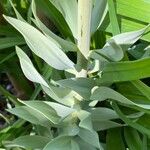
Fritillaria persica
Persian fritillary · Persian lily
Description
Source: leafsnapFritillaria persica is a Middle Eastern species of flowering plant in the lily family Liliaceae, native to southern Turkey, Iran, Iraq, Lebanon, Syria, Cyprus, Palestine and Israel. It is widely cultivated as an ornamental and naturalized in the Lazio region of Italy. It is the sole species in Fritillaria subgenus Theresia. The Latin specific epithet persica means “Persian”, referring to the modern country of Iran.Fritillaria persica is a robust bulbous perennial growing 30–60 cm (12–24 in) tall. Each plant may bear up to 30, conical, narrow, bell-shaped flowers, up to 0.75 in (1.9 cm) long, ranging in colour from deep purple to greenish brown.A plant commonly found in cultivation outside its range is the cultivar 'Adiyaman', which is taller and more free-flowering than populations of the species inside its native range. This cultivar has gained the Royal Horticultural Society’s Award of Garden Merit.
🌳 The Persian fritillary has notable characteristics that make it suitable for horticultural hybridization. Garden enthusiasts and professional growers value it for its distinctive tall spikes of bell-shaped flowers and use it to develop new ornamental varieties. This emphasizes its worth beyond simple natural beauty, contributing to greater genetic diversity in ornamental plant breeding programs.
Care Guide
💧 Water Every 7 days
The Persian fritillary flourishes in conditions with moderate moisture and well-drained soil, effectively balancing its tolerance for drought with its need for hydration. For optimal health, water the plant weekly and apply mulch to help retain soil moisture during the growing season. This practice will enhance the plant’s vigor and improve the quality of its blooms.
How should I water my Persian fritillary?
To properly water the Persian fritillary, it is recommended to use filtered water at room temperature. Tap water may contain harmful particles for this plant. The water should be at room temperature or slightly warmer to avoid shocking the plant, considering its warm native environment. Overhead watering should be avoided as it can cause problems with the foliage. Instead, the filtered room temperature water should be applied to the soil until it is completely soaked. This helps the plant by moistening the roots and aiding in the spreading of nutrients throughout the soil.
What do I do if I give my Persian fritillary either too much or too little water?
Both overwatering and underwatering can harm the health of your Persian fritillary, but overwatering is more common. When this plant gets too much water, its stems and leaves may wilt and turn yellow. Overwatering for a long time can also cause diseases like root rot, mold, and mildew, which can be fatal. Underwatering is less likely because the Persian fritillary can tolerate some drought. But if it happens, the leaves may become brittle and brown. It's important to recognize the signs of overwatering early, as some diseases like root rot may not be fixable if left too long. If you see early signs, reduce watering immediately and check the soil. If it drains poorly, replace it with a loose, well-draining mix. If signs of underwatering are present, simply water more regularly until they go away.
How frequently do I need to water my Persian fritillary?
If your Persian fritillary is in a pot, you can determine if it needs water by checking the soil. Stick your finger into the soil and if the top two to three inches are dry, then it's time to water it. If you have it planted outdoors in the ground, you can also test the soil in a similar way. Once again, if the first few inches of soil are dry, it's time to water. Usually, during the spring and early fall, you'll need to water this plant about once a week using this method. However, during extremely hot weather, you might need to water it twice or even more times per week. But keep in mind that mature and well-established Persian fritillaries are able to withstand drought.
How much water does my Persian fritillary require?
When watering your Persian fritillary, you should be generous with the amount of water you give. Make sure the first two to three inches of soil are dry before watering, and when you do water, make sure to thoroughly soak the soil. It's important to add enough water so that excess water can flow through the drainage holes in the pot. If you don't see excess water draining, it means you haven't watered enough. However, you should also avoid allowing water to accumulate in the soil, as this could harm the plant. On the other hand, if water isn't draining properly, it could mean that the soil in the pot isn't draining well, which is bad for the plant's health and should be avoided. If the plant is outside, one inch of rain per week should be enough.
How should I give water to my Persian fritillary at different times as it grows?
The water needs of the Persian fritillary can change depending on growth stages. When the plant is in its early years or has just been transplanted, it requires more water. During these stages, the plant focuses on developing new roots, which benefit from higher moisture levels. As the plant matures, it requires less water. Additionally, during the bloom period, the plant may need extra water as flower development consumes a significant amount of moisture.
☀️ Light Full sun
Persian fritillary does best in places that receive abundant sunlight during the day. However, it can also tolerate spots with somewhat less light. The strength of sunlight plays a major role in its health and vigor. Both excessive and insufficient light can affect its condition. Its original growing environment consisted of open areas frequently bathed in sunlight.
What are the sunlight requirements for Persian Fritillary?
Persian fritillary thrives best in areas that receive generous sunlight throughout the day, preferring full sun conditions, which means over 6 hours of sunlight. However, it is also adaptable to partial sun conditions, receiving about 3-6 hours of sunlight. It is essential to watch how sunlight moves through your garden, choosing spots that provide the right balance of light and shade to ensure the plants' happiness. The intensity of sunlight significantly affects the healthy growth and vigor of Persian fritillary, with too much or too little light impacting its well-being. Originally, Persian fritillary grew in open spaces often bathed in sunlight.
How can artificial lighting supplement natural sunlight for Persian Fritillary?
For indoor Persian fritillary plants, when natural sunlight is insufficient, especially during winter or in less sunny spaces, artificial lighting serves as an essential solution for optimal growth. LED lights are recommended for providing specific wavelengths needed by the plants. Full sun plants require 30-50W/sq ft of artificial light, partial sun plants need 20-30W/sq ft, and full shade plants need 10-20W/sq ft. The light source should be placed 12-36 inches above the plant to mimic natural sunlight. Most plants require 8-12 hours of artificial light per day.
What are the symptoms of inappropriate lighting for Persian Fritillary?
Inadequate lighting can lead to several symptoms indicating light deficiency in Persian fritillary, including small leaves, leggy or sparse growth, faster leaf drop, slower or no new growth, and lighter-colored new leaves. Excessive sunlight exposure may cause chlorosis, sunscald, leaf curling, wilting, and leaf scorching. These conditions indicate a lack of chlorophyll and essential nutrients or direct damage from intense sunlight, negatively affecting the plant's ability to photosynthesize, retain hydration, and maintain overall health.
How can I address lighting issues for Persian Fritillary?
To optimize growth for Persian fritillary, gradually increase its exposure to sunlight until it meets its requirements. For indoor plants, move them weekly to a sunnier spot, ideally by a south-facing window, or use artificial grow lights for at least 8 hours daily. For outdoor plants, ensure a gradual adaptation to sunnier locations to prevent sunburn. Minimize obstructions like trees by pruning to let more sunlight through. If necessary, transplant smaller plants during their dormant period to a more suitable location with ample sunlight and good drainage. Note that parts of the plant affected by insufficient light may not recover, but new growth should be healthy once the lighting is improved.
🌡️ Temperature 5–32.2°C
The Persian fritillary is native to temperate environments and prefers temperatures between 41 and 89.6 °F (5 to 32 ℃). During the summer months, temperatures should be monitored closely because the Persian fritillary cannot tolerate excessive heat.
What is the ideal temperature range for Persian fritillary?
Persian fritillary thrives in temperate environments, with a preference for temperatures between 41 to 89.6 °F (5 to 32 °C). During the summer, it's important to monitor the temperature closely, as Persian fritillary cannot withstand excessive heat. This plant has a strong resistance to cold, and usually, special frost protection measures aren't required in winter. However, should winter temperatures drop below -25°C, implementing cold protection by covering the plant with soil or straw is advisable.
How should Persian fritillary be cared for in winter to prevent drought and water scarcity?
Before the first freeze in autumn, it's recommended to water Persian fritillary abundantly to ensure the soil is moist as it freezes. This practice helps protect the plant from drought and water scarcity throughout the winter and into early spring by maintaining a level of moisture in the soil that supports the plant's needs during these colder months.
What are the signs and solutions of low temperature impact on Persian fritillary?
Persian fritillary is notably cold-tolerant and ideally should be kept in temperatures above 5°C. If winter temperatures fall below -25°C, the plant may not show immediate distress, but you may observe a decrease in sprouting or a complete lack of sprouting in the spring. In such cases, the solution is to remove any parts of the plant that have failed to sprout by spring to ensure the plant's health.
What are the signs and solutions for high temperature effects on Persian fritillary?
During the summer months, it's crucial to ensure that the temperature around Persian fritillary does not exceed 32°C. Exposing the plant to temperatures above 35°C can lead to the leaves becoming lighter, curling, susceptible to sunburn, and in severe instances, the plant might wilt and dry out. To mitigate these issues, trim away any sunburned or dried-up parts of the plant. Additionally, relocate the plant to a shadier spot or use a shade cloth to protect it from midday and afternoon sun. Remember to water the plant in the morning and evening to maintain soil moisture.
💨 Humidity
🪴 Soil 6-7
🌱 Fertilizer
For Persian fritillary, the primary time to fertilize is in early spring when the flowers are starting to form. The proper fertilizer promotes better blooms and helps the plant produce attractive flowers. Fertilizing in early spring ensures strong flowering during the season and supplies energy for dormant growth phases.
Why should I put fertilizer on my Persian fritillary?
Fertilization plays an important role for the Persian fritillary and other plants as it provides essential nutrients that promote growth above and below ground. While the fertilization needs of the Persian fritillary are generally low and it may survive without fertilization, annual fertilization can greatly benefit the plant. Regular fertilization not only helps to sustain the plant but also enhances the production of longer-lasting, more beautiful flowers. Therefore, those wishing to maintain the best appearance for their Persian fritillary should prioritize annual fertilization.
When should I fertilize my Persian fritillary?
The best time to fertilize a Persian fritillary is in late winter to early spring, when it is coming out of dormancy and starting to grow. Fertilizing at this time helps promote healthy growth for the season ahead. Although it is generally recommended to fertilize in early spring, it is also okay to fertilize in the fall. However, it is not recommended to fertilize during summer or winter.
When is it not a good idea to give fertilizer to my Persian fritillary?
To prevent overfertilization and its complications, it is recommended to fertilize your Persian fritillary only in late winter and early spring. This plant has low fertilization needs, so a single annual feeding is sufficient. However, if you didn't fertilize in spring, it is okay to feed it in the fall. It is important to avoid fertilizing during the rest of the growing season and winter, as the plant is either dormant or has minimal growth during these times.
Which kind of fertilizer should I use for my Persian fritillary?
When it comes to fertilizing a Persian fritillary, any general-purpose fertilizer with balanced nutrients will work well. However, there are special nutrient blends that can be even more beneficial. Many gardeners believe that higher levels of phosphorus enhance root strength and flower quality, making a phosphorus-rich fertilizer ideal for this flowering plant. Granular or liquid fertilizers are both suitable as long as they contain abundant nutrients. Apart from manufactured options, using organic materials like compost and manure can greatly improve the soil for Persian fritillaries.
How can I make my Persian fritillary plant grow better?
To fertilize a Persian fritillary, the most common method is to use granular or pellet fertilizer. It's important to remember to do this when the plant is transitioning from its dormant phase to active growth, typically in early spring. Wait until the plant starts sending shoots through the soil before applying the fertilizer. Alternatively, some people prefer using liquid fertilizer, which should be diluted with water before applying. Regardless of the type of fertilizer used, it's best to moisten the soil before, during, and after applying it.
🪴 Pot & Repot
✂️ Pruning
The Persian fritillary features tall stems and bell-shaped flowers. It requires spring pruning to remove dead foliage and spent blooms. This practice not only promotes growth and flowering but also helps prevent disease. By carefully trimming the plant, you can improve air circulation and direct the plant's energy towards producing a vibrant display of flowers.
🌿 Propagating
🐛 Diseases & pets
☠️ Toxicity
Characteristics
- Plant Type
- Herb
- Life Cycle
- Perennial
- Genus
- Fritillaria
- Family
- Liliaceae
- Hardiness Zone
- 5-8
- Mature Height
- 91 cm
- Mature Spread
- 30 cm
- Leaf Color
- Green, Gray, Silver
- Leaf Type
- Deciduous
- Flower Color
- Purple
- Flower Size
- 2.03 cm to 3.05 cm
- Bloom Time
- Mid spring, Late spring
- Planting Time
- Spring
- Harvest Time
- Early summer, Mid summer
- Native Area
- Iraq, Turkey, Syria, Iran, Cyprus, Lebanon