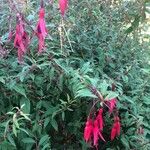
Fuchsia magellanica
Fuchsia · Dollar Princess · Hardy fuchsia · Hummingbird Fuchsia · Bleeding Heart
Description
Source: leafsnapFuchsia magellanica, commonly known as the Magellan fuchsia, is a species of flowering plant in the family Onagraceae. Native to southern Argentina and Chile, it has become naturalized in other parts of the world. The plant typically grows to a height of 1-3 meters and features slender branches with small leaves that are dark green on top and purple underneath. The pendulous flowers, with four petals ranging in color from pink to purple-red, bloom from summer through fall and attract hummingbirds. Fuchsia magellanica is a popular ornamental plant due to its attractive flowers, foliage, and growth habit. It can be grown as a shrub or trained into an espalier or standard form, making it an excellent accent or specimen plant in gardens or containers on patios or balconies. Several cultivars of this species are available, offering variations in flower color (including white and pink-red), size (typically smaller flowers under 2 inches), hardiness (tolerance for cold temperatures), and growth habit (upright vs. trailing). The Magellan fuchsia prefers well-drained soil with regular watering but can tolerate some drought once established. It also prefers partial shade but can manage full sun if provided with adequate water during hot weather conditions. Overall, Fuchsia magellanica is an attractive ornamental shrub that adds beauty to any garden setting while providing food for hummingbirds during their migration season, making it ideal for bird lovers as well.
🌳 Although hardy fuchsia is commonly admired for its decorative charm, its true appeal may rest in its role as a vital ecological partner. By supporting a range of pollinators, hardy fuchsia is essential for maintaining healthy ecosystems. Moreover, its attractive flowers, because of their bright pigmentation, could have future applications in areas like eco-friendly dyes.
🎭 Trusting affection, refined taste, sound judgment, happiness
Care Guide
💧 Water Every 3 days
Hardy fuchsia flourishes in humid, temperate climates. It can tolerate moderate drought conditions, needing water every one to two weeks. Ideally, it should be grown outdoors, where it thrives in cooler temperatures. To help retain soil moisture during dry spells, applying mulch around the plant is beneficial.
When should I water my Hardy Fuchsia?
Timely and proper watering is crucial for the overall health and well-being of Hardy Fuchsia. A clear indication that your plant needs water is when the top 1-2 inches of soil are dry, which can be checked by inserting your finger into the soil. Additionally, wilted or drooping leaves signal a need for water. It's important to avoid watering too early when the soil is still damp, as this can lead to root rot and fungal issues. Conversely, watering too late can cause various stress signs such as wilting, dryness, and bud drop. It's essential to monitor soil dryness, leaf condition, and the plant's growth rate to determine the optimal watering schedule.
How should I water my Hardy Fuchsia?
Hardy Fuchsia requires specific watering needs and sensitivities to be considered for optimal hydration. Consistent moisture in the soil is important, but the plant should not be overwatered. Techniques such as bottom-watering, where the plant pot is placed in a tray of water allowing the roots to absorb moisture from the bottom up, can prevent over-saturation and minimize the risk of fungal diseases. A watering can with a narrow spout can help target water directly at the base of the plant, ensuring efficient hydration. Employing a moisture meter could help monitor the moisture level accurately to maintain slightly moist soil. Focus on watering the base and avoid wetting the foliage to minimize disease risks.
How much water does Hardy Fuchsia really need?
Coming from South America, the Hardy Fuchsia flourishes in damp, moist environments and prefers a habitat with ample water. However, having a shallow root system, it benefits more from frequent, light waterings rather than deep soakings. A mature plant in a medium-sized pot requires thorough watering when the top inch of soil feels dry, using about 1-2 cups of water per session. Adequate hydration is indicated by healthy and turgid leaves, while over-watering can cause yellow or limp leaves and under-watering may result in wilting or leaf drop. Ensuring well-draining soil and pots with adequate drainage holes while regularly checking soil moisture can help maintain the right water quantity.
What kind of water is best for Hardy Fuchsia?
Ideally, Hardy Fuchsia prefers rainwater or distilled water, as tap water should be let sit out for 24 hours to allow chlorine to evaporate. Rainwater is particularly recommended as it is soft and lacks chemicals that could hinder growth. While Hardy Fuchsia can tolerate tap water, continuous use of water with chlorine and fluoride might impede its growth. Excessive minerals could also cause leaf spotting. Therefore, tap water should be used only if it has been allowed to sit to evaporate the chlorine and other volatile compounds. Room temperature water is preferred to avoid shocking the plant.
How do Hardy Fuchsia's watering needs change with the seasons?
Throughout the year, the watering needs of Hardy Fuchsia change with the seasons. In spring, consistent soil moisture is crucial to support its active growth phase. By summer, reduce the watering frequency as the plant may undergo drought-induced dormancy. Autumn calls for a gradual reduction in watering as Hardy Fuchsia prepares for winter dormancy, requiring the soil to stay lightly moist. During winter, water sparingly, allowing the topsoil to dry out between sessions, as the plant requires minimal moisture. Monitoring and adjusting water application according to seasonal changes are essential for maintaining plant health.
☀️ Light Partial sun
The hardy fuchsia does best with a mix of sun and shade, and is robust enough to withstand strong daily sunlight. Native to areas with changing light levels, this plant can tolerate a sunlit location but may be damaged if the light is either too intense or too little, which affects its growth and flowering.
What are the sunlight requirements for hardy fuchsia?
Hardy fuchsia requires partial to full sun exposure to thrive. Partial sun refers to about 3-6 hours of sunlight per day, while full sun means the plant needs more than 6 hours of sunlight daily. It's essential to observe how sunlight moves through your garden and select locations that offer a balance of light and shade, ensuring the plants' well-being and growth.
What are the essentials for growing a healthy hardy fuchsia?
The hardy fuchsia does best in a mix of sun and shade, tolerating variable light conditions from its natural habitat. While it can withstand strong sunshine, extremely harsh or insufficient sunlight can impede its growth and flowering. Artificial lighting, such as LED lights, can supplement natural sunlight, especially for indoor plants or during less sunny seasons. Depending on the plant's sunlight needs, the wattage for artificial lights ranges from 10-20W/sq ft for full shade plants to 30-50W/sq ft for full sun plants. Adjust the lights' distance (12-36 inches) and duration (8-12 hours per day) to mimic natural conditions.
What symptoms indicate that a hardy fuchsia is getting insufficient light?
Inadequate sunlight can cause several symptoms in hardy fuchsia, including reduced flowering and fruiting, early leaf drop, leggy growth, lighter-colored leaves, chlorosis, sunscald, leaf curling, wilting, and leaf scorching. These symptoms indicate the plant's struggle with either too much or too little light, affecting its overall health and ability to perform photosynthesis effectively.
What solutions are available for hardy fuchsia experiencing insufficient light?
To address insufficient light for hardy fuchsia, gradually acclimate the plants to the right amount of sunlight by moving them to progressively sunnier spots each week. For indoor plants or those difficult to move, employing artificial light like desk lamps or professional grow lights for at least 8 hours a day can supplement their light intake. For outdoor plants, ensure they are gradually accustomed to more sunlight to prevent sunburn. If obstructions like trees block sunlight, consider pruning or relocating the plants to sunnier positions during their dormant season, ensuring they have ample sunlight and good drainage.
🌡️ Temperature 10–35°C
Hardy fuchsia originates from cooler climates and grows best at temperatures between 68 and 95 °F (20 and 35 ℃). In hot conditions, provide some shade to protect it. In colder seasons, applying mulch can help preserve the temperatures it needs.
What are the optimal temperature conditions for Hardy Fuchsia?
Hardy Fuchsia, also known by its botanical name Fuchsia magellanica, thrives best in cooler regions, with ideal temperatures ranging between 68 to 95°F (20 to 35°C). During hot weather, it's important to provide some shade for the plant to protect it. While Hardy Fuchsia is known for its strong cold resistance and doesn't usually require special frost protection measures in winter, in extremely cold conditions where temperatures are expected to drop below -25°C, protecting the plant by wrapping the trunk and branches with non-woven fabric or cloth is advisable.
How should Hardy Fuchsia be cared for in winter?
Before the first freeze of autumn, it's recommended to water Hardy Fuchsia abundantly so that the soil remains moist when it enters a frozen state. This is crucial for preventing drought and water scarcity for the plant during winter and early spring. Although Hardy Fuchsia has strong cold resistance and special frost protection measures aren't usually necessary, in regions where winter temperatures fall below -25°C, it's important to provide additional protection by wrapping the plant.
What are the symptoms of cold and heat stress in Hardy Fuchsia, and how can they be managed?
In cold conditions, Hardy Fuchsia is quite tolerant and thrives best when temperatures are above 20°C. During winter, it should be kept above 0°C. If temperatures fall below -25°C, the branches may become brittle and dry in spring, with no new shoots emerging. The solution is to prune away any dead branches that have failed to produce new leaves in spring. In contrast, during high temperatures above 35°C, leaves may lighten in color, tips may dry and wither, and the plant becomes more susceptible to sunburn. Managing this involves trimming away sunburned and dried parts, moving the plant to a shaded location or using a shade cloth, and keeping the soil moist with morning and evening watering.
💨 Humidity normal (40-60%)
This plant will thrive in moderate humidity, which is probably the level in your home. However, misting it a few times a week can be very beneficial. Make sure the room has good ventilation.
🪴 Soil 6-6
🌱 Fertilizer
Timing is important for fertilizing Hardy fuchsia. Apply fertilizer in early spring and continue once a month until early summer. Fertilizer encourages attractive blooms and supplies energy during both dormant and active growth phases.
Why should I put fertilizer on my Hardy fuchsia plant?
Fertilizing a Hardy fuchsia is important for several reasons. Firstly, it will help your plant produce beautiful blooms. To ensure excellent flowers, it is best to fertilize in early spring. Additionally, fertilizer provides your Hardy fuchsia with energy that can be stored in the ground during dormant growth phases. By giving your plant extra nutrients in the fall or late spring, it will have more energy to use when active growth resumes.
When should I fertilize my Hardy fuchsia plant?
To ensure effective fertilization of Hardy fuchsia, it is important to consider the timing. Applying fertilizer too early, while the plant is still dormant, will be ineffective and the fertilizer may be washed away by rainwater, causing waste and pollution. The ideal time for the first application of fertilizer is early spring. It is then recommended to fertilize once a month until early summer.
When is it not a good idea to fertilize my Hardy fuchsia?
To ensure proper blooming, it is important to avoid using fertilizer with high levels of nitrogen for Hardy fuchsia. Such fertilizers can promote leaf growth but limit the number of blooms. Instead, opt for fertilizers that have lower nitrogen levels in relation to other essential nutrients. Additionally, refrain from fertilizing Hardy fuchsia in late autumn as it can promote excessive growth right before winter. Moreover, refrain from fertilizing during hot and dry periods as dry soil is not as effective at delivering fertilizer, and stimulating growth during these times may require more water than is available. It is best to apply fertilizer earlier in the season when temperatures are cooler. Lastly, keep in mind that Hardy fuchsia can absorb fertilizer from neighboring plants or lawns, so avoid inadvertently providing a double dose of fertilizer to trees or shrubs.
What kind of fertilizer does my Hardy fuchsia plant need?
To help your Hardy fuchsia thrive, you have a few options for fertilizing. Firstly, a balanced fertilizer with slightly more phosphorus is ideal. Alternatively, you can enhance the soil by adding organic materials like compost, worm castings, or manure. When the flower buds start to appear, experienced gardeners recommend using water-soluble fertilizers with phosphorus 1-2 times to improve the flower development and size. There are various forms of fertilizers available, and most will work well for your Hardy fuchsia. However, liquid or powdered fertilizers are often considered the best options. Regardless of the form you choose, dilute the fertilizer and apply it while watering your Hardy fuchsia.
How can I feed my Hardy fuchsia?
To effectively fertilize your Hardy fuchsia, it is important to carefully follow the instructions for the specific fertilizer you are using. Avoid over-fertilizing by determining the correct amount to apply. A general guideline is to use the age of the tree (if known) or the trunk diameter to determine the amount of fertilizer needed. Typically, it is recommended to use one-tenth of a pound of fertilizer per year or per inch of trunk, with a maximum of one pound. When using granular or organic fertilizers like blood meal, sprinkle the substance from the base of the tree to the drip line (the area below the outermost branches). Be careful not to let the fertilizer come in contact with the trunk. Over time, the granules will break down and filter into the soil to be absorbed by the roots. After fertilizing, apply a layer of compost around the base of the tree that is approximately one inch deep, and water thoroughly.
🪴 Pot & Repot 2-3 years
When repotting Hardy fuchsia, select a pot 1–2 inches (2.5–5.1 cm) larger with good drainage. Use a well-draining potting mix. Repot in spring or fall, making sure the root ball sits slightly below the rim of the pot. Water thoroughly after repotting and place it in a warm spot with indirect sunlight.
✂️ Pruning
To promote healthy growth and ensure abundant blooms, prune hardy fuchsia in early spring before new growth begins. Start by removing any dead or crossing branches. Then, trim back vigorous growth to maintain the plant's shape and encourage flowering. This will enhance air circulation and lead to a healthier, more beautiful plant.
🌿 Propagating
🐛 Diseases & pets
☠️ Toxicity
Characteristics
- Plant Type
- Shrub, Vine
- Life Cycle
- Perennial
- Genus
- Fuchsia
- Family
- Onagraceae
- Hardiness Zone
- 6-9
- Mature Height
- 1.22 m to 3.66 m
- Mature Spread
- 1.22 m to 3.05 m
- Leaf Color
- Green
- Leaf Type
- Deciduous
- Flower Color
- Red, Purple, White, Pink
- Flower Size
- 2.54 cm to 5.08 cm
- Bloom Time
- Late spring, Summer
- Planting Time
- Spring, Autumn
- Harvest Time
- Mid summer, Late summer, Early fall
- Native Area
- Argentina, Chile