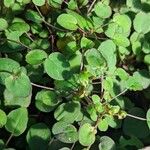
Fuchsia procumbens
New Zealand prostrate fuchsia
Description
Source: leafsnapFuchsia procumbens is a prostrate shrub that is endemic to coastal areas of the North Island of New Zealand. Common names include creeping fuchsia, climbing fuchsia or trailing fuchsia. It belongs to a South Pacific lineage that diverged from all other fuchsias around 30 million years ago. F. procumbens diverged from the other New Zealand (and Tahitian) species around 18 million years ago.
Care Guide
💧 Water Every 1-2 weeks
Creeping fuchsia is native to the temperate regions of New Zealand and does best in moderately moist, well-drained soil. It prefers consistent moisture but can tolerate brief dry periods. Water the plant every one to two weeks, allowing the top layer of soil to dry slightly between waterings. Adding mulch helps retain moisture in the soil and protects the plant's roots.
☀️ Light Full sun
Creeping fuchsia comes from open habitats, such as sunny meadows and forest edges, where light is plentiful. It thrives in Full Sun but can also tolerate Partial Sun, adapting well to a range of sunlight conditions.
What are the sunlight requirements for Creeping Fuchsia?
Creeping Fuchsia thrives in environments that offer full sun but can also adapt to partial sun, making it versatile in various sunlight conditions. For optimal growth, it requires above 6 hours of sunlight in full sun conditions and about 3 to 6 hours of sunlight in partial sun conditions. It's important to observe the movement of sunlight through your garden to find the perfect spots that provide a balance of light and shade, which is crucial for the happiness and health of your plants.
How can artificial lighting be used for Creeping Fuchsia indoors?
When natural sunlight is insufficient for Creeping Fuchsia, especially during winter or in less sunny spaces, artificial lighting becomes essential for promoting healthy growth. LED lights are recommended due to their ability to be customized for providing specific wavelengths needed by plants. The intensity required varies: full sun plants need 30-50W/sq ft, partial sun plants need 20-30W/sq ft, and full shade plants need 10-20W/sq ft of artificial light. The light source should be placed 12-36 inches above the plant to mimic natural sunlight and operated for 8-12 hours per day depending on the plant's needs.
What symptoms indicate Creeping Fuchsia is getting insufficient light?
Symptoms of insufficient light in Creeping Fuchsia include smaller new leaves, leggy or sparse growth, earlier leaf drop to conserve resources, delayed or stopped growth, leaves with pale or irregular color patterns indicating lack of chlorophyll, chlorosis or yellowing of leaves due to breakdown of chlorophyll, sunscald with damaged tissues from intense exposure, curled leaves as a defense against water loss, wilting from loss of water pressure, and leaf scorching from excessive sunlight exposure. These symptoms reveal the plant’s struggle in suboptimal lighting and need for immediate correction in light exposure.
What solutions are available for improving Creeping Fuchsia's light exposure?
To improve light exposure for Creeping Fuchsia, different strategies can be applied based on the setting. Indoors, gradually move your plant to a sunnier spot each week until it attains at least 6 hours of sunlight daily, utilize south-facing windows, or employ artificial grow lights for at least 8 hours a day for ample light. Outdoors, adapt your plants to brighter conditions incrementally to avoid sunburn. Ground planted species benefit from reducing sunlight obstructions by pruning and potentially transplanting to better-lit locations during the dormant season. Remember, damaged parts might not recover, but increased light exposure encourages healthy new growth.
🌡️ Temperature 20–37.8°C
Creeping fuchsia shows strong adaptability to different climate conditions, coping with both sweltering summers and cold winters. It does, however, have an ideal temperature range for growth. When temperatures get too high, the plant is susceptible to heat and humidity stress, which can lead to its death. In areas where temperatures near the lower limit of its cold tolerance, taking insulating measures to protect the plant is necessary.
What is Creeping fuchsia?
Creeping fuchsia, known scientifically as Fuchsia procumbens, doesn't have any provided details on its essentials or symptoms in the given information. This plant is notable for its unique name and botanic classification but unfortunately, specifics about its care, growth habits, or common concerns were not included in the provided data.
💨 Humidity
🪴 Soil 6-8
🌱 Fertilizer
Timing is essential when feeding Creeping fuchsia. Apply fertilizer in early spring and continue once a month until early summer. Fertilizer encourages attractive blooms and supplies energy during both dormant and active growth stages.
🪴 Pot & Repot Every 12 months
✂️ Pruning
Creeping fuchsia is a low-growing plant known for its colorful flowers. To maintain its shape and encourage blooming, regular pruning is necessary. In early spring, lightly trim the plant and remove any damaged stems to improve airflow and prevent disease. This care will result in a healthier and more vibrant plant.
🌿 Propagating
🐛 Diseases & pets
☠️ Toxicity
Characteristics
- Plant Type
- Tree, Shrub
- Life Cycle
- Perennial
- Genus
- Fuchsia
- Family
- Onagraceae
- Hardiness Zone
- 9-11
- Mature Height
- 20 cm
- Mature Spread
- 91 cm
- Leaf Color
- Green, Dark Green
- Leaf Type
- Deciduous
- Flower Color
- Red, Purple
- Flower Size
- 2.03 cm to 3.05 cm
- Bloom Time
- Summer, Fall
- Planting Time
- Spring, Summer
- Harvest Time
- Late summer, Fall, Early winter
- Native Area
- New Zealand