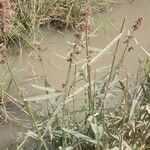
Fuirena umbellata
Yefen
Care Guide
💧 Water
Tropical umbrellasedge flourishes in consistently moist soils with high humidity, making it somewhat drought-tolerant. To mimic its natural habitat, weekly watering is recommended. As an aquatic plant, it should be planted in containers that maintain moisture without leading to waterlogging.
☀️ Light Full sun
Tropical umbrellasedge is a perennial, herbaceous species that thrives in sunny, open habitats and is often found in meadows and grasslands. It prefers full sun but can also tolerate partial sun.
What are the sunlight requirements for Tropical umbrellasedge?
Tropical umbrellasedge, or Fuirena umbellata, thrives in environments that offer full sun, which is above 6 hours of sunlight daily, but it can also tolerate partial sun conditions, amounting to about 3-6 hours of sunlight. It is essential to observe the movement of sunlight through your garden to ensure that you pick a location that provides the ideal balance of light and shade, which will contribute to the well-being of your plants.
How does artificial lighting affect the growth of indoor Tropical umbrellasedge plants?
When natural sunlight is insufficient, especially during winter or in less sunny areas, artificial lighting can significantly promote healthier and faster growth in Tropical umbrellasedge plants. Using the right type of artificial light, such as LED lights, is crucial because they can be customized to provide specific wavelengths needed by the plant. For full sun plants, 30-50W/sq ft of artificial light is recommended, 20-30W/sq ft for partial sun plants, and 10-20W/sq ft for full shade plants. The artificial light source should be placed 12-36 inches above the plant, mimicking natural sunlight as closely as possible, and most plants will require 8-12 hours of light per day.
What are the symptoms of light deficiency in Tropical umbrellasedge?
When Tropical umbrellasedge is grown in inadequate lighting, it may exhibit several symptoms indicating light deficiency, such as small and irregularly sized new leaves, leggy or sparse growth, faster leaf drop, slowed or halted growth, and lighter-colored or yellow leaves (chlorosis). Overexposure to sunlight can also cause issues like sunscald, leaf curling, wilting, and leaf scorching, which are harmful to the plant's health.
What solutions can be applied for Tropical umbrellasedge experiencing sunlight-related issues?
For indoor Tropical umbrellasedge experiencing insufficient sunlight, gradually moving the plant to a location with at least 6 hours of direct sunlight is advised, alongside the usage of artificial lighting solutions if necessary. For outdoor plants, it's essential to acclimate them to changes in light gradually to prevent sunburn. Additionally, minimizing any obstructions that block sunlight, such as pruning trees or relocating the plant, can enhance sunlight exposure. It's important to note that while damaged parts of the plant might not recover, new growth should be healthy following these adjustments.
🌡️ Temperature 15–37.8°C
Tropical umbrellasedge comes from tropical areas, where the climate is generally warm and humid. Consequently, it is adapted to high temperatures and humidity. It dislikes sudden temperature changes and prefers a stable temperature, so avoiding indoor temperature fluctuations is important. It usually cannot tolerate cold and needs warmer conditions to grow. If the surrounding temperature falls too low, the plant may stop growing or even die.
💨 Humidity
🪴 Soil 5-6
🌱 Fertilizer
Tropical umbrellasedge needs extra nutrients to encourage healthy new growth. In spring, placing some compost around the plant's base can effectively supply the nutrition it needs. Fertilizing supports vigorous growth and helps the plant resist diseases and pests.
🪴 Pot & Repot
✂️ Pruning
To keep your tropical umbrellasedge healthy and looking its best, prune it in early spring. Start by removing dead or damaged stems, and thin out any crowded areas to improve air circulation. This will enhance both growth and appearance. Be careful not to prune too much, as this can stress the plant. Always use sanitized tools to prevent the spread of disease. Finally, maintain a balanced structure for optimal health.
🌿 Propagating
🐛 Diseases & pets
☠️ Toxicity
Characteristics
- Plant Type
- Grass
- Life Cycle
- Perennial
- Genus
- Fuirena
- Family
- Cyperaceae
- Hardiness Zone
- 8-11
- Mature Height
- 0.61 m to 1.22 m
- Mature Spread
- 20 cm to 49 cm
- Leaf Color
- Green
- Leaf Type
- Semi-evergreen
- Flower Color
- White
- Flower Size
- 30.48 cm
- Bloom Time
- Summer, Early fall, Mid fall
- Planting Time
- Spring
- Harvest Time
- Late summer, Fall, Early winter
- Native Area
- Sri Lanka, Burkina Faso, Belize, India, Mexico, Guatemala, Madagascar, Guinea-Bissau, Uganda, Tanzania, Benin, Sierra Leone, Indonesia, Cameroon, Mozambique, Ethiopia, Central African Republic, Malawi, Honduras, Philippines, Bangladesh, Laos, Panama, Chad, China, Colombia, Japan, Togo, El Salvador, Senegal, Côte d'Ivoire, Ecuador, Costa Rica, Gambia, Congo (DRC), Angola, Malaysia, Namibia, Kenya, Niger, Jamaica, Zimbabwe, Mali, Cuba, Cambodia, Equatorial Guinea, Liberia, Venezuela, Brazil, Ghana, Botswana, Congo, Nepal, South Africa, Zambia, Sudan, Mauritania, Guinea, Bolivia, Vietnam, Guyana, Nicaragua, Thailand, Gabon