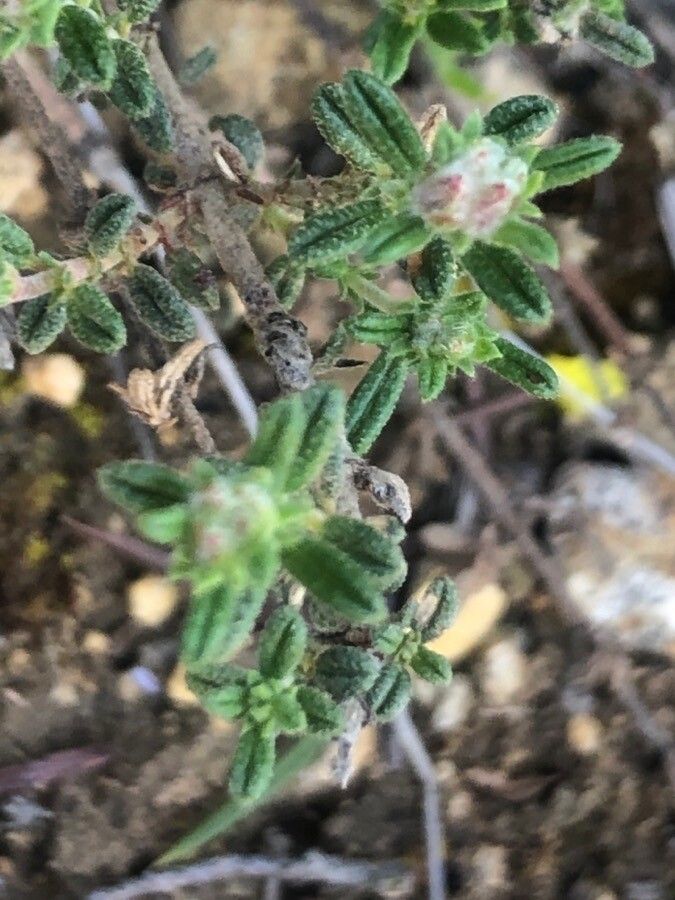
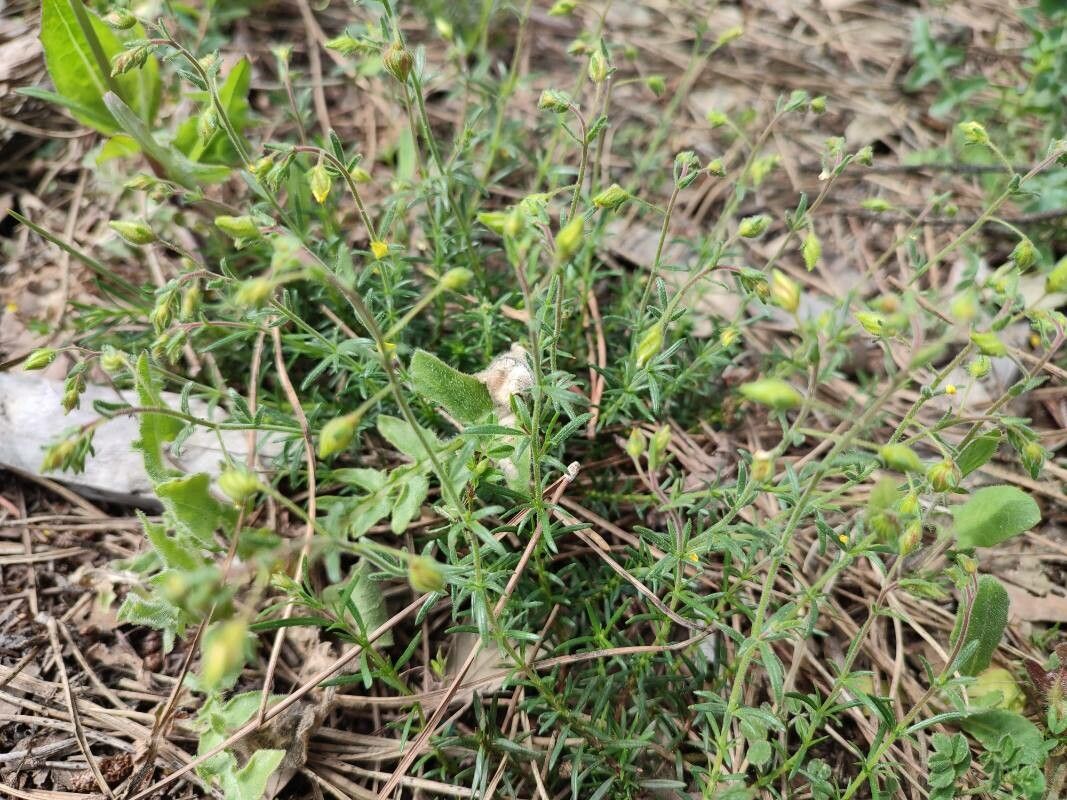
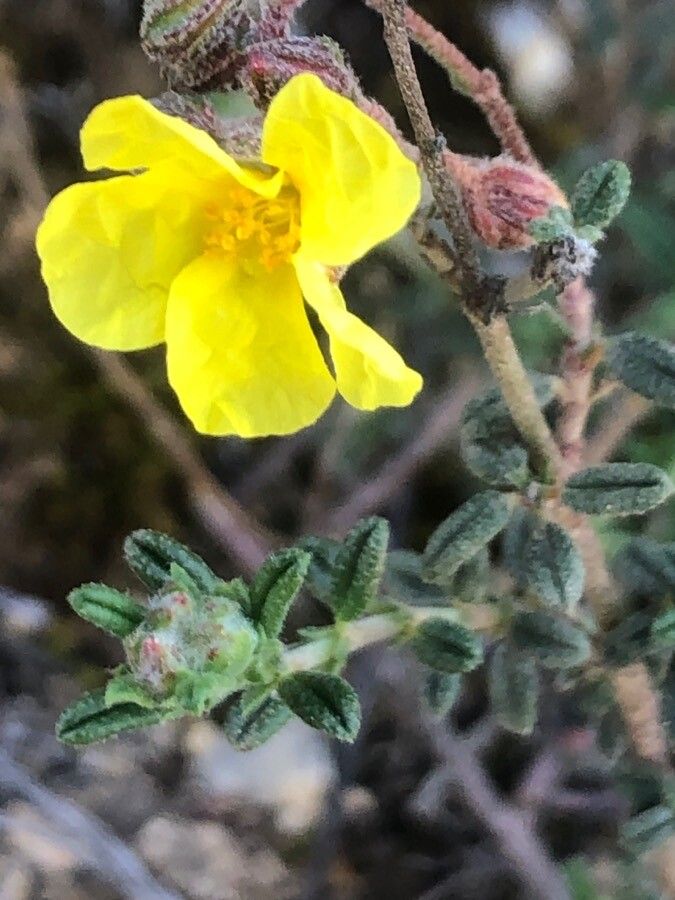
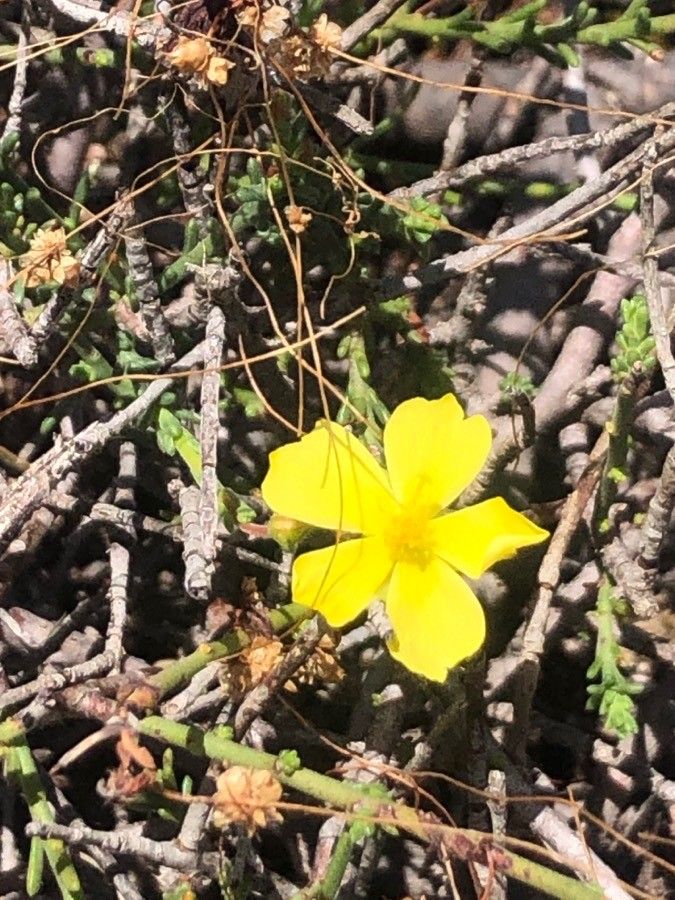
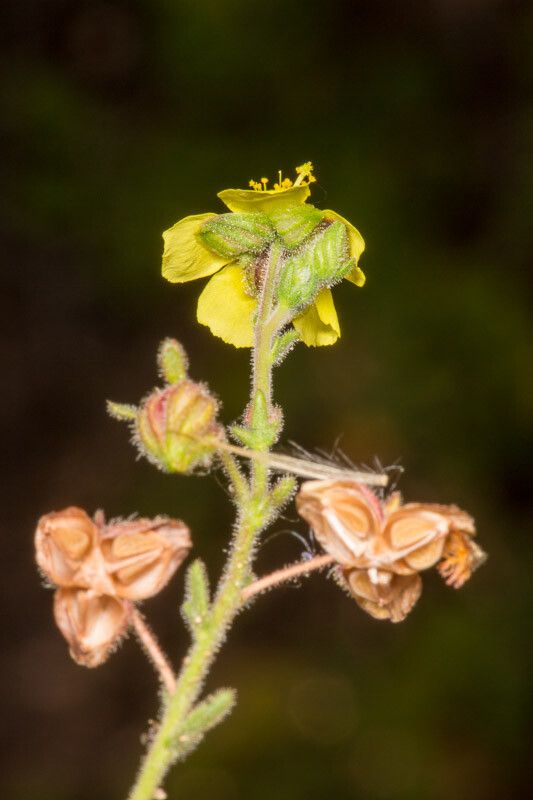
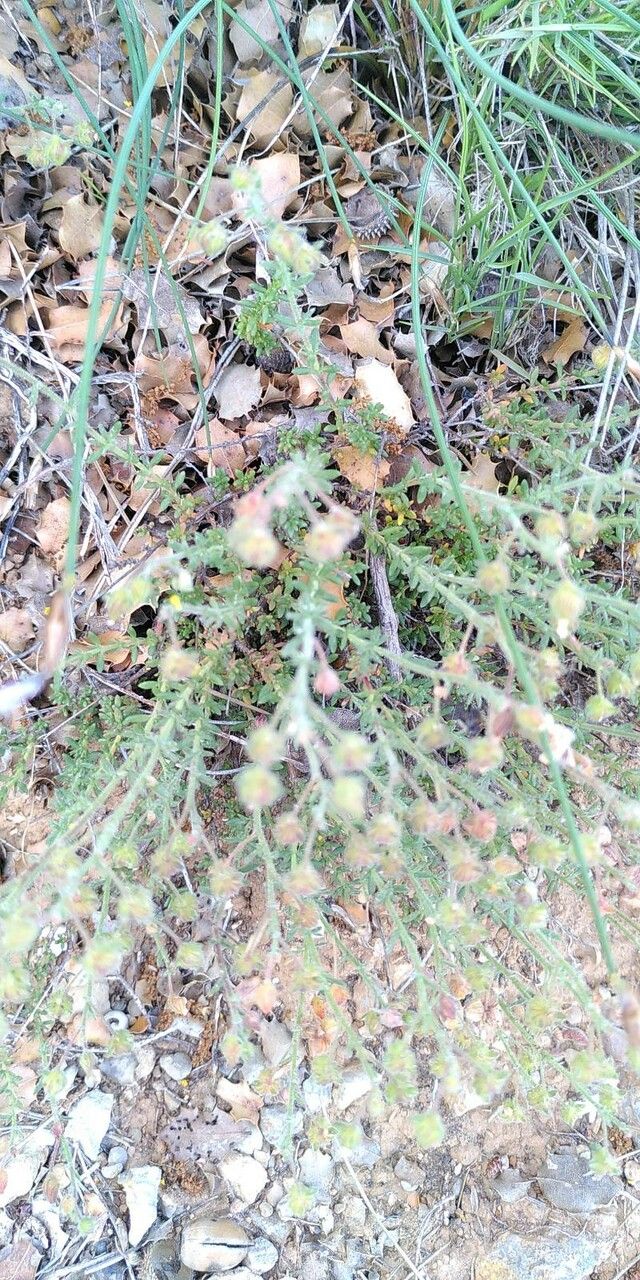
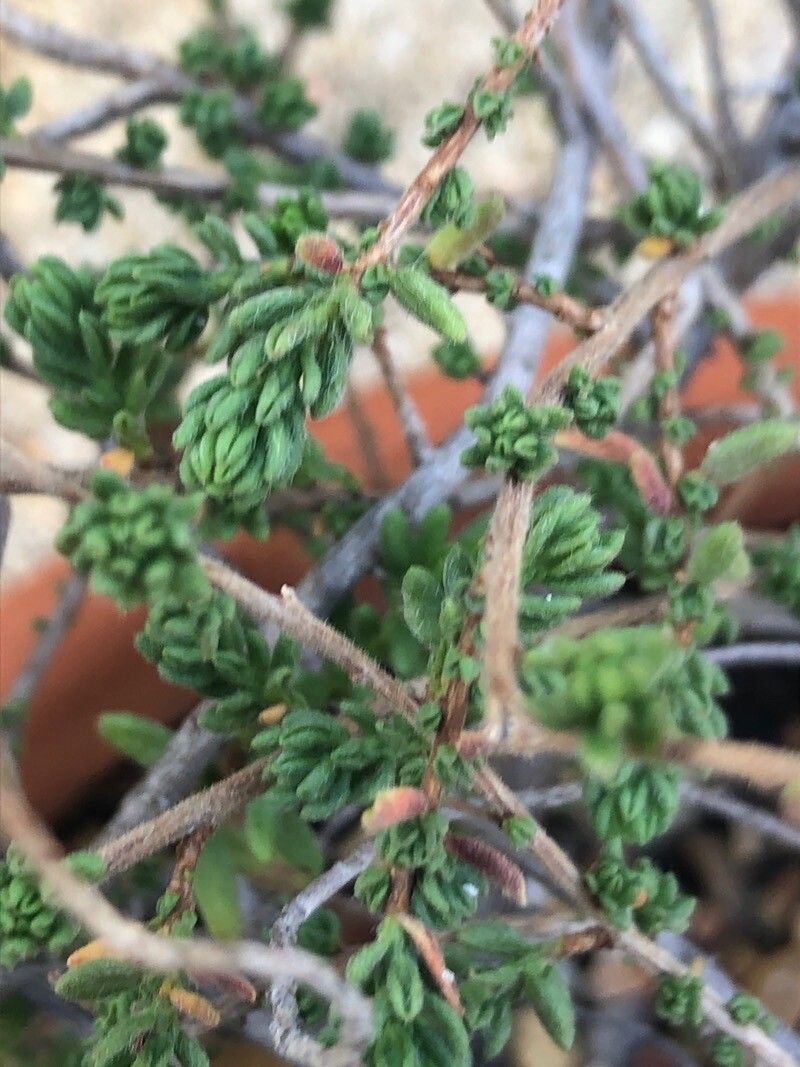
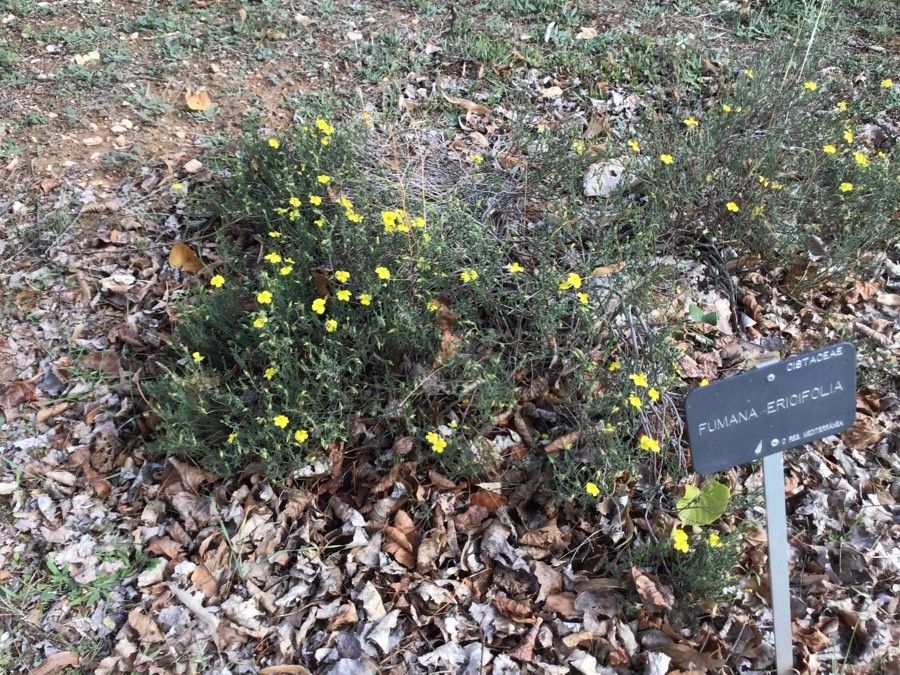
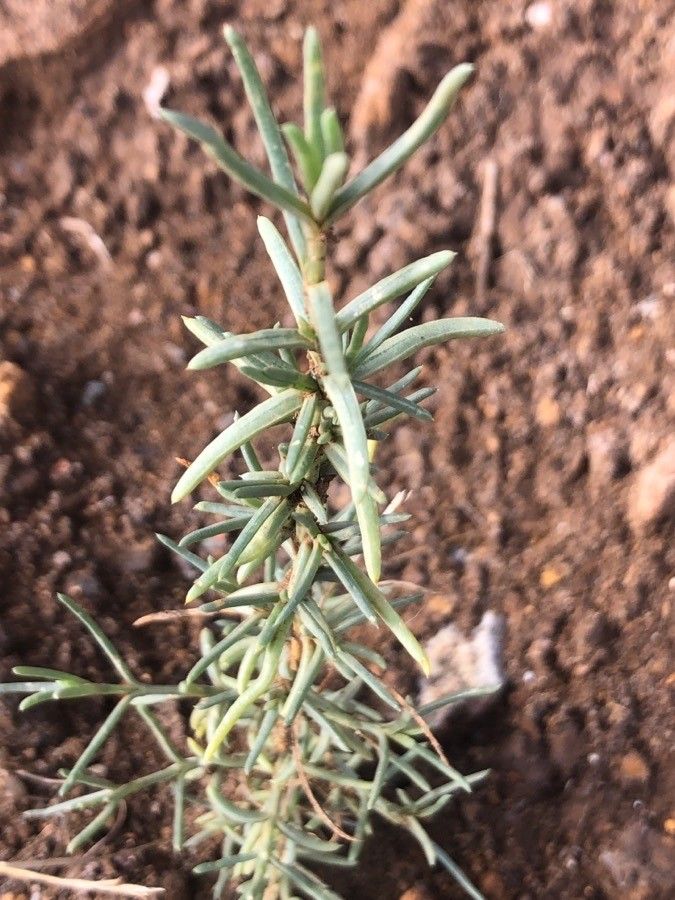
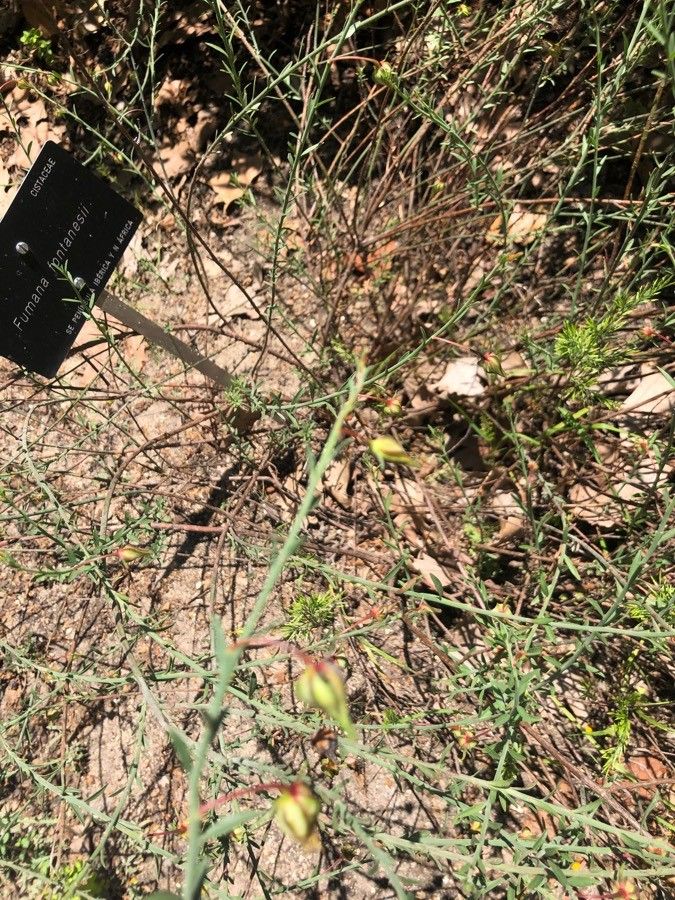
Fumana thymifolia is a small, evergreen shrub from the Cistaceae family, native to the Mediterranean region. It thrives in rocky and sandy areas, as well as on hillsides and cliffs. The plant features narrow, needle-like leaves arranged in a spiral pattern along its stems. Its small, yellow, five-petaled flowers bloom from spring to summer.
This hardy plant can tolerate drought and poor soil quality. While it requires full sun for optimal growth, it can also grow in partial shade. Historically, some cultures have used Fumana thymifolia for its anti-inflammatory properties.
In landscaping, Fumana thymifolia is popular as ground cover or in rock gardens due to its low-growing habit and ability to thrive in rocky soil. Its bright yellow flowers attract pollinators like bees.
Overall, Fumana thymifolia is an attractive, low-maintenance shrub that adds color and texture to any garden or landscape design, while also providing ecological benefits such as supporting pollinators.
Thyme-leaved rockrose displays strong resistance to disease and is usually not susceptible to illnesses. With regard to care, this plant is fairly low-maintenance. When grown outdoors it needs only light watering, and larger specimens typically do not require pruning. Smaller specimens, however, should be trimmed after flowering. Thyme-leaved rockroset is appropriate for anyone with an outdoor area, such as a garden or deck, and does not demand much gardening experience.
How to keep Fumana Thymifolia.
Light
Thyme-leaved rockrose is native to open habitats, such as sunny meadows and woodland edges, which offer plenty of light. It thrives in Full Sun but can also tolerate Partial Sun, adjusting well to varying sunlight levels.
Water
The thyme-leaved rockrose is a drought-tolerant plant that thrives in arid Mediterranean conditions, needing minimal moisture. It does well when watered every 2-3 weeks and prefers well-draining soil, which helps maintain root health and mimics its native rocky habitat.
Temperature
Thyme-leaved rockrose shows strong adaptability to a variety of climate conditions, whether facing blistering summers or cold winters. Still, it has a preferred temperature range for growth. When temperatures get too high, the plant is susceptible to heat and humidity stress, which can cause it to die. In areas where temperatures reach the lower limit of its cold tolerance, it is essential to use insulation to protect the plant.
Fertilizer
Timing is important when fertilizing Thyme-leaved rockrose. Apply fertilizer in early spring and continue once a month until early summer. Fertilizer promotes attractive blooms and supplies energy during both dormant and active growth phases.
Pruning
Thyme-leaved rockrose benefits from winter pruning, which is best done from early to late winter. Trim away any dead branches to promote better health and shape. Making light cuts encourages dense growth, while avoiding heavy pruning helps maintain its natural form. Regular maintenance supports blooming and reduces the risk of disease. Always use clean, sharp tools for precise cutting.
Botanical profile.
- Plant Type
- Shrub
- Life Cycle
- Perennial
- Genus
- Fumana
- Family
- Cistaceae
- Hardiness Zone
- 7-10
- Mature Height
- 20 cm
- Mature Spread
- 20 cm to 40 cm
- Leaf Color
- Dark Green, Forest Green
- Leaf Type
- Evergreen
- Flower Color
- Yellow
- Flower Size
- 1.02 cm to 1.52 cm
- Bloom Time
- Mid spring, Late spring, Early summer
- Planting Time
- Spring, Autumn
- Harvest Time
- Summer
- Native Area
- Italy, France
Other names.
Reader questions.
What are the sunlight requirements for Thyme-leaved Rockrose?
Thyme-leaved Rockrose requires full sun, meaning it should receive above 6 hours of sunlight daily, but it can also tolerate partial sun, or about 3-6 hours of sunlight. It's important to observe your garden's light conditions throughout the day to find spots that offer the right balance of light and shade for your plants. This consideration helps ensure the plants' optimum growth and happiness.
How can artificial lighting be used for indoor plants?
For indoor plants, when natural sunlight is not sufficient, especially in winter or less sunny spaces, artificial lighting is crucial. Optimal growth is achieved by using LED lights, which can be tailored to provide necessary wavelengths. Full sun plants require 30-50W per square foot of artificial light, partial sun plants need 20-30W, and full shade plants require 10-20W. The light source should be placed 12-36 inches above the plant, mimicking natural sunlight, and plants typically need 8-12 hours of light per day.
What are some common symptoms of light deficiency in Thyme-leaved Rockrose?
Thyme-leaved Rockrose may show several symptoms when exposed to suboptimal lighting, including smaller new leaves, leggy or sparse growth, faster leaf drop, slower or no new growth, lighter-colored new leaves, chlorosis, sunscald, leaf curling, wilting, and leaf scorching. These symptoms indicate the plant is struggling with insufficient light and needs adjustments to its environment.
What solutions can help Thyme-leaved Rockrose recovering from light deficiency?
To help recover Thyme-leaved Rockrose from light deficiency, gradually increase its sunlight exposure. For indoor plants, move them to a sunnier location each week until they get at least 6 hours of sunlight daily, utilize a south-facing window, or use artificial lighting for at least 8 hours daily. For outdoor plants, move them weekly to gradually adapt to sunlight while avoiding sudden changes to prevent sunburn. Reducing obstructions like pruning trees or transplanting to sunnier spots can also help. It's essential to note that parts of the plant already affected may not recover, but new growth will be healthy with improved light conditions.