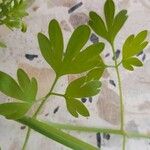
Fumaria muralis
Common Ramping-fumitory · Wall fumitory · Scrambling fumitory · Ramping fumitory · White Ramping Fumitory
Description
Source: leafsnapFumaria muralis, commonly known as wall fumitory, is a delicate annual herb belonging to the family Papaveraceae. Native to Europe and western Asia, it has been introduced and naturalized in many other parts of the world. The plant reaches up to 30 cm in height and has finely divided, bluish-green leaves. Its small flowers, which are either pinkish-purple or white, feature a distinctive spur at the base of each petal. Wall fumitory thrives in dry or moist soils and is adaptable to sunny or partially shaded environments such as walls, rocks, waste places, and disturbed areas. It typically blooms from April to September, depending on the location. Traditionally, this plant has been used for medicinal purposes due to its diuretic properties, which can help treat urinary tract infections and kidney stones. Additionally, it contains alkaloids that have sedative effects on the nervous system. Aside from its medicinal uses, wall fumitory is also valued as an ornamental plant because of its delicate appearance. However, it can become invasive if not properly controlled. In summary, Fumaria muralis is an intriguing herbaceous annual that offers both medicinal benefits and ornamental value when effectively managed in gardens or landscapes.
🌳 Despite its modest appearance, common ramping-fumitory has an unexpected ability to serve as a bioindicator for certain soil contaminants. Researchers have found that it can signal the presence of heavy metals such as lead and zinc in soil, potentially informing ecological assessments and remediation efforts for polluted landscapes.
Care Guide
💧 Water Every 7 days
Common ramping-fumitory flourishes in conditions with moderate rainfall and consistently moist soil, though it can withstand short periods of dryness. Watering it once a week helps maintain its health. Being an annual herb, it naturally grows during the rainy season, so it's important to replicate these conditions for successful cultivation, whether indoors or outdoors.
How should I water my Common ramping-fumitory?
To water Common ramping-fumitory, there are several options you can choose from. You can use a garden hose with a spray nozzle, a watering can, or any other common watering tool. Common ramping-fumitory is not very particular about the type of water it receives. It can thrive with rainwater, tap water, or filtered water. However, it's best to avoid watering this plant from above as it can harm the leaves and flowers and even result in disease. Using a drip irrigation system is often the most effective way to water Common ramping-fumitory. These systems distribute water evenly and directly to the soil. If you have a Common ramping-fumitory growing in a container, you can follow a similar watering method but use different tools. Simply use a cup, watering can, or tap to apply water directly to the soil.
What should I do if I give too much or too little water to my Common ramping-fumitory plant?
To prevent underwatering your Common ramping-fumitory, water it regularly when you notice it lacks moisture. However, be careful not to overwater it because this can be more serious. Overwatering can lead to diseases and the plant's decline or death. To avoid this, choose a growing spot with ample sunlight to dry the soil and good drainage to prevent water from pooling. If your potted ramping-fumitory is overwatered, consider transferring it to a new pot with proper drainage. Use loose soils and an efficient draining pot when repotting.
How frequently should I water my Common ramping-fumitory?
Common ramping-fumitory requires regular watering throughout the growing season. In the spring, water the plant about once a week. As the season progresses and temperatures rise, increase watering to two to three times a week. Avoid exceeding this rate as it could harm the plant. Regardless of watering frequency, ensure that the soil remains moist but not overly wet. When growing in a pot, water more frequently than when in the ground. Generally, water container-grown common ramping-fumitory a few times per week compared to just once per week for plants in the ground.
How much water does my Common ramping-fumitory plant need?
Determining how much water to give to your Common ramping-fumitory can be done in a few different ways. One method is to feel the soil to determine its moisture level and water until the first six inches of soil feel moist. Another method is to use a set measurement, such as two gallons per week, taking into account the temperature and dryness of the soil. However, it's important to avoid overwatering if your plant requires less water. When growing in a container, you should moisten all layers of dry soil and check for moisture by sticking your finger in the soil or noticing excess water draining from the pot.
How can I know if I am giving my Common ramping-fumitory enough water?
It can be a bit challenging to avoid overwatering your Common ramping-fumitory. These plants have deep roots, so they do need the soil to be moistened on a weekly basis. However, they are very prone to root rot and can also develop browning if they get too much water. Luckily, underwatering is not as much of a concern since these plants can survive without extra watering for a while. However, if you go too long without giving them water, they will start to wilt and you might notice dry leaves.
☀️ Light Full sun
Common ramping-fumitory does best with plentiful sunlight and can also tolerate partly sunlit locations. Its native habitat reinforces this reliance, as sunlit settings support its growth. However, continuous exposure can weaken the plant, just as insufficient sunlight can inhibit it.
How much sunlight does Common ramping-fumitory need each day to grow well?
In order to help them thrive, the plants should be exposed to a minimum of 6 to 8 hours of sunlight every day. Particularly during summer, they thrive with more exposure to morning light. The Common ramping-fumitory, in particular, requires ample sunlight to flourish. The greater the amount of light these species receive, the more successful they will be at producing food, showcasing beautiful blooms, and surviving.
What kind of sunlight does Common ramping-fumitory require?
The Common ramping-fumitory thrives in full sunlight, so it's important to avoid overcrowding them. Ensuring even sun exposure is crucial to prevent the leaves from being deprived of sunlight. If planted in pots, it is recommended to place the herbaceous flowers in windows where they can receive direct sun throughout the day, regardless of the season. Partial or filtered light should be avoided as it may result in weak stems and unhealthy flowers. Overall, it is best to always expose the Common ramping-fumitory to the sun for optimal growth.
Can the sun damage plants? How can I protect Common ramping-fumitory from getting hurt by the sun and heat?
When the temperature rises above 90℉(32℃), the Common ramping-fumitory can be susceptible to damage. This is especially true if they are exposed to many hours of direct sunlight. To protect them, it's best to provide shade in the afternoon during the summer. It's important to keep in mind that sunlight is stronger in the summer and exposure is 50% longer compared to winter. If the Common ramping-fumitory is stressed from sunlight, it's a good idea to keep them well-watered. Water the plants when the top 2 inches of soil are dry, and consider moving them indoors if it's too hot outside, especially if they are planted in containers. During the day, the plant leaves may naturally wilt and recover at night. However, if the Common ramping-fumitory continues to droop, it indicates rapid water loss and they should be watered promptly.
Should I keep Common ramping-fumitory away from the sun?
The Common ramping-fumitory thrives in sunlight and is not affected by sun exposure. It is actually attracted to the sun and may grow towards it. For optimal growth, plant them in gardens that face south to maximize sun exposure from morning until afternoon. It's important to note that while sun is beneficial, some species may get sunburned if exposed to too much sunlight. To protect them, consider providing shade in the form of a tree or wall during the afternoon and midday sun. Growing the Common ramping-fumitory in shady areas is not possible as the energy required for larger flower production is too high. Therefore, it is recommended to provide full sun conditions for this plant to thrive.
What happens if Common ramping-fumitory doesn't get enough sunlight?
If the Common ramping-fumitory doesn't receive enough sunlight or is placed in shady locations, its photosynthetic process slows down. This lack of sunlight leads to thin and long stems as the plant tries to find more sun. Consequently, it won't bloom or produce seeds in the shade. Insufficient sunlight also causes older leaves to die and new ones to have a lighter color than the older foliage. Additionally, new growth is smaller than previous growth. While the Common ramping-fumitory loves the sun, it can wilt under excessive heat and ultraviolet light in the summer. To protect the leaves and flowers, consider covering them with a green shade net during this time. Indoors, use a fan to reduce the heat.
🌡️ Temperature 5–35°C
Common ramping-fumitory is adapted to a native habitat that requires temperatures between 68 and 95 °F (20 to 35 ℃). It does best in areas that provide a warm, temperate climate. During different seasons, alter its exposure to keep temperatures within this ideal range.
What is the optimal growing temperature for Common Ramping-Fumitory?
The Common Ramping-Fumitory thrives in a warm, temperate climate with temperatures ranging from 68 to 95 °F (20 to 35 °C). To ensure the plant's health, it's important to adjust its exposure to maintain this optimal temperature range across varying seasons. The plant is also quite cold-resistant and does not normally require special frost protection measures in winter. However, for exceptionally cold winters with temperatures expected to drop below -25°C, protective measures like covering the plant with soil or straw are advisable. Additionally, watering the plant abundantly before the first freeze in autumn helps keep the soil moist during winter and early spring, preventing drought and water scarcity.
How does Common Ramping-Fumitory respond to low temperatures?
Common Ramping-Fumitory is quite tolerant of cold weather and generally thrives as long as the temperature remains above 20°C. In the winter, it's important to keep the plant above 0°C to avoid damage. However, if temperatures fall below -25°C, the plant may not show any noticeable changes during the winter itself, but you might observe a decrease in sprouting or even a complete lack of sprouting come springtime. If this occurs, the recommended course of action is to remove any parts of the plant that have failed to sprout in spring.
What should I do if my Common Ramping-Fumitory experiences high temperatures?
During the summer months, it's crucial to ensure the Common Ramping-Fumitory is not exposed to temperatures above 35°C. Exceeding 38°C can cause the leaves to lighten in color, become prone to curling, suffer sunburn, and in severe cases, the entire plant may wilt and dry up. To mitigate these effects, trim away any sunburned and dried-up parts of the plant. Also, consider moving the plant to a location that provides shade during the midday and afternoon sun, or use a shade cloth to protect it. Keeping the soil moist by watering the plant in the morning and evening will also help manage the impact of high temperatures.
💨 Humidity
🪴 Soil 6-7
🌱 Fertilizer
Common ramping-fumitory responds well to regular, dilute applications of fertilizer to encourage healthy leaf development. You should feed Common ramping-fumitory about once a month during the summer. Nitrogen is essential for foliage, and adding nitrogen-rich sources helps Common ramping-fumitory thrive.
🪴 Pot & Repot
✂️ Pruning
To enhance the growth and appearance of common ramping-fumitory, with its delicate pink flowers and fern-like leaves, consider early spring pruning. Trim any leggy stems and remove dead foliage to promote health and encourage compact growth. Make sure to use sharp, clean tools to prevent the spread of disease, ensuring a vibrant display in your garden.
🌿 Propagating
🐛 Diseases & pets
☠️ Toxicity
Characteristics
- Plant Type
- Herb
- Life Cycle
- Annual
- Genus
- Fumaria
- Family
- Papaveraceae
- Hardiness Zone
- 5-9
- Mature Height
- 91 cm
- Mature Spread
- 20 cm to 40 cm
- Leaf Color
- Light Green, Pale Green
- Leaf Type
- Deciduous
- Flower Color
- Pink, White
- Flower Size
- 2.54 cm
- Bloom Time
- Mid spring, Late spring, Early summer
- Planting Time
- Spring
- Harvest Time
- Late spring, Early summer, Mid summer
- Native Area
- Germany, France, Ireland, United Kingdom, Morocco, Portugal