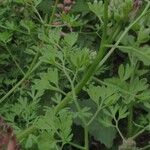
Fumaria officinalis
Fumitory · Common fumitory · Wax-dolls · Earthsmoke · Drug fumitory
Description
Source: leafsnapFumaria officinalis, commonly known as common fumitory or earth smoke, is a herbaceous annual plant in the Papaveraceae family. Native to Europe and western Asia, it has been introduced and naturalized in many parts of the world. The plant can grow up to 50 cm tall and features finely divided, bluish-green leaves. Its small flowers are pinkish-purple or white, each adorned with a distinctive spur at the base of its petals. For centuries, Fumaria officinalis has been valued for its medicinal properties, including diuretic, laxative, and anti-inflammatory effects. Traditionally, it was used to treat skin conditions such as eczema and psoriasis, as well as liver disorders. The plant thrives in moist soils with partial shade but can also grow in full sun. It is commonly found in waste grounds, hedgerows, meadows, and cultivated fields. Beyond its medicinal uses, Fumaria officinalis plays a crucial ecological role by providing nectar for bees and other pollinators during early spring, a time when other flowers are often scarce. In summary, Fumaria officinalis is a fascinating herbaceous annual with both significant medicinal properties and ecological importance. It is an essential species within its native range and has become widely naturalized around the world.
🌳 Besides its known uses, common fumitory can reveal soil properties. The plant often grows plentifully in areas that are rich in certain metals, such as boron. As a result, its presence can signal the levels of these metals in the soil, potentially acting as a natural indicator of soil composition and health. This aspect of common fumitory has implications for both agriculture and environmental monitoring.
Care Guide
💧 Water Every 3 days
Common fumitory flourishes in moisture-rich environments and requires consistent hydration. To maintain steady soil moisture without causing waterlogging, it's ideal to water it once a week. Careful water management is crucial for its delicate foliage, especially when grown outdoors, where rainfall can help with irrigation.
How should I water my Common fumitory plant?
To water Common fumitory, you have a few options. You can use a garden hose with a spray nozzle, a watering can, or any other common watering tool. Common fumitory isn't too picky when it comes to watering - it can survive on rainwater, tap water, or filtered water. However, it's best not to water this plant from above as it can harm the leaves and flowers and potentially cause disease. Instead, a drip irrigation system works well for Common fumitory as it provides even and direct watering to the soil. If you have Common fumitory in a container, you can use a cup, watering can, or tap to apply water directly to the soil.
What should I do if I give my Common fumitory plant too much or too little water?
To prevent underwatering for Common fumitory, simply maintain a regular watering schedule when you notice it lacks moisture. However, overwatering can be more serious if not caught early. Overwatering can lead to diseases, decline, and death of the plant. To avoid such issues, choose a sunny location with well-draining soil to dry it out properly and prevent waterlogging. If your potted Common fumitory is overwatered, it might be necessary to change containers with better drainage. Ensure loose soils and use a pot that drains efficiently during the repotting process.
How often do I need to water my Common fumitory?
To keep common fumitory healthy, water it regularly during the growing season. In the spring, water once a week. As the weather gets hotter, increase watering to two or three times per week. However, be careful not to overwater, as this can harm the plant. Regardless of how often you water, make sure the soil remains moist but not too wet. Watering common fumitory in a pot is a little different. Potted plants may need more frequent watering since the soil can dry out faster. In most cases, plan to water a potted common fumitory a few times per week, compared to just once per week for a plant in the ground.
How much water does my Common fumitory plant need?
Determining the water needs for your Common fumitory can be approached in a few different ways. One method is to feel the soil for moisture and water until the first six inches are moist. Another option is to use a set measurement, such as giving about two gallons of water per week, considering factors like temperature and soil dryness. However, it's important to be cautious with strict guidelines as overwatering may occur if the plant requires less water. When growing the Common fumitory in a container, a different method is needed. You can check the moisture levels by sticking your finger in the soil or watering until there's a slight trickle of water from the drainage holes.
How can I know if I'm giving enough water to my Common fumitory?
Avoiding overwatering can be somewhat difficult for Common fumitory plants. On one hand, it is necessary to moisten the soil weekly due to their deep roots. However, they are highly susceptible to root rot and may experience browning from overwatering. Underwatering is less likely because these plants can survive without supplemental watering for some time. However, if they are deprived of water for too long, they will wilt and develop dry leaves.
☀️ Light Full sun
Common fumitory grows best when it receives abundant light throughout the day, though it can tolerate moderate shade. Because it originates from habitats with prevalent sun exposure, those conditions support its optimal growth. However, too much light can be harmful, while too little light may hinder its normal development.
What are the sunlight requirements for Common Fumitory?
Common Fumitory, or Fumaria officinalis, thrives best with abundant light throughout the day but can endure moderate shade. It requires full sun, meaning above 6 hours of sunlight daily, to grow optimally. However, it can also manage with partial sun, about 3-6 hours of sunlight. Care should be taken to observe the garden's light patterns to find spots that offer a good balance of light and shade, ensuring the plant's happiness.
How can artificial lighting support Common Fumitory indoors?
When natural sunlight is insufficient for Common Fumitory indoors, especially during winter or in less sunny locations, artificial lighting provides an essential solution. Indoor plants benefit from artificial lights, such as LED lights, which can be customized to supply specific light wavelengths needed by the plant. Full sun plants require 30-50 Watts per square foot, partial sun plants need 20-30 Watts per square foot, and full shade plants need 10-20 Watts per square foot. The light source should be placed 12-36 inches above the plant to mimic natural sunlight, and most plants need 8-12 hours of light per day.
What are the symptoms of light deficiency in Common Fumitory when grown indoors?
When grown indoors with inadequate light, Common Fumitory may show several symptoms indicating light deficiency. These include smaller new leaves, leggy or sparse growth, faster leaf drop, as well as slower or no growth at all. Leaves may develop lighter colors or irregular color patterns, a sign of insufficient chlorophyll and nutrient acquisition. Chlorosis, sunscald, leaf curling, wilting, and leaf scorching are additional symptoms that can occur due to excessive sunlight or poor light conditions.
How can I address light-related issues for Common Fumitory?
Optimal growth for Common Fumitory can be ensured by gradually moving the plant to sunnier locations, ensuring at least 6 hours of direct sunlight daily, particularly through a south-facing window. For indoor plants that are large or not easily movable, consider using artificial light, keeping a lamp on for at least 8 hours a day or investing in professional grow lights. For outdoor plants, avoid sudden changes in light intensity to prevent sunburn. Minimize obstructions by pruning trees or branches that block sunlight, and consider transplanting smaller plants to sunnier locations during their dormant period for better light access and growth.
🌡️ Temperature 5–32.2°C
Common fumitory is native to habitats with temperatures ranging from 68 to 95 °F (20 to 35 ℃). It does particularly well in warmer climates. Seasonal adjustments may be required, especially in cooler seasons, to maintain its preferred temperatures.
What is the ideal temperature range for common fumitory?
Common fumitory thrives in environments where the temperature ranges from 68 to 95 °F (20 to 35 °C), making it well-suited to warmer climates. Seasonal adjustments might be necessary during cooler months to maintain these preferred temperatures. While common fumitory has strong cold resistance, in environments where winter temperatures are expected to drop below the specific limit for growth, it is still essential to take steps to protect the plant from frost. This can include covering the plant with soil or straw or watering it abundantly before the first freeze in autumn to ensure the soil remains moist and enters a frozen state. These measures help prevent drought and water scarcity for the plant during the colder months.
How does low temperature affect common fumitory, and what are the solutions?
Common fumitory is cold-tolerant and flourishes best when temperatures remain above the lower suitable growth temperature limit. During winter, temperatures should be maintained above the tolerable growing temperature minimum to prevent harm. If temperatures fall below the growth limit temperature, there might not be noticeable changes during winter. However, a decrease in sprouting or a lack of sprouting during springtime can occur. The solution for spring following such a winter involves removing any parts of the plant that have failed to sprout, to encourage new growth and maintain the plant's health.
What should be done if common fumitory is exposed to high temperatures?
During the summer, it's crucial to ensure that common fumitory does not exceed the maximum suitable growth temperature. Exposing the plant to temperatures above the tolerable growing temperature maximum can lead to the leaves becoming lighter in color, curling, becoming prone to sunburn, or in severe cases, causing the entire plant to wilt and dry out. To combat this, sunburned and dried parts should be trimmed away. The plant can be moved to a shaded location or protected with a shade cloth to avoid direct midday and afternoon sun. Additionally, watering the plant in the morning and evening helps keep the soil moist and supports the plant's health during periods of high heat.
💨 Humidity
🪴 Soil 6-7
🌱 Fertilizer
Common fumitory responds well to regular, light applications of fertilizer to encourage healthy leaf growth. You should fertilize Common fumitory about once a month during the summer. Nitrogen is essential for the foliage, and providing nitrogen-rich sources helps Common fumitory thrive.
🪴 Pot & Repot
✂️ Pruning
🌿 Propagating
🐛 Diseases & pets
☠️ Toxicity
Characteristics
- Plant Type
- Herb
- Life Cycle
- Annual, Biennial
- Genus
- Fumaria
- Family
- Papaveraceae
- Hardiness Zone
- 4-8
- Mature Height
- 10 cm to 49 cm
- Mature Spread
- 30 cm
- Leaf Color
- Green
- Leaf Type
- Semi-evergreen
- Flower Color
- Pink, Purple
- Flower Size
- 0.76 cm to 1.02 cm
- Bloom Time
- Mid spring, Late spring, Early summer
- Planting Time
- Spring
- Harvest Time
- Early summer, Mid summer