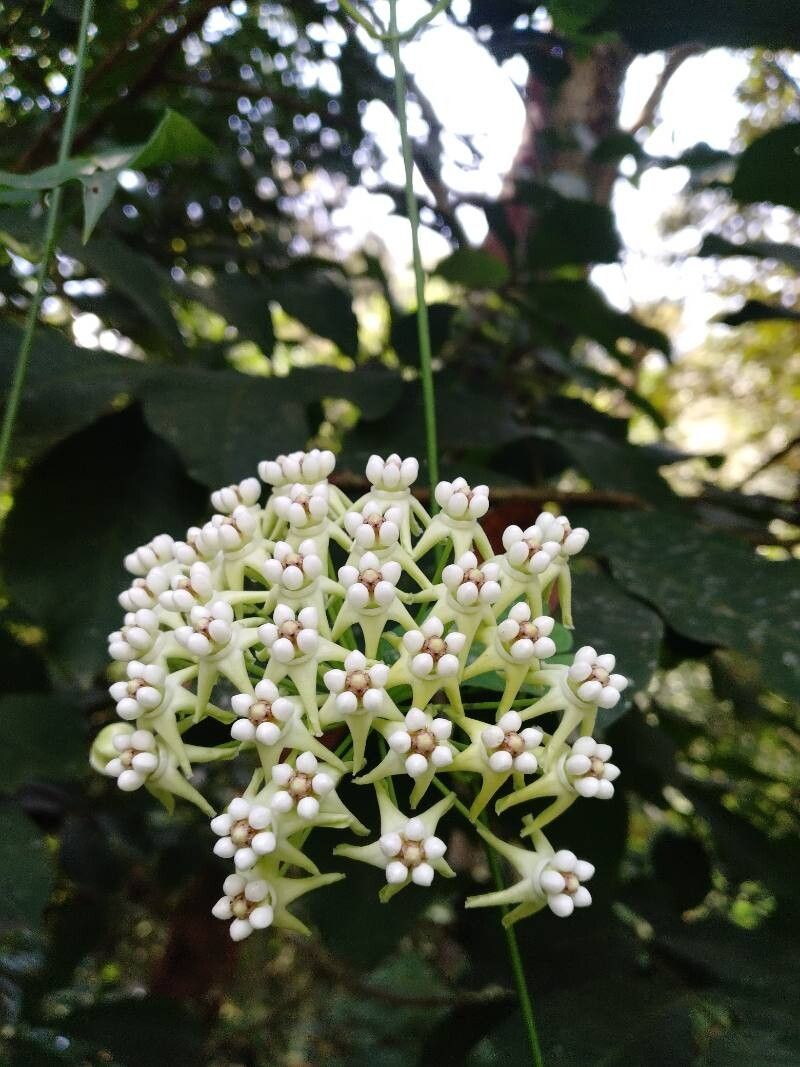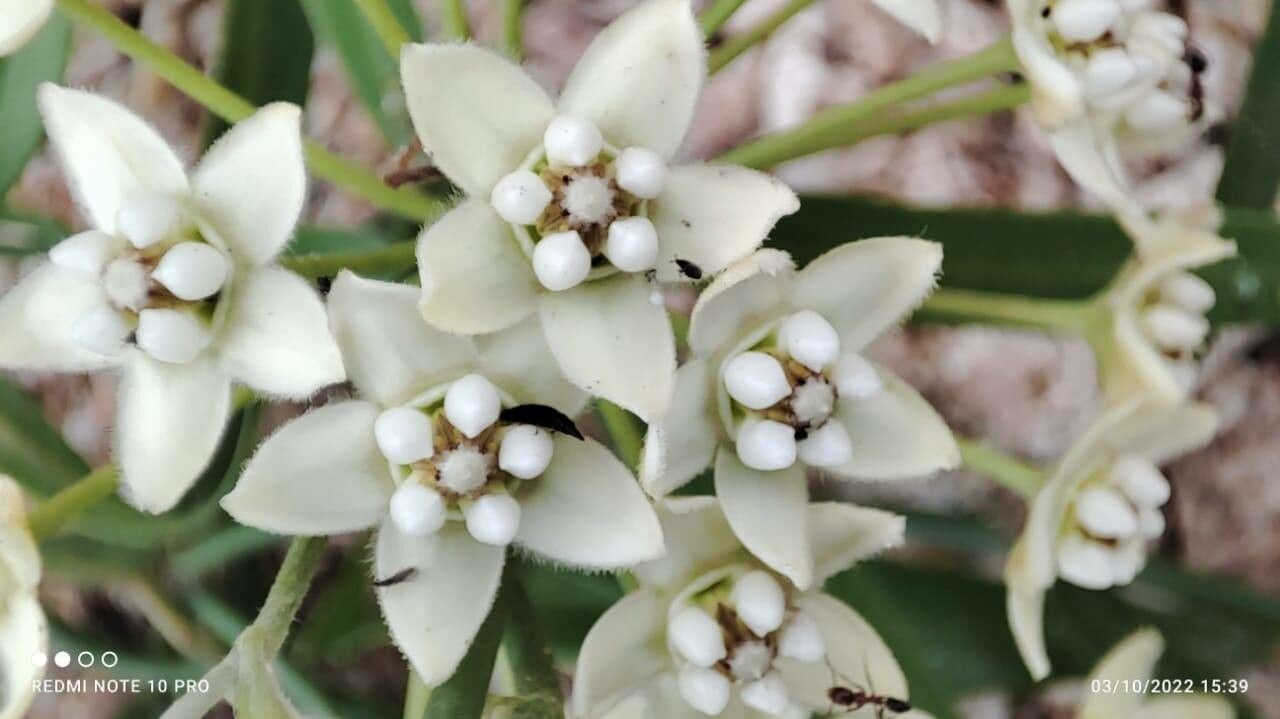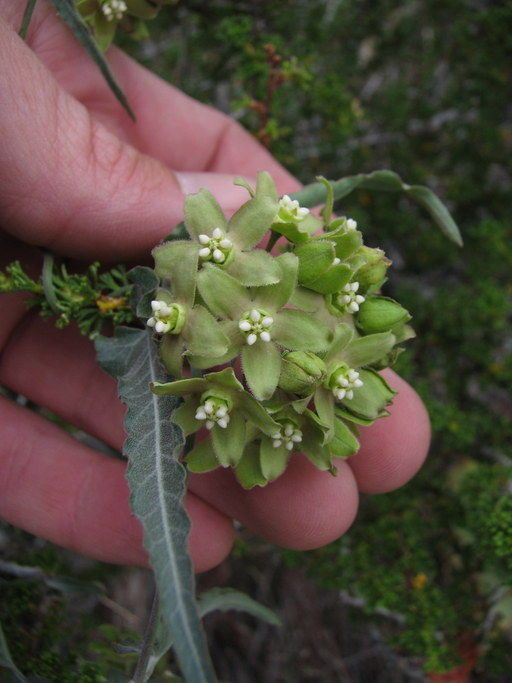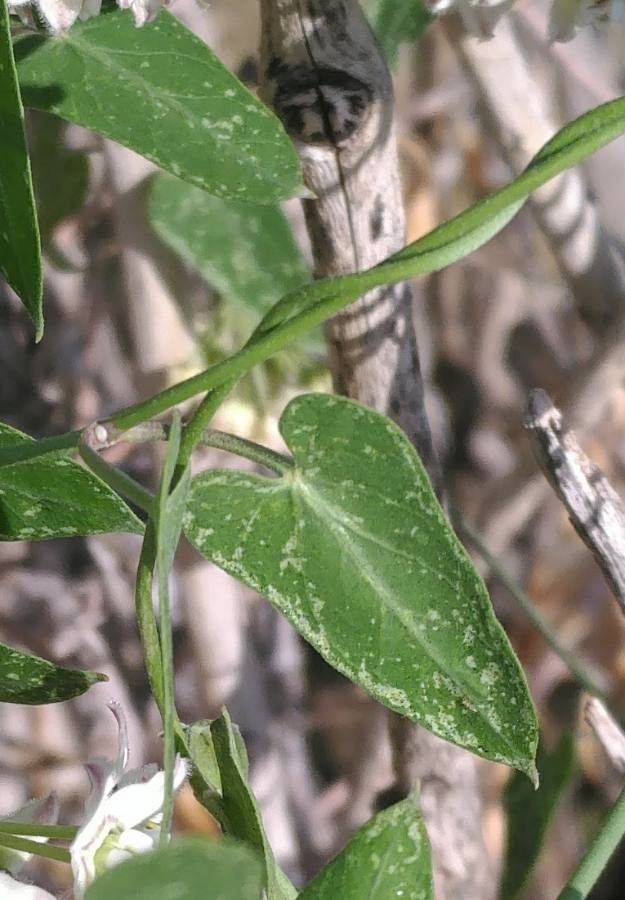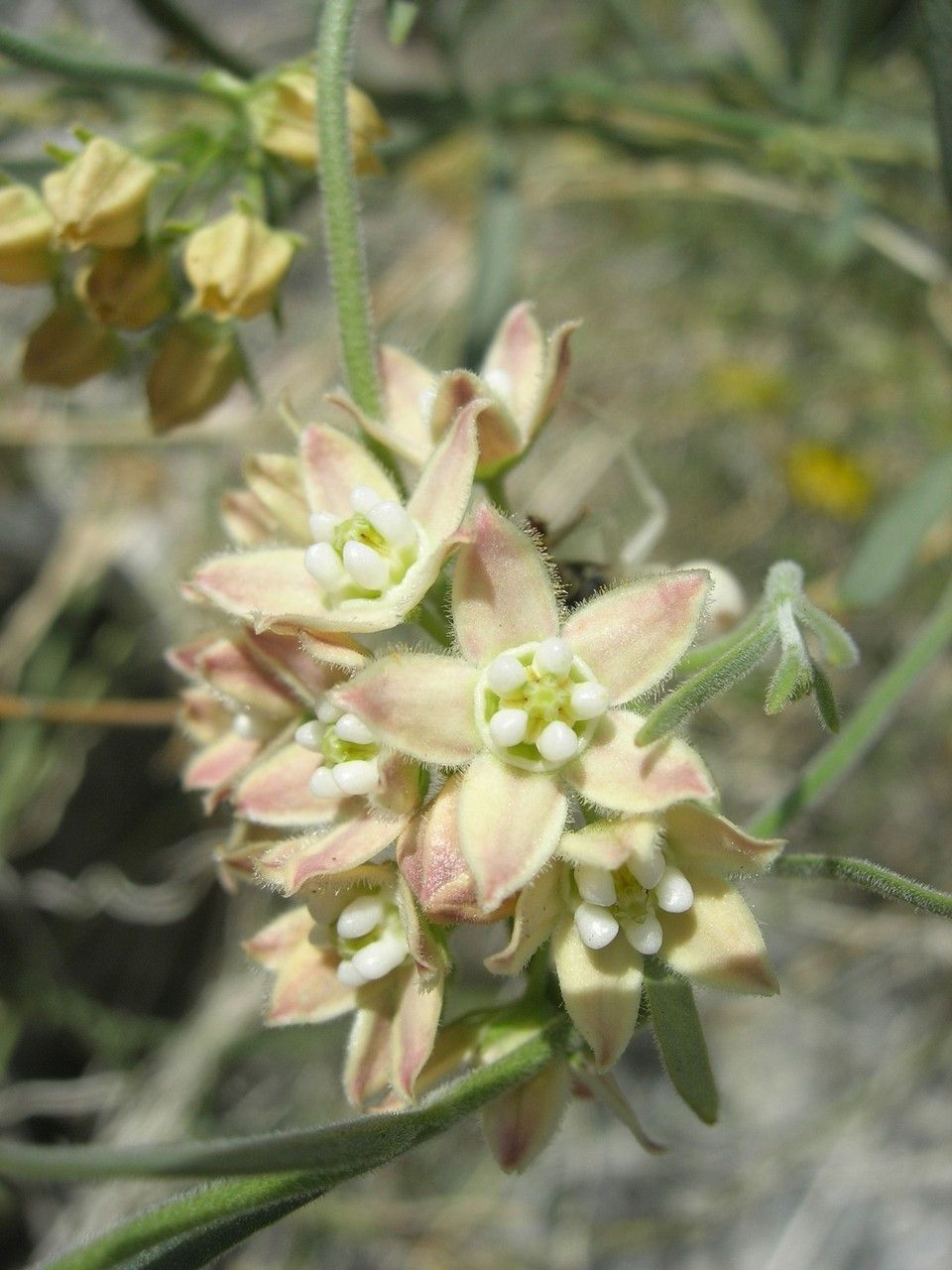
Sarcostemma hirtellum (Funastrum hirtellum) (rambling milkweed, hairy milkweed), is a perennial, vine-like plant of mid- to lower-elevation desert regions. It is a member of the family Asclepiadaceae and the genus Sarcostemma, the climbing milkweeds. It is found in the southwestern United States and northwestern Mexico — in southeastern California, southern Nevada, Arizona, Sonora, and Baja California. Hairy milkweed can be an aggressive, opportunistic species, capable of overtaking a suitable sprouting location and killing the plants it grows upon. If the supporting plants can compete successfully, all of the species continue. The green vines have few narrow leaves and are themselves photosynthetic. In early- and mid-spring, flower clusters occur in a circular or half-globe cluster of 7 to 13+ florets, with each floret about 3/8 of an inch. The flower clusters are sometimes profuse and therefore noticeable. When the dried seedpods remain months later, after the vines have desiccated, they are the plant identifier. Another indicator of the plant's presence is the inundation of the supporting species, or multiple species, by quantities of vines.
Hairy milkweed has strong resistance to disease and is generally unlikely to develop illnesses. However, it can be vulnerable to pests and diseases found in its surroundings. Such infections are typically not serious. Regarding care, the plant needs moderate maintenance. It should be pruned regularly to keep a good appearance and support healthy growth. Applying fertilizer can also encourage flowering. Hairy milkweed is well suited to anyone with outdoor space, like a garden or patio, and does not demand extensive care experience. When grown indoors, it may require more attention.
How to keep Funastrum Hirtellum.
Light
Hairy milkweed is a sun-loving, perennial herbaceous plant native to open habitats and commonly found in meadows and grasslands. It prefers full sun but can also tolerate partial sun conditions.
Temperature
Hairy milkweed comes from tropical areas, where the climate tends to be warm and humid. For that reason it is well suited to high temperatures and moisture. It is not fond of abrupt temperature changes and prefers a steady thermal environment, so avoiding temperature swings indoors is important. It generally does not tolerate cold and needs warmer conditions to thrive. If the ambient temperature falls too low, the plant may stop growing or even die.
Fertilizer
Hairy milkweed needs the most fertilizer during its active growth period, which is mainly in spring, summer, and early fall. Fertilization supplies essential nutrients that the soil may lack, supporting healthy root and stem growth and attractive foliage, which is an important characteristic of this plant.
Pruning
Hairy milkweed, characterized by its twining vines and soft, downy leaves, benefits greatly from pruning in early spring. The main techniques involve removing dead stems and shaping the plant to promote healthy growth. This practice improves air circulation, enhances flowering, and reduces the risk of disease, aligning perfectly with the plant's growth cycle for optimal development.
Botanical profile.
- Plant Type
- Vine, Herb
- Life Cycle
- Perennial
- Genus
- Funastrum
- Family
- Apocynaceae
- Hardiness Zone
- 9-11
- Mature Height
- 2.13 m to 3.96 m
- Mature Spread
- 0.91 m to 2.13 m
- Leaf Color
- Green, Dark Green
- Leaf Type
- Deciduous
- Flower Color
- White
- Flower Size
- 1.02 cm to 1.52 cm
- Bloom Time
- Summer, Early fall
- Planting Time
- Spring, Summer
- Harvest Time
- Fall
- Native Area
- Mexico