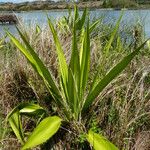
Furcraea foetida
Mauritius-hemp · Giant cabuya · Green-aloe · Giant false agave · Maguey
Description
Source: leafsnapFurcraea foetida, commonly known as Mauritius hemp or giant cabuya, is a succulent plant native to the Caribbean and Central America. It belongs to the Asparagaceae family and is closely related to agave plants. This plant features a rosette of long, sword-shaped leaves that can grow up to 6 feet long and 6 inches wide. The leaves are green or bluish-green, with sharp spines along the edges. When in bloom, Furcraea foetida can reach heights of up to 30 feet. The flowers are large and striking, with greenish-yellow petals that bloom on tall spikes in late spring or early summer. The plant also produces small bulbils on its flower stalks, which can be used for propagation. Furcraea foetida is often grown as an ornamental plant in gardens due to its attractive foliage and unique form. It prefers well-draining soil and full sun exposure, though it can also tolerate partial shade. The sap of Furcraea foetida has been used for medicinal purposes by indigenous people for centuries, thanks to its anti-inflammatory properties. Additionally, the plant has been used for fiber production, including making ropes, baskets, mats, and hats. Overall, Furcraea foetida is a fascinating succulent that adds a unique touch wherever it's planted, while also having practical uses throughout history.
🌳 Giant Cabuya leaves have long provided a useful material for building roofs, supplying shelter to various rural communities. The strong fibers extracted from the leaves are known for their durability and resistance to rot in wet conditions, making them effective for thatching. Beyond the practical uses, the cultural importance of employing naturally available resources highlights the symbiotic link between the plant and human ingenuity in sustainable living.
Care Guide
💧 Water Every 7 days
The giant Cabuya, native to arid regions, is highly drought-tolerant, needing water only once every three weeks. It thrives in dry landscapes due to its succulent-like qualities, which enable efficient water storage. This makes it perfect for dry climates and sandy soils.
How should I water my Giant Cabuya plant?
To properly water the Giant Cabuya plant, it is recommended to use filtered water at room temperature. This is because tap water may contain harmful particles. Additionally, it is important to avoid using cold water as it can shock the plant, which is accustomed to warm environments. Instead of overhead watering, which can lead to leaf problems, it is best to directly apply the filtered room temperature water to the soil until it is thoroughly soaked. This helps the roots stay moist and allows them to spread and gather necessary nutrients.
What do I do if I give my Giant Cabuya too much or too little water?
Overwatering is a common problem for Giant Cabuya plants and can cause wilting, yellowing, and potential diseases like root rot, mold, and mildew. Underwatering is less common but can cause brittle, brown leaves. It's important to notice signs of overwatering early and adjust watering schedules accordingly. If overwatering is detected, reduce watering and check the soil's drainage. Replace poorly draining soil with a loose, well-draining potting mix. If underwatering is suspected, increase watering until symptoms improve.
How often do I need to water my Giant Cabuya?
If your Giant Cabuya plant is in a pot, you can determine if it needs water by sticking your finger into the soil. If the top two to three inches of soil are dry, it's time to water it. If you're growing your Giant Cabuya outdoors in the ground, you can use the same method to test the soil. Once the top few inches of soil have dried out, it's time to water. Typically, during spring and early fall, you'll need to water this plant about once a week using this method. However, in extremely hot weather, you may need to increase watering to twice or more per week. It's worth mentioning that mature, well-established Giant Cabuya plants can handle drought quite well.
How much water should I give to my Giant Cabuya plant?
When watering your Giant Cabuya plant, don't hold back on the amount of water you give. Make sure the top two to three inches of soil are dry before watering thoroughly. The water should soak the soil completely and excess water should flow out from the drainage holes at the bottom of the pot. If you don't see excess water draining, it means you haven't watered enough. However, be careful not to let water accumulate in the soil as it can harm the plant. On the other hand, if water doesn't drain properly, it could mean that the soil doesn't have good drainage, which is bad for the plant's health. If the plant is outdoors, one inch of rain per week is sufficient.
How do I water my Giant Cabuya when it is growing at different stages?
The water requirements of the Giant Cabuya can vary depending on its growth stages. When the plant is young or has recently been transplanted, it requires more water than usual. During these stages, the Giant Cabuya focuses its energy on developing new roots, which in turn support future growth. These roots perform best when they receive slightly more moisture. As the plant matures, it will require less water. Additionally, during the blooming period, the Giant Cabuya may need extra water as the flower development requires a significant amount of moisture.
☀️ Light Full sun
Giant Cabuya strongly prefers exposure to large amounts of light during the day. It can, however, tolerate moderate lighting conditions. In its native habitat it prospers in abundant sunlight. Both excessive and insufficient light can impede the plant's health and growth.
What are the sunlight requirements for plants?
Plants have varying sunlight requirements to thrive. Full sun plants need above 6 hours of sunlight daily, while partial sun plants require about 3-6 hours of sunlight. It's important to observe how sunlight moves through your garden to select spots that offer a harmonious balance of light and shade, catering to the needs of your plants and ensuring their well-being.
How does Giant Cabuya respond to different lighting conditions?
Giant Cabuya, also known as Furcraea foetida, flourishes under substantial daylight but can also adapt to moderate illumination conditions. Naturally thriving in environments with plenty of sunlight, its health and growth can be negatively affected by both over and underexposure to light. Adequate lighting, whether natural or artificial, is crucial for its optimal growth.
How can artificial lighting benefit indoor plants?
Artificial lighting is crucial for indoor plants, especially when natural sunlight is insufficient, such as during winter or in less sunny spaces. It promotes faster, healthier growth by providing the necessary wavelengths of light. LED lights are a favorable option, and it's recommended to provide full sun plants with 30-50W/sq ft, partial sun plants with 20-30W/sq ft, and full shade plants with 10-20W/sq ft of artificial light. Proper placement and duration, mimicking natural daylight hours, are essential for achieving optimal indoor plant growth.
What are the symptoms of inadequate lighting for Giant Cabuya?
Giant Cabuya may exhibit several symptoms when exposed to inadequate lighting, including smaller new leaves, leggy or sparse growth, faster leaf drop, slower or halted growth, lighter-colored new leaves, chlorosis, sunscald, leaf curling, wilting, and leaf scorching. These symptoms indicate the plant's struggle to adapt to insufficient light by conserving resources or suffering from overexposure to intense sunlight.
What solutions are available for managing lighting conditions for Giant Cabuya?
To manage lighting conditions for Giant Cabuya, gradually increase sunlight exposure to at least 6 hours daily for indoor plants, using a south-facing window or artificial lights for plants that are not easily moved. Outdoor plants should also be gradually moved to sunnier locations to prevent sunburn, avoiding sudden changes in light intensity. Reducing obstructions like pruning trees can help, and for smaller plants, consider transplanting during the dormant period to a location with ample sunlight and good drainage for healthier growth.
🌡️ Temperature 15–37.8°C
Giant Cabuya is indigenous to mesothermic climates and prefers temperatures from 59 to 100.4 °F (15 to 38 ℃). Be sure to modify the temperature across seasons to replicate its native environment for optimal growth.
What is the native climate of Giant Cabuya, and what are its temperature preferences?
Giant Cabuya is indigenous to mesothermic climates and prefers a temperature range from 59 to 100.4 °F (15 to 38 °C). For optimal growth, it's essential to adjust the surrounding temperature across different seasons to replicate its native environment closely. Though Giant Cabuya possesses some degree of cold tolerance, it typically doesn't require extra cold protection measures when temperatures stay above -5°C. However, if the forecast suggests temperatures dipping below -5°C, it's crucial to implement temporary cold protection tactics, such as encasing the plant in plastic film, fabric, or similar materials, removing these coverings as soon as temperatures rise.
How does Giant Cabuya respond to low temperatures, and what measures can be taken to protect it?
Giant Cabuya has a moderate tolerance for low temperatures, thriving when the mercury stays above 15°C and needing protection below -5°C. Temperatures dropping below -10°C may cause the leaves to droop; while they might recover in mild instances, severe cold can lead to wilting and leaf loss. To protect Giant Cabuya in cold conditions, it's advisable to trim off frost-damaged parts and wrap the plant in non-woven fabric or cloth. Erecting a wind barrier might also help shield it from chilly winds, mitigating cold damage.
What should be done if Giant Cabuya experiences high temperatures?
During the summer months, it's crucial to ensure the temperature surrounding Giant Cabuya does not exceed 38°C. If temperatures surpass 43°C, you may notice the leaves lightening in color, drying and withering at the tips, curling, and becoming more prone to sunburn. To mitigate these issues, trim away any sunburned or dried-up parts of the plant. Relocating it to a spot with afternoon shade or employing a shade cloth can also protect against intense sun exposure. Ensuring the soil remains moist with morning and evening watering can further alleviate stress from high temperatures.
💨 Humidity normal (40-60%)
This plant will thrive in moderate humidity, which is probably the level in your home. However, misting it a few times a week can be very beneficial. Make sure the room has good ventilation.
🪴 Soil 6-7
🌱 Fertilizer
For Giant Cabuya, small amounts of fertilizer applied once or twice a year during the growing season are enough. Do not fertilize in winter or in summer when the plant is dormant. Use less fertilizer for plants that have been repotted, and wait a couple of months after repotting before you start fertilizing. Fertilizing helps maintain healthy growth and encourages flowering.
Why should I put fertilizer on my Giant Cabuya plant?
The Giant Cabuya relies heavily on its leaves for structure, and fertilization plays a crucial role in maintaining their appearance and functionality. By properly fertilizing, you can ensure consistent color and healthy texture in the leaves. Additionally, fertilization works beneath the soil's surface to promote the growth of new roots and maintain existing ones within the root system. This not only keeps the plant healthy at present but also enhances its ability to absorb nutrients from the soil in the future.
When should I fertilize my Giant Cabuya plant?
If you grow your Giant Cabuya outdoors each year, it will start growing new leaves in early spring. This is the signal to start fertilizing it. Generally, one application of fertilizer in spring is sufficient for the plant to thrive. However, if you want to maximize its growth, you can fertilize it multiple times during spring and early summer. In this case, you can feed it about once every month to a month and a half.
When is it a bad idea to put fertilizer on my Giant Cabuya?
During late fall and winter, your Giant Cabuya goes into a dormant phase and stops producing new growth. So, you should avoid fertilizing it during this time. In spring and summer, if you choose to fertilize, start decreasing the amount as summer approaches because the plant's growth rate will also slow down. It is never a good idea to fertilize your Giant Cabuya during extremely hot weather or when the soil is very dry. Fertilizing in these cases can stress the plant and cause it to die prematurely.
What kind of fertilizer should I use for my Giant Cabuya plant?
Choosing the best fertilizer for a Giant Cabuya is actually quite simple. These plants do well with a general-purpose garden fertilizer that has equal amounts of nitrogen, phosphorus, and potassium, like a 10-10-10 ratio. Avoid fertilizers with excessive nitrogen. The most effective fertilizers for a Giant Cabuya typically come in a granular form that is slow-release and easy to apply to the soil. Additionally, feeding your Giant Cabuya with organic soil amendments, such as compost, can be beneficial.
How do I give nutrients to my Giant Cabuya plant?
To ensure the success of your Giant Cabuya plant, wait until early spring when you start to see the first leaves emerge from the soil's surface. Once this happens, apply a granular slow-release fertilizer with a balanced formula to the soil around the base of your plant. You can repeat this process later in the season if you prefer. When reapplying the fertilizer, be sure to focus on the soil near the base of the plant rather than directly on the plant itself. You might need to gently move some leaves to access the soil above the roots. It's also beneficial to water your Giant Cabuya before and after fertilizing to support its growth.
🪴 Pot & Repot 2-3 years
The Giant Cabuya is a large succulent featuring rosette-shaped leaves. Re-pot every 2 to 3 years during the spring, using a slightly larger pot filled with a well-draining soil mix. After re-potting, water the plant sparingly and ensure it receives bright, indirect sunlight. This will help facilitate a smooth transition and promote healthy growth.
✂️ Pruning
The Giant Cabuya features a striking rosette shape with sword-like leaves. To maintain its health and appearance, prune in early spring by removing dead leaves and trimming any spent flowers after they bloom. Regularly removing suckers improves air circulation and overall plant health. Using sharp tools helps prevent the spread of disease. In general, pruning encourages new growth and keeps the plant looking neat.
🌿 Propagating
🐛 Diseases & pets
☠️ Toxicity
Characteristics
- Plant Type
- Herb, Shrub
- Life Cycle
- Perennial
- Genus
- Furcraea
- Family
- Asparagaceae
- Hardiness Zone
- 8-11
- Mature Height
- 91 cm
- Mature Spread
- 1.22 m to 1.83 m
- Leaf Color
- Green, Blue
- Leaf Type
- Evergreen
- Flower Color
- White
- Flower Size
- 4.06 cm to 5.08 cm
- Bloom Time
- Mid summer
- Planting Time
- Spring
- Harvest Time
- Mid summer, Late summer
- Native Area
- Colombia, Bolivia, Venezuela, Guyana, Suriname, Costa Rica, Panama, Trinidad and Tobago