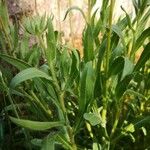
Gaillardia aristata
رعنا زیبا · Indian blanket flower · Gaillardia · Great blanket-flower · Blanket-flower
Description
Source: leafsnapGaillardia aristata, commonly known as blanket flower, is a perennial plant native to North America. Part of the Asteraceae family, this plant is celebrated for its vibrant and colorful blooms that appear from early summer until fall. Typically, the blanket flower grows up to 2 feet tall and spreads between 1 to 2 feet. Its leaves are lance-shaped with toothed edges, while its daisy-like flowers feature red or yellow petals with distinctive red or brown markings at their base. The blanket flower thrives in full sun and well-drained soil but can tolerate partial shade. It becomes drought-tolerant once established, though regular watering during prolonged dry spells is beneficial. Gaillardia aristata attracts pollinators such as bees, butterflies, and hummingbirds, making it an excellent addition to a pollinator-friendly garden. There are several cultivars available, each with unique color combinations. For example, 'Arizona Sun' boasts red petals tipped in yellow, while 'Goblin' features deep burgundy-red flowers. Gaillardia aristata is an excellent choice for garden borders, rock gardens, or wildflower meadows due to its extended blooming period and low maintenance requirements. Additionally, it makes a striking cut flower for floral arrangements, retaining its vibrant colors long after being cut from the plant.
🌳 Although admired mainly for its visual appeal, the common blanketflower also has practical uses. Indigenous American tribes made dyes from its blossoms and stems to recreate the plant’s vivid hues. A brew of its leaves was traditionally used as a remedy for digestion. In addition, the common blanketflower attracts bees, supporting pollinator gardens and aiding honey production.
🎭 Humility, charisma, contentment and delight
Care Guide
💧 Water Every 3 days
The common blanketflower, native to prairie regions, is known for its drought tolerance and ability to thrive in well-drained soils. To support optimal growth, water it weekly to mimic its natural rainfall conditions. Although typically grown outdoors, this plant benefits from the increased evaporation that helps manage moisture during its active growing season.
How should I water my Common blanketflower plant?
When watering the Common blanketflower, it is best to use filtered water at room temperature. Tap water can contain harmful particles for this plant, so filtered water is preferred. It is important to use room temperature or slightly warmer water because the Common blanketflower is accustomed to a warm environment and cold water can be a shock to its system. To avoid any problems with the foliage, it is recommended to avoid overhead watering. Instead, you should apply the filtered room temperature water directly to the soil until it is completely soaked. This will benefit the plant by moisturizing the roots and helping them spread through the soil to gather the necessary nutrients.
What should I do if I give my Common blanketflower too much or too little water?
Overwatering is a more common issue that can harm the health of your Common blanketflower. It can cause wilting, yellowing leaves, and potentially deadly diseases like root rot, mold, and mildew. Underwatering is less common but can also occur, leading to brittle, brown leaves. It's important to be attentive to signs of overwatering and take action promptly. Reduce watering immediately and consider replacing poorly draining soil. If your Common blanketflower shows signs of needing more water, simply increase your watering frequency until the signs improve.
How much water does my Common blanketflower need and how often?
If your Common blanketflower is in a pot, the most precise way to determine if it needs water is to check the moisture level of the soil by sticking your finger into it. If the top two to three inches of soil feel dry, it's time to water it. The same method can be used if you have your Common blanketflower planted in the ground outdoors. When the top few inches of soil are dry, it's time to give it some water. Generally, during the spring and early fall, you'll need to water this plant about once a week using this method. However, when it's extremely hot, you may need to increase the watering frequency to two or more times per week. Keep in mind that mature and well-established Common blanketflowers are very resistant to drought.
How much water does my blanketflower plant need?
To properly water your Common blanketflower, don't hold back on the amount of water you provide. Make sure the top two to three inches of soil are dry before giving it a good, thorough watering. It's important to completely soak the soil, so add enough water until you see excess water flowing out of the drainage holes at the bottom of your pot. If no excess water is draining, it means you haven't given enough water. On the other hand, be cautious of water accumulating in the soil, as this can be harmful to the plant. Also, if water doesn't drain properly from the pot, it may indicate that the soil doesn't drain well, which is not good for the plant's health. If the plant is located outdoors, about 1 inch of rain per week should be enough.
How should I water my Common blanketflower as it grows?
The water needs of the Common blanketflower can vary depending on its growth stages. In the first few years or after transplanting, it requires more water because it is focused on developing new roots to support future growth. During this time, the roots need extra moisture to perform well. However, as the plant matures, it will require less water. Another stage where it may need more water is during the bloom period, as flower development relies on a significant amount of moisture.
☀️ Light Full sun
Originating in sun-rich habitats, the common blanketflower grows best in places where sunlight is strong for most of the day. It can also tolerate situations with less dominant daytime light. However, too little light may stunt its growth or produce sparse flowering, while too much exposure can scorch the leaves.
What are the sunlight requirements for Common Blanketflower (Gaillardia aristata)?
Common Blanketflower thrives in environments with abundant sunlight, requiring more than 6 hours of sun exposure daily to flourish fully. It can adapt to partial sun, about 3-6 hours of sunlight, but insufficient exposure may lead to stunted growth or sparse blossoming, and too much direct sun can cause leaf scorch. Observing how sunlight moves through your garden will help in choosing locations that provide a balance of light and shade.
What are the essentials for growing Common Blanketflower successfully?
The key to successfully growing Common Blanketflower is ensuring it receives ample sunlight since it is derived from environments rich in sunlight. For indoor plants, where natural light is not adequate, especially during winter or in less sunny spaces, artificial lighting becomes essential. LEDs are recommended for their ability to be customized to specific plant needs. Full sun plants might need 30-50W/sq ft, partial sun 20-30W/sq ft, and full shade 10-20W/sq ft of artificial light. The proper distance (12-36 inches) and duration of light (8-12 hours per day) mimic natural sunlight conditions, promoting healthier growth.
What symptoms indicate insufficient or excessive sunlight for Common Blanketflower?
Common Blanketflower may show several symptoms in response to light deficiency or excess. Insufficient light can cause small leaves, leggy growth, faster leaf drop, slower or no new growth, and lighter-colored or chlorotic leaves. Excessive sunlight exposure might result in symptoms like sunscald (pale or necrotic areas on leaves), chlorosis (leaves turning yellow), leaf curling or wilting as defense mechanisms against water loss, and leaf scorching marked by brown, dry edges on leaves, which affects photosynthesis and plant health.
What solutions can address the lighting issues for Common Blanketflower?
To address lighting issues for Common Blanketflower, gradually increase sunlight exposure for outdoor plants by moving them to sunnier locations weekly to avoid sunburn. For indoor plants, move them to a south-facing window or use artificial lighting if the plant is large or hard to move, ensuring at least 8 hours of light daily. You can also reduce obstructions by pruning trees or transplanting to areas with better sunlight and drainage. Note that parts of the plant damaged by improper sunlight may not recover, but new growth will be healthy following these adjustments.
🌡️ Temperature 0–35°C
Common blanketflower, native to North America, thrives in temperatures from 32 to 95℉ (0 to 35 ℃). During hot summer conditions, placing it in a shaded spot and keeping the soil pH at 6.0 or higher will help it thrive. In the cooler fall temperatures, the stems should be cut back to 6 inches to encourage new growth in spring.
What is the native region of the common blanketflower?
The common blanketflower, scientifically known as Gaillardia aristata, is native to North America. It is well-adapted to a range of temperatures and conditions found within this region.
What are the optimal growing conditions for common blanketflower?
Common blanketflower thrives in temperatures ranging from 32 to 95°F (0 to 35°C). During the hot temperatures of summer, it benefits from a shaded location and soil with a pH of 6.0 or higher. In the cooler temperatures of fall, cutting back the stems to 6 inches promotes new growth in spring. Moreover, common blanketflower has strong cold resistance, often not requiring special frost protection measures. However, when winter temperatures are expected to drop below -35°C, providing cold protection with covering materials such as soil or straw is advisable. Before the first freeze in autumn, watering the plant abundantly to ensure the soil remains moist before entering a frozen state can be beneficial.
How does the common blanketflower react to low temperatures?
The common blanketflower demonstrates significant cold tolerance, flourishing best when temperatures remain above 0°C. Despite this tolerance, maintaining winter temperatures above -30°C is advised. If temperatures fall below -35°C, the plant might not show noticeable changes during the winter, but it might experience a decrease in sprouting or fail to sprout at all in the spring. The recommended solution for plants that have failed to sprout due to low temperatures is to remove the non-sprouting parts in spring.
How should common blanketflower be cared for in high temperatures?
In summer, it is crucial to keep the common blanketflower's environment below 35°C to avoid stress from high temperatures. Exceeding 38°C can cause the leaves to lighten in color, curl, become susceptible to sunburn, and in severe cases, lead to the entire plant wilting and drying. To mitigate these effects, it's advised to trim away sunburned and dried parts, relocate the plant to a shaded area during the midday and afternoon sun, or use a shade cloth for protection. Additionally, watering the plant in the morning and evening helps to keep the soil moist and reduces temperature stress.
💨 Humidity
🪴 Soil 6-7
🌱 Fertilizer
Early spring, when the Common blanketflower is coming out of dormancy and starting active growth, is the best time to fertilize. Fertilization supplies essential nutrients for healthy development. Although the Common blanketflower has relatively low fertilizer requirements, applying fertilizer annually can improve its survival and encourage better, longer-lasting blooms.
Why should I add fertilizer to my Common blanketflower?
Fertilization plays a vital role in the well-being of the Common blanketflower and other plants. By providing essential nutrients, fertilization promotes growth both above and below the ground. Although the Common blanketflower has relatively low fertilization needs and can sometimes survive without it, annual fertilization can be highly advantageous. It not only keeps the plant alive but also enhances the quality and longevity of its flowers. Therefore, those who want their Common blanketflower to flourish should prioritize regular fertilization.
When should I put fertilizer on my Common blanketflower for the best results?
The best time to fertilize a Common blanketflower is in the late winter to early spring. This is when the plant is coming out of its dormant phase and starting to grow. Fertilizing during this time will promote healthy growth for the upcoming season. Although it is generally recommended to fertilize in the early spring, it is also acceptable to fertilize in the fall. However, it is not advisable to feed the plant during summer or winter.
When is the best time to not fertilize my Common blanketflower?
To ensure the health of your Common blanketflower, it is best to only fertilize it during late winter and early spring. This plant has low fertilization requirements and only needs one feeding per year. Fertilizing during spring, summer, and fall can easily lead to overfertilization and its associated issues. However, if you missed fertilizing in spring, it is acceptable to feed the plant during fall. Additionally, there is no need to fertilize this plant during winter as it enters a dormant phase where it does not produce new growth. Therefore, it is not recommended to fertilize during most of the winter.
What kind of fertilizer does my Common blanketflower need?
For a Common blanketflower, any general-purpose fertilizer with a balanced amount of the main plant nutrients will work well. However, there are specific nutrient blends that can be even more beneficial. Many gardeners believe that higher levels of phosphorus promote stronger roots and better flowers. Since Common blanketflower is a flowering plant, using a phosphorus-rich fertilizer may be the best option. Whether in granular or liquid form, it is important to ensure that the fertilizer contains plenty of nutrients. Additionally, organic methods such as compost, manure, and similar materials can greatly improve the soil for your Common blanketflower.
How should I apply fertilizer to my Common blanketflower?
To fertilize a Common blanketflower, the most common method is to use granular or pellet fertilizer around the plant's soil. Make sure to fertilize when the plant is transitioning from its winter dormant phase to active growth. In early spring, wait for shoots to emerge from the soil before applying the fertilizer. Alternatively, you can use liquid fertilizer, which should be diluted with water before application. Regardless of the type of fertilizer used, it's important to moisten the soil before, during, and after fertilization.
🪴 Pot & Repot 2-3 years
When repotting Common blanketflower, select a pot 1-2 inches (2.5–5.1 cm) larger with ample drainage. Use a well-draining potting mix. Repot in spring or fall, ensuring the root ball is slightly lower than the rim of the flower pot. Water thoroughly after repotting and place in a warm spot with indirect sunlight.
✂️ Pruning
The common blanketflower is known for its vibrant blooms and thrives with proper pruning from early to late spring. To encourage bushier growth and improve airflow, remove spent blooms by deadheading and trim the stems back by one-third. Additionally, remove any dead or damaged stems to promote overall plant health. Pruning during the active growth period increases the plant's vigor.
🌿 Propagating
🐛 Diseases & pets
☠️ Toxicity
Characteristics
- Plant Type
- Herb
- Life Cycle
- Perennial
- Genus
- Gaillardia
- Family
- Asteraceae
- Hardiness Zone
- 3-9
- Mature Height
- 20 cm to 61 cm
- Mature Spread
- 61 cm
- Leaf Color
- Green
- Leaf Type
- Deciduous
- Flower Color
- Red, Yellow, Orange
- Flower Size
- 5.08 cm to 6.35 cm
- Bloom Time
- Early summer, Mid summer
- Planting Time
- Spring
- Harvest Time
- Mid summer, Late summer
- Native Area
- Cultivated hybrid; parents are native North American wildflowers