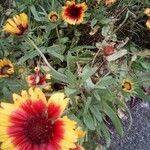
Gaillardia pulchella
رعنا زیبا · Indian blanket · Sundance · Rose-ring blanket-flower · Rose-ring gaillardia
Description
Source: leafsnapGaillardia pulchella, commonly known as Indian blanket or firewheel, is a vibrant flowering plant in the sunflower family. Native to North and South America, it thrives in various habitats, including prairies, meadows, and roadsides. Typically, the plant reaches about 1 to 2 feet in height and showcases bright red or yellow daisy-like flowers that bloom from late spring to early fall. These eye-catching flowers attract pollinators such as bees and butterflies. Gaillardia pulchella is easy to grow from seed, making it ideal for wildflower gardens or as a colorful addition to borders and containers. It prefers full sun but can tolerate some shade and requires well-draining soil with moderate moisture levels. Overall, Gaillardia pulchella is a stunning addition to any garden, providing vibrant color throughout the growing season while supporting pollinators in the ecosystem.
💡 Indian blanket is a vibrant annual wildflower that thrives naturally in hot, dry areas. It creates dense blankets of vividly colored flowers, attracting hummingbirds and butterflies. Additionally, the seed heads of the Indian blanket provide food for goldfinches. To cultivate Indian blanket, sow the seeds directly into the soil after the risk of frost has passed, or start the seeds indoors four to six weeks before the last expected frost date.
🌳 Indian blanket is not only an attractive feature in gardens but also a source of natural dyes. Its petals yield eco-friendly red, yellow, and orange dyes for textiles, which are useful to craftspeople and sustainable fashion brands. This hardy plant not only enhances spaces but also provides an important nectar source for bees and butterflies, making it an ornamental yet functional nectar hub that can be beneficial for insect sustenance in harsh climates.
🎭 Future success, humility, charisma, happiness
Care Guide
💧 Water Every 3 days
Indian blanket is well-suited to dry, prairie-like conditions and requires only moderate watering, about twice a week. Its resilience makes it an excellent choice for outdoor cultivation, where it can benefit from natural rain cycles. This low-maintenance plant produces vibrant blooms, making it an attractive option for gardeners who want something beautiful yet hardy.
When Should I Water My Indian Blanket?
Watering an Indian blanket, scientifically named Gaillardia pulchella, should be based on several indicators that signal when the plant needs water. These include soil dryness—when the top 1 to 2 inches of soil feels dry, leaf condition—wilting, faded, or yellowing leaves, and the plant's growth stages, particularly during the pre-flowering stage. The need for water increases with higher temperatures and more sunlight exposure. However, be cautious of over-watering, especially when the soil is still moist, to avoid root rot and under-watering which can lead to wilting and potentially stunt the plant's growth. Properly managing water supply is essential for the plant's health, encouraging optimal growth, vibrant flower production, and resistance to diseases.
How Should I Water My Indian Blanket?
Watering your Indian blanket effectively involves striking a balance that supports its need for moisture while avoiding over-saturation, as the plant is drought-tolerant. The traditional method of watering from above using a soft stream, mimicking rainfall, is recommended. This technique should be done until the first drops appear at the bottom of the pot, ensuring deep water penetration to the roots. Use a watering can with a long, narrow spout for targeted watering at the plant base, minimizing moisture on the foliage, which should remain dry. If foliage needs cleaning, use a soft brush instead of water spray to prevent mildew. Always avoid creating water puddles around the plant to reduce the risk of fungal diseases.
How Much Water Does Indian Blanket Really Need?
The water requirement for an Indian blanket depends on several factors, including pot size, root depth, and the size of the plant itself. Generally, a plant in a 10-inch diameter pot might need about 1 liter of water, ensuring it reaches the root level well without causing water-logging. The soil should slightly dry out between watering sessions, and the soil's color will darken when moist. Signs of correct watering include the top layer of the soil feeling slightly dry to the touch. Over-watering and under-watering both have adverse effects on the plant, including risks of root rot, pest infestation, wilting, or reduced blooming.
What Kind of Water is Best for Indian Blanket?
For an Indian blanket, the best water to use is distilled water, as it is free of minerals and contaminants that could harm the plant. Rainwater is a good alternative, provided it's collected cleanly. Filtered water can be used if necessary to remove harmful elements, while tap water should be treated to eliminate chlorine and fluoride due to the plant's sensitivity. Letting tap water sit out for 24 hours before use helps evaporate chlorine, and employing a carbon or reverse osmosis filter can further purify the water. Room temperature water, around 68-72°F (20-22°C), is ideal to avoid shocking the plant's system.
How Do Indian Blanket's Watering Needs Change with the Seasons?
The watering needs of Indian blanket vary across seasons, reflecting its growth and dormancy periods. In spring, with the onset of active growth, ensure the soil is consistently moist using gentle watering tools. Summer demands more frequent watering due to increased heat and the plant's flowering phase. In autumn, as the plant prepares for dormancy, reduce watering since lower temperatures and diminished sunlight slow soil moisture evaporation. During winter, water sparingly, maintaining minimal moisture to prevent the soil from completely drying out, and consider mulching to protect the root zone.
☀️ Light Full sun
Indian blanket prospers in plentiful sunlight, especially in places where sunlight is unobstructed during the day. Areas with gently dappled shade can also support strong growth. However, a marked reduction in sunlight can undermine the plant’s health and vigor. Excessive sun or insufficient sun can cause poor flowering and stressed foliage, respectively.
What are the sunlight requirements for Indian blanket?
Indian blanket thrives in environments with abundant sunshine, needing above 6 hours of sunlight for full sun conditions and about 3-6 hours for partial sun conditions. It's important to monitor the movement of sunlight through your garden to place your plants in spots that offer a balanced light exposure. An area with light-dappled shade can also support the impressive growth of Indian blanket, but both overexposure and under-exposure to sunlight can lead to poor blooms and stressed foliage, respectively.
How does artificial lighting benefit Indian blanket indoors?
When natural sunlight is insufficient, especially during winter or in less sunny indoor spaces, artificial lighting becomes crucial for the growth of Indian blanket. Adequate artificial lighting can promote faster and healthier growth. LED lights are recommended for indoor plant lighting as they can be tailored to provide specific wavelengths necessary for the plant. The required intensity varies with the type of exposure needed: 30-50W/sq ft for full sun plants, 20-30W/sq ft for partial sun, and 10-20W/sq ft for full shade plants. Placement of the light source should be 12-36 inches above the plant, mimicking natural sunlight conditions for 8-12 hours per day.
What are the symptoms of light deficiency in Indian blanket?
Indian blanket may show various symptoms when it experiences inadequate light conditions. These include smaller new leaves, leggy or sparse growth due to longer spaces between leaves or stems, faster leaf drop as a means to conserve resources, slower or halted new growth, and lighter-colored leaves indicating insufficient chlorophyll. Excessive sunlight can also lead to chlorosis (loss of green leaf color), sunscald (damage from intense sunlight), leaf curling as a defense mechanism, wilting due to increased water loss, and leaf scorching characterized by brown, dry edges on leaves.
What solutions are available for Indian blanket facing insufficient sunlight?
To address insufficient sunlight for Indian blanket, gradually increase the plant's exposure to sunlight by moving it to a sunnier location each week until it receives at least 6 hours of direct sunlight daily. For indoor plants, particularly large or immovable ones, consider supplementing with artificial light, keeping a desk or ceiling lamp on for at least 8 hours daily or investing in professional plant grow lights. When addressing outdoor plants, move them gradually to avoid sunburn. Removing obstructions like overhanging branches can also improve sunlight access. For smaller plants that can be moved, consider transplanting during their dormant period to a location with better sunlight exposure and drainage.
🌡️ Temperature 15–37.8°C
Indian blanket is native to environments with temperatures ranging from 68 to 100 degrees Fahrenheit (20 to 38 degrees Celsius). It prefers warm conditions and can tolerate mild seasonal fluctuations. Adjust care proactively if temperatures drop below or rise above this range.
What is the ideal temperature range for Indian blanket to thrive?
The Indian blanket, scientifically known as Gaillardia pulchella, thrives best in environments where temperatures range between 68 to 100 degrees Fahrenheit (20 to 38 degrees Celsius). It is well-suited to warm temperatures and capable of adapting to mild seasonal fluctuations. Care adjustments are recommended when temperatures fall outside this ideal range.
Does Indian blanket require special frost protection measures during winter?
Indian blanket has a strong resistance to cold, which usually negates the need for special frost protection measures during winter. However, in instances where winter temperatures are anticipated to fall below -15°C, it's important to provide additional cold protection to the plant. This can be accomplished by covering the plant with insulating materials such as soil or straw. It is also beneficial to water the plant abundantly before the first freeze of autumn to ensure the soil remains moist and enters a frozen state, which helps prevent drought and water scarcity during the colder months.
How does Indian blanket respond to temperatures below -15°C?
When temperatures drop below -15°C, Indian blanket remains cold-tolerant with no noticeable changes during the winter. However, such low temperatures can lead to a decrease in sprouting or a complete lack of sprouting come springtime. The recommended solution in spring is to remove any parts of the plant that have failed to sprout, promoting healthier growth for the surviving sections.
What should be done if Indian blanket is exposed to temperatures above 43°C?
Exposure to temperatures exceeding 43°C can cause harm to the Indian blanket, leading to symptoms such as lighter leaf color, curling, susceptibility to sunburn, and in severe cases, wilting and drying of the entire plant. To mitigate these effects, it is advised to trim away sunburned and dried-up parts of the plant, move it to a shaded location away from the midday and afternoon sun, or utilize a shade cloth for protection. Additionally, watering the plant in the morning and evening to maintain soil moisture is crucial under such conditions.
💨 Humidity normal (40-60%)
This plant will thrive in moderate humidity, which is probably the level in your home. However, misting it a few times a week can be very beneficial. Make sure the room has good ventilation.
🪴 Soil 5-7
🌱 Fertilizer
Once most of the Indian blanket's blooms have opened to full size, resume fertilizing. When the blooms are at peak production, apply fertilizer every three to four weeks, weather permitting. Then, when the Indian blanket begins to produce fewer new blooms, stop fertilizing; there's no need to feed the plant when it can no longer produce additional blooms.
Why should I put fertilizer on my Indian blanket plant?
Plants, including Indian blanket, require nutrients to survive. This is common knowledge among gardeners, regardless of their level of experience. However, without proper nourishment, Indian blanket will die out shortly after the initial pollination. To ensure the plant thrives throughout the blooming season and produces large, beautiful flowers, it is essential to provide the correct type and amount of nutrients. Fertilizer is especially beneficial as it aids Indian blanket in developing a robust and healthy root system. Given that this plant has a delicate and thin root system prone to damage, fertilizing at planting helps establish a strong foundation, providing stability and setting the stage for an impressive flowering performance. Proper timing of fertilization also has the potential to significantly prolong Indian blanket's blooming period.
When should I fertilize my Indian blanket plant?
Indian blanket experiences significant growth early in the growing season, once the risk of frost has passed. It is crucial to fertilize Indian blanket during this time, specifically during planting. The fertilization should occur when the plant is initially placed in the ground or in planters, regardless of your chosen planting method. This dose of fertilizer will be the only one until later in the year when the blooms are in full swing. Once the season is in full swing and the majority of Indian blanket blooms have reached full size, it is time to resume fertilization. When the blooms are at their peak output, start fertilizing every three to four weeks, dependent on the weather. However, once Indian blanket begins producing fewer new blooms, it is not necessary to continue fertilizing as the plant is no longer capable of producing more blooms.
When should I not put fertilizer on my Indian blanket?
Regular fertilizing is important for Indian blanket plants, but it's crucial to apply it at the right time. In some situations, it's necessary to hold back on fertilizer application. These situations are often related to climate, but controllable factors also play a role. When there are issues with the plant, the soil, or the climate, it's best to wait until these problems are resolved and the plant has recovered before applying fertilizer. For instance, severe or unexpected weather changes are indicators that it's not a good time to fertilize. If a sudden cold snap occurs during the summer, it's better to wait for warmer temperatures before resuming fertilization. The same applies if the soil becomes too dry or compacted to absorb any fertilizer effectively. In such cases, applying fertilizer would result in the roots receiving it directly, which isn't beneficial for Indian blanket plants. Additionally, it's important to avoid fertilizing when temperatures are excessively hot, particularly during the hottest parts of the day when temperatures reach into the 90-degree Fahrenheit range. Since fertilizer breaks down at different speeds depending on temperature, it's necessary to prevent it from breaking down too quickly in hot conditions. Furthermore, it's advisable to address any pest or disease issues and resolve them before reapplying fertilizer.
What kind of fertilizer does my Indian blanket plant need?
Indian blanket plants require a specific balance of nutrients for optimal growth. It is recommended to use a fertilizer formulated for high-yield blooming plants, which typically contains a higher level of phosphorus. Look for a fertilizer with a higher P number in its NPK ratio, such as 10-30-10. Many fertilizer brands offer options suitable for blooming plants like Indian blanket, making it convenient to provide the necessary nutrients. If using a pre-mixed fertilizer, be sure to follow the instructions to avoid over- or under-fertilizing, which can negatively impact the plant's growth.
How do I make my Indian blanket grow better?
Applying fertilizer to Indian blanket plants may vary depending on the type of fertilizer you have. However, there are general tips to follow. When you first plant Indian blanket, mix the recommended amount of fertilizer into the soil before planting and water it in. For subsequent fertilizing, the process may differ. If you have pellet fertilizers, mix them into the top inch of soil around the outer edge of the plant's roots and water them in well initially, then water regularly thereafter. Other fertilizers can be mixed into a watering can and applied like regular watering. Follow the instructions on the fertilizer packaging, but if you prefer a regular schedule, aim for fertilizing every three to four weeks.
🪴 Pot & Repot Every 12 months
When repotting Indian blanket, choose a pot that's 1-2 inches (2.5–5.1 cm) larger in diameter, ensuring it has good drainage. Use a well-draining potting mix and consider adding perlite for extra drainage. Repot in spring or early summer, then water thoroughly and place it in a shady location at first.
✂️ Pruning
Indian blanket is a perennial plant known for its vibrant, bi-colored blooms. To encourage bushier growth, prune it from early to late spring and regularly pinch back the spent flowers for continuous blooming. Be careful not to remove too much foliage, as this helps the plant maintain its energy reserves. Pruning also improves air circulation, reducing pest problems and promoting overall health.
🌿 Propagating
🐛 Diseases & pets
☠️ Toxicity
Characteristics
- Plant Type
- Herb
- Life Cycle
- Annual, Biennial
- Genus
- Gaillardia
- Family
- Asteraceae
- Hardiness Zone
- 7-11
- Mature Height
- 20 cm to 61 cm
- Mature Spread
- 15 cm to 30 cm
- Leaf Color
- Green, Silver, Gray
- Leaf Type
- Deciduous
- Flower Color
- Yellow, Purple, Red, Orange, Pink, Blue, Brown
- Flower Size
- 4.06 cm to 6.35 cm
- Bloom Time
- Late spring, Summer
- Planting Time
- Spring
- Harvest Time
- Summer, Early fall
- Native Area
- Honduras, Mexico, Guatemala, El Salvador, Nicaragua