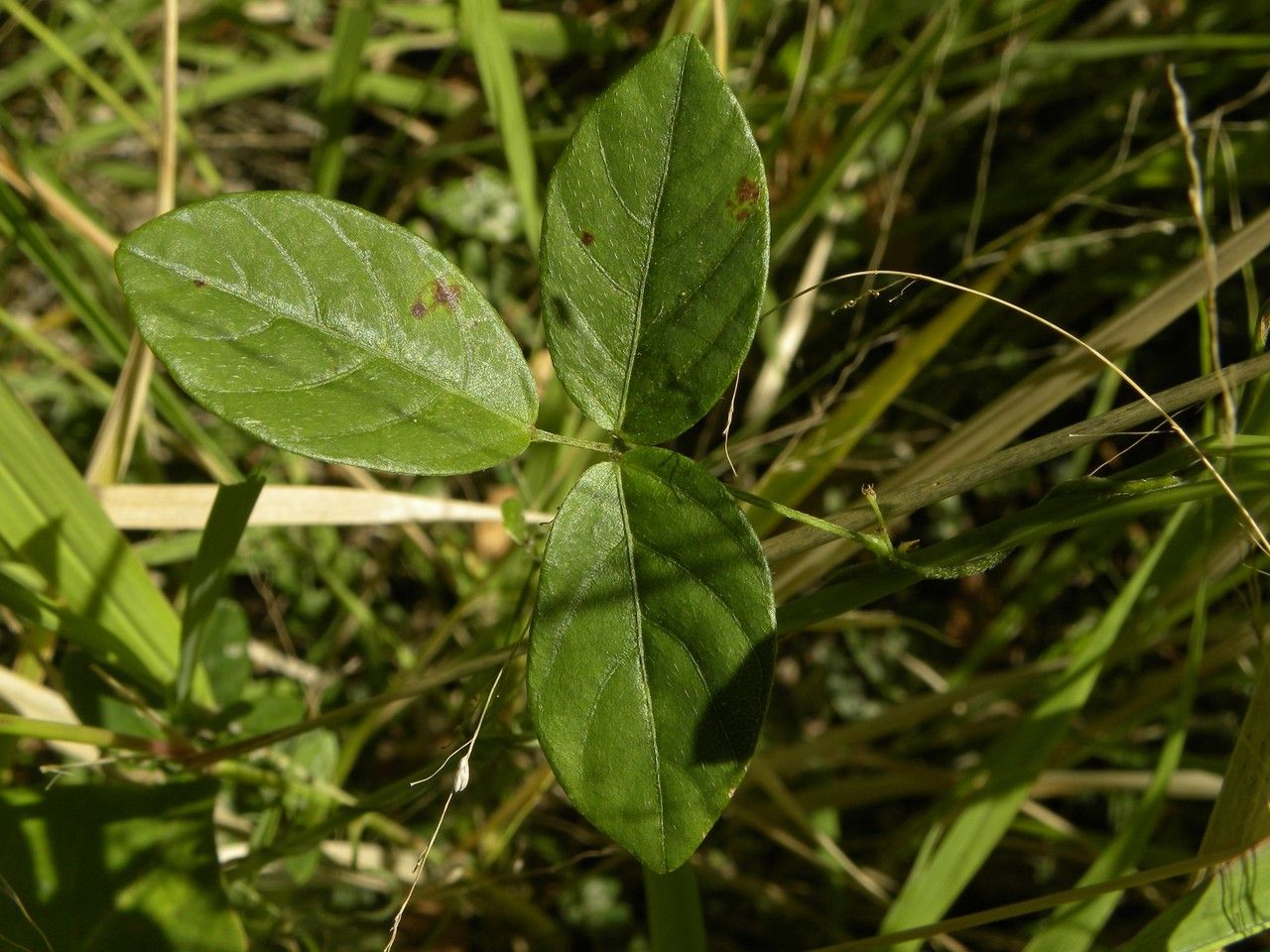
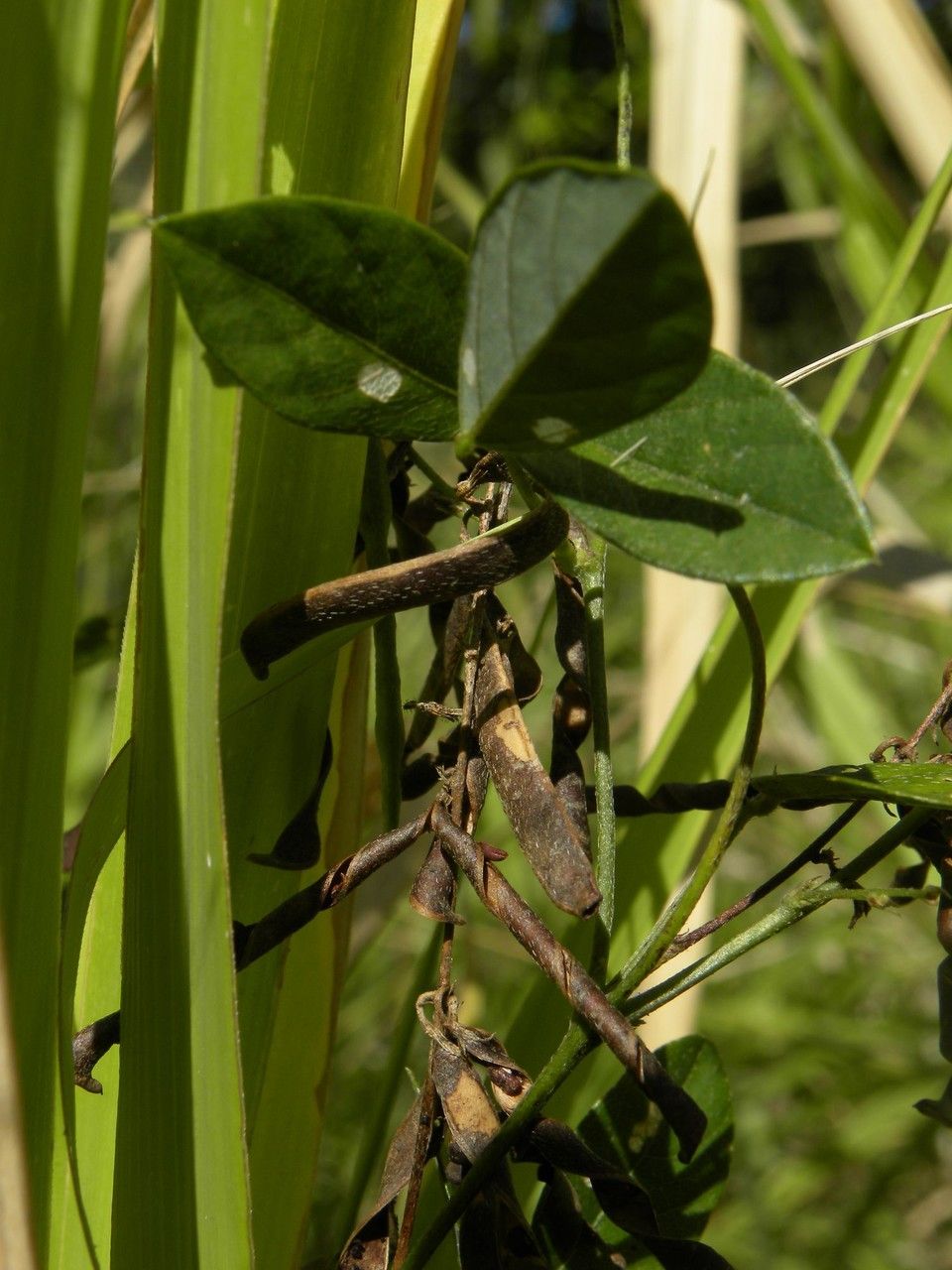
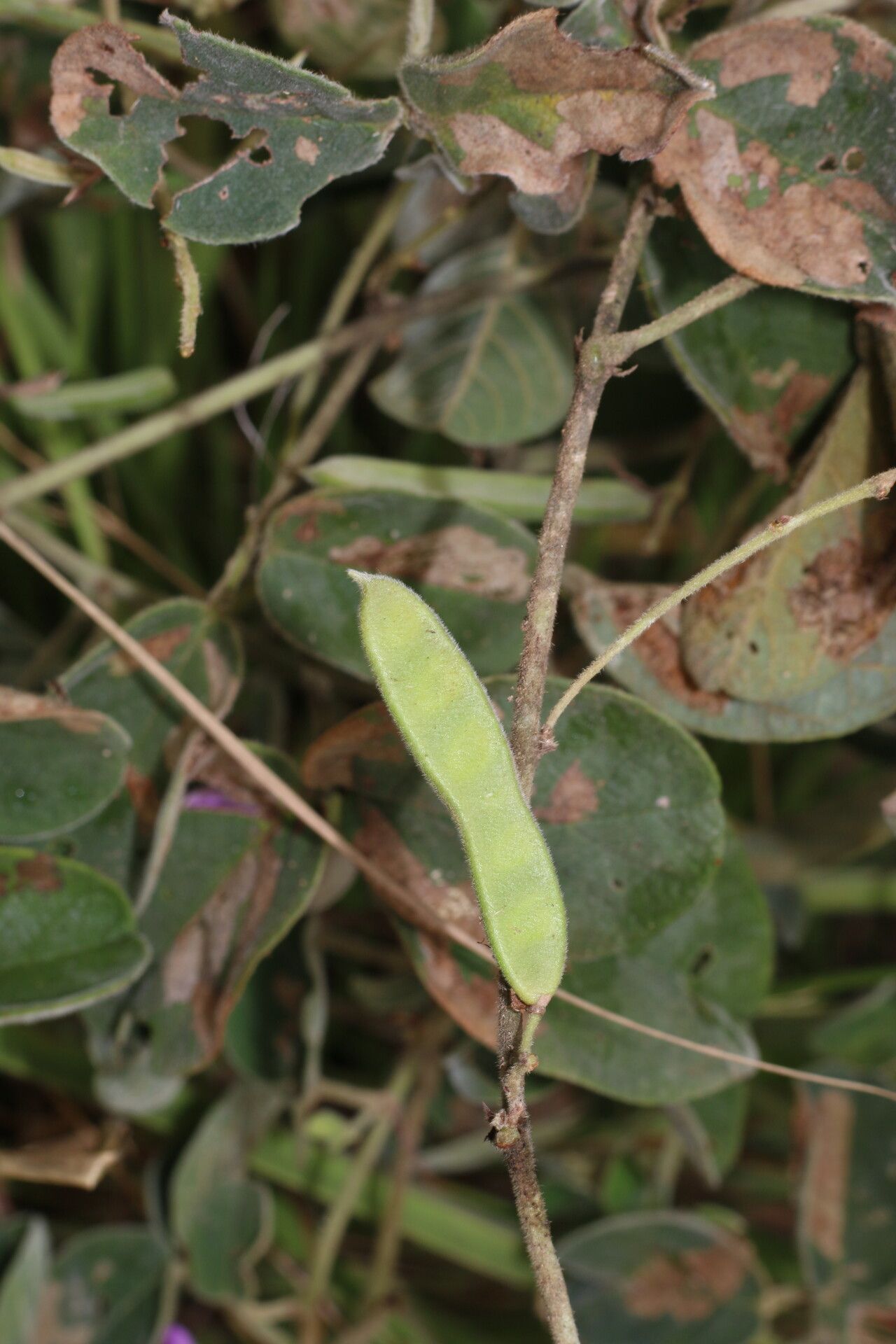
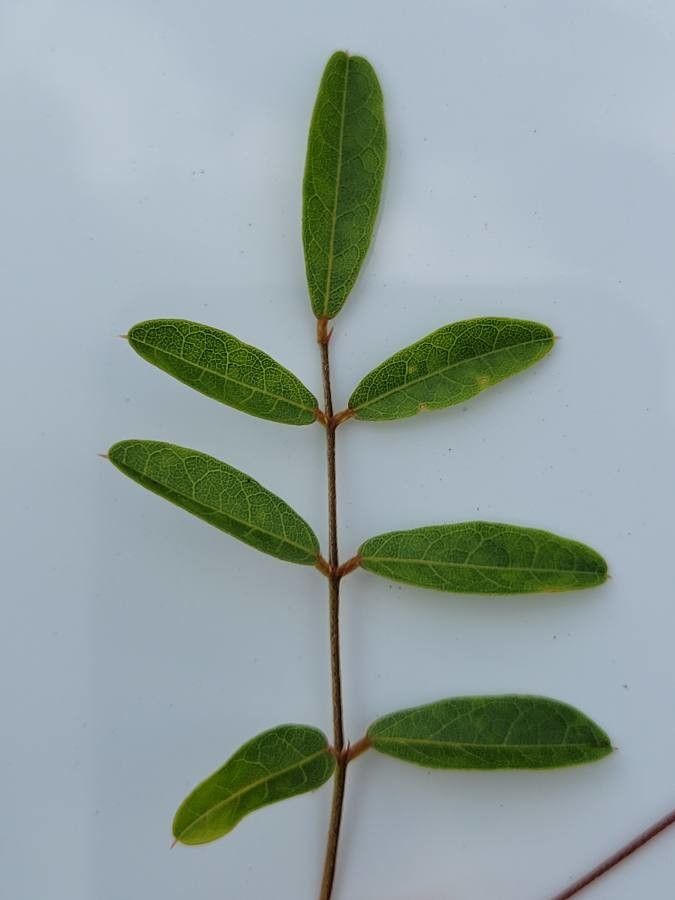
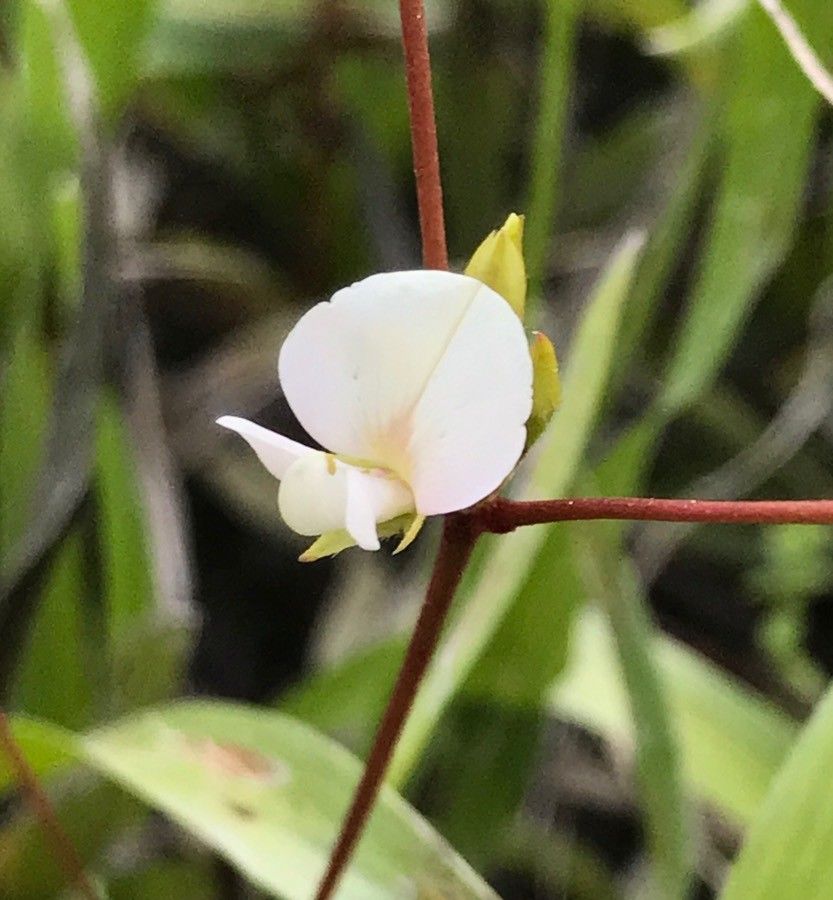
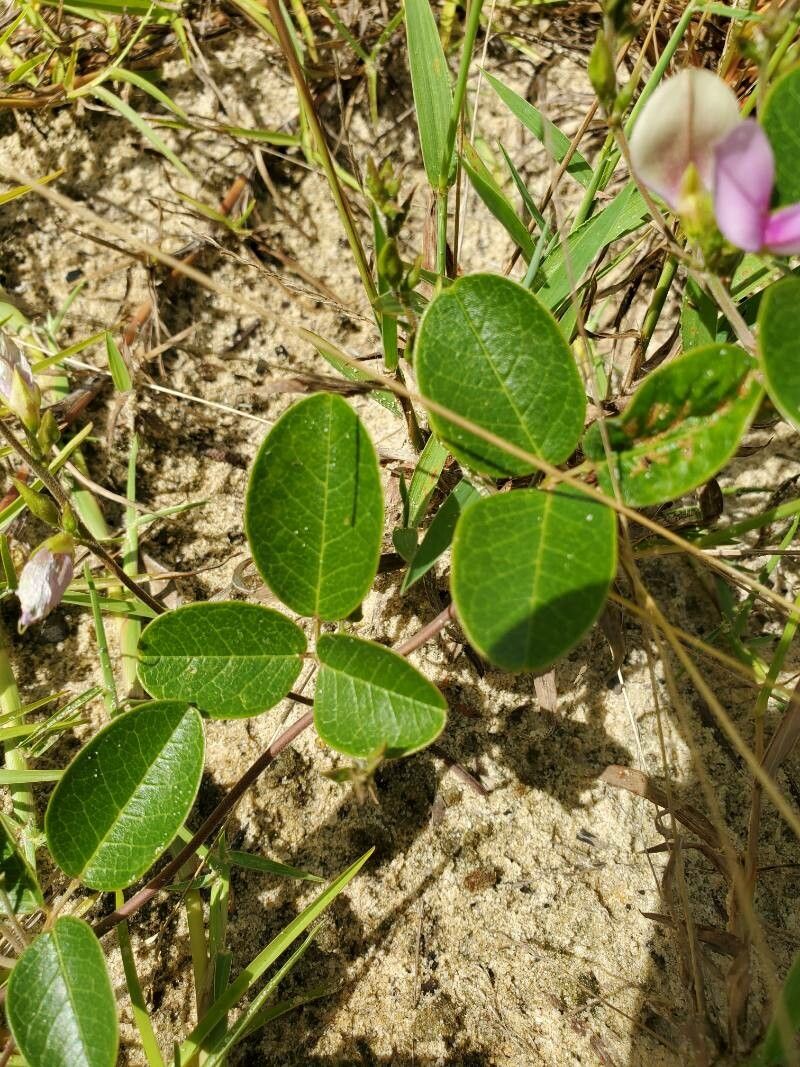
Galactia tenuiflora is a twining or trailing vine belonging to the family Fabaceae. This pantropical species is found in northern Australia between the Kimberley region and North Queensland. It is found in a variety of habitats but prefers Eucalypt woodland. Galactia tenuiflora has compound leaves with three leaflets. Purple flowers occur in January and February. The inflorescence is axillary, with between one and three flowers per node. The pod is between 30 and 50mm in length, initially pale green but maturing to brown. Seeds are pale to dark brown, seven to nine per pod.
Slender flowered milkpea shows strong resistance to disease and is generally not susceptible to illnesses. With regard to upkeep, this plant is fairly low-maintenance. Planted outdoors, it needs only occasional watering, and larger specimens typically do not require pruning. Smaller plants, on the other hand, should be trimmed after flowering. Slender flowered milkpeat is appropriate for anyone with outdoor space, such as a garden or a deck, and does not demand extensive gardening experience.
How to keep Galactia Tenuiflora.
Light
The slender flowered milkpea is native to open areas like sunlit meadows and edge of forests, where there is abundant light. While it flourishes in Full Sun, it can also thrive in Partial Sun, indicating its adaptable nature towards different levels of sunlight.
Water
The slender flowered milkpea is well-suited to subtropical environments and demonstrates excellent drought tolerance. This plant thrives in drier conditions and typically grows outdoors. It needs watering only once every three weeks. However, during the growing season, its water uptake increases to support flowering. The milkpea can efficiently utilize infrequent rainfall during this period.
Temperature
The slender flowered milkpea is native to tropical areas characterized by hot and moist climates. This means that it's acclimated to higher temperatures and humidity levels. It isn't fond of abrupt shifts in temperature and favors consistent temperature surroundings, so it's crucial to prevent any indoor temperature swings. Typically, it can't withstand chilly temperatures and needs a warmer climate to grow properly. Should the ambient temperature fall excessively, the plant might stop growing or potentially perish.
Fertilizer
The care for Slender flowered milkpea highly depends on fertilization. Consistent nourishment during the growing phase aids in maintaining energy for vibrant leaves and promotes balanced growth. Overlooking the need for fertilization can cause poor leaf health, decreased decorative value, and fragile or hindered growth susceptible to snapping.
Pruning
The slender-flowered milkpea is a vine-like plant with delicate blossoms. To encourage healthy growth and flowering, prune it in early spring by removing any dead stems and gently shaping the plant. Seasonal pruning helps control its spread and enhance its appearance. For the best results and to prevent disease, use clean and sharp tools during pruning.
Botanical profile.
- Plant Type
- Vine
- Life Cycle
- Perennial
- Genus
- Galactia
- Family
- Fabaceae
- Hardiness Zone
- 9-11
- Mature Height
- 30 cm to 61 cm
- Mature Spread
- 49 cm to 91 cm
- Leaf Color
- Green, Dark Green
- Leaf Type
- Semi-evergreen
- Flower Color
- Pink, Purple
- Flower Size
- 1.02 cm to 1.52 cm
- Bloom Time
- Summer, Early fall, Mid fall
- Planting Time
- Spring, Summer, Autumn
- Harvest Time
- Late summer, Fall, Early winter
- Native Area
- Nepal, India, Indonesia, Vietnam, Philippines, Thailand, China
Reader questions.
What are the sunlight requirements for Slender flowered milkpea?
Slender flowered milkpea, known botanically as Galactia tenuiflora, thrives best in full sun, which means it requires more than 6 hours of sunlight daily, but it can also tolerate partial sun, with around 3-6 hours of sunlight. It's essential to observe how sunlight moves through your garden to find spots that offer a good balance of light and shade, ensuring the plant's health and growth. This species is well-adapted to sunny meadows and forest edges, indicative of its preference for ample light.
What are the artificial lighting requirements for indoor Slender flowered milkpea plants?
For indoor Slender flowered milkpea plants, adequate lighting is crucial, especially when natural sunlight is insufficient, such as during winter or in less sunny spaces. Using artificial lights can be an effective solution. LED lights are recommended because they provide specific wavelengths needed for plant growth. Full sun plants require 30-50W per square foot of artificial light, partial sun plants need 20-30W per square foot, and full shade plants require 10-20W per square foot. The artificial light source should be placed 12-36 inches above the plant, mimicking natural sunlight conditions. Most plants will thrive with 8-12 hours of light per day.
What are the signs of light deficiency in Slender flowered milkpea?
Slender flowered milkpea shows several signs when suffering from light deficiency, including smaller new leaves, leggy or sparse growth, faster leaf drop, slower or no new growth, lighter-colored new leaves, chlorosis (leaves turning yellow), sunscald, leaf curling, wilting, and leaf scorching. These symptoms indicate that the plant is not receiving adequate sunlight, which is crucial for its growth and health.
How can light deficiency in Slender flowered milkpea be addressed?
Addressing light deficiency in Slender flowered milkpea involves several strategies. Indoors, gradually move the plant to a sunnier location each week until it receives at least 6 hours of direct sunlight daily through a south-facing window. For large or immovable plants, consider using artificial light sources for at least 8 hours a day. Outdoors, move plants to sunnier spots gradually to avoid sunburn. Removing obstructions that block sunlight and transplanting smaller plants to brighter areas with good drainage can also help. It's important to note that parts of the plant affected by insufficient light may not recover, but new growth should be healthy following improved light exposure.