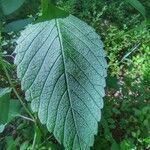
Galeopsis bifida
Small hemp-nettle · Bifid hempnettle · Lesser hemp-nettle · Splitlip hempnettle · Bifid Hemp-nettle
Description
Source: leafsnapGaleopsis bifida, commonly known as bifid hemp-nettle, is a herbaceous plant belonging to the family Lamiaceae. Native to Europe and Asia, it has also been introduced to North America. The plant can grow up to 60 cm tall and features a square stem with ovate, serrated leaves arranged oppositely. The flowers of Galeopsis bifida are pinkish-purple and bloom from June through September. These flowers are organized in whorls around the stem, with each whorl containing 2-6 flowers. Each flower's corolla is two-lipped: the upper lip is hooded, while the lower lip has three lobes. Galeopsis bifida thrives in moist soils found in open fields or along roadsides but can also grow in drier soils. It is considered an invasive species in some areas due to its rapid spread through self-seeding. Historically, the plant has been used for medicinal purposes for centuries, containing compounds with anti-inflammatory properties that help alleviate pain caused by arthritis and other inflammatory conditions. Overall, Galeopsis bifida is an intriguing herbaceous plant known for its beautiful pinkish-purple flowers that bloom during the summer months. It also possesses medicinal properties, making it valuable for various uses, including traditional medicine practices in its native regions of Europe and Asia.
Care Guide
💧 Water Every 3 days
Splitlip hempnettle originates from temperate regions and thrives in evenly moist soil, requiring weekly watering. The growth of this herbaceous plant is closely tied to water availability, making adequate hydration essential during its active growing season to ensure optimal health and vigorous development.
How should I water my Splitlip hempnettle?
To water Splitlip hempnettle, you have a few options. You can use a garden hose with a spray nozzle, a watering can, or any other common watering tool. This plant isn't too picky about the type of water it receives – rainwater, tap water, or filtered water will all work fine. It's generally best to avoid watering it from overhead, as this can damage the leaves and flowers and potentially cause disease. Using a drip irrigation system is often the most effective method for watering Splitlip hempnettle, as it distributes water evenly and directly to the soil. If you have a container-grown Splitlip hempnettle, you can still follow a similar watering approach but use a cup, watering can, or tap to apply water directly to the soil.
What should I do if I give my Splitlip hempnettle too much or too little water?
To prevent underwatering Splitlip hempnettle, simply water it more regularly when you notice it lacking moisture. However, overwatering can be a serious issue. It can cause diseases leading to decline and death in the plant. To prevent this, choose a suitable location with plenty of sunlight and good drainage. If you overwater Splitlip hempnettle in a pot, you may need to change to a pot with better drainage and add loose soil while repotting.
How often do I need to water my Splitlip hempnettle?
To ensure healthy growth, Splitlip hempnettle should be watered regularly throughout the growing season. In the spring, watering once per week should be sufficient. As the season progresses and temperatures rise, you may need to increase watering to two or three times per week. It is important not to exceed this rate as it can harm the plant. Regardless of the watering schedule, it is important to keep the soil moist but not wet. When growing Splitlip hempnettle in a pot, you will need to water more frequently compared to plants in the ground. Generally, plan to water container-grown Splitlip hempnettle a few times per week to prevent the soil from drying out too quickly.
How much water does my Splitlip hempnettle plant need?
Determining the right amount of water for your Splitlip hempnettle can be approached in a few different ways. One method involves feeling the soil to assess its moisture and watering until the top six inches feel moist. Another option is to use a specific measurement, such as two gallons per week, taking into account factors like heat and soil dryness. However, be cautious about strictly following these guidelines, as overwatering may occur if your plant requires less water. When growing Splitlip hempnettle in a container, a different approach is necessary. Make sure to water the soil enough to moisten all dry layers, which can be checked by feeling the soil or observing excess water draining from the pot's holes.
How can I know if I'm giving enough water to my Splitlip Hempnettle?
Splitlip hempnettle can be a bit tricky to water correctly. On one hand, these plants have deep roots which means you need to water the soil thoroughly once a week. However, be careful not to overwater them because Splitlip hempnettle are very prone to root rot. Overwatering can also lead to browning of the plant. Underwatering is not as likely to happen since these plants can survive for some time without extra water. However, if you wait too long to water, the plant will start to wilt and you may see dry leaves.
☀️ Light Full sun
The splitlip hempnettle does best with unobstructed sunlight but can also tolerate environments with somewhat reduced sun. Proper lighting has a major effect on the plant's health and growth. If the plant receives too little light, it may show poor growth and development.
What are the sunlight requirements for Splitlip hempnettle?
Splitlip hempnettle thrives in full sun, requiring more than 6 hours of sunlight per day. It can also grow under partial sun conditions, with about 3-6 hours of sunlight. It's essential to watch how sunlight moves through your garden, choosing spots that offer a balance of light and shade, to ensure the optimal growth and happiness of your plants. The plant's health and growth are significantly influenced by proper lighting, and insufficient light can lead to poor growth and development.
How can artificial lighting be used for Splitlip hempnettle?
When natural sunlight is insufficient, especially during winter or in less sunny spaces, artificial lighting can be crucial for the growth of indoor Splitlip hempnettle plants. Indoor plants require adequate lighting for optimal growth. LED lights are recommended because they can be customized to provide the specific wavelengths needed by your plants. Full sun plants need 30-50W per square foot, partial sun plants require 20-30W per square foot, and full shade plants need 10-20W per square foot. The light source should be placed 12-36 inches above the plant, mimicking natural sunlight, and for most plant species, 8-12 hours of light per day is necessary.
What are common symptoms of insufficient light in Splitlip hempnettle?
When Splitlip hempnettle is grown indoors with inadequate light, several symptoms may manifest, including smaller new leaves, leggy or sparse growth, faster leaf drop, slower or no new growth, lighter-colored new leaves indicative of insufficient chlorophyll and nutrients, and chlorosis where leaves turn yellow. Excessive sunlight can cause sunscald, leaf curling as a defense mechanism, wilting due to increased water loss, and leaf scorching characterized by brown, dry edges on leaves.
What solutions exist for Splitlip hempnettle experiencing poor light conditions?
For optimal growth, indoor plants can be gradually moved to sunnier locations to receive at least 6 hours of direct sunlight daily. Utilize south-facing windows and keep curtains open during the day for maximum exposure. If the plant is large or not easily movable, consider using artificial light, keeping lamps on for at least 8 hours daily. Outdoors, move plants gradually to more sunlit spots to avoid sunburn. If trees block sunlight, prune their branches and leaves. For smaller plants, transplant them during their dormant period to a sunny location with good drainage. Note that parts of the plant affected by insufficient light may not recover, but new growth will be healthy.
🌡️ Temperature 5–35°C
Splitlip hempnettle can tolerate a wide range of temperatures, but its distribution may still be restricted by certain combinations of moisture and heat. It grows best in warm summer conditions with sufficient rainfall or watering. Long stretches of cloudy, rainy weather or prolonged high temperatures can raise the risk of the plant dying. In winter, adequate protection from cold can enhance its chances of survival.
What is the botanical name of Splitlip hempnettle?
The botanical name of Splitlip hempnettle is Galeopsis bifida. It belongs to the plant species that are detailed under various categories, but further specific details such as its essentials and symptoms associated with it are not provided in the available information.
💨 Humidity
🪴 Soil 6-7
🌱 Fertilizer
Splitlip hempnettle benefits from regular, weak fertilizer applications to encourage healthy leaf development. You should feed Splitlip hempnettle about once a month during the summer. Nitrogen is essential for foliage, and supplying nitrogen-rich sources helps Splitlip hempnettle flourish.
🪴 Pot & Repot
✂️ Pruning
🌿 Propagating
🐛 Diseases & pets
☠️ Toxicity
Characteristics
- Plant Type
- Herb
- Life Cycle
- Annual
- Genus
- Galeopsis
- Family
- Lamiaceae
- Hardiness Zone
- 4-9
- Mature Height
- 20 cm to 61 cm
- Mature Spread
- 20 cm to 40 cm
- Leaf Color
- Green, Dark Green
- Leaf Type
- Deciduous
- Flower Color
- Pink, Purple
- Flower Size
- 0.76 cm
- Bloom Time
- Early summer, Mid summer
- Planting Time
- Spring, Summer
- Harvest Time
- Mid summer
- Native Area
- Turkey, Sweden, India, Slovakia, Montenegro, Slovenia, Croatia, Belarus, Russia, Germany, Estonia, Koppen, Romania, Latvia, Belgium, Netherlands, Nepal, France, Czech Republic, Bulgaria, Poland, Greece, Ukraine, Serbia, China, Lithuania, Norway, Kyrgyzstan, Kazakhstan, Italy, Switzerland, Denmark, Japan, Mongolia, Finland, Bhutan, Albania, Ireland, United Kingdom, Hungary