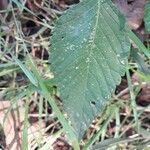
Galeopsis tetrahit
Hemp-nettle · Common hemp-nettle · Brittlestem Hempnettle · Brittle-stemmed Hemp-nettle · Dog Nettle
Description
Source: leafsnapGaleopsis tetrahit, commonly known as hemp-nettle, is a herbaceous plant that belongs to the Lamiaceae family. Native to Europe and Asia, it has also been introduced to other parts of the world. The plant can reach up to 1 meter in height and features a square stem with opposite, toothed, and hairy leaves. The flowers of Galeopsis tetrahit are pink or purple and bloom from June to September. They are arranged in whorls around the stem, with each whorl containing 6-12 flowers. The plant produces small nutlets that are dispersed by animals or the wind. Galeopsis tetrahit prefers moist soils and is commonly found along roadsides, in fields, meadows, waste areas, and disturbed sites. In some regions, it is considered an invasive species due to its rapid spreading ability. Historically, the plant has been used for its anti-inflammatory properties in medicinal applications. During World War II, it also served as a substitute for hemp fiber when supplies were limited. Overall, Galeopsis tetrahit is an interesting herbaceous species with unique characteristics that distinguish it from other plants in the Lamiaceae family.
🌳 Common hemp-nettle serves as an intriguing bioindicator, indicating the nutrient levels of the soil where it grows. Its presence can point to soils high in nitrogen, a detail useful to ecologists and agriculturalists when evaluating soil fertility.
Care Guide
💧 Water Every 3 days
Common hemp-nettle flourishes in moist environments and requires regular watering, typically on a weekly basis. This herbaceous plant is frequently cultivated outdoors, where it depends on natural rainfall. Its growth is closely tied to water availability, so proper irrigation is crucial to maintaining its health.
How should I water my Common hemp-nettle in the best way?
To water Common hemp-nettle, you have several options. You can use a garden hose with a spray nozzle, a watering can, or any other common watering tool. This plant is not too particular about the type of water it receives - rainwater, tap water, or filtered water will all do just fine. However, it is best to avoid watering from overhead as this can harm the leaves and flowers and even lead to disease. Instead, consider setting up a drip irrigation system, which evenly and directly waters the soil. If you have a container-grown Common hemp-nettle, you can follow a similar watering approach but use a cup, watering can, or tap to apply water directly to the soil.
What should I do if I give my Common hemp-nettle too much water or not enough water?
To prevent underwatering Common hemp-nettle, simply water it more regularly when you notice it lacks moisture. Overwatering, on the other hand, can be a serious issue that may lead to diseases and the plant's death. To avoid this, choose a well-lit location with good drainage to allow excess water to drain properly. If you overwater a potted Common hemp-nettle, consider repotting it with loose soil and a pot that drains efficiently. This will help prevent waterlogging and ensure proper growth.
How frequently should I water my Common hemp-nettle?
To keep your Common hemp-nettle healthy, you'll need to water it regularly throughout the growing season. In the spring, water once a week. As the season progresses and it gets hotter, increase the watering to two to three times a week. However, be careful not to exceed this rate as it can harm the plant. It's important to keep the soil relatively moist but not overly wet, regardless of the watering frequency. If your Common hemp-nettle is in a pot, you'll need to water it more often compared to when it's planted in the ground. Potted plants tend to dry out faster, so plan to water them a few times a week. In contrast, in-ground plants only need to be watered once a week.
How much water does my Common hemp-nettle require?
Determining how much water to give your Common hemp-nettle can be approached in a few different ways. Some gardeners prefer to gauge the moisture level of the soil by feeling it with their hands. In this method, the general guideline is to water until the top six inches of soil feels moist. Another option is to use a specific measurement to determine the water amount. Typically, Common hemp-nettle requires around two gallons of water per week, depending on factors like temperature and soil dryness. However, following these guidelines strictly may result in overwatering if the plant needs less water for some reason. When growing Common hemp-nettle in a container, a different method is necessary. In this case, it is recommended to water until all layers of dry soil are moist. You can test this by inserting your finger into the soil to check for moisture. Another sign is when you observe a slight trickle of excess water coming out from the drainage holes of the pot.
How do I know if I'm giving enough water to my Common hemp-nettle?
Avoiding overwatering your Common hemp-nettle can be challenging due to conflicting factors. While these plants have deep roots that require weekly moisture, they are highly vulnerable to root rot. Overwatering can also lead to browning. Underwatering is less likely because Common hemp-nettle can survive without supplemental watering for some time, but prolonged lack of water can cause wilting and dry leaves.
☀️ Light Full sun
Common hemp-nettle does best with abundant sunlight, though it can tolerate lower light levels. Sunlight greatly supports its healthy growth. If it doesn't get enough light, the plant may show stunted growth or pale foliage. However, too much sun can cause damage to the leaves.
What are the sunlight requirements for common hemp-nettle?
Common hemp-nettle thrives best under abundant sunlight exposure, although it can tolerate lower light conditions. For optimal growth, it should receive above 6 hours of sunlight daily (full sun), but it can still grow with about 3-6 hours of sunlight (partial sun). It's important to observe how sunlight moves through your garden, selecting spots that offer a good balance of light and shade to ensure the plants' health. Sunlight is crucial for the plant's healthy growth, significantly influencing its development. Insufficient light may cause stunted growth or weakly-colored foliage, while too much sunlight can lead to foliage damage.
How can artificial lighting be used for indoor common hemp-nettle plants?
Indoor plants like the common hemp-nettle require adequate lighting for optimal growth, especially when natural sunlight is insufficient. This is common during winter or in less sunny spaces. Artificial lights, particularly LED lights, are a good solution as they can be customized to provide specific wavelengths needed by plants. For full sun plants, 30-50W/sq ft of artificial light is recommended; for partial sun plants, 20-30W/sq ft; and for full shade plants, 10-20W/sq ft. The light source should be placed 12-36 inches above the plant to mimic natural sunlight, ensuring the plant receives 8-12 hours of light per day.
What are the signs of inadequate light exposure in common hemp-nettle?
Common hemp-nettle showing signs of inadequate light exposure may exhibit symptoms such as smaller new leaves, leggy or sparse growth, faster leaf drop, slower or no new growth, and lighter-colored or irregularly pigmented new leaves. Additionally, excessive sunlight can cause chlorosis (leaf yellowing due to chlorophyll breakdown), sunscald (damage from intense sunlight exposure), leaf curling, wilting, and leaf scorching. These symptoms indicate that the plant's light conditions need to be adjusted for healthier growth.
What are the solutions for common hemp-nettle experiencing poor light conditions?
For common hemp-nettle plants experiencing poor light conditions indoors, gradually increasing their exposure to sunlight can help. Start by moving them to a sunnier location each week until they receive at least 6 hours of direct sunlight daily. Utilizing a south-facing window and keeping curtains open during the day can maximize sunlight exposure. If the plant is too large or not easily movable, consider using artificial light sources for at least 8 hours daily. For outdoor plants, it's crucial to avoid sudden changes in light intensity to prevent sunburn. Gradually moving plants to sunnier spots can aid adaptation. If plants are blocked by obstructions like trees, pruning or transplanting to a location with more sunlight and good drainage might be necessary. It's important to note that parts of the plant damaged by insufficient sunlight may not recover, but new growth should be healthy after adjusting light exposure.
🌡️ Temperature 0–32.2°C
Common hemp-nettle originates from areas with moderate temperatures, preferring a range of 68 to 95 °F (20 to 35 ℃). Depending on seasonal changes, it may need measures such as shading or mulching to regulate temperature.
What is the ideal temperature range for growing Common hemp-nettle?
Common hemp-nettle thrives in regions with moderate temperatures, ideally ranging from 68 to 95 °F (20 to 35 °C). It has a strong cold resistance but may require measures like shading or mulching for temperature control as the seasons change.
What should I do to protect Common hemp-nettle during winter?
Although Common hemp-nettle has strong cold resistance and usually doesn't require special frost protection measures, if winter temperatures are expected to drop below -35°C, it is important to provide cold protection. This can include covering the plant with soil or straw. Additionally, before the first freeze of autumn, water the plant abundantly to ensure the soil remains moist and enters a frozen state, helping prevent drought and water scarcity during winter and early spring.
How does Common hemp-nettle react to low temperatures during winter?
Common hemp-nettle is cold-tolerant and thrives best when the temperature is above 20°C. During winter, it should be kept above 0°C. If the temperature falls below -35°C, you might not notice any changes during winter, but there may be a decrease in sprouting or even no sprouting during springtime. In spring, you should remove any parts that have failed to sprout.
What are the effects of high temperatures on Common hemp-nettle and how can I mitigate them?
During summer, it's best to keep Common hemp-nettle below 35°C. Should the temperature exceed 38°C, the plant's leaves may become lighter in color, prone to curling, susceptible to sunburn, and in severe cases, the entire plant can wilt and dry. To mitigate these effects, trim away the sunburned and dried-up parts. Move the plant to a cooler location, provide shade during the midday and afternoon sun, or use a shade cloth. Also, water the plant in the morning and evening to keep the soil moist.
What are the botanic name and common characteristics of Common hemp-nettle?
The botanic name for Common hemp-nettle is Galeopsis tetrahit. It is native to regions with moderate temperatures and exhibits strong cold resistance. Despite this, it requires temperature management strategies such as shading or mulching based on seasonal changes and may need protection when temperatures are expected to significantly drop.
💨 Humidity
🪴 Soil 6-7
🌱 Fertilizer
Common hemp-nettle does well with regular, light applications of fertilizer to encourage healthy leaf development. You should fertilize Common hemp-nettle about once a month throughout the summer. Nitrogen is important for foliage, and adding nitrogen-rich sources helps Common hemp-nettle thrive.
🪴 Pot & Repot
✂️ Pruning
🌿 Propagating
🐛 Diseases & pets
☠️ Toxicity
Galeopsis tetrahit plant is poisonous, causing paralysis.
Characteristics
- Plant Type
- Herb
- Life Cycle
- Annual
- Genus
- Galeopsis
- Family
- Lamiaceae
- Hardiness Zone
- 3-8
- Mature Height
- 20 cm to 61 cm
- Mature Spread
- 25 cm
- Leaf Color
- Green, White
- Leaf Type
- Deciduous
- Flower Color
- Pink, White, Purple
- Flower Size
- 1.52 cm to 2.03 cm
- Bloom Time
- Early summer, Mid summer
- Planting Time
- Spring
- Harvest Time
- Mid summer
- Native Area
- Sweden, Austria, Slovakia, Montenegro, Pakistan, Slovenia, Croatia, Belarus, Russia, Germany, Iceland, Estonia, Romania, Latvia, Belgium, Portugal, Nepal, Netherlands, France, Czech Republic, Bulgaria, Armenia, Poland, Greece, Ukraine, Serbia, Lithuania, Norway, Italy, Spain, Switzerland, Denmark, Myanmar, Finland, Albania, Ireland, United Kingdom, Hungary