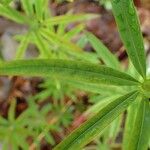
Galium aristatum
Awned bedstraw
Description
Source: leafsnapGalium aristatum, the awned bedstraw, is a plant species in the Rubiaceae, currently (May 2014) accepted as a distinct species. It is native to the Alps and the Pyrenees Mountains of Europe (Spain, France, Italy, Switzerland, Austria and Germany). It is also reportedly naturalized in a few places in New York State in the United States.
Care Guide
💧 Water
☀️ Light Partial sun
Great lady's bedstraw comes from habitats with dappled light, such as forest understories or rocky spots that provide natural shade. It does well in partial sun but can also adapt to full sun conditions.
🌡️ Temperature 5–35°C
Great lady's bedstraw can tolerate a wide range of temperatures, but its distribution may still be limited by different combinations of moisture and heat. It performs best in warm summer climates with sufficient rainfall or watering. Extended periods of cloudy, rainy weather or prolonged high temperatures can increase the risk of Great lady's bedstraw dying. In winter, adequate protection from cold can raise the plant's survival rate.
💨 Humidity
🪴 Soil 6-8
🌱 Fertilizer
Great lady's bedstraw benefits from regular, mild applications of fertilizer to support healthy leaf development. You should feed Great lady's bedstraw roughly once a month during the summer. Nitrogen is essential for the foliage, and providing nitrogen-rich fertilizer helps Great lady's bedstraw prosper.
🪴 Pot & Repot
✂️ Pruning
🌿 Propagating
🐛 Diseases & pets
☠️ Toxicity
Characteristics
- Plant Type
- Herb
- Life Cycle
- Annual
- Genus
- Galium
- Family
- Rubiaceae
- Hardiness Zone
- 4-9
- Mature Height
- 30 cm to 91 cm
- Mature Spread
- 30 cm to 61 cm
- Leaf Color
- Green
- Leaf Type
- Semi-evergreen
- Flower Color
- White
- Flower Size
- 0.20 cm to 0.25 cm
- Bloom Time
- Late spring, Early summer, Mid summer
- Planting Time
- Spring, Summer, Autumn
- Harvest Time
- Mid summer, Late summer, Early fall