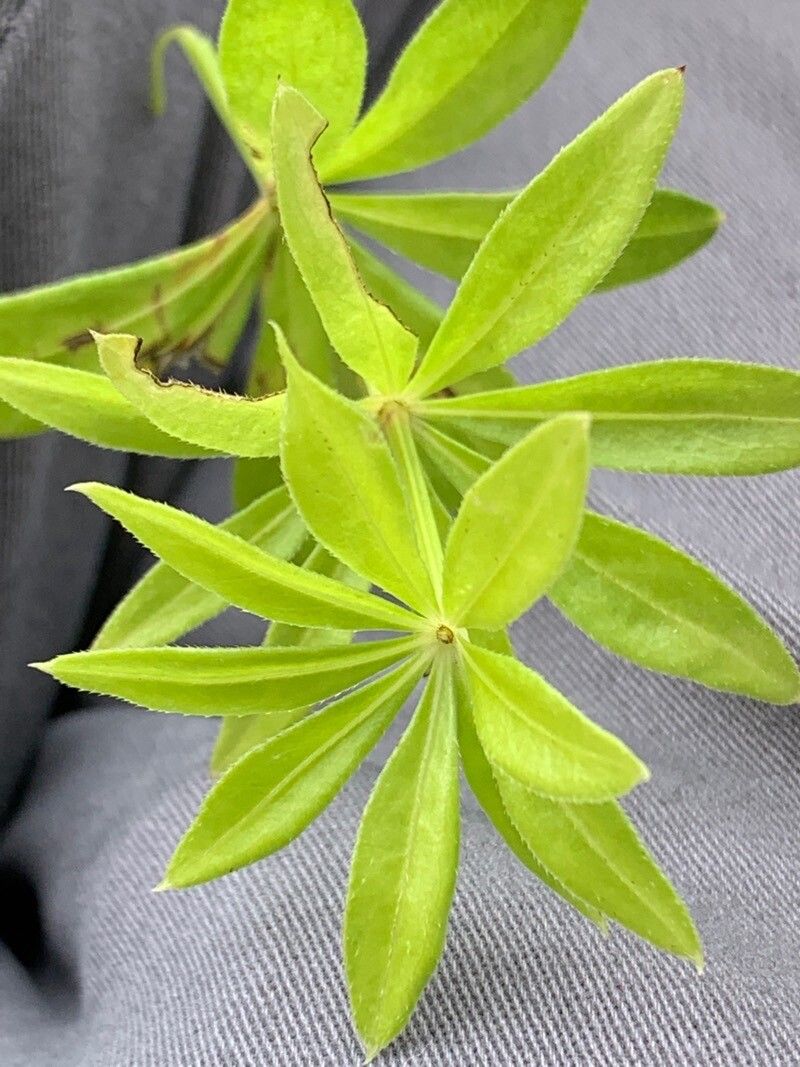
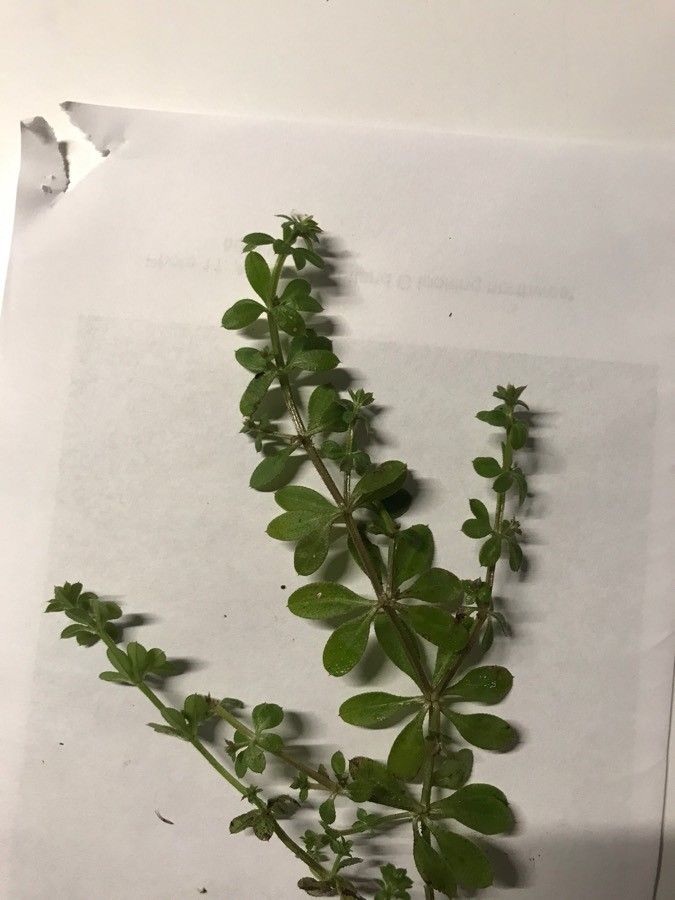
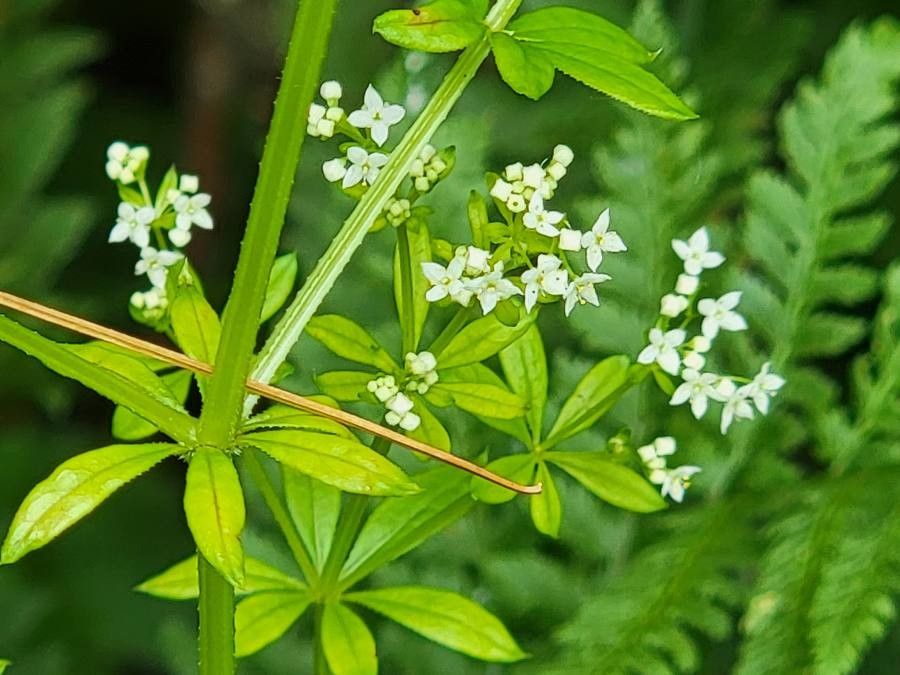
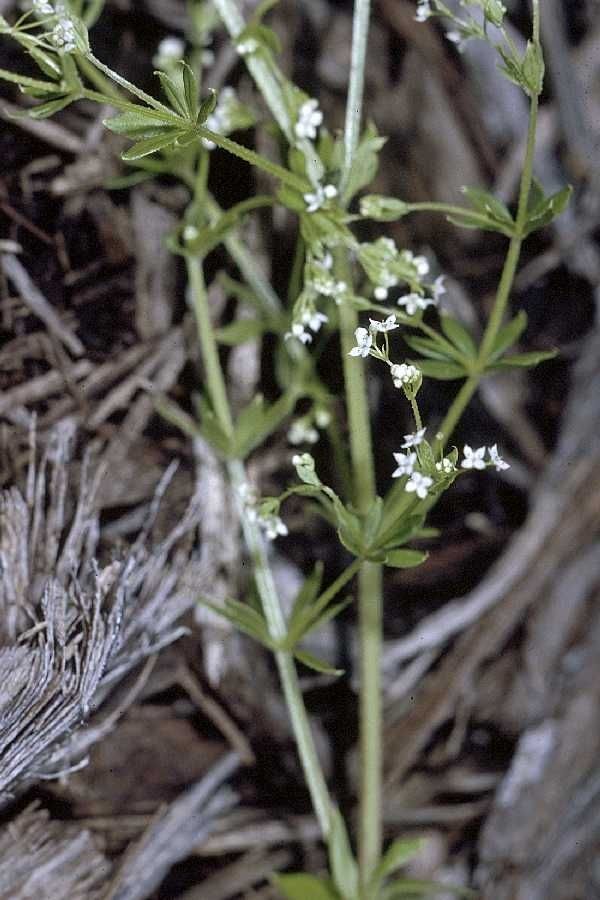
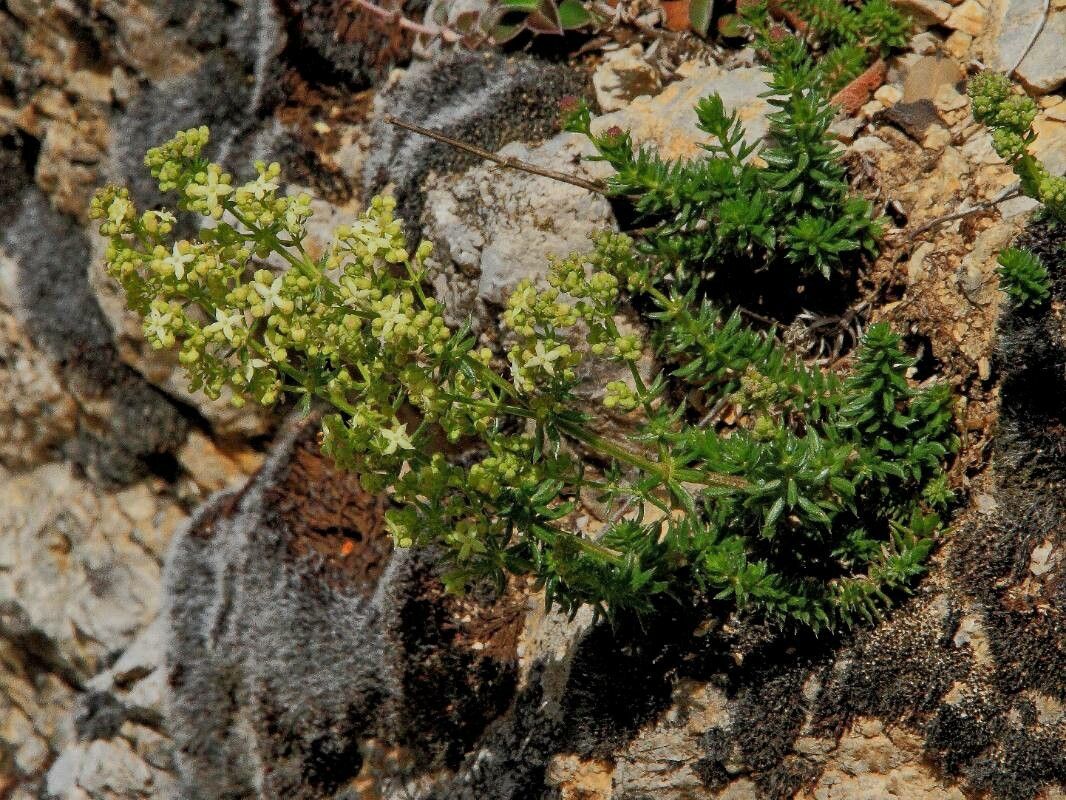
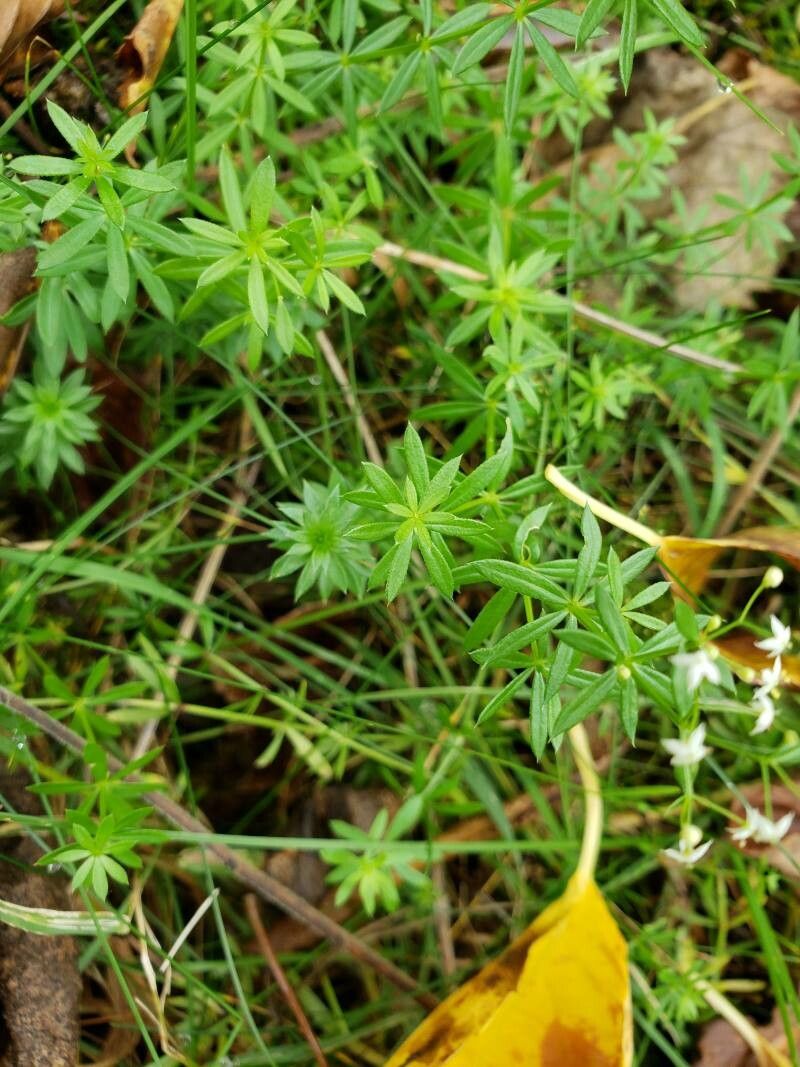
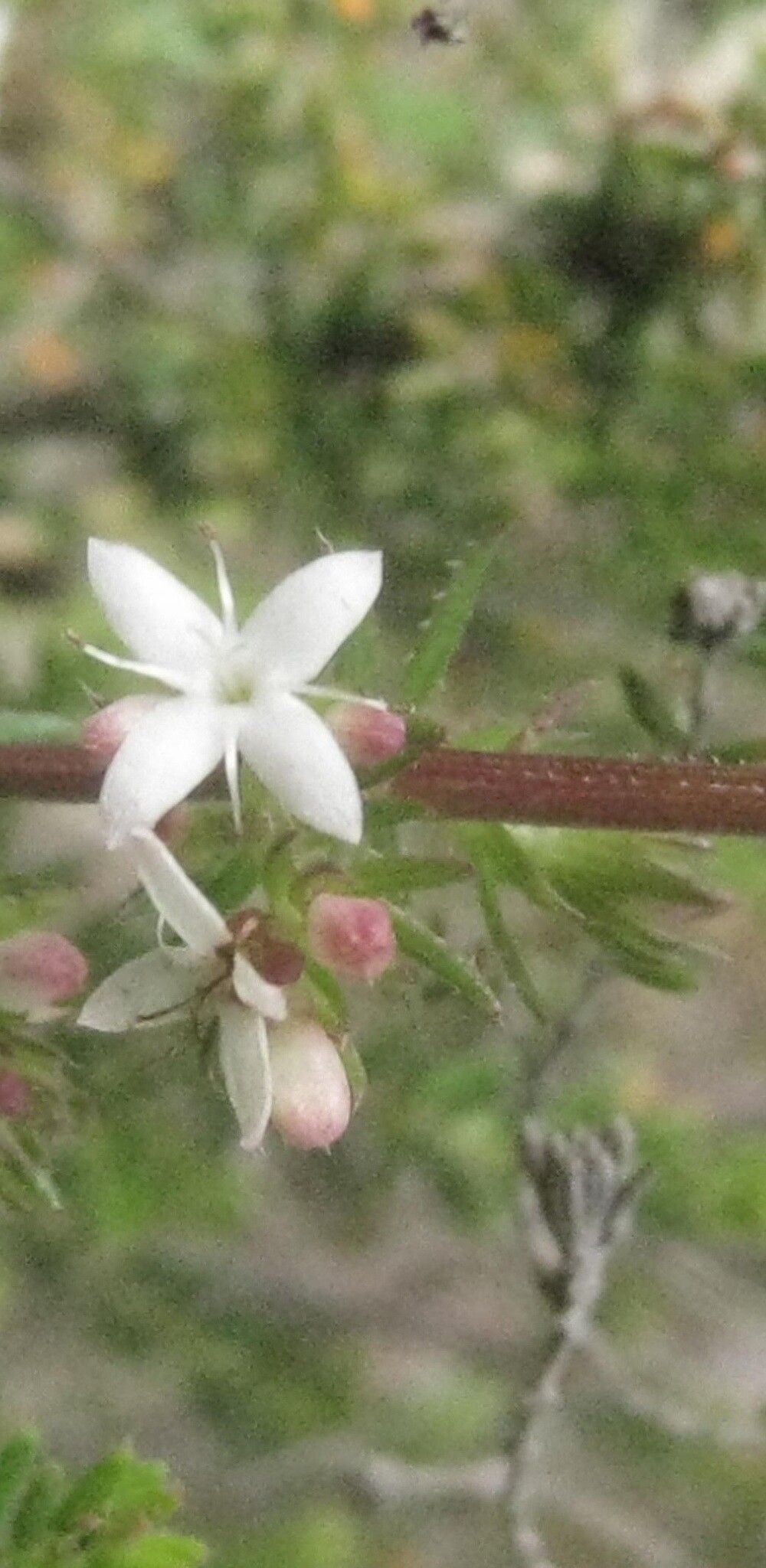
Galium asprellum, the rough bedstraw, is a plant species in the family Rubiaceae. It native to eastern Canada and northeastern United States, from North Carolina and Tennessee north to Minnesota, Ontario and Newfoundland. It is considered a noxious weed in New York, Pennsylvania and Vermont, and is abundantly common in the other New England states and in sections of the Great Lakes region. It is a perennial herb. Leaves are simple with three or more leaves per node. Flowers have four petals and are white in color.
Rough bedstraw is largely resistant to diseases and is usually not easily affected by them. Still, it can be vulnerable to pests and diseases present in its environment. These problems are typically not severe. For care, the plant needs a moderate level of maintenance. It should be pruned regularly to preserve a neat appearance and support healthy growth. Fertilizing can also encourage more blooms. Rough bedstraw is well suited for anyone with outdoor areas such as a garden or patio and does not demand extensive plant-care experience. It may require more attention when kept indoors.
How to keep Galium Asprellum.
Light
Rough bedstraw is native to habitats like forest understories and rocky areas, where it grows in natural shade. It prefers partial sun but can tolerate full sun or full shade, illustrating its adaptable and hardy nature.
Water
Rough bedstraw, native to temperate regions, thrives in consistently moist, humus-rich soil, mirroring its natural habitat. It has moderate drought tolerance, but for optimal health, it needs weekly watering. This plant is commonly found in woodlands or meadows.
Temperature
Rough bedstraw is native to temperate regions and does best in temperatures of 59 to 90 °F (15 to 32℃). If planted in cooler climates, give it a warmer microclimate or extra protection during winter.
Fertilizer
Usually one fertilizer application in spring is enough for Rough bedstraw, although multiple feedings can optimize growth. Feed every month to every month and a half. Fertilization improves the appearance and function of the leaves, encouraging even color and a healthy texture. It also promotes root development and nutrient uptake, supporting long-term plant health.
Pruning
Rough bedstraw has a coarse texture and grows in clumps. To promote healthy growth and shape the plant, it's best to prune it from early to late spring. During pruning, trim any leggy stems and remove dead parts. Thinning the plant may also be necessary to prevent overcrowding. For guidance specific to your climate, consult horticultural sources.
Botanical profile.
- Plant Type
- Herb
- Life Cycle
- Perennial
- Genus
- Galium
- Family
- Rubiaceae
- Hardiness Zone
- 7
- Mature Height
- 0.61 m to 1.83 m
- Mature Spread
- 49 cm to 91 cm
- Leaf Color
- Green
- Leaf Type
- Deciduous
- Flower Color
- White
- Flower Size
- 0.20 cm to 0.25 cm
- Bloom Time
- Summer
- Planting Time
- Spring, Summer, Autumn
- Harvest Time
- Late summer, Early fall, Mid fall
Other names.
Reader questions.
What are the sunlight requirements for Rough bedstraw?
Rough bedstraw thrives in partial sun, requiring about 3-6 hours of sunlight daily. It's native to environments that naturally offer shade, like forest understories or rocky areas. Although it prefers partial sun, Rough bedstraw can also tolerate full shade. When planning where to place your Rough bedstraw, it's important to observe how sunlight moves through your garden to find spots that provide a good balance of light and shade, ensuring the plants' well-being.
How can artificial lighting be used for Rough bedstraw grown indoors?
For Rough bedstraw grown indoors, artificial lighting can be crucial, especially when natural sunlight is insufficient. LED lights are a preferred choice because they can be customized to provide specific wavelengths needed by the plant. The requirement for artificial light varies depending on the plant's natural sunlight needs: full sun plants require 30-50W/sq ft, partial sun plants 20-30W/sq ft, and full shade plants 10-20W/sq ft. The light source should be placed 12-36 inches above the plant to mimic natural sunlight and left on for 8-12 hours per day to replicate the natural daylight hours.
What are the symptoms of light deficiency in Rough bedstraw?
Rough bedstraw can show several symptoms when exposed to insufficient light, including smaller new leaves, leggy or sparse growth, faster leaf drop, slower or no new growth, and lighter-colored new leaves. Chlorosis, sunscald, leaf curling, wilting, and leaf scorching are additional symptoms that may appear in varying light conditions, from insufficient to excessive sunlight exposure. These symptoms signal the need for adjusting the plant's light exposure to improve its health.
What are some solutions for light deficiency in Rough bedstraw?
To address light deficiency in Rough bedstraw, consider several strategies. For indoor plants, gradually shift them to sunnier spots each week until they receive 3-6 hours of direct sunlight daily, or use artificial light such as desk or ceiling lamps for at least 8 hours daily. For outdoor plants, move them to sunnier locations gradually to avoid sunburn. Reducing obstructions like pruning trees can help increase sunlight exposure. Transplanting smaller plants during their dormant period to a location with better sunlight and drainage can also be beneficial. Note that affected parts of the plant might not recover, but new growth should be healthy with improved light conditions.