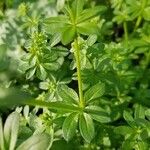
Galium mollugo
نفس کاذب نوزاد · Hedge Bedstraw · White bedstraw · False baby's-breath · Wild madder
Description
Source: leafsnapGalium mollugo, commonly known as hedge bedstraw, is a perennial herbaceous plant in the Rubiaceae family. Native to Europe and Asia, it has also been introduced to North America and other regions worldwide. The plant can grow up to 1 meter tall, featuring a slender stem that branches at the top. Its narrow, lance-shaped leaves have rough edges and are arranged in whorls of 6-8 around the stem. The small, white flowers of Galium mollugo grow in clusters at the end of each branch. They bloom from June to September and produce small fruits, each containing two seeds. While the plant prefers moist soils, it can also thrive in dry conditions. Historically, Galium mollugo has been used for its medicinal properties, particularly its diuretic effects, which help treat urinary tract infections, kidney stones, and edema among other ailments. Additionally, the plant contains antioxidants that help protect against oxidative stress. Hedge bedstraw is an essential food source for many insects, including bees, which rely on its nectar during the summer months when other flowers are scarce. Overall, Galium mollugo is an attractive perennial with valuable medicinal properties, making it a beneficial addition to any garden or natural area where it can grow undisturbed by human activity or pollution.
🌳 Although many people may regard hedge bedstraw as nothing more than greenery for the compost heap, it held an important place in history. The gallic acid from the plant, when mixed with iron sulfate, produced the "Hungarian Red" dye. Medieval artists prized this vivid ink and used it to adorn religious texts with images of sacred figures.
Care Guide
💧 Water Every 7 days
Hedge bedstraw is native to temperate regions and flourishes in moderately moist environments. It thrives with consistent soil moisture and typically requires watering once a week. This plant is commonly found outdoors in meadows and hedgerows, where it adapts to regular rainfall. The natural precipitation in these areas influences the growth patterns and seasonal water needs of hedge bedstraw.
How should I water my Hedge bedstraw plant?
To properly water the Hedge bedstraw, it is recommended to use filtered water at room temperature. Tap water may contain harmful particles for the plant, making filtered water a better choice. Since the Hedge bedstraw originates from a warm environment, it is important to use water that is at room temperature or slightly warmer to prevent shocking the plant. Avoid watering from above as it can lead to complications with the foliage. Instead, pour the filtered room temperature water directly onto the soil until it is completely soaked. This method benefits the plant by hydrating the roots and promoting their growth and nutrient absorption.
What do I do if I give my Hedge bedstraw too much water or not enough water?
Overwatering is a common problem for Hedge bedstraw and can cause wilting, yellowing, and diseases like root rot. Underwatering is less common, but can make leaves brittle and brown. It's important to notice signs of overwatering early and reduce watering immediately. If the soil drains poorly, replace it with a well-draining mix. If the Hedge bedstraw lacks water, increase watering until signs improve.
How often should I water my Hedge bedstraw? --> How frequently should I water my Hedge bedstraw plant?
If your Hedge bedstraw is in a pot, the most accurate way to determine if it needs water is by sticking your finger into the soil. If the top two to three inches of soil are dry, then it's time to water it. If you have your Hedge bedstraw planted outdoors in the ground, you can use the same method to test the soil. Once again, if the top few inches of soil are dried out, it's time to water. Typically, during spring and early fall, watering once a week is sufficient. However, when it gets really hot, you may need to water twice a week or more. It's worth noting that mature, well-established Hedge bedstraw can tolerate drought well.
How much water does my Hedge bedstraw plant require?
Here are some tips for watering your Hedge bedstraw: - Don't be shy about how much water you give. With the top couple inches of soil dry, it's best to thoroughly water the plant. - Make sure to supply enough water so that the soil is completely soaked. - The water you add should be enough to cause excess water to drain out of the pot's drainage holes. If you don't see excess water draining, you may not have watered enough. - However, be careful not to let water accumulate in the soil, as this can harm the plant. - If there is no water draining through the pot, it could be a sign of poorly draining soil, which is not good for the plant's health. - If the plant is outside, about 1 inch of rain per week should be enough.
How do I water my Hedge bedstraw at different stages of growth?
The water needs of the Hedge bedstraw can vary based on its growth stages. In the first few years or after transplanting, it requires more water to support root growth. As the plant matures, it needs less water. Additionally, during the bloom period, it may require additional water due to the moisture demand for flower development.
☀️ Light Partial sun
Hedge bedstraw does best in locations that receive a moderate amount of sunlight each day, though it can tolerate stronger exposure. It comes from habitats with variable sun conditions. Too much or too little light can impair its healthy growth, affecting its vigor and flower production.
What are the sunlight requirements for hedge bedstraw?
Hedge bedstraw thrives best in conditions that offer a moderate amount of sun each day, benefitting from both partial sun, which is about 3-6 hours of sunlight, and full sun, characterized by more than 6 hours of sunlight. The plant is adaptable, originating from environments with varying sun exposure. However, it's crucial to ensure that it doesn't receive too much or too little sunlight as this can negatively affect its growth, vigor, and blooming capabilities. It’s advised to watch the movement of sunlight through your garden to select locations that ensure an optimal balance of light and shade, which is essential for the plant's well-being.
How does artificial lighting support the growth of indoor hedge bedstraw plants?
Indoor hedge bedstraw plants require adequate lighting to grow optimally. When natural sunlight is scarce, especially during winter or in less sunny areas, artificial lighting becomes a crucial alternative. It's recommended to use LED lights as they can provide specific wavelengths needed by plants. Full sun plants need 30-50W/sq ft, partial sun plants need 20-30W/sq ft, and full shade plants require 10-20W/sq ft of artificial light. The light source should be placed 12-36 inches above the plant, simulating natural sunlight. Moreover, mimicking natural daylight hours, most plants will need 8-12 hours of artificial light daily to promote healthier and faster growth.
What are common symptoms of light deficiency in hedge bedstraw?
When hedge bedstraw is grown indoors with inadequate light, several symptoms may appear, including small or new leaves growing smaller than the mature ones, leggy or sparse growth due to longer spaces between leaves or stems, faster leaf drop as the plant tries to conserve resources, slower or halted growth, and new leaves that may appear lighter in color or pale, indicating insufficient chlorophyll and nutrients. Excessive sunlight can also cause issues like chlorosis, where leaves turn yellow, sunscald with damaged plant tissues, leaf curling as a defense mechanism against sunlight, wilting due to increased water loss, and leaf scorching characterized by brown, dry edges on leaves.
What are the solutions for hedge bedstraw experiencing insufficient or excessive sunlight?
To address light issues for hedge bedstraw, indoors, gradually expose the plant to more sunlight by shifting it to sunnier spots each week until it receives 3-6 hours of direct sunlight daily, facilitating adaptation. For large or immovable plants, supplement with artificial light, keeping a desk or ceiling lamp on for at least 8 hours daily or investing in professional grow lights. Outdoors, also move plants gradually to sunnier locations to prevent sunburn, avoiding sudden, intense light changes. If the plant is in the ground and blocked by obstacles like trees, consider pruning to improve sunlight access or transplant smaller plants during their dormant period to better-lit areas with good drainage. Note that parts of the plant damaged by light issues may not recover, but new growth should be healthy with corrected light exposure.
🌡️ Temperature 0–32.2°C
Hedge bedstraw is typical of temperate climates and commonly grows in conditions where temperatures range from 68 to 95 °F (20 to 35 ℃). Although it is adaptable, when temperatures drop or rise sharply, adjustments to its surroundings may be needed to ensure continued growth.
What kind of climate does hedge bedstraw thrive in?
Hedge bedstraw, also known by its botanical name Galium mollugo, is characteristic of temperate climates. It traditionally grows in environments where the temperature ranges from 68 to 95 °F (20 to 35 °C). Despite its adaptability, hedge bedstraw may require adjustments in extreme temperatures to ensure its continued growth.
Does hedge bedstraw need frost protection during the winter?
Hedge bedstraw is highly cold-tolerant and does not require additional frost protection measures during the winter. However, before the first freeze in autumn, it is beneficial to water the plant generously. This practice ensures that the soil remains moist and enters a frozen state, which helps prevent drought and water scarcity for the plant during the winter and early spring months.
How does hedge bedstraw react to temperatures below -35°C?
While hedge bedstraw is extremely cold-tolerant, it has its limits. Winter temperatures should be maintained above -35°C (-31°F). If the temperature drops below this threshold, the plant may not show noticeable changes during the winter, but there could be a decrease in sprouting or even no sprouting at all in spring. The recommended solution for spring is to remove any parts of the plant that have failed to sprout.
What should be done if hedge bedstraw is exposed to high temperatures?
Hedge bedstraw is not tolerant of high temperatures. Growth ceases and the plant becomes more susceptible to rot when temperatures exceed 35°C (95°F). Sunburned and dried-up parts should be trimmed away. To protect the plant, move it to a location that provides shade from the midday and afternoon sun, or use a shade cloth. Additionally, watering the plant in the morning and evening to keep the soil moist can help manage the effects of high temperatures.
💨 Humidity
🪴 Soil 6-7
🌱 Fertilizer
For Hedge bedstraw, one fertilizer application in spring is generally adequate, though additional feedings can maximize growth. Feed every month to every six weeks. Fertilizing improves leaf appearance and function, maintaining even color and a healthy texture. It also encourages root development and better nutrient uptake for long-term plant health.
🪴 Pot & Repot
✂️ Pruning
🌿 Propagating
🐛 Diseases & pets
☠️ Toxicity
Galium mollugo contains anthraquinone compound, which is mildly toxic. After making contact, it may cause skin irritation or allergy.
Characteristics
- Plant Type
- Herb
- Life Cycle
- Perennial, Annual
- Genus
- Galium
- Family
- Rubiaceae
- Hardiness Zone
- 3-7
- Mature Height
- 15 cm to 91 cm
- Mature Spread
- 61 cm
- Leaf Color
- Green
- Leaf Type
- Deciduous
- Flower Color
- White
- Flower Size
- 1.02 cm to 1.52 cm
- Bloom Time
- Late spring, Early summer, Mid summer
- Planting Time
- Spring, Summer
- Harvest Time
- Mid summer
- Native Area
- Egypt, Austria, Czech Republic, Slovakia, Armenia, Poland, Croatia, Slovenia, Belarus, Ukraine, Serbia, Russia, Lithuania, Hungary, Germany, Italy, Spain, Switzerland, Netherlands, Estonia, France, Albania, United Kingdom, Romania, Latvia, Portugal