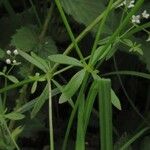
Galium palustre
Common marsh bedstraw · Marsh-bedstraw · Purva Madara (LVL)
Description
Source: leafsnapGalium palustre, the common marsh bedstraw or simply marsh-bedstraw, is a herbaceous annual plant of the family Rubiaceae. This plant is widely distributed, native to virtually every country in Europe, plus Morocco, the Azores, Turkey, Turkmenistan, Western Siberia, Greenland, eastern Canada, St. Pierre & Miquelon, and parts of the United States (primarily the Michigan and the Northeast, but with isolated populations in Tennessee, Montana, Washington and Oregon). The species is classified as a noxious weed in New York, Pennsylvania, Massachusetts, Connecticut, Vermont and New Hampshire. It is considered naturalized in Kamchatka, Australia, New Zealand and Argentina.
Care Guide
💧 Water
Common marsh bedstraw thrives in wetland habitats and prefers high moisture levels, requiring weekly watering to stay hydrated. Although it can tolerate short periods of dryness, maintaining soil moisture during its growing season is essential for ensuring its vigor and health.
How should I water my Common marsh bedstraw?
To properly water the Common marsh bedstraw, it is recommended to use filtered water at room temperature. Tap water may contain harmful particles that can affect the plant's health. The ideal temperature for the water is room temperature or slightly warmer since the Common marsh bedstraw is accustomed to a warm environment. Cold water could be a shock to its system. Instead of overhead watering, it is best to apply the filtered room temperature water directly to the soil until it is completely soaked. This method helps moisten the roots, allowing them to spread and gather the necessary nutrients for the plant's well-being.
What should I do if I give my Common marsh bedstraw too much water or too little water?
Both overwatering and underwatering can harm your Common marsh bedstraw, but overwatering is the more common issue. Excess water can cause wilting and yellowing of the stems and leaves. It can also lead to diseases like root rot, mold, and mildew, which can be fatal to the plant. Underwatering is less common because this plant tolerates drought fairly well. However, it is still possible, and in such cases, the leaves may become brittle and brown. It is important to recognize the signs of overwatering early and take action immediately. Some diseases caused by overwatering, like root rot, may not be reversible if left unaddressed for too long. If you notice early signs of overwatering, reduce your watering schedule and check the soil's drainage. If it drains poorly, replace it with a loose, well-draining potting mix. If you suspect your Common marsh bedstraw is not getting enough water, simply increase your watering frequency until the signs improve.
How frequently should I water my Common marsh bedstraw?
If your Common marsh bedstraw is in a pot, you can use the most precise method to determine if it needs water by checking the moisture level of the soil. Simply stick your finger into the soil and if you find that the top two to three inches are dry, it's time to water it. For outdoor plants grown in the ground, you can use a similar method to test the soil. Once again, if the first few inches of soil have become dry, it's time to water. Typically, during spring and early fall, watering your plant once a week should suffice. However, during extremely hot weather, you may need to water it twice a week or even more frequently. That being said, mature and well-established Common marsh bedstraw plants have an impressive ability to withstand drought.
How much water does my Common marsh bedstraw require?
To properly water your Common marsh bedstraw, be generous with the amount of water you give. Wait until the top two to three inches of soil are dry, then provide a thorough watering that saturates the entire soil. Make sure to add enough water that it drains out through the holes at the bottom of the pot. If you don't see any excess water draining, you may not have watered enough. However, be careful not to let water start accumulating in the soil, as this can harm the plant. On the other hand, if water isn't draining properly from the pot, this could suggest poorly draining soil, which is bad for the plant's health. If the plant is outside, one inch of rain per week will be sufficient.
How much water does my Common marsh bedstraw need at different times as it grows?
The water needs of the Common marsh bedstraw can vary throughout its growth stages. In the first few years or after transplanting, it requires more water due to the development of new roots. These roots need extra moisture to support future growth. However, as the plant matures, it will need less water. Additionally, during the bloom period, the flower development requires significant moisture, so you may need to provide more water during this time.
☀️ Light Partial sun
Common marsh bedstraw is a species that grows best in areas with a moderate amount of sunlight, though it can also maintain growth in places with lower light levels. Excessive light can stress it, while inadequate light may slow its growth. Its native habitats generally exhibit these conditions.
What are the sunlight requirements for Common Marsh Bedstraw?
Common Marsh Bedstraw thrives well in partial sun, requiring about 3-6 hours of sunlight a day. It can also grow in full shade, where it receives less than 3 hours of sunlight daily. Observing how sunlight moves through your garden will help you find spots that offer the perfect balance of light and shade, ensuring the well-being of your plants. This plant adapts well to both environments characteristic of its native habitats but needs careful observation to maintain the right balance between light and shade for optimal growth.
How can artificial lighting benefit indoor Common Marsh Bedstraw plants, and what are the guidelines?
Indoor Common Marsh Bedstraw plants require adequate lighting for optimal growth, especially when natural sunlight is insufficient, such as in winter or less sunny spaces. Artificial lights, particularly LED, can provide the necessary wavelengths of light. For full sun plants, provide 30-50W per square foot, for partial sun plants 20-30W per square foot, and for full shade plants 10-20W per square foot of artificial light. The light source should be placed 12-36 inches above the plant to mimic natural sunlight, and most plants need 8-12 hours of light per day. This promotes faster, healthier growth by compensating for the lack of natural sunlight.
What symptoms indicate a Common Marsh Bedstraw is not receiving adequate sunlight?
Symptoms of inadequate light for Common Marsh Bedstraw include smaller new leaves, leggy or sparse growth, faster leaf drop, slower or no new growth, and changes in leaf color such as lighter-colored new leaves or chlorosis, which is a condition where leaves turn yellow due to a breakdown of chlorophyll. Additionally, excessive light can cause sunscald, leaf curling, wilting, and leaf scorching. These symptoms collectively indicate the plant’s struggle with its current light conditions, affecting its overall health and growth.
What are some solutions to improve light conditions for Common Marsh Bedstraw?
To optimize growth, gradually adapt Common Marsh Bedstraw to changing light conditions by moving it to sunnier spots each week, aiming for 3-6 hours of direct sunlight daily. For large or immovable plants, consider artificial lighting, keeping a desk or ceiling lamp on for at least 8 hours a day, or use professional grow lights. Outdoors, move plants gradually to sunnier locations to avoid sunburn. If light is obstructed, prune blocking branches or move plants to sunnier spots with good drainage, ideally during their dormant period in late winter or early spring. Remember, while parts of the plant that suffered from insufficient sunlight may not recover, new growth after improving light exposure should be healthy.
🌡️ Temperature 20–35°C
Common marsh bedstraw is native to areas with temperate climates and generally thrives at temperatures of 68 to 95 °F (20 to 35 ℃). Seasonal adjustments might be required to keep temperatures within this range for optimal growth.
What is the optimal temperature range for growing Common marsh bedstraw?
Common marsh bedstraw thrives in temperatures between 68 to 95°F (20 to 35°C), originating from regions with moderate climates. It's vital to make seasonal adjustments to maintain this temperature range for the plant's optimal growth. The plant is extremely heat-loving, but it's also sensitive to cold temperatures. To avoid damage from colder climates, it's recommended to bring the plant indoors during autumn and place it near a bright window, away from direct heat sources, ensuring that the temperature stays above 20°C during winter. Conversely, any temperatures nearing 5°C can be detrimental to the plant.
How should I care for Common marsh bedstraw during low temperatures?
Common marsh bedstraw prefers warm temperatures and does not tolerate cold well, thriving best above 20°C. During winter, it's crucial to keep temperatures above 5°C. Exposure to temperatures below 1°C can cause the leaves to lighten in color and, after frost damage, turn brown or black with possible wilting and drooping. To mitigate frost damage, trim off the frost-affected parts and move the plant indoors to a warm environment, placing it near a south-facing window for ample sunlight, but avoid placing it near heaters or air conditioners to prevent air dryness.
What are the steps to take if Common marsh bedstraw experiences high temperatures?
During the summer, it's essential to ensure that the temperature around Common marsh bedstraw does not exceed 35°C to avoid heat stress. If temperatures go over 41°C, the plant's leaves may start to lighten, increasing susceptibility to sunburn. To help the plant recover from high temperatures, trim away sunburned and dried parts. Move the plant to a shaded area that's protected from the intense midday and afternoon sun. Additionally, water the plant in the early morning and evening hours to maintain soil moisture and help cool the plant.
💨 Humidity
🪴 Soil 5-6
🌱 Fertilizer
Common marsh bedstraw needs the most fertilizer during its active growth period, mainly in spring, summer, and early fall. Fertilization provides essential nutrients the soil may lack, supporting healthy root and stem growth as well as the plant's attractive foliage, a defining characteristic.
🪴 Pot & Repot
✂️ Pruning
🌿 Propagating
🐛 Diseases & pets
☠️ Toxicity
Characteristics
- Plant Type
- Herb
- Life Cycle
- Perennial, Annual
- Genus
- Galium
- Family
- Rubiaceae
- Hardiness Zone
- 10
- Mature Height
- 10 cm to 49 cm
- Mature Spread
- 20 cm to 40 cm
- Leaf Color
- Green
- Leaf Type
- Deciduous
- Flower Color
- White
- Flower Size
- 0.25 cm to 0.51 cm
- Bloom Time
- Late spring, Early summer, Mid summer
- Planting Time
- Spring, Autumn
- Harvest Time
- Mid summer