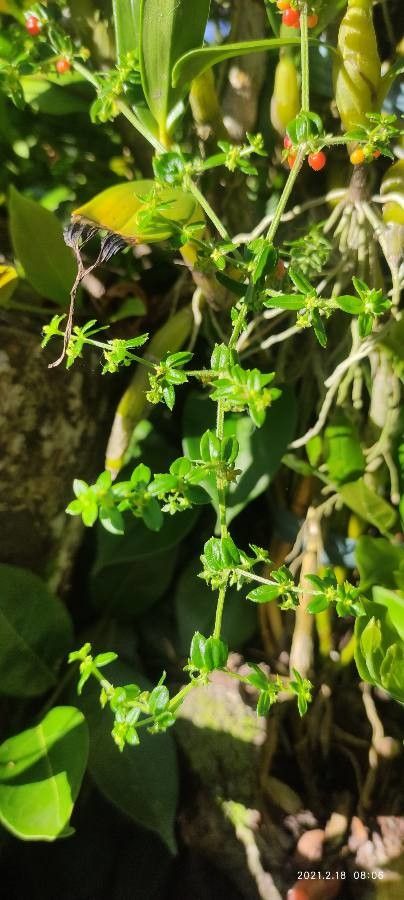
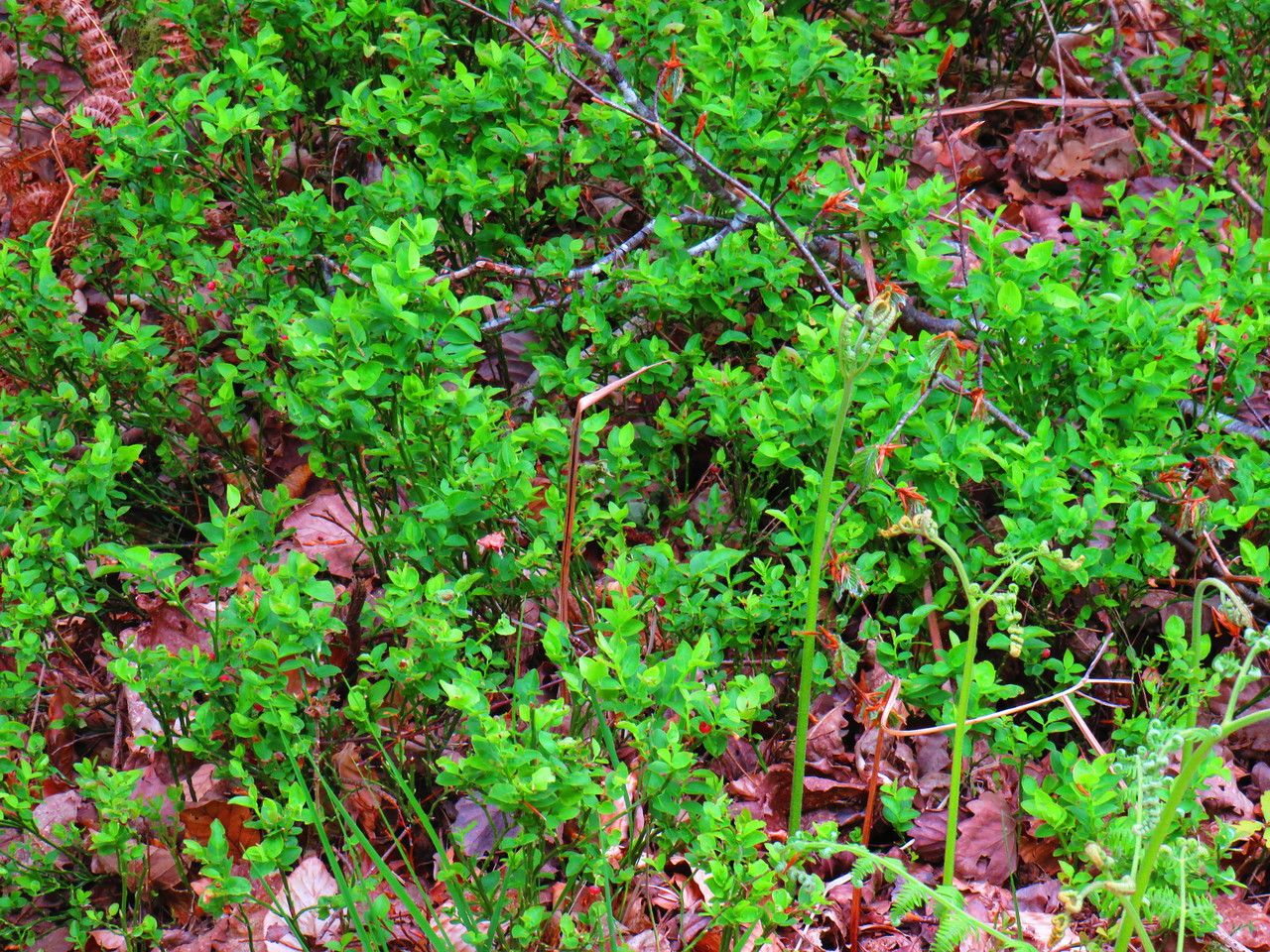
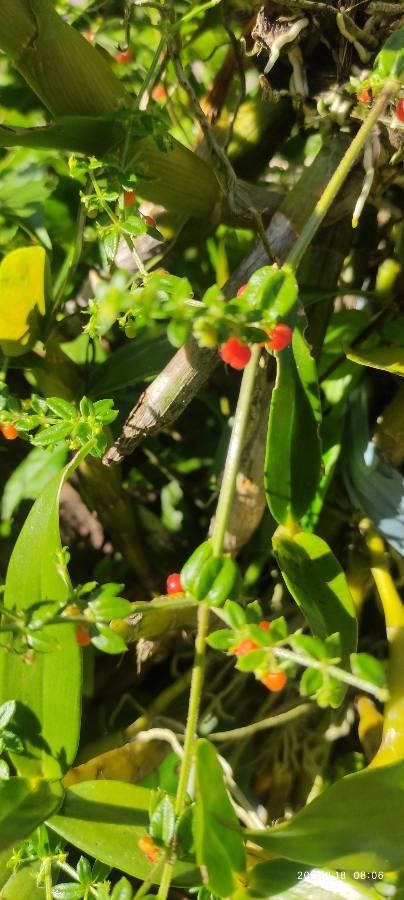
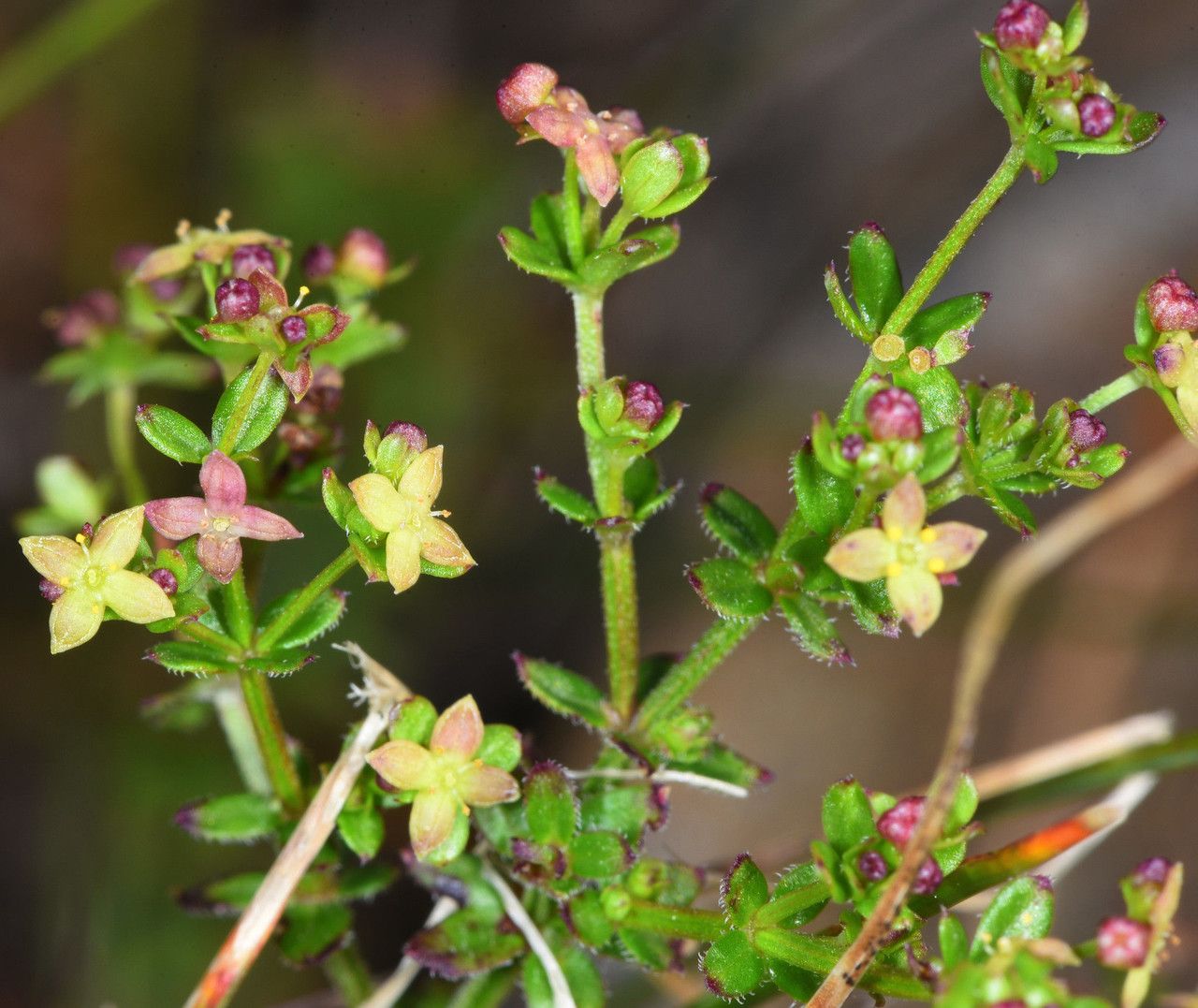
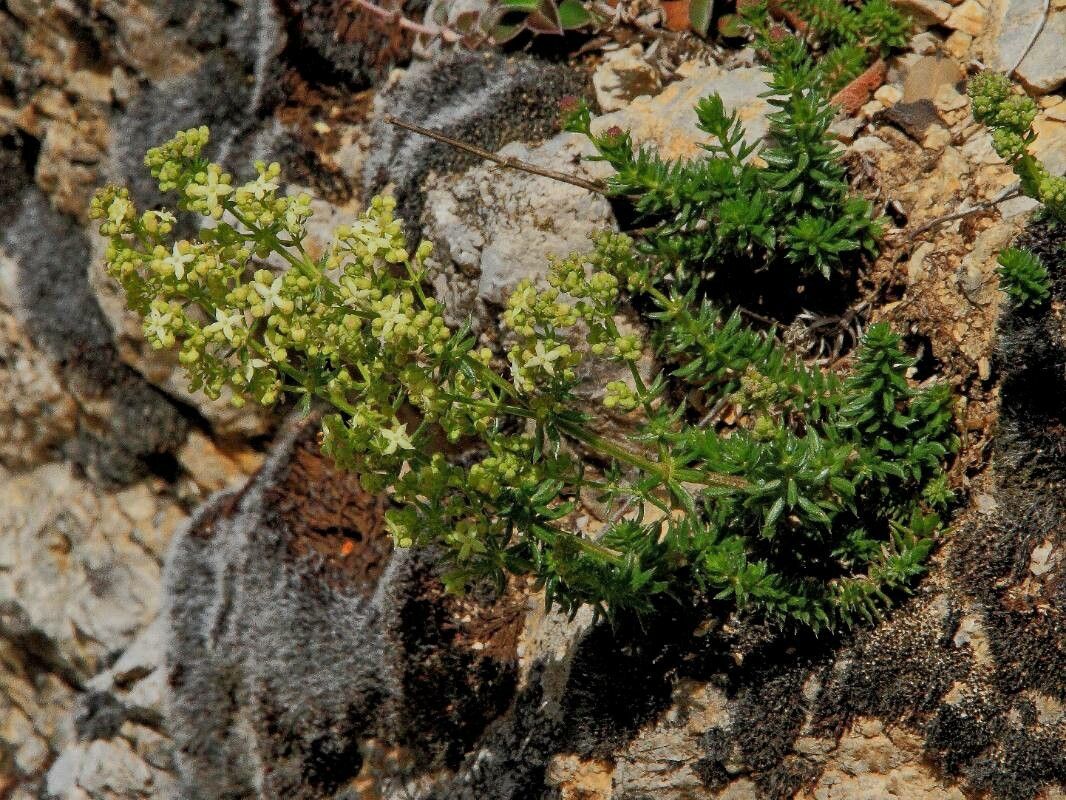
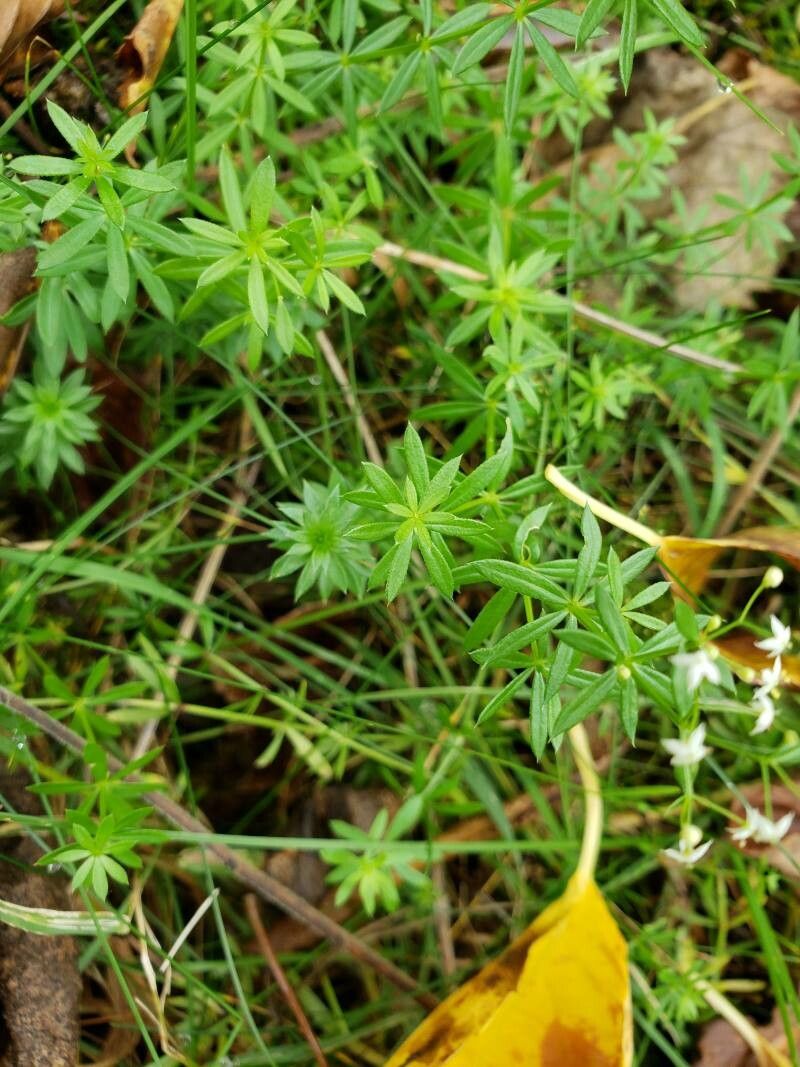
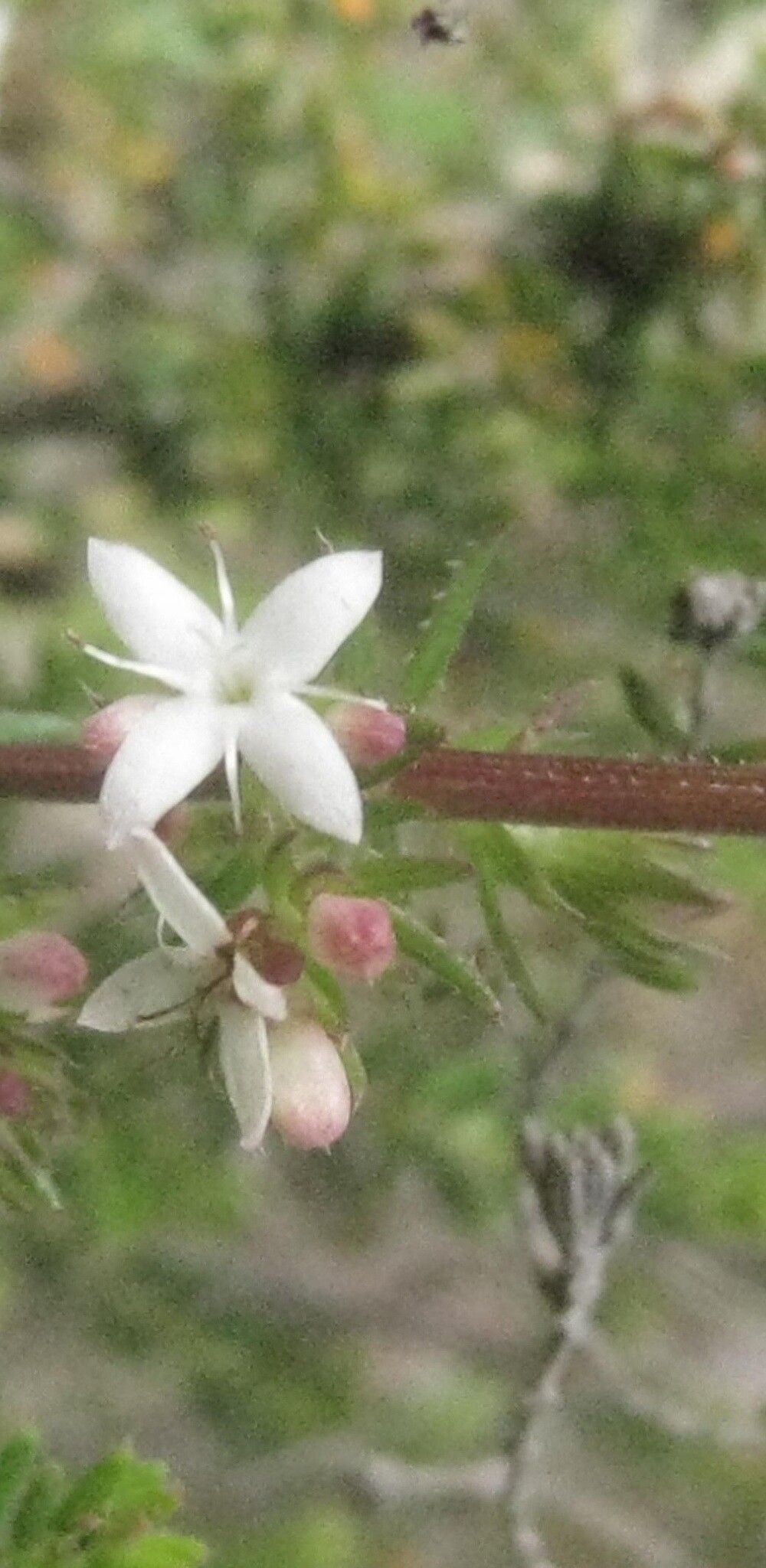
Galium porrigens, commonly known as stickywilly or wild madder, is a perennial herbaceous plant belonging to the Rubiaceae family. Native to North America, it thrives in various habitats such as meadows, forests, and wetlands. The plant can grow up to 1 meter tall and features a square stem covered with small hooked hairs that easily adhere to clothing or animal fur. The leaves of Galium porrigens are arranged in whorls of 4 to 8 around the stem, and are lance-shaped with pointed tips. Its small white flowers, each with four petals, bloom in clusters at the ends of branches from June through August. Historically, Native Americans utilized Galium porrigens for medicinal purposes, treating ailments such as headaches, stomachaches, and fevers. Early settlers also made tea from its leaves. Galium porrigens plays a significant role in ecosystems as an important food source for wildlife; deer feed on its leaves, while birds consume its seeds. Additionally, the plant contributes to soil conservation by preventing erosion through root binding. In conclusion, Galium porrigens is a versatile perennial herb that serves multiple purposes. It has medicinal uses for humans, provides food for wildlife, and helps in soil conservation, making it an essential component of North American ecosystems.
How to keep Galium Porrigens.
Pruning
To improve the health and appearance of graceful bedstraw, perform an early spring pruning to remove any dead or overcrowded stems. This enhances airflow, which supports better growth. Use clean tools to trim away any damaged stems, encouraging a fuller plant and managing its spread. Be sure to properly dispose of the pruned material to prevent the spread of disease and pests.
Botanical profile.
Other names.