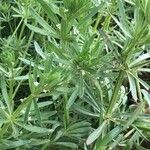
Galium tricornutum
بی تی راخ سه شاخ، زبرینه · Corn-cleavers · Three-horn bedstraw · Rough-corn bedstraw · Roughfruit corn bedstraw
Description
Source: leafsnapGalium tricornutum: An Ecologically and Medicinally Important Plant Galium tricornutum, commonly known as small bedstraw or three-horned bedstraw, is a perennial herbaceous plant in the Rubiaceae family. Native to Europe and Asia, this plant thrives in various habitats, including meadows, woodlands, and hedgerows. The plant can grow up to 60 cm in height, featuring a slender, square-shaped stem. Its leaves are narrow with pointed tips and are arranged in whorls of four or five around the stem. Galium tricornutum produces small white flowers with four petals, which cluster at the end of each stem. Historically, the plant has been valued for its medicinal properties, particularly its diuretic effects, which help treat urinary tract infections. Additionally, its yellow-green color has been used as a natural dye for fabrics. Ecologically, Galium tricornutum plays a crucial role by providing food for various insects such as bees, butterflies, moths, and beetles. It also serves as a host plant for certain butterfly species, including the common blue butterfly (Polyommatus icarus). In summary, Galium tricornutum is a significant herbaceous perennial that offers both ecological and medicinal benefits, making it a valuable species within its native range.
Care Guide
💧 Water Every 7 days
Corn cleavers thrive with moderate hydration and need to be watered weekly to keep the soil consistently damp. Typically grown outdoors, they benefit from adequate watering during the growing season and respond positively to seasonal rainfall patterns for optimal growth.
How should I water my Corn cleavers?
If you need to water Corn cleavers, there are several options you can choose from. You can use a garden hose with a spray nozzle, a watering can, or any other common watering tool. This plant is not very particular about its water source, so it can survive with rainwater, tap water, or filtered water. However, it is best to avoid watering from above as it can harm the leaves and flowers and potentially cause disease. Instead, setting up a drip irrigation system is often the most effective method. This system will evenly and directly apply water to the soil, benefiting the Corn cleavers. If you have a container-grown Corn cleavers, you can follow a similar approach but adjust the tools you use. Use a cup, watering can, or your tap to water the plant directly at the soil level.
What should I do if I give my Corn cleavers too much water or too little water?
If your Corn cleavers plant is not getting enough water, the solution is simple: start watering it more regularly. However, overwatering can be a serious issue if not caught early. It can lead to diseases that cause the plant to decline and die. To prevent this, choose a suitable location for your plant with ample sunlight to dry out the soil and good drainage to avoid water pooling. If you have overwatered your potted Corn cleavers, you may want to consider transferring it to a new pot. The previous container may have had poor drainage or lacking enough drainage holes. When repotting, use loose soil and a pot that drains effectively.
How frequently should I water my Corn cleavers?
Corn cleavers requires regular watering throughout the growing season. In the spring, water the plant once a week. As the season progresses and temperatures rise, you may need to increase watering to two to three times per week. However, be careful not to exceed this rate, as it can harm the plant. Additionally, ensure that the soil remains moist but not wet, regardless of the watering frequency. When watering Corn cleavers in a pot, you will generally need to water more frequently compared to plants in the ground. Potted plants tend to dry out faster, so plan to water container-grown Corn cleavers a few times per week, rather than just once per week for plants in the ground.
How much water does my Corn cleavers plant need?
There are a few different ways to determine how much water to give your Corn cleavers. Some gardeners prefer to gauge soil moisture by feeling the soil. A general rule is to water until the first six inches of soil feel moist. Alternatively, you can use a set measurement. Typically, Corn cleavers require about two gallons of water per week, depending on temperature and soil dryness. However, strictly following this guideline can lead to overwatering if your plant needs less water. When growing Corn cleavers in a container, a different approach is necessary. Water enough to moisten all layers of dry soil. You can check this by inserting your finger into the soil. Another indication is observing a slight trickle of excess water draining through the pot's holes.
How can I know if I'm giving enough water to my Corn cleavers?
Avoiding overwatering your Corn cleavers can be tricky. These plants have deep roots, so you need to water the soil weekly. However, be cautious because Corn cleavers are prone to root rot and browning if overwatered. Underwatering is less common since these plants can survive without extra watering. However, if you wait too long to water, the plant will wilt and develop dry leaves.
☀️ Light Full sun
Corn cleavers is native to bright, open environments and does best in full sun. While it can tolerate partial sun, it prefers direct sunlight for optimal growth. This plant, which can be annual or biennial, is known for its sun-loving nature.
What are the sunlight requirements for Corn Cleavers?
Corn cleavers thrive in environments where they can receive full sun, meaning they flourish with more than 6 hours of direct sunlight per day. They are capable of tolerating partial sun, which is about 3-6 hours of sunlight, but full sun is preferred for optimal growth. Corn cleavers originate from bright, open environments, showcasing their love for the sun. It's important to monitor the movement of sunlight in your garden to ensure you're selecting spots that offer a harmonious balance of light and shade, catering to the needs of your plants and guaranteeing their well-being.
How can artificial lighting be used for Corn Cleavers when natural sunlight is insufficient?
When Corn Cleavers are grown indoors and natural sunlight is insufficient, especially during winter or in shaded areas, artificial lighting becomes crucial for their growth. LED lights can be a suitable option because they can be tailored to provide specific wavelengths needed by the plants. Generally, full sun plants require 30-50W/sq ft, partial sun plants 20-30W/sq ft, and full shade plants 10-20W/sq ft of artificial light. The light source should be placed 12-36 inches above the plant, mimicking the natural sunlight's distance, with a duration of 8-12 hours per day to replicate natural daylight hours, promoting healthier and faster growth.
What are the common symptoms of inadequate light for indoor-grown Corn Cleavers?
Indoor-grown Corn Cleavers may showcase various symptoms indicating inadequate light exposure, such as smaller new leaves compared to previous ones, leggy or sparse growth due to elongated spaces between leaves or stems, accelerated leaf drop, halted or completely stopped growth, paler new leaves, and symptoms of chlorosis (yellowing leaves due to chlorophyll breakdown), sunscald, leaf curling, wilting, and leaf scorching. Each of these symptoms reflects the plant’s struggle with insufficient light, impacting its overall health and growth.
What solutions can be implemented for Corn Cleavers facing light deficiency indoors and outdoors?
For Corn Cleavers facing light deficiency, indoors solutions include gradually moving plants to sunnier locations to eventually receive at least 6 hours of sunlight daily, utilizing a south-facing window, and considering supplemental artificial light if natural light is insufficient. Outdoors, the process involves gradually acclimatizing plants to sunnier spots to prevent sunburn. To minimize sunlight obstructions, observe and reduce barriers by pruning or transplanting, specifically for smaller plants, during their dormant period for better light access and growth. While affected parts may not recover, new growth will be healthier following improved light exposure.
🌡️ Temperature 5–35°C
Corn cleavers can tolerate a wide range of temperatures, but its distribution may still be restricted by certain combinations of moisture and heat. It does best in warm summer conditions with sufficient rainfall or watering. Extended periods of cloudy, rainy weather and prolonged high temperatures can raise the risk of Corn cleavers dying. In winter, adequate protection from cold can help improve the plant's survival.
💨 Humidity
🪴 Soil 6-7
🌱 Fertilizer
Corn cleavers do well with regular, dilute applications of fertilizer to encourage healthy leaf growth. Fertilize Corn cleavers roughly once a month throughout the summer. Nitrogen is vital for foliage, and providing nitrogen-rich sources helps Corn cleavers thrive.
🪴 Pot & Repot
✂️ Pruning
Corn cleavers have scrambling stems and hooked bristles. Prune these plants from early to late spring to manage their growth. Remove any dead stems and thin out dense areas to improve air circulation, reduce the risk of disease, and promote overall health. Be sure to use clean, sharp tools for effective pruning.
🌿 Propagating
🐛 Diseases & pets
☠️ Toxicity
Characteristics
- Plant Type
- Herb
- Life Cycle
- Annual
- Genus
- Galium
- Family
- Rubiaceae
- Hardiness Zone
- 5-9
- Mature Height
- 20 cm to 61 cm
- Mature Spread
- 15 cm to 30 cm
- Leaf Color
- Green
- Leaf Type
- Deciduous
- Flower Color
- White
- Flower Size
- 0.20 cm to 0.25 cm
- Bloom Time
- Mid spring, Late spring, Early summer
- Planting Time
- Spring
- Harvest Time
- Summer
- Native Area
- Libya, Egypt, Turkey, Sweden, India, Austria, United Arab Emirates, Slovakia, Pakistan, Slovenia, Croatia, Yemen, Belarus, Uzbekistan, Russia, Iraq, Germany, Romania, Qatar, Belgium, Portugal, Netherlands, Saudi Arabia, France, Tajikistan, Tunisia, Cyprus, Bulgaria, Poland, Armenia, Greece, Ukraine, Serbia, Lebanon, China, Norway, Afghanistan, Syria, Kyrgyzstan, Kazakhstan, Italy, Spain, Switzerland, Iran, Albania, Azerbaijan, Hungary, Turkmenistan