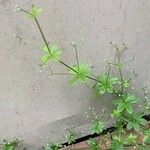
Galium triflorum
Sweet-scent bedstraw · Fragrant Bedstraw · Sweet Bedstraw · Sweetscented Bedstraw · Three-flowered Bedstraw
Description
Source: leafsnapGalium triflorum, commonly known as fragrant bedstraw or sweet-scented bedstraw, is a perennial herbaceous plant in the Rubiaceae family. Native to North America, it thrives in various habitats, including meadows, prairies, and open woods. Reaching up to 3 feet in height, the plant has a sprawling growth habit with square stems covered in small hairs. Its lance-shaped leaves are arranged in whorls of 6-8 around the stem and feature pointed tips. From May to August, Galium triflorum produces small, white, sweet-smelling flowers that attract bees and other pollinators. Historically, Native Americans have used this plant medicinally to treat ailments such as headaches, stomachaches, and skin irritations. It has also served as a natural dye for textiles. Fragrant bedstraw is an essential food source for many butterfly species, including monarch butterfly caterpillars, which feed on its leaves. In summary, Galium triflorum is a captivating wildflower with fragrant blooms that enhances natural landscapes while providing important ecological benefits, such as supporting pollinator habitats.
Care Guide
💧 Water Every 7 days
Cudweed thrives in moisture-rich environments and needs weekly watering to stay healthy. Although it has some drought tolerance, it primarily grows outdoors and adjusts its growth cycle based on rainfall patterns. This helps it make the most of water during wetter periods.
How can I water my Cudweed plant in the best way?
To properly water the Cudweed plant, it's best to use filtered water at room temperature. Tap water may contain harmful particles. Additionally, the water should be at room temperature or slightly warmer because the Cudweed is used to a warm environment and cold water can be a shock. Avoid spraying water on the foliage and instead, thoroughly water the soil until it's soaked. This is beneficial for the plant as it helps moisten the roots, allowing them to spread and absorb nutrients from the soil.
What should I do if I give my Cudweed too much water or too little water?
Overwatering and underwatering can harm your Cudweed, but overwatering is more common. Excessive water causes wilting and yellowing of stems and leaves, and can lead to diseases like root rot, mold, and mildew, which can kill the plant. Underwatering is less common because Cudweed is drought tolerant, but it can still happen, turning the leaves brittle and brown. It's important to spot signs of overwatering early as some diseases may be irreversible if left too long. Reduce watering and improve soil drainage if overwatering is observed. For underwatering, increase watering until signs improve.
How frequently should I water my Cudweed plant?
If your Cudweed plant is in a pot, the most precise way to determine if it needs water is by checking the soil moisture. Plunge your finger into the soil and if you feel that the top two to three inches are dry, then it's time to water it. For outdoor Cudweed plants in the ground, you can use a similar method to test the soil moisture. Once again, if you find that the first few inches of soil are dry, it's a sign that you should water the plant. During spring and early fall, you'll likely need to water the Cudweed about once a week using this method. However, in extremely hot weather, you may need to increase watering to about twice a week or even more. It's important to note that mature and well-established Cudweed plants can withstand drought quite well.
How much water does my Cudweed plant need?
To ensure your Cudweed gets the right amount of water, be generous when watering. Wait until the top two to three inches of soil are dry before giving it a good soak. Make sure the water penetrates the entire soil by giving enough that excess water can flow out of the drainage holes at the bottom of the pot. If you don't see any excess water draining, you may have not given enough water or the soil may not be draining properly. Avoid letting water accumulate in the soil as it can harm the plant. For outdoor Cudweed, one inch of rain per week is enough.
How do I water my Cudweed when it's growing at different stages?
The water needs of the Cudweed can change depending on its growth stages. When the Cudweed is in its early years or has just been transplanted, it requires more water than usual. This is because it is focusing on developing new roots to support future growth, and these roots need more moisture. As the Cudweed matures, it will need less water. Another stage where more water may be necessary is during the bloom period, as the flower development uses up a significant amount of moisture.
☀️ Light Full sun
Cudweed increasingly prefers areas that receive a lot of sun. In its native environment it is accustomed to abundant light. Nevertheless, it is fairly resilient and can also adjust to spots with a mix of sun and shade or even relatively low light. These variations in light levels can influence its optimal growth and overall health.
What are the sunlight requirements for Cudweed?
Cudweed thrives in various sunlight conditions, demonstrating a preference for full sun, which means it needs more than 6 hours of sunlight daily. It can also grow in partial sun and full shade, requiring about 3-6 hours of sunlight. The plant has a remarkable ability to adapt to different light levels, which can influence its growth and health. Observing how sunlight moves through your garden will help you find the ideal spots that offer the right balance of light and shade, ensuring your plants stay healthy and happy.
How does artificial lighting support Cudweed growth indoors?
When natural sunlight is insufficient, especially during winter or in less sunny spaces, artificial lighting becomes crucial for Cudweed's growth indoors. Adequate lighting is essential for optimal plant growth, with LED lights being a popular choice due to their capability to provide specific wavelengths needed by plants. Full sun plants require 30-50W/sq ft, partial sun plants need 20-30W/sq ft, and full shade plants demand 10-20W/sq ft of artificial light. Placing the light source 12-36 inches above the plants mimics natural sunlight, and adjusting the duration to 8-12 hours daily can promote faster, healthier growth.
What are the symptoms of light deficiency in Cudweed?
Cudweed exhibits several symptoms when exposed to inadequate lighting, including smaller new leaves, leggy or sparse growth, faster leaf drop, slower or halted new growth, and lighter-colored new leaves. Excessive sunlight can cause chlorosis, sunscald, leaf curling, wilting, and leaf scorching. These symptoms indicate the plant's struggle with the current light conditions, affecting its ability to photosynthesize effectively, maintain hydration, and ultimately its overall health and appearance.
How can I optimize Cudweed's lighting conditions for better growth?
To enhance Cudweed's growth, gradually expose it to more sunlight until it receives at least 6 hours of direct sunlight daily. For indoor plants, consider using a south-facing window or artificial lighting to achieve optimal sunlight exposure. Outdoor plants should be moved progressively to sunnier spots to prevent sunburn. If sunlight is blocked by obstacles like trees, consider pruning to improve light penetration. For smaller plants, relocating them during their dormant period to a location with ample sunlight and good drainage can also boost their growth. Remember, while parts of the plant damaged by insufficient light may not recover, new growth will be healthy with improved lighting conditions.
🌡️ Temperature 0–41.1°C
Cudweed tolerates a wide range of temperatures and can grow between 32 to 105.8 °F (0 to 41 ℃). It flourishes in its native habitats where temperatures vary greatly. To replicate those conditions, adjust temperatures seasonally for optimal growth.
What temperature range is suitable for cudweed growth?
Cudweed is adapted to grow within a wide temperature range of 32 to 105.8 °F (0 to 41 °C). It thrives in environments where temperatures can fluctuate widely. To ensure optimal growth, it's recommended to adjust the temperatures seasonally. Cudweed has a strong resistance to cold, so special frost protection measures are not usually necessary. However, during winters where temperatures may drop below -40°C, it's important to provide protection by covering the plant with soil or straw. Additionally, watering the plant abundantly before the first freeze in autumn helps to keep the soil moist and prevents water scarcity during winter and early spring.
How does cudweed respond to low temperatures?
Cudweed is notably cold-tolerant, performing best when temperatures remain above 0°C. It should ideally be kept above -35°C during winter. Although it can survive temperatures below -40°C without noticeable changes during the winter, such extreme cold may lead to a decrease in sprouting, or in some cases, prevent sprouting entirely come spring. If parts of the cudweed fail to sprout in spring, it is advised to remove these unproductive parts.
What are the effects of high temperatures on cudweed, and how can they be mitigated?
During the summer months, cudweed should be maintained at temperatures below 41°C. Exposure to temperatures exceeding 45°C can result in the leaves lightening in color, curling, becoming prone to sunburn, and in severe cases, the entire plant wilting and drying out. To mitigate these effects, sunburned and dried parts of the plant should be trimmed away. Relocating the plant to a shaded area or using a shade cloth to provide protection from the midday and afternoon sun can also be beneficial. Moreover, watering the plant in the mornings and evenings will help keep the soil moist and support plant health.
💨 Humidity
🪴 Soil 5-7
🌱 Fertilizer
One application of fertilizer in spring is generally enough for Cudweed, though multiple feedings can maximize growth. Feed every one to one and a half months. Fertilization improves the leaves’ appearance and function, helping maintain uniform color and a healthy texture. It also encourages root development and nutrient uptake for long-term plant health.
🪴 Pot & Repot
✂️ Pruning
🌿 Propagating
🐛 Diseases & pets
☠️ Toxicity
Characteristics
- Plant Type
- Herb
- Life Cycle
- Perennial
- Genus
- Galium
- Family
- Rubiaceae
- Hardiness Zone
- 2-13
- Mature Height
- 15 cm to 76 cm
- Mature Spread
- 61 cm to 91 cm
- Leaf Color
- Green, Dark Green
- Leaf Type
- Semi-evergreen
- Flower Color
- White
- Flower Size
- 0.15 cm to 0.25 cm
- Bloom Time
- Late spring, Early summer, Mid summer
- Planting Time
- Spring, Summer
- Harvest Time
- Mid summer
- Native Area
- Nepal, India, Sweden, Mexico, Belarus, China, Russia, Lithuania, Norway, Switzerland, Denmark, Japan, Finland, Estonia, Latvia