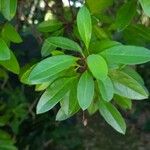
Galphimia glauca
Shower of gold · Goldshower
Description
Source: leafsnapGalphimia glauca, commonly known as Thryallis or Rain of Gold, is a flowering plant native to Mexico and Central America. This plant, belonging to the Malpighiaceae family, is highly favored as an ornamental due to its beautiful yellow flowers that bloom year-round. It can grow up to 6 feet tall and features glossy, green, oval-shaped leaves with pointed tips. The small, star-shaped flowers, approximately 1 inch in diameter, grow in clusters at the end of branches and attract both bees and butterflies. Galphimia glauca thrives in full sun or partial shade and requires well-draining soil. Once established, it is drought-tolerant but benefits from regular watering during dry periods. The plant can be propagated by seeds or cuttings. Traditionally, Galphimia glauca has been used for its anti-inflammatory properties and to treat anxiety disorders such as panic attacks and phobias, thanks to its calming effects on the nervous system. Overall, Galphimia glauca is an appealing ornamental plant that brings vibrant color to gardens year-round while also offering potential medicinal benefits when used appropriately under medical supervision.
Care Guide
💧 Water Every 7 days
Goldshower, a plant native to tropical regions, thrives in environments with high humidity and consistent moisture. To care for it properly, water the plant weekly to keep the soil moist, but be careful not to let it become waterlogged. During rainy seasons, adjust your watering schedule to avoid overwatering.
☀️ Light Full sun
Goldshower comes from open habitats, like sunny meadows and forest edges, which offer abundant light. It thrives in Full Sun but can also tolerate Partial Sun, adapting well to different sunlight conditions.
🌡️ Temperature 20–37.8°C
Goldshower comes from tropical areas where the climate is generally warm and humid. Because of this, it is well adapted to high temperatures and humidity. It does not tolerate sudden temperature changes and prefers a steady temperature, so avoiding temperature fluctuations indoors is important. It usually cannot withstand cold and needs higher temperatures to grow. If the surrounding temperature falls too low, the plant may stop growing or even die.
💨 Humidity
🪴 Soil 6-8
🌱 Fertilizer
The best time to fertilize a Goldshower is in early spring, when it emerges from dormancy. This encourages overall growth and flower development. Fertilizing improves foliage, stems, and branches, and promotes large, vibrant, long-lasting flowers. It helps transfer nutrients from the roots to the blooms and enhances the plant's health and resistance to disease.
🪴 Pot & Repot Every 12 months
✂️ Pruning
Goldshower is a lively shrub known for its bright yellow flowers. To promote growth and blooming, prune the plant between early and late winter. Focus on removing dead branches and thinning out crowded areas. Regular pruning helps maintain the shrub’s shape and encourages dense foliage. Always use clean tools to minimize stress and prevent disease.
🌿 Propagating
🐛 Diseases & pets
☠️ Toxicity
Characteristics
- Plant Type
- Shrub
- Life Cycle
- Perennial
- Genus
- Galphimia
- Family
- Malpighiaceae
- Hardiness Zone
- 9-11
- Mature Height
- 0.91 m to 3.05 m
- Mature Spread
- 0.91 m to 2.13 m
- Leaf Color
- Light Green
- Leaf Type
- Evergreen
- Flower Color
- Yellow
- Flower Size
- 1.02 cm to 1.52 cm
- Bloom Time
- Late spring, Summer, Early fall, Mid fall
- Planting Time
- Spring, Summer
- Harvest Time
- Mid summer, Late summer, Fall, Early winter
- Native Area
- Honduras, Mexico, Guatemala, El Salvador, Nicaragua