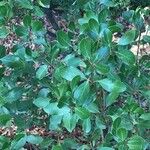
Garrya fremontii
Fremont silktassel · Bearbrush
Description
Source: leafsnapGarrya fremontii, widely known as Fremont's silk tassel, is a shrub species native to the western United States. As a member of the Garryaceae family, it can reach heights of up to 20 feet and spread up to 15 feet wide. This plant boasts an upright growth habit and dense foliage, providing excellent cover for wildlife. The leaves of Garrya fremontii are dark green, glossy, and have a leathery texture. It produces small, inconspicuous flowers, followed by long clusters of silky gray-green catkins that can extend up to 10 inches in length. Garrya fremontii thrives in well-drained soils and can grow in either full sun or partial shade. Once established, it is drought-tolerant. Its attractive foliage and unique catkins make it a popular choice as an ornamental shrub in landscaping. Historically, Native American tribes have used Garrya fremontii for medicinal purposes to treat various ailments, including colds, coughs, fevers, headaches, and stomachaches. Additionally, its bark was prized for basket-making due to its flexibility. Overall, Garrya fremontii is an attractive shrub with unique features, making it a favorite among gardeners while also holding cultural significance for Native American tribes who have utilized it medicinally over time.
Care Guide
💧 Water Every 7 days
Bearbrush thrives in woodland-like environments with occasional rainfall. This plant is drought-tolerant and requires watering every 1-2 weeks, allowing the soil to dry between waterings. It is best grown outdoors and benefits from mulching to retain moisture while preventing waterlogging.
☀️ Light Partial sun
Bearbrush naturally occurs in habitats such as forest understories and rocky areas, where it is exposed to natural shade. It favors partial sun but can tolerate full sun or full shade, illustrating its versatility and hardiness.
🌡️ Temperature 15–35°C
Bearbrush displays strong adaptability to different climatic conditions, whether facing hot summers or cold winters. However, it does have an optimal temperature range for growth. When temperatures become too high, the plant is vulnerable to heat and humidity stress, which can cause it to die. In areas where temperatures approach the lower limit of its cold tolerance, it’s important to provide insulation to protect the plant.
💨 Humidity
🪴 Soil 6-8
🌱 Fertilizer
The timing of fertilizing Bearbrush is important. Apply fertilizer in early spring and continue on a monthly basis until early summer. Fertilizer promotes attractive blooms and supplies energy during both dormant and active growth periods.
🪴 Pot & Repot
✂️ Pruning
Bearbrush thrives with annual pruning in early spring, which encourages healthy growth and vibrant flowering. Be sure to remove any dead branches and thin out dense areas to improve air circulation. To prevent disease, use clean, sharp tools. After the plant has finished blooming, perform light maintenance pruning to keep it looking its best.
🌿 Propagating
🐛 Diseases & pets
☠️ Toxicity
Characteristics
- Plant Type
- Shrub
- Life Cycle
- Perennial
- Genus
- Garrya
- Family
- Garryaceae
- Hardiness Zone
- 7-10
- Mature Height
- 2.13 m to 4.88 m
- Mature Spread
- 2.13 m to 3.05 m
- Leaf Color
- Dark Green, Olive Drab
- Leaf Type
- Evergreen
- Flower Color
- White
- Flower Size
- 5.08 cm to 10.16 cm
- Bloom Time
- Late winter, Early spring, Mid spring
- Planting Time
- Spring, Winter
- Harvest Time
- Late summer, Early fall, Mid fall