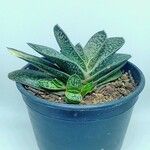
Gasteria minima
Care Guide
💧 Water
Gracilis is a drought-tolerant succulent that thrives in dry conditions and requires minimal watering. It only needs to be watered every 2-3 weeks. To prevent root rot, it should be planted in well-draining soil, which is particularly important for maintaining proper moisture balance when grown indoors.
☀️ Light Partial sun
Gracilis, a species that thrives in the midday sun, can tolerate both fully exposed and fully shaded lighting conditions. Native to settings with varied light, moderate exposure promotes vigorous growth. Excessive or insufficient light, however, can impede its development or harm its health.
What are the sunlight requirements for Gracilis?
Gracilis requires partial sun, about 3-6 hours of sunlight, but it can also thrive in full sun or full shade conditions, which means more than 6 hours of sunlight. It's essential to watch how sunlight moves through your garden to ensure you place your plants in spots that offer a balanced mix of light and shade, promoting their health and happiness.
What are the essential care tips for Gracilis?
Gracilis is a versatile species that does well under both completely exposed and completely shaded lighting conditions, thanks to its origin in environments with varied light. Balanced exposure is crucial for its robust growth. However, both overexposure and underexposure can hinder its development or damage its health. For indoor plants where natural sunlight is insufficient, artificial lighting becomes essential for growth. LED lights are recommended, with full sun plants requiring 30-50W/sq ft, partial sun plants 20-30W/sq ft, and full shade plants 10-20W/sq ft. The light source should be 12-36 inches above the plant for a duration mimicking natural daylight, usually 8-12 hours per day.
What are the common symptoms of improper light exposure in Gracilis?
Gracilis shows a range of symptoms when it doesn't get the right amount of light. Insufficient sunlight may cause new leaves to become lighter in color or the plant to appear pale, indicating a lack of chlorophyll. Plants may exhibit leggy growth or become sparse and weak. Chlorosis, or the yellowing of leaves due to excessive sunlight, hampers photosynthesis. Sunscald, leaf curling, wilting, and leaf scorching are other symptoms, each indicating issues like too much direct sunlight or insufficient watering, resulting in damaged plant tissues or reduced overall health.
How can I address light exposure problems in Gracilis?
To optimize Gracilis's growth, gradually adjust it to the right light conditions. For indoor plants, move them incrementally to sunnier spots to receive 3-6 hours of sunlight or use artificial lighting if moving them is impractical. Outdoor plants should be moved gradually to prevent sunburn. If light is blocked by physical obstructions like trees, consider pruning to improve sunlight exposure. For smaller plants, transplanting during the dormant season to a sunnier location may be beneficial. It's crucial to note that while parts of the plant damaged by inadequate light may not recover, new growth will be healthy with proper light exposure.
🌡️ Temperature 20–37.8°C
The gracilis plant's native growth environment requires temperatures ranging from 18 to 30 ℃ (64 to 86 ℉). It prefers a temperature range of 20 to 38 ℃ (68 to 100 ℉). In colder seasons, it is recommended to keep the plant at 16 to 24 ℃ (60 to 75 ℉) to ensure proper growth and development.
What is the ideal temperature range for growing Gracilis?
The Gracilis plant thrives in a native growth environment with temperatures ranging from 18 to 30°C (64 to 86°F), but it prefers a slightly warmer range of 20 to 38°C (68 to 100°F). During the colder seasons, maintaining a temperature range of 16 to 24°C (60 to 75°F) is essential for proper growth and development. As winter is the growing season for Gracilis, keeping temperatures above 20°C ensures optimal growth. It's important to protect the plant from temperatures below 0°C by moving it indoors to a well-lit area, and if overwintering outside, placing it in a sheltered spot with ample sunlight, or considering a temporary greenhouse while keeping it adequately moist.
How should I care for my Gracilis plant during extremely low temperatures?
Gracilis plants are not tolerant of extremely cold temperatures and thrive best when kept between 20°C and 38°C. During winter, temperatures should remain above 0°C. Exposure to temperatures below -5°C can cause the leaves to exhibit water-soaked necrosis and wilting. For mild frost damage, symptoms might not be immediate, but wilting and leaf drop can occur within a week. To address this, trim off the frostbitten areas and immediately move the plant to a warmer indoor environment or set up a makeshift greenhouse for protection against the cold. Choose a location near a south-facing window for indoor placement to ensure the plant receives ample sunlight, and ensure the greenhouse is well-ventilated to prevent plant decay.
What should I do if my Gracilis plant is exposed to high temperatures?
During the summer months, it's crucial to keep the Gracilis plant below 38°C. Temperatures exceeding 43°C can cause the plant to enter a dormant state and become more susceptible to rot in high humidity conditions. If your plant is exposed to such high temperatures, remove any dry and rotten parts and relocate it to a partially shaded area to protect it from direct sunlight, especially during midday and afternoon. Avoid watering the plant until the weather cools down to help prevent further stress and potential damage.
What are the botanical characteristics of Gracilis?
Gracilis, known botanically as Gasteria minima, is a plant species that requires specific care and environmental conditions to thrive. Understanding its preferred temperature ranges and how to address symptoms of stress due to temperature extremes are vital for its healthy growth and development.
💨 Humidity
🪴 Soil 6-7
🌱 Fertilizer
For Gracilis, small amounts of fertilizer applied once or twice a year during the growing season are adequate. Do not fertilize in winter or in summer when it is dormant. Cut back on fertilizer for plants that have been repotted and wait a couple of months after repotting before feeding. Fertilizing promotes healthy growth and encourages blooms.
🪴 Pot & Repot Every 2 years
When repotting Gracilis, choose a pot slightly larger than the current one that has good drainage. Use a gritty, well-draining succulent or cactus mix. Gently remove the plant from its old pot, brush off excess soil, and place it back at the same depth. Wait a few days before watering so any root damage can heal. Repot during spring or fall and keep it in a brightly lit location.
✂️ Pruning
🌿 Propagating
🐛 Diseases & pets
☠️ Toxicity
Characteristics
- Plant Type
- Succulent, Herb
- Life Cycle
- Perennial
- Genus
- Gasteria
- Family
- Xanthorrhoeaceae
- Hardiness Zone
- 9-11
- Mature Height
- 15 cm
- Mature Spread
- 5 cm to 6 cm
- Leaf Color
- Green, Blue, Yellow, White
- Leaf Type
- Evergreen
- Flower Color
- Pink, Orange
- Flower Size
- 2.03 cm
- Bloom Time
- Late spring, Early summer
- Planting Time
- Spring, Summer
- Harvest Time
- Early summer, Mid summer