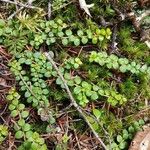
Gaultheria hispidula
Creeping Wintergreen · Creeping-Snowberry · Cancer Wintergreen · Maidenhair Berry · Moxieplum
Description
Source: leafsnapGaultheria hispidula, commonly known as the creeping snowberry or moxie-plum, and known to Micmaq tribes of Newfoundland as Manna Teaberry, is a perennial spreading ground-level vine of the heath family Ericaceae. It is native to North America and produces small white edible berries. It fruits from August to September. Its leaves and berries taste and smell like wintergreen.
Care Guide
💧 Water
Creeping snowberry thrives in high humidity and consistently moist environments, preferring soil that is evenly damp and exhibits moderate tolerance to drought. Watering every 2-3 weeks is recommended to keep the soil hydrated without making it waterlogged. This plant is ideal as ground cover and benefits from mulching, which helps retain moisture and mimics its natural habitat.
How should I water my Creeping snowberry plants?
Your Creeping snowberry is not too picky about how you water it. You can use any common watering tool like watering cans, hoses, or cups. Just make sure to water the plant's soil directly. It's important to evenly moisten all areas of the soil to provide water to the entire root system. Using filtered water is helpful as tap water may have harmful particles. Also, use water at or slightly above room temperature as extremely hot or cold water can shock the plant. However, the Creeping snowberry usually responds well to all types of water.
What should I do if I give too much or too little water to my Creeping snowberry plant?
Outdoor plants, especially newly planted ones or seedlings, are susceptible to lack of watering. When trees are small or newly planted, it is important to consistently water them for a few months. This is because once the roots are established, they can rely on rain. When Creeping snowberry plants are in pots, overwatering is more likely. If you accidentally overwater your Creeping snowberry, take immediate action to fix the situation. Firstly, stop watering the plant to minimize the effects of overwatering. Then, remove the plant from its pot to inspect the roots. If no root rot is found, you can return the plant back to the pot. However, if there are signs of root rot, trim affected roots and apply a fungicide to prevent further damage. Lastly, repot the Creeping snowberry in well-draining soil. In the case of underwatering, simply water the plant more frequently. Underwatering can be easily addressed—when the leaves droop, dry out, and fall off, they will quickly regain fullness after sufficient watering. Make sure to adjust your watering frequency promptly when underwatering occurs.
How frequently should I water my Creeping snowberry plant?
Most outdoor plants can grow naturally with rainfall. If your area doesn't get enough rainfall, water your plants every 2 weeks in spring and fall but more frequently in summer. In winter, water sparingly since plants grow slower and need less water. Young or newly planted Creeping snowberry plants should be watered more often to help them establish and become more drought tolerant. For potted Creeping snowberry plants, you have two options for determining watering frequency. The first is setting a predetermined schedule, such as once every week or every other week. However, this may not always work as it doesn't consider the specific growing conditions for your plant. Watering frequency can also vary depending on the season. During summer, when the plant's water needs are highest, a predetermined schedule may not be enough. Another option is to base watering frequency on soil moisture. Wait until the first two to four inches of soil, about ⅓ to ½ depth of the pots, have completely dried out before watering again.
How much water does my Creeping snowberry plant need?
To water your Creeping snowberry effectively, you don't always need to use a lot of water. Just check if a few inches of the soil have dried since the last watering. If so, give it around five to ten ounces of water each time. You can also gauge the water volume by assessing the soil moisture. Keep track of how many inches of soil have dried between waterings. To ensure your Creeping snowberry gets enough moisture, make sure to water all the layers of soil that have dried since the last watering. If more than half of the soil is dry, it's a good idea to give it more water. Keep adding water until you see excess water draining from the pot's drainage holes. If your Creeping snowberry is planted in an outdoor area that receives plenty of rain, it may not require any additional watering. However, when it's young or establishing itself, make sure it receives 1-2 inches of rain per week. As it grows and becomes established, it can rely solely on rainwater. Only during hot weather without rainfall for 2-3 weeks should you consider giving it a full watering to prevent stress.
How do I know if I'm giving enough water to my Creeping snowberry plant?
The Creeping snowberry commonly suffers from overwatering, which can be identified by yellowing leaves and leaf drop. Overwatering can also lead to a shriveled plant structure and root rot. On the other hand, an underwatered Creeping snowberry will wilt and have brown or brittle leaves. If you notice signs of overwatering or underwatering, take action to restore the plant's health.
☀️ Light Partial sun
The creeping snowberry prefers locations with filtered or dappled sunlight rather than full, unobstructed sun. It thrives best under these light conditions, which mirror its native habitat. Still, the plant can tolerate environments without sun. Both excessive and insufficient light can stress it, lowering its vigor and restricting its growth.
What are the sunlight requirements for Creeping Snowberry?
Creeping Snowberry requires about 3-6 hours of sunlight daily and appreciates filtered sun rather than unobstructed sunlight for optimal growth. It's crucial to watch how sunlight moves through your garden to find spots that offer the perfect balance of light and shade, ensuring the plants thrive. However, the plant can also survive in less sunny conditions, thanks to its adaptability. Both excessive and insufficient light can cause stress, affecting the plant's health and growth.
How can artificial lighting benefit indoor Creeping Snowberry plants?
Artificial lighting is essential for indoor Creeping Snowberry plants, especially when natural sunlight is insufficient. In conditions such as winter or less sunny spaces, artificial lights promote healthier and faster growth by providing the necessary lighting. LED lights are recommended as they can be tailored to offer specific wavelengths needed by your plants. For different plant needs; full sun plants require 30-50W/sq ft, partial sun plants need 20-30W/sq ft, and full shade plants need 10-20W/sq ft of artificial light. The proper distance (12-36 inches above the plant) and duration (mimicking natural daylight hours, usually 8-12 hours) of light exposure are crucial for simulating natural sunlight conditions.
What are the symptoms of inadequate light in Creeping Snowberry?
When Creeping Snowberry receives insufficient light, it may exhibit symptoms such as smaller new leaves, leggy or sparse growth, faster leaf drop, slower or halted growth, lighter-colored new leaves, chlorosis, sunscald, leaf curling, wilting, and leaf scorching. These symptoms indicate the plant's struggle with poor light conditions, affecting its ability to photosynthesize and maintain healthy growth.
What solutions are available for Creeping Snowberry struggling with light conditions?
For indoor plants, optimizing growth involves gradually shifting them to sunnier spots each week until they receive 3-6 hours of direct sunlight daily. If moving the plant isn't feasible, consider using artificial light sources, like a desk or ceiling lamp for at least 8 hours daily or investing in professional plant grow lights. Outdoors, plants should be moved gradually to sunnier locations to prevent sunburn. Pruning nearby trees can help reduce obstructions, allowing more sunlight to reach your plants. For smaller plants, transplanting during the dormant period (late winter or early spring) to a location with ample sunlight and good drainage can also be beneficial. Note that parts of the plant that have already been affected by light deficiency may not recover, but new growth post-adjustment will be healthy.
🌡️ Temperature 5–35°C
Creeping snowberry is native to environments with temperatures ranging from 41 to 95 °F (5 to 35 °C). The plant thrives in moderate temperatures, so make adjustments during extreme seasonal changes to maintain its preferred temperature.
What is the optimal temperature range for Creeping snowberry?
Creeping snowberry (Gaultheria hispidula) thrives in environments where temperatures fluctuate between 41 to 95°F (5 to 35°C). These moderate temperatures are ideal for the plant, and adjustments may be necessary during extreme seasonal changes to maintain this temperature preference. The plant also exhibits strong cold resistance, typically not requiring special frost protection measures in winter. However, it is important to protect the plant from temperatures dropping below -25°C by using measures such as wrapping the trunk and branches with non-woven fabric or cloth. An abundant watering before the first freeze in autumn to keep the soil moist can help prevent drought and water scarcity during winter and early spring.
How does Creeping snowberry react to low temperatures?
Creeping snowberry is cold-tolerant and fares best when temperatures stay above 5°C. During winter, it is essential to keep the plant above -20°C. If temperatures fall below -25°C, there might not be noticeable changes during winter; however, branches may become brittle, dry, and fail to produce new shoots by spring. To manage this, pruning away any dead branches that have failed to produce new leaves in the spring is recommended.
What should I do if Creeping snowberry experiences high temperatures?
During summer, it is important to keep Creeping snowberry below 35°C. Temperatures exceeding 38°C can cause the leaves to lighten in color, become dry and withered at the tips, and make the plant more susceptible to sunburn. To mitigate high temperature damage, you should trim away the sunburned and dried-up parts of the plant. It's beneficial to move the plant to a shaded location during the midday and afternoon sun or use a shade cloth. Additionally, watering the plant in the morning and evening can help keep the soil moist and reduce stress on the plant.
💨 Humidity high (>60%)
This plant needs special care because it loves high humidity levels of 60-80% or more. The best way to achieve this is by placing a humidifier near the plant. Daily misting is also essential! Make sure the room has good ventilation.
🪴 Soil 4-6
🌱 Fertilizer
The Creeping snowberry plant needs adequate nutrients to achieve the best fruit production. Apply fertilizer in early spring to promote new growth and flower development. Regular feeding keeps the plant healthy, produces tastier fruit, and prevents nutrient-deficiency problems such as yellowing leaves and poor fruiting.
🪴 Pot & Repot
✂️ Pruning
Creeping snowberry is a low-growing evergreen groundcover that requires pruning from early to late winter to maintain its shape and control its spread. Be sure to remove any damaged stems and perform light pruning to keep the plant dense. Use clean, sharp tools for precise cuts, which will help the plant heal quickly and reduce the risk of disease.
🌿 Propagating
🐛 Diseases & pets
☠️ Toxicity
Characteristics
- Plant Type
- Shrub
- Life Cycle
- Perennial
- Genus
- Gaultheria
- Family
- Ericaceae
- Hardiness Zone
- 5-9
- Mature Height
- 20 cm to 46 cm
- Mature Spread
- 91 cm
- Leaf Color
- Dark Green
- Leaf Type
- Evergreen
- Flower Color
- White
- Flower Size
- 0.25 cm
- Bloom Time
- Mid spring, Late spring
- Planting Time
- Spring, Summer, Autumn
- Harvest Time
- Mid summer, Late summer, Early fall