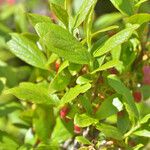
Gaylussacia baccata
Black Huckleberry · Crackleberry · Black huckleberrry
Description
Source: leafsnapGaylussacia baccata, commonly known as black huckleberry or highbush huckleberry, is a deciduous shrub in the Ericaceae family. Native to eastern North America, it thrives in diverse habitats like forests, bogs, and rocky slopes. Typically reaching up to 6 feet in height, this shrub has dark green leaves that turn a vibrant red in the fall. Its flowers are small and white or pinkish, while its dark blue-black berries ripen from July through September. For centuries, Native Americans have used black huckleberry for medicinal purposes, such as treating coughs, colds, and fevers. The berries also serve as a crucial food source for wildlife, including birds and bears, especially during the fall when other food sources are limited. Overall, Gaylussacia baccata is an ecologically important plant species. It provides essential habitat for wildlife and has significant cultural value due to its historic medicinal uses by indigenous communities.
🌳 The black huckleberry plant enhances gardens almost year-round with its attractive spring blooms, vibrant summer berries, and colorful autumn foliage. It can be incorporated into wildlife or informal gardens as a border shrub or as an accent piece around trees, attracting birds and butterflies. Its ability to thrive in dry and harsh conditions also makes it an excellent choice for coastal and rock gardens.
🎭 Belief, Simple Joys
Care Guide
💧 Water Every 7 days
Black huckleberry is well-suited to its native woodland understorey, thriving in consistently moist soil. To prevent water stress and maintain the necessary humidity, it's essential to water it weekly. Being a shade-loving plant, it prospers in areas with regular rainfall, which mirrors the conditions of its natural habitat.
☀️ Light Full sun
Black huckleberry does best with abundant light, though it can persist under moderate light. It comes from habitats with plentiful sunlight, which fosters vigorous growth. Regulating light exposure is important, because overly strong or insufficient light can hamper its growth and health.
What are the sunlight requirements for black huckleberry?
Black huckleberry requires full sun, meaning above 6 hours of sunlight, to thrive optimally, but it can also tolerate partial sun conditions, which is about 3-6 hours of sunlight. It's important to monitor how sunlight moves through your garden to ensure your plants receive the correct balance of light and shade. This balance helps promote the plant's growth and maintains their health.
How does sunlight affect the growth of black huckleberry?
Sunlight plays a crucial role in the growth and health of black huckleberry. Originating from environments with ample sunlight, this plant thrives under abundant light but can also endure moderate light conditions. However, excessive or insufficient light exposure can impede its growth. In indoor settings, where natural sunlight might be lacking, artificial lighting can be a vital solution to provide the plant with the necessary light for optimal growth. LED lights are particularly beneficial as they can be adjusted to deliver specific wavelengths needed by the plant.
What symptoms indicate a black huckleberry plant is getting too little or too much sun?
Symptoms of too little sunlight in black huckleberry include smaller new leaves, leggy or sparse growth, faster leaf drop, and slower or no new growth, indicating the plant's struggle in low light conditions. Insufficient sunlight leads to paler new leaves and chlorosis. Too much sun can result in symptoms like sunscald, leaf curling, wilting, leaf scorching, where the plant's leaves or stems get damaged by intense light exposure. These symptoms highlight the plant's need for a balanced light environment for healthy growth.
What are some solutions for black huckleberry plants not receiving enough sunlight?
For black huckleberries not receiving enough sunlight, gradual relocation to sunnier spots is advisable. Indoors, moving plants to a south-facing window or using artificial lights can help ensure they get at least 6 hours of direct sunlight. Outdoors, it's key to adjust the plant's position gradually to prevent sunburn. Additionally, reducing obstructions that block sunlight, such as by pruning blocking trees, and considering transplanting smaller plants to sunnier locations during their dormant periods, can significantly improve light exposure for healthier growth.
🌡️ Temperature 5–32.2°C
The black huckleberry plant favors relatively cool conditions and can tolerate temperatures from 41 to 89 ℉ (5 to 32 ℃). It is native to temperate environments and can endure both hot and cold summers. Spring and fall typically bring moderate temperatures, which are best for the plant’s growth. In summer, when temperatures rise, it needs adequate shade and moisture to prevent the leaves from burning.
What temperature conditions are ideal for black huckleberry plants?
Black huckleberry plants thrive in relatively cool temperatures, tolerating a range from 41°F (5°C) to 89°F (32°C). They are adaptable to temperate environments, performing best in moderate spring and fall conditions. During hotter summers, providing sufficient shade and moisture is crucial to prevent leaf burn. Despite their high cold tolerance, protecting the soil moisture before the first freeze in autumn is advised to prevent winter and early spring drought.
How should I care for black huckleberry in extremely cold temperatures?
Black huckleberry is highly cold-tolerant, with the winter temperature ideally staying above -30°C. If temperatures drop below this, you may not notice immediate damage, but by spring, the branches could turn brittle and dry, failing to produce new shoots. To manage this, prune dead branches that haven't sprouted new leaves in the spring to encourage healthy growth.
What steps should I take if my black huckleberry experiences high temperatures?
Black huckleberry struggles with temperatures above 32°C, potentially leading to significant leaf drop or even the death of the plant. If this happens, you should trim sunburnt and dried parts of the plant, relocate it to a shaded area, or use shade cloth to protect it during peak sun hours. Additionally, watering the plant in the morning and evening helps keep the soil moist, further aiding the plant's recovery and health.
💨 Humidity
🪴 Soil 4-6
🌱 Fertilizer
Apply fertilizer to your Black huckleberry in early spring to encourage healthy growth. Consistent fertilizing improves overall plant health, producing vigorous growth, better tolerance of harsh conditions, and stronger resistance to pests and diseases. Keep to a defined fertilization routine for your Black huckleberry to maintain bright, richly colored foliage and a full, lush appearance.
🪴 Pot & Repot
✂️ Pruning
The black huckleberry is a deciduous shrub that offers dark, edible berries and vibrant foliage. To maintain its health and appearance, prune the shrub in late spring, after the risk of frost has passed. Focus on removing dead branches and thinning out crowded areas to improve air circulation. Regular pruning helps prevent disease and promotes abundant berry yields, making it essential for gardeners.
🌿 Propagating
🐛 Diseases & pets
☠️ Toxicity
Characteristics
- Plant Type
- Shrub
- Life Cycle
- Perennial
- Genus
- Gaylussacia
- Family
- Ericaceae
- Hardiness Zone
- 4-7
- Mature Height
- 30 cm to 91 cm
- Mature Spread
- 0.61 m to 1.22 m
- Leaf Color
- Green, Yellow, Red, Gold, Orange
- Leaf Type
- Deciduous
- Flower Color
- Pink, Red
- Flower Size
- 2.54 cm
- Bloom Time
- Late spring, Early summer
- Planting Time
- Spring, Autumn
- Harvest Time
- Mid summer
- Native Area
- North America