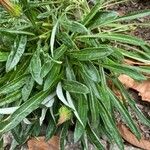
Gazania rigens
گازانیا · Treasure-flower · Gazania · నిధి బంతి · African Daisy
Description
Source: leafsnapGazania rigens (syn. G. splendens), sometimes called treasure flower, is a species of flowering plant in the family Asteraceae, native to coastal areas of southern Africa. It is naturalised elsewhere and is widely cultivated as an ornamental plant.
💡 The treasure flower has uniquely shaped, tongue-like petals that resemble a face. Its blooms are fascinating because they open in sunlight and close after sunset.
🌳 The treasure flower is admired for its beauty, but it also serves an environmental role as a bioindicator. It reveals pollutant levels in its surroundings by reacting to toxins. Despite its use in monitoring soil health and its independence from chemical agents, the treasure flower has not yet been widely employed commercially for this ecological purpose.
🎭 I feel proud of you.
Care Guide
💧 Water Every week
The treasure flower flourishes in sunny, dry conditions, showing excellent drought tolerance with minimal watering, usually just once a week. Ideal for outdoor cultivation, it thrives in full sunlight and needs more water when actively growing, but requires less as temperatures decline.
☀️ Light Full sun
The treasure flower thrives in locations receiving ample sunlight from sunrise to sunset. This exposure promotes strong growth, vivid blooms, and overall plant vigor. Although it favors such conditions, the treasure flower can tolerate sites with less than full daylight. However, excessive or insufficient light can result in dull flowering or stunted growth, respectively.
What are the sunlight requirements for a treasure flower?
The treasure flower requires full sun exposure, which means it thrives in areas that receive more than 6 hours of direct sunlight a day, ensuring robust growth, vibrant blooms, and overall plant vigor. However, it can also tolerate partial sun conditions, about 3-6 hours of sunlight. It's important to watch how sunlight moves through your garden to choose the best spots for your plants, balancing light and shade to ensure their happiness.
Can treasure flowers grow under artificial lighting?
Yes, treasure flowers can grow under artificial lighting, especially indoors when natural sunlight is insufficient. Indoor plants benefit greatly from artificial lights such as LEDs, which can be customized to provide the specific wavelengths of light that plants need. Full sun plants require 30-50W/sq ft, partial sun plants need 20-30W/sq ft, and full shade plants need 10-20W/sq ft of artificial light. The light source should be placed 12-36 inches above the plant to mimic natural sunlight, and the duration should mimic natural daylight hours, typically 8-12 hours per day.
What are the symptoms of insufficient sunlight for treasure flowers?
When treasure flowers don't receive enough sunlight, they may exhibit several symptoms indicating light deficiency. These symptoms include lighter-colored new leaves, indicating a lack of chlorophyll; slower or halted growth as the plant enters survival mode; impact on flowering and fruiting; faster leaf drop to conserve resources; chlorosis, or yellowing of leaves; sunscald, causing pale or necrotic areas; leaf curling to reduce surface area exposed to sunlight; wilting from increased water loss; and leaf scorching, characterized by brown, dry edges. These signs help identify when the plant needs more sunlight.
How can I remedy insufficient sunlight exposure for my treasure flower?
To counteract insufficient sunlight for your treasure flower, you can adopt several strategies. Indoors, gradually move your plant to sunnier locations until it receives at least 6 hours of direct sunlight daily, utilizing south-facing windows and keeping curtains open. Artificial lighting is an alternative, with desk or ceiling lamps on for at least 8 hours daily, or investing in professional grow lights. Outdoors, gradually move plants to sunnier spots, avoiding drastic changes to prevent sunburn. If sunlight is blocked, prune trees or move smaller plants to sunnier locations. Remember, parts of the plant affected by low light may not recover, but new growth will be healthy after adjusting light exposure.
🌡️ Temperature 20–37.8°C
Treasure flower originates from warm climates and does best in temperatures ranging from 68 to 100 ℉ (20 to 38 ℃). In summer, it should be given shade and sufficient watering to avoid heat stress. In cooler seasons, such as fall and winter, treasure flower can tolerate temperatures as low as 50 to 60 ℉ (10 to 15 ℃).
What is the ideal temperature range for a Treasure flower?
The Treasure flower, botanically known as Gazania rigens, thrives in warmer climates and enjoys temperatures between 68 to 100°F (20 to 38°C). It is important to provide shade and adequate watering during the hot summer months to prevent heat stress. In the cooler seasons of fall and winter, this plant can tolerate lower temperatures, ranging from 50 to 60°F (10 to 15°C). However, it is extremely sensitive to cold and should be protected from temperatures at or below freezing to avoid harm.
How should a Treasure flower be cared for in high temperatures?
In high temperatures, especially during the summer when the mercury can soar above 100°F (38°C), it's crucial to take steps to protect your Treasure flower. First, ensure the plant is not exposed to temperatures exceeding 109°F (43°C) as this can lead to leaf discoloration and increased susceptibility to sunburn. To combat the effects of high temperatures, you should trim any sunburned or dried-up parts of the plant, provide shade during the midday and afternoon sun, and water the plant in the morning and evening to maintain moist soil conditions.
What should I do if my Treasure flower suffers from low temperature or frost damage?
In cases of low temperature or frost damage, where the leaves of the Treasure flower may become lighter or even turn brown or black with symptoms like wilting or drooping, immediate action is required. Trim off the frost-damaged parts of the plant and move it to a warmer indoor location. A south-facing window is ideal as it ensures ample sunlight, but be careful to avoid placing the plant near heaters or air conditioning vents, which can lead to excessively dry air and further stress the plant. Keeping the plant in an environment above 20°C during winter is beneficial for its growth.
💨 Humidity normal (40-60%)
This plant will thrive in moderate humidity, which is probably the level in your home. However, misting it a few times a week can be very beneficial. Make sure the room has good ventilation.
🪴 Soil 6-7
🌱 Fertilizer
Correct fertilization is vital for the health and appearance of Treasure flower. Apply fertilizer to Treasure flower during the summer, repeating the application every month throughout the season. Nutrients provide energy for growth and sustain the plant's parts. Fertilizing improves Treasure flower's floral display, ensuring the best blooms.
🪴 Pot & Repot 2-3 years
When repotting Treasure flower, select a pot 1-2 inches (2.5–5.1 cm) larger with ample drainage. Use a well-draining potting mix. Repot in spring or fall, ensuring the root ball is slightly lower than the rim of the flower pot. Water thoroughly after repotting and place it in a warm spot with indirect sunlight.
✂️ Pruning
The treasure flower is known for its vibrant blooms and benefits from pruning to encourage bushier growth and longer-lasting flowers. For the best results, prune in early spring or late winter. Be sure to remove any spent flowers and leggy stems to stimulate new growth. Cutting back about one-third of the plant helps improve air circulation, prevent diseases, and maintain an attractive appearance.
🌿 Propagating
🐛 Diseases & pets
☠️ Toxicity
Treasure flowers generally are not toxic plants to humans or animals. However, they are not meant to be eaten and should be kept out of the reach of children and pets.
Characteristics
- Plant Type
- Herb
- Life Cycle
- Perennial, Annual
- Genus
- Gazania
- Family
- Asteraceae
- Hardiness Zone
- 9-11
- Mature Height
- 10 cm to 49 cm
- Mature Spread
- 10 cm to 49 cm
- Leaf Color
- Green, Yellow, Gray
- Leaf Type
- Evergreen
- Flower Color
- Orange, Yellow, White
- Flower Size
- 6.35 cm to 10.16 cm
- Bloom Time
- All year round
- Planting Time
- Spring
- Harvest Time
- All year round
- Native Area
- South Africa, Eswatini, Mozambique