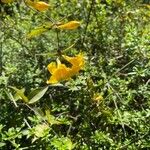
Gelsemium rankinii
Rankin's Trumpet-Flower · Rankin's trumpetflower · Swamp jessamine · Swamp yellow jasmine
Description
Source: leafsnapGelsemium sempervirens and Gelsemium rankinii are two species of flowering plants belonging to the Gelsemiaceae family. Native to North America, these species are commonly known as Carolina jessamine or yellow jessamine. G. sempervirens is a woody vine that can grow up to 20 feet in length, while G. rankinii is a smaller shrub that typically reaches up to 6 feet tall. Both plants feature glossy, evergreen leaves and produce fragrant yellow flowers in the spring. The flowers of both species contain toxic alkaloids, which can cause serious health problems if ingested by humans or animals. Despite this, these plants have been used for medicinal purposes by Native American tribes for centuries. Gelsemium sempervirens has been utilized as a homeopathic remedy for anxiety and nervousness, while Gelsemium rankinii has been used to treat headaches and fever. In summary, these two species of Carolina jessamine are beautiful ornamental plants with intriguing medicinal properties. However, they should be handled with care due to their toxicity.
Care Guide
💧 Water Every 7 days
Rankin's trumpet flower originates from moist woodlands and thrives with moderate watering. It can tolerate brief dry spells, making it a resilient plant. For optimal growth, water it every 1-2 weeks, mimicking natural rainfall patterns. Typically grown outdoors, this plant flourishes with the right amount of moisture, producing vibrant blooms without the need for excessive watering.
☀️ Light Partial sun
Rankin's trumpet flower is native to habitats like forest understories or rocky areas that are naturally shaded. It prefers partial sun but can tolerate full sun or full shade, reflecting its versatile and hardy nature.
🌡️ Temperature 15–35°C
Rankin's trumpet flower adapts well to temperature, able to endure high heat and considerable temperature fluctuations. In hot weather, attention should be given to watering and providing adequate shade to avoid sunburn. Conversely, it has fairly low tolerance for cold; while it can handle some chill, extremely low temperatures may cause frost damage.
💨 Humidity
🪴 Soil 6-7
🌱 Fertilizer
Timing is important for fertilizing Rankin's trumpet flower. Apply fertilizer in early spring and continue monthly until early summer. Fertilizer encourages lovely blooms and supplies energy during both dormant and active growth periods.
🪴 Pot & Repot
✂️ Pruning
The trumpet flower, known for its trumpet-shaped blooms, thrives with annual spring pruning. Key practices include removing dead stems, thinning crowded sections for better airflow, and shaping the plant's growth. These steps promote healthy flowering, prevent disease, and enhance the plant's ornamental appeal while keeping it manageable. For the best care, refer to reputable guides.
🌿 Propagating
🐛 Diseases & pets
☠️ Toxicity
Characteristics
- Plant Type
- Vine
- Life Cycle
- Perennial
- Genus
- Gelsemium
- Family
- Gelsemiaceae
- Hardiness Zone
- 7-9
- Mature Height
- 6.1 m
- Mature Spread
- 2.44 m
- Leaf Color
- Dark Green
- Leaf Type
- Evergreen
- Flower Color
- Yellow
- Flower Size
- 2.54 cm to 7.62 cm
- Bloom Time
- Early spring, Mid spring
- Planting Time
- Spring, Autumn
- Harvest Time
- Early summer, Mid summer
- Native Area
- Guatemala