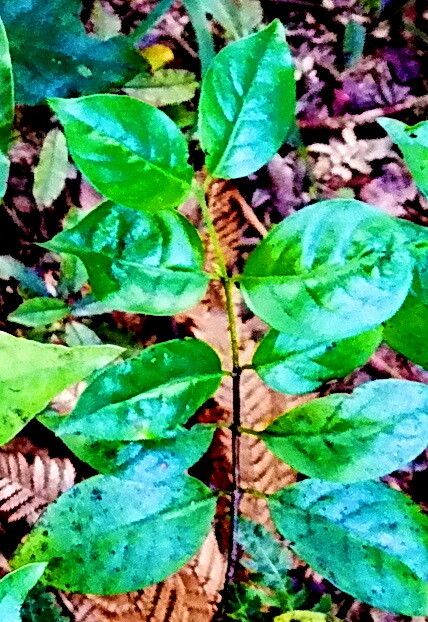
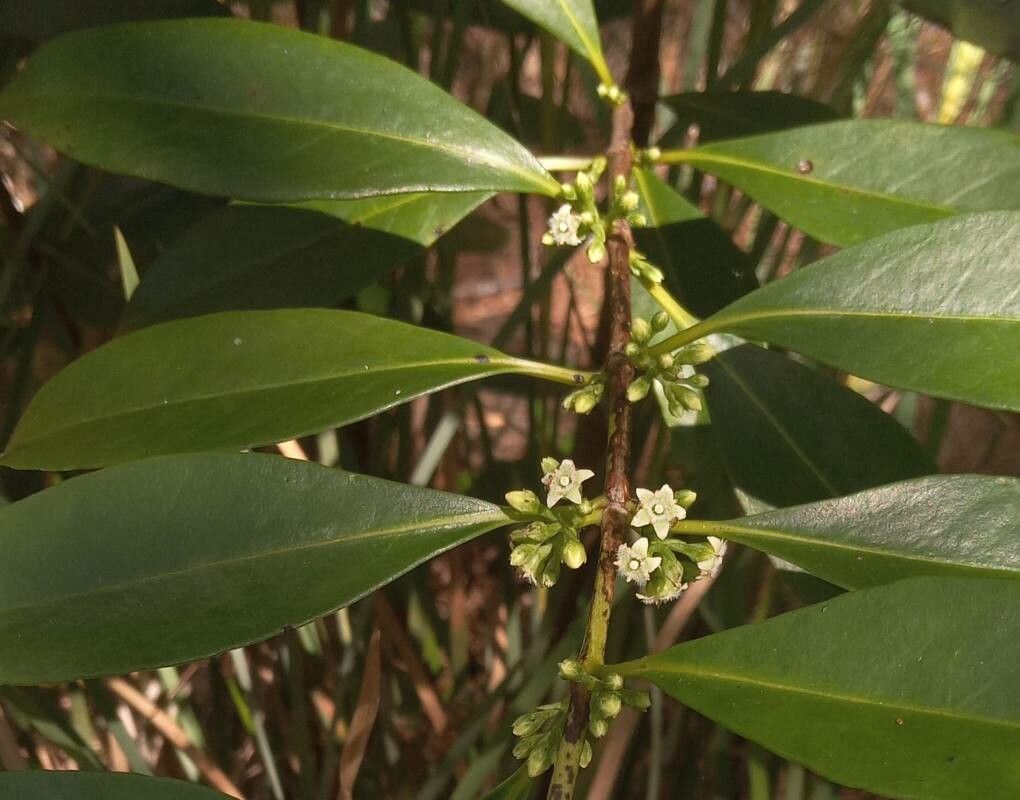
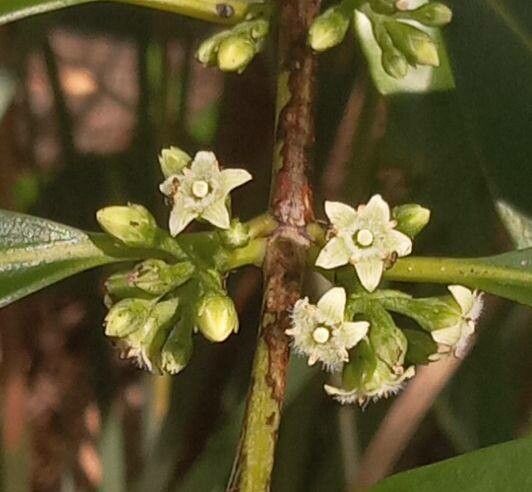
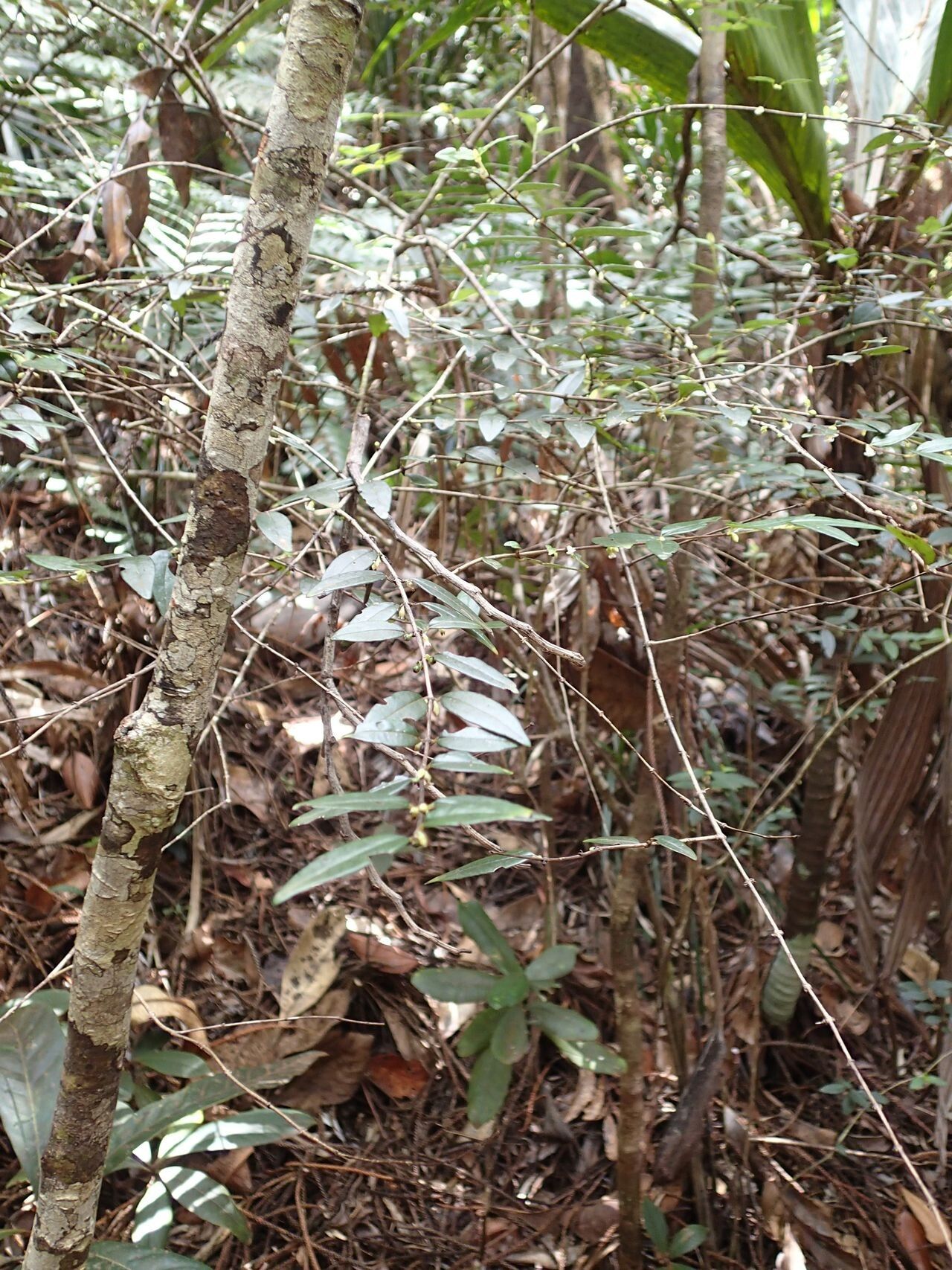
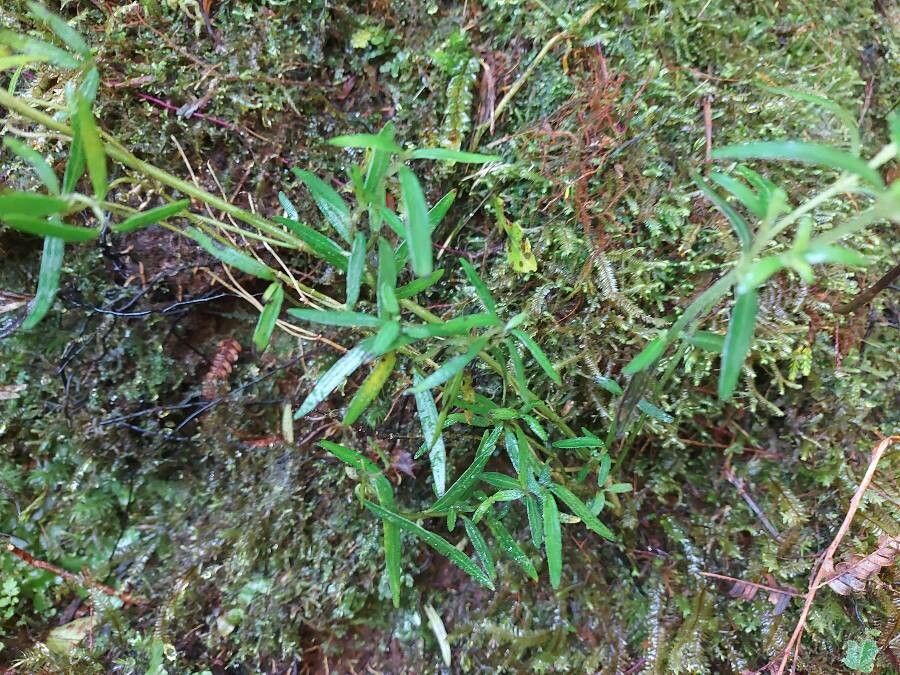
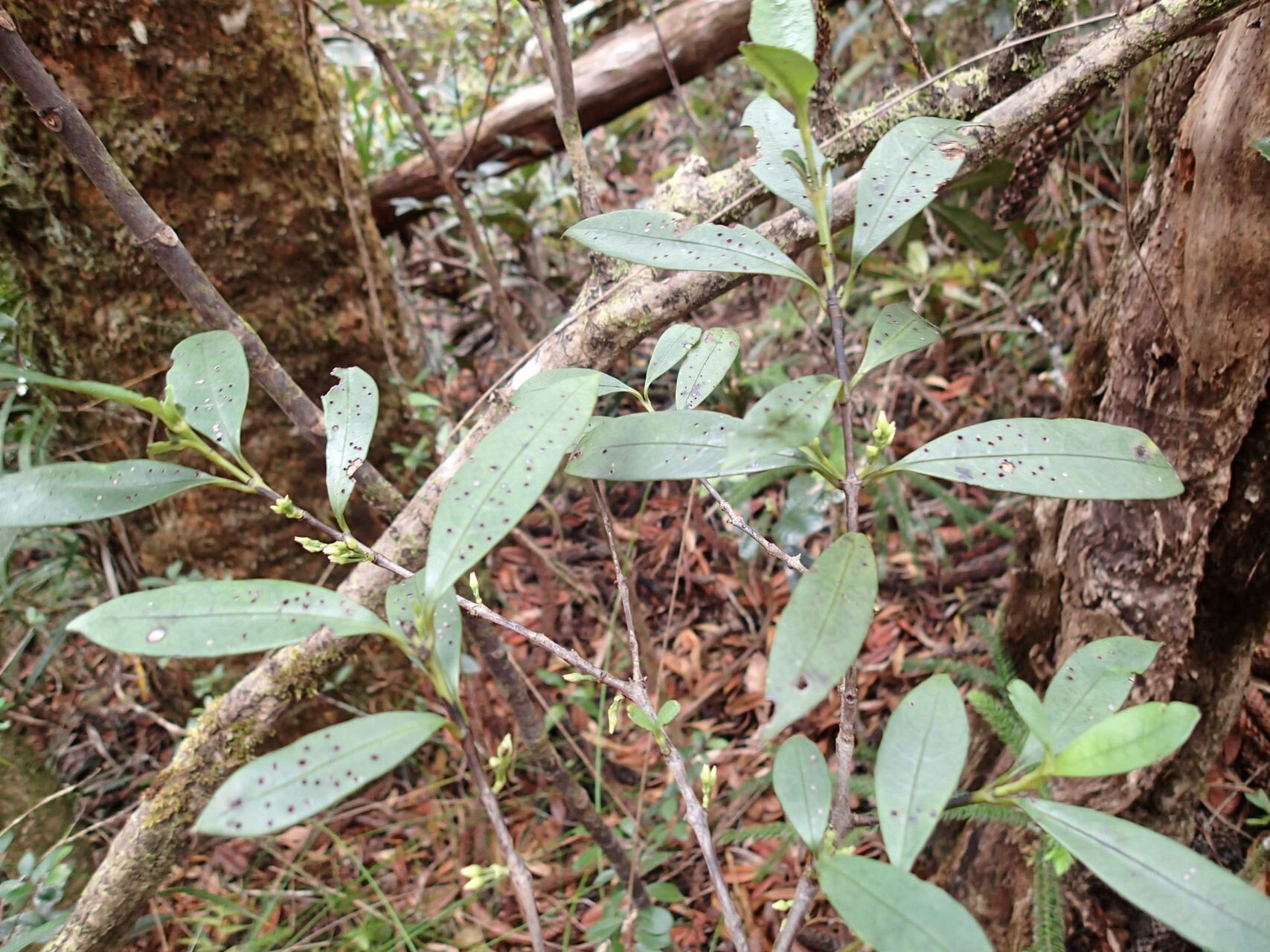
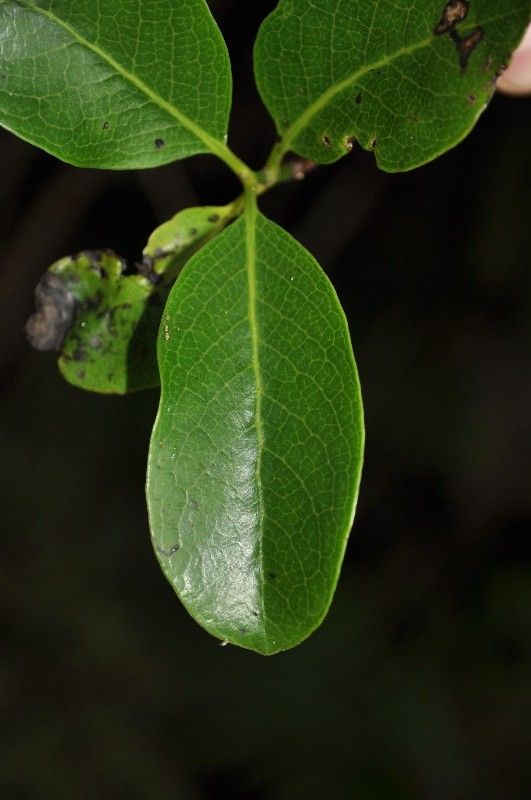
Geniostoma rupestre is a species of flowering plant in the family Loganaceae. It is a shrub or tree which ranges from Taiwan and Malesia to Papuasia, Queensland, New Zealand, and the western and central Pacific islands.
Hangehange har god sykdomsresistens og er vanligvis ikke særlig utsatt for sykdommer. Når det gjelder stell, er denne planten relativt lettstelt. Plantet utendørs trenger den lite vanning, og større planter må som regel ikke beskjæres. Mindre planter bør derimot beskjæres etter blomstring. Hangehanget passer for enhver som har et uteområde, for eksempel en hage eller en terrasse, og krever ikke mye erfaring med stell.
How to keep Geniostoma Rupestre.
Light
Hangehange is native to habitats like forest understories and rocky sites, where it occurs in natural shade. It favors partial sun but can adjust to full sun or full shade, reflecting its adaptable and hardy nature.
Temperature
Hangehange comes from tropical areas, where the weather is generally warm and humid. Consequently, it is well-suited to high temperatures and humidity. It does not tolerate sudden temperature shifts and prefers a consistent temperature, so avoiding indoor temperature fluctuations is important. It usually cannot endure cold conditions and needs warmer temperatures to grow. If the surrounding temperature falls too low, the plant may stop growing or even die.
Fertilizer
The best time to fertilize a Hangehange is in early spring, when it breaks dormancy. This stimulates overall growth and flower development. Fertilization improves the foliage, stems, and branches, while encouraging large, vibrant, and long-lasting flowers. It helps move nutrients from the roots to the flowers and enhances the plant’s health and resistance to disease.
Pruning
Geniostoma rupestre is a versatile shrub known for its glossy leaves and tubular flowers. To encourage growth and improve air circulation, prune it in early spring. Be sure to carefully remove any dead branches using clean tools to prevent disease. This will enhance both flowering and the overall vigor of the plant throughout the season.
Botanical profile.
- Plant Type
- Tree, Shrub
- Life Cycle
- Perennial
- Genus
- Geniostoma
- Family
- Loganiaceae
- Hardiness Zone
- 9-11
- Mature Height
- 3.96 m
- Mature Spread
- 1.52 m to 2.44 m
- Leaf Color
- Dark Green
- Leaf Type
- Evergreen
- Flower Color
- White
- Flower Size
- 3.05 cm
- Bloom Time
- Mid fall, Late fall, Early winter
- Planting Time
- Spring, Summer, Autumn
- Harvest Time
- Mid winter, Late winter, Early spring
Other names.