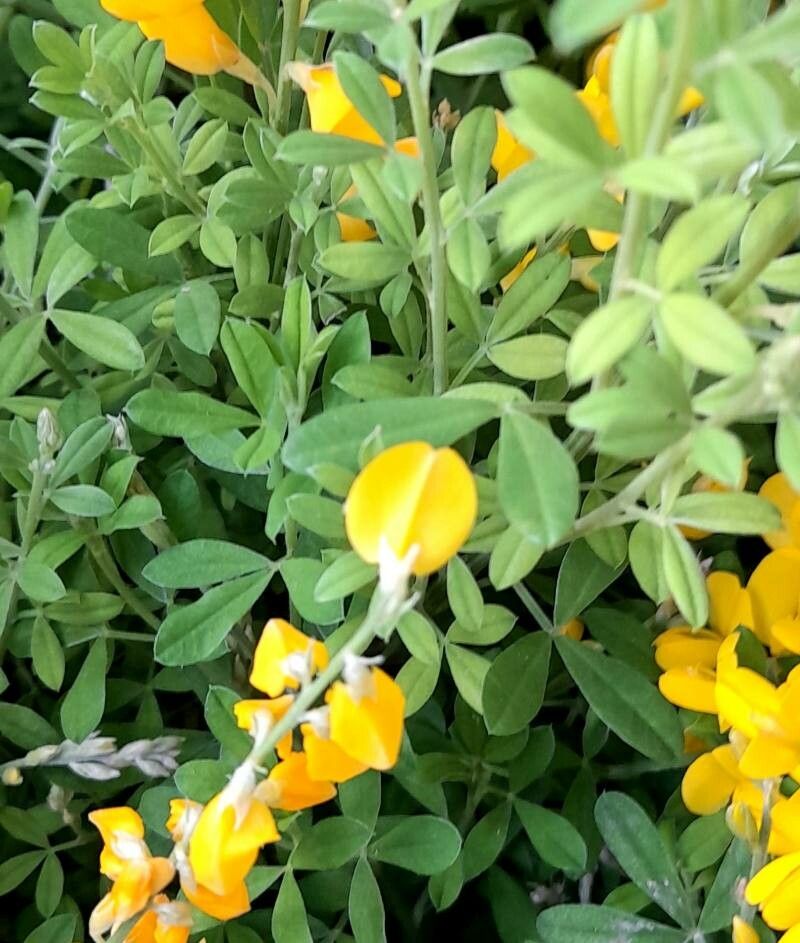
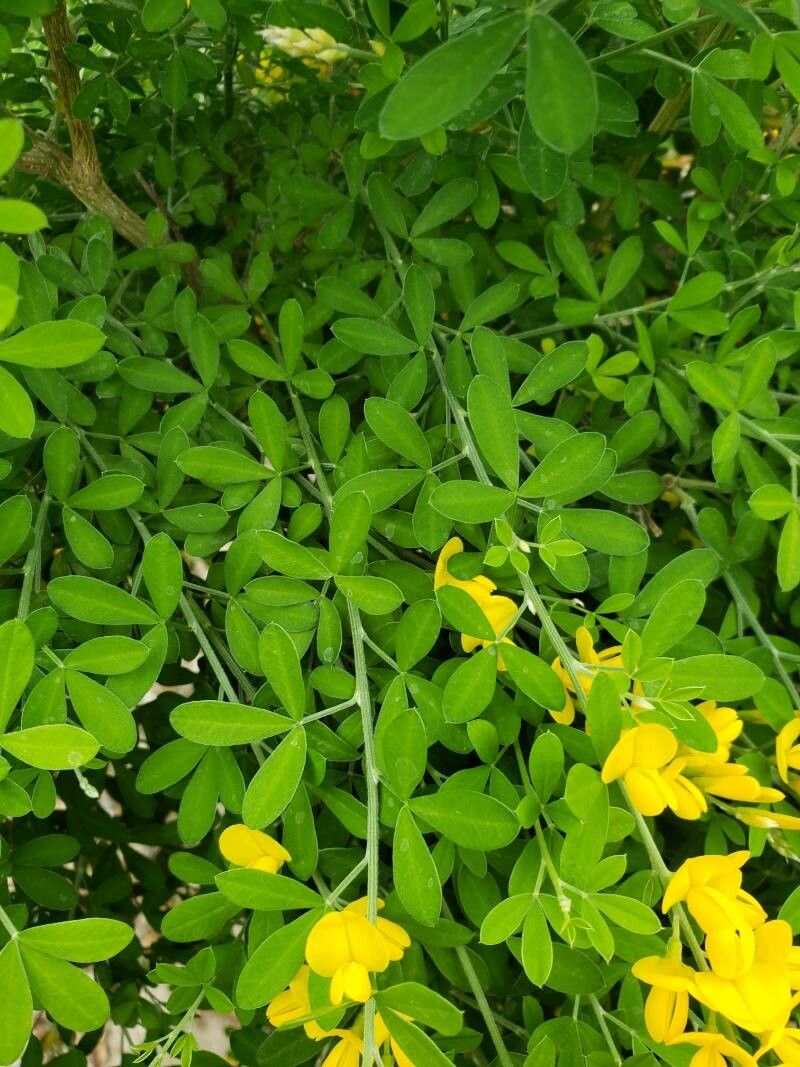
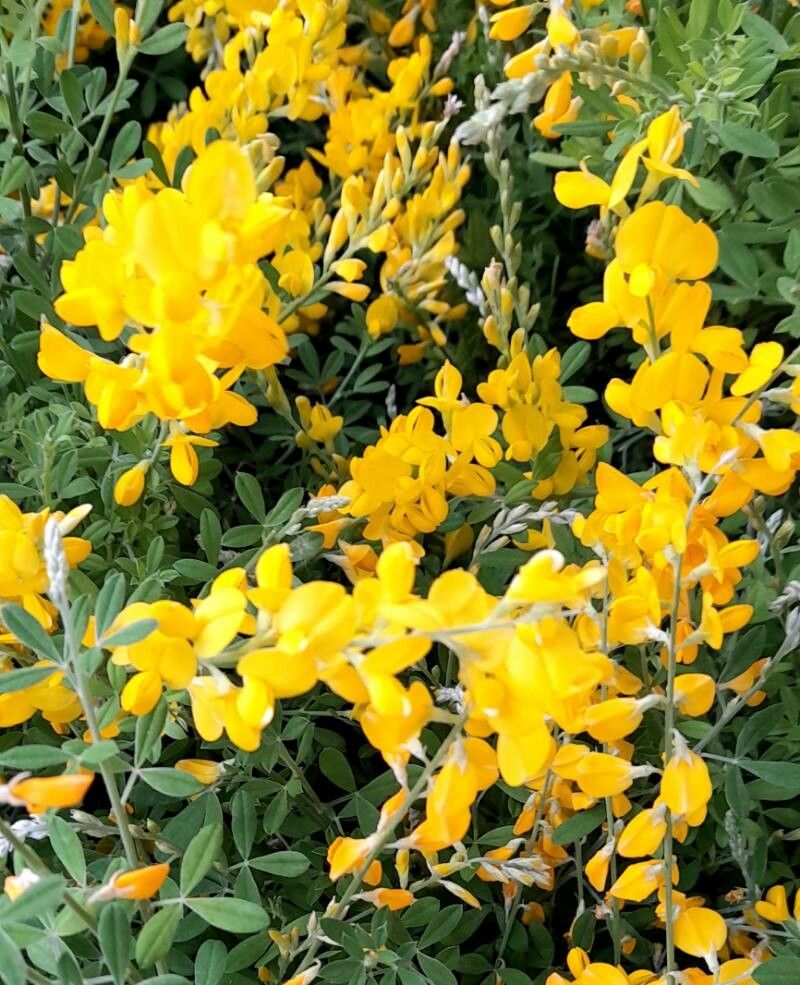
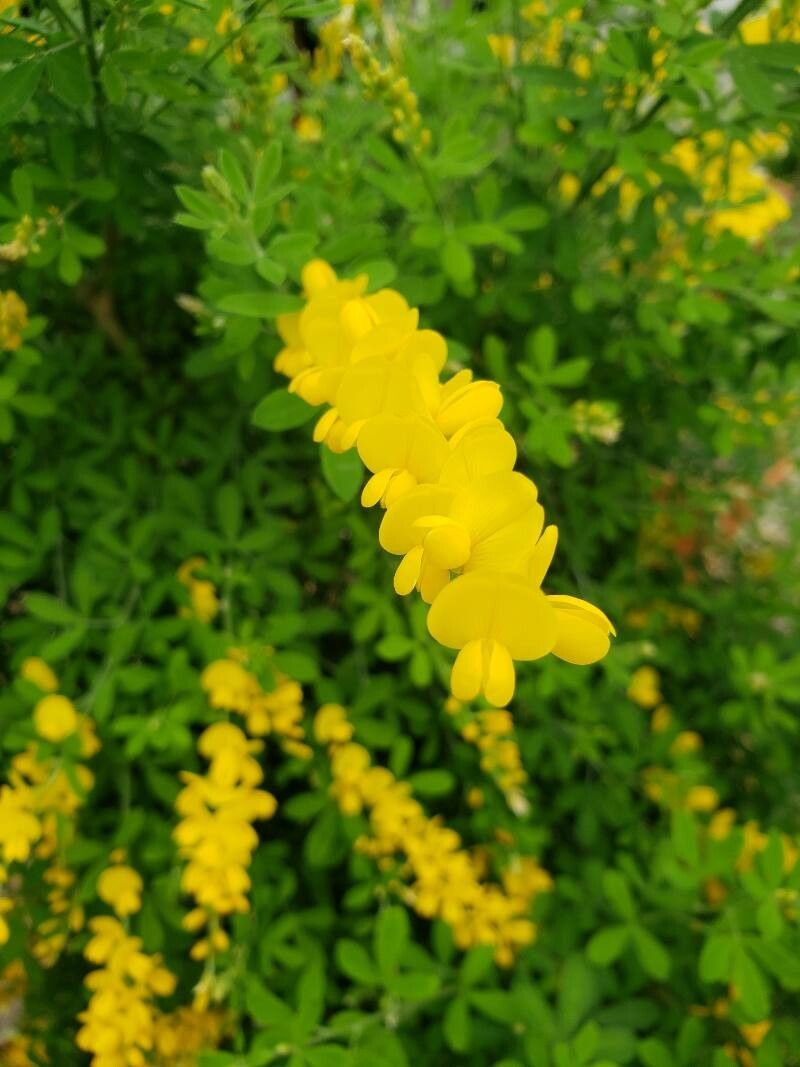
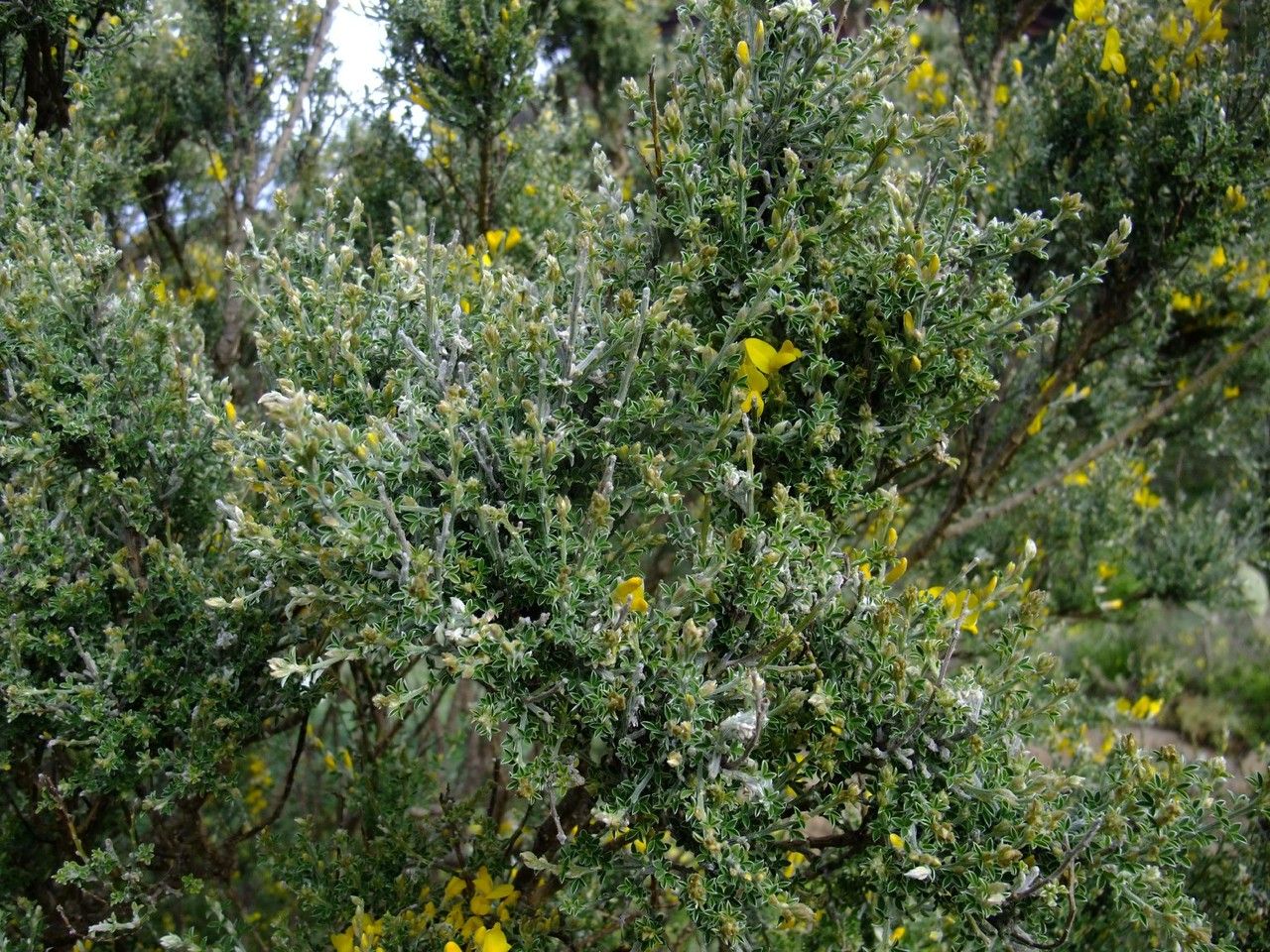
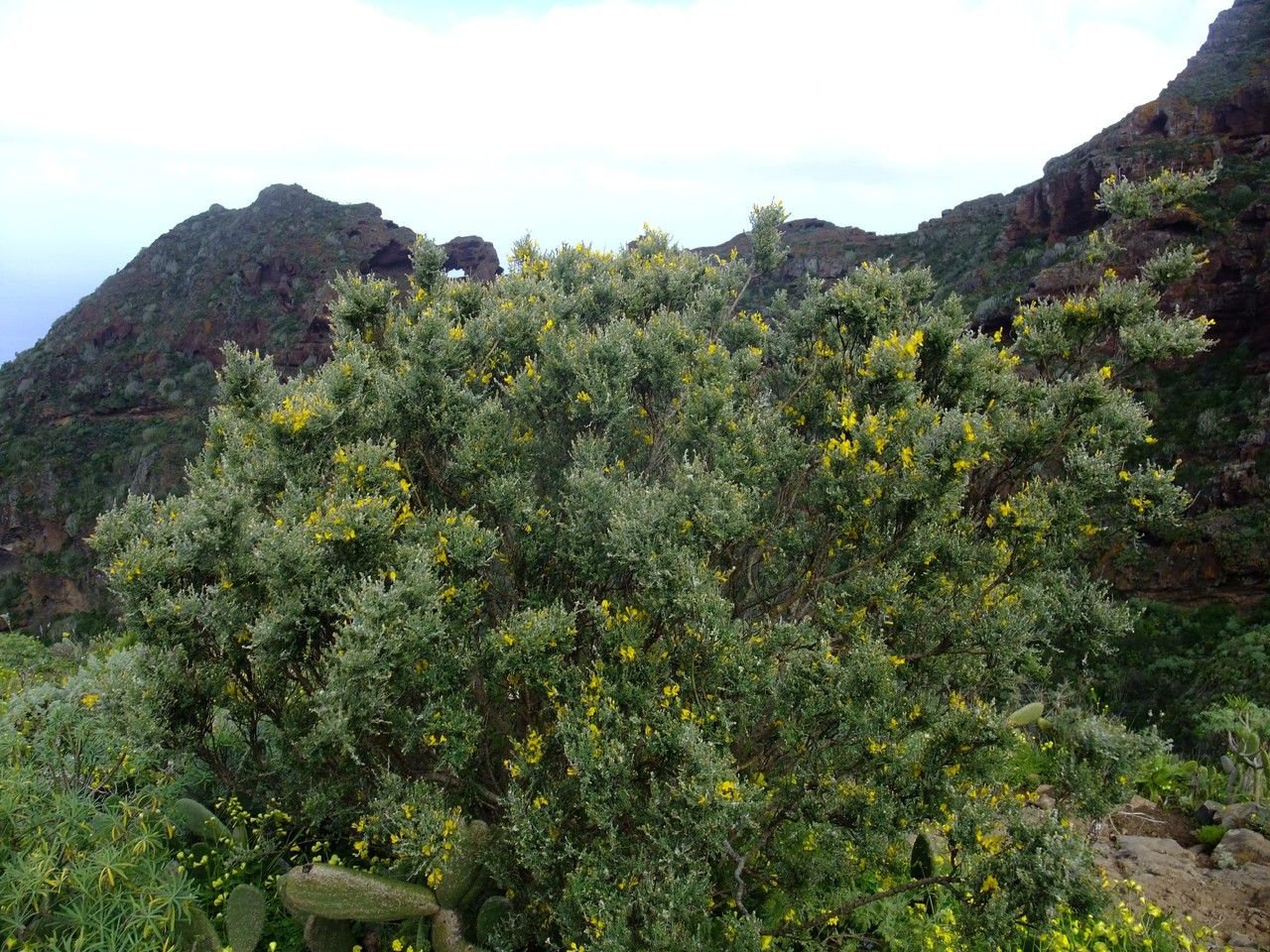
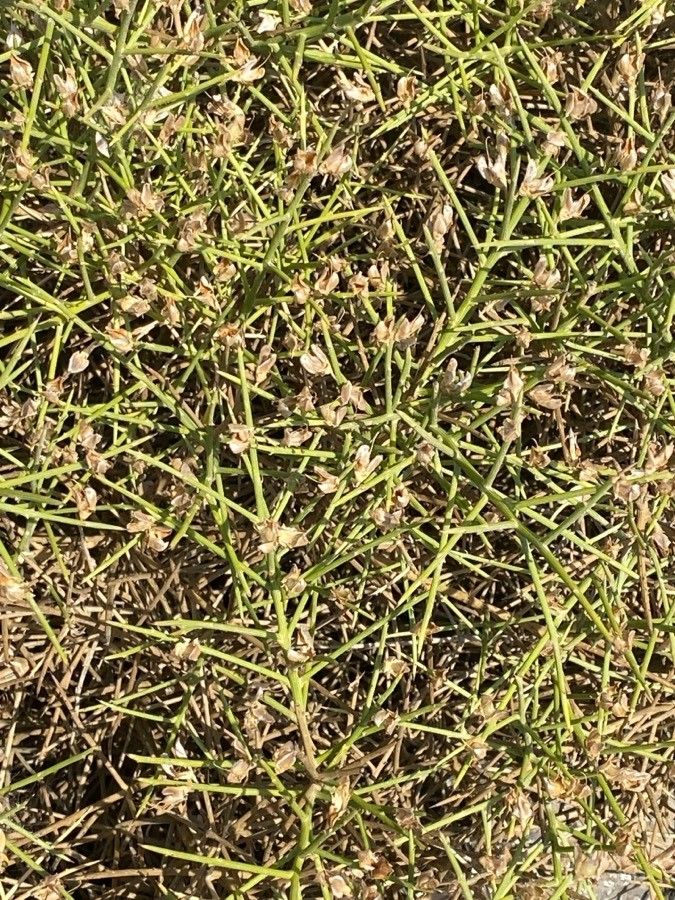
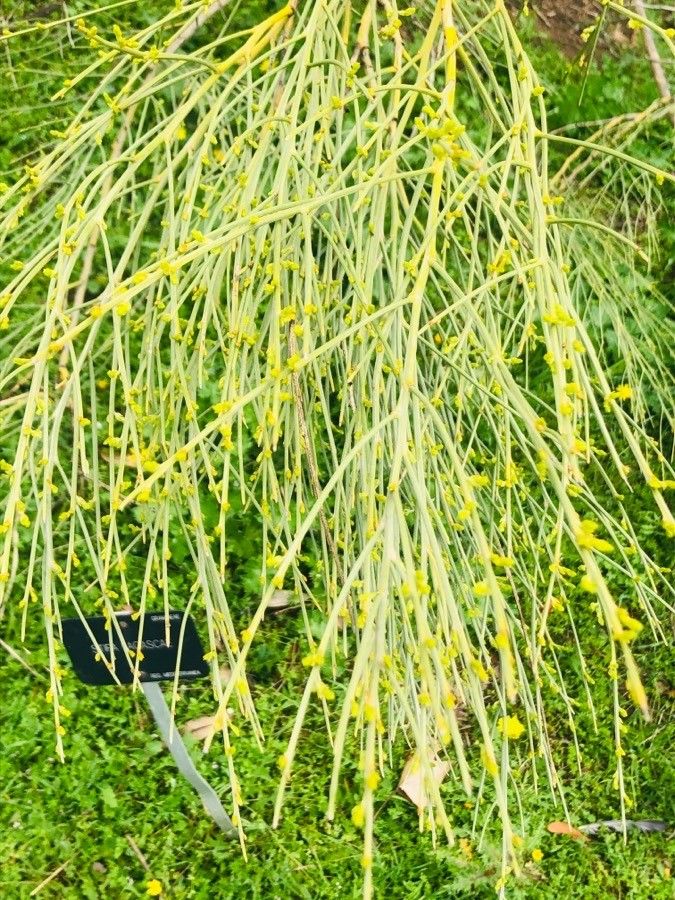
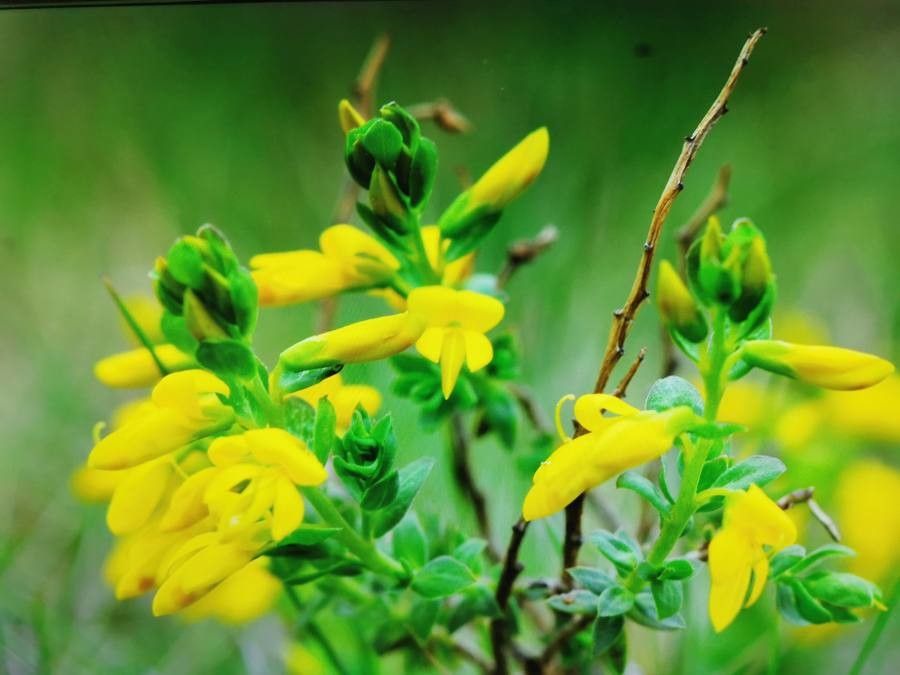
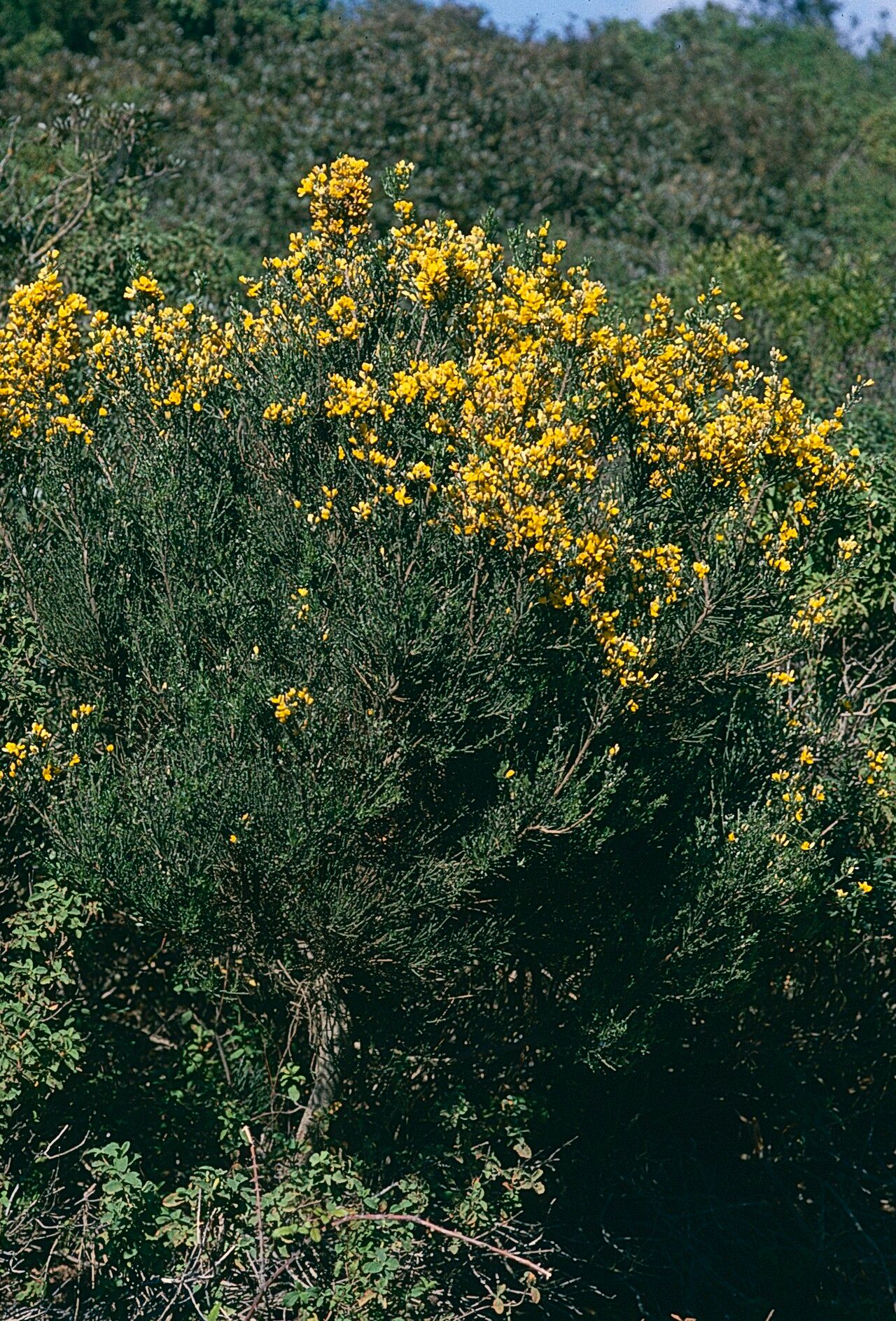
Genista canariensis is a species of flowering plant in the legume family Fabaceae, known by the common names Canary broom, Canary Islands broom or florist's genista. It is native to the Canary Islands, but it grows as an introduced species in mainland Europe, especially Spain, and on other continents. It has been introduced to California and Washington State in the US. This is a vigorous upright evergreen shrub growing to 3 m (9.8 ft) tall by 1.5 m (4.9 ft) broad, with hairy green stems. The leaves are made up of oval-shaped blue-green leaflets each up to a centimeter long and densely hairy on the undersides. The raceme inflorescence holds up to 20 bright yellow pea-like flowers. The fruit is a legume pod one to two centimeters long containing several dark brown seeds. It is hardy down to −5 °C (23 °F), preferring mild coastal areas. In cultivation in the UK this plant has gained the Royal Horticultural Society’s Award of Garden Merit.
Canary broom is disease-resistant and is generally not susceptible to illnesses. Regarding care, the plant is fairly low-maintenance. When grown outdoors it needs little watering, and larger specimens usually do not require pruning. Smaller plants, however, should be pruned after they have finished blooming. Canary broom is suitable for anyone with an outdoor area, such as a garden or deck, and does not demand much prior care experience.
How to keep Genista Canariensis.
Light
Canary broom comes from open habitats, like sunny meadows and forest edges, which provide plenty of light. It does best in Full Sun but can also tolerate Partial Sun, adapting well to various light conditions.
Water
Canary broom, which comes from arid regions, is highly drought-tolerant and requires only minimal watering—about every 2 to 3 weeks. It thrives in well-draining soil and can go dormant during extended dry periods to conserve its resources. Be cautious not to overwater, as this can harm this otherwise resilient outdoor plant.
Temperature
Canary broom has good temperature adaptability, able to withstand higher heat and wide temperature fluctuations. In hot weather, attention should be paid to watering and suitable shade provided to avoid sunburn. However, Canary broom is relatively intolerant of low temperatures. While it can endure some cold, overly low temperatures can cause frost damage.
Fertilizer
Timing is essential for fertilizing Canary broom. Apply fertilizer in early spring and continue monthly through early summer. Fertilizer promotes attractive blooms and supplies energy during both dormant periods and active growth.
Pruning
Canary broom is known for its bright yellow flowers and graceful, arching branches. To keep your plant healthy, prune it from early to late winter by removing any dead stems and lightly trimming the branches. Every few years, rejuvenate older plants to maintain their vigor. Be sure to use well-draining soil to prevent root rot. For more detailed care instructions, consult the RHS (Royal Horticultural Society) guidelines.
Botanical profile.
- Plant Type
- Tree, Shrub
- Life Cycle
- Perennial
- Genus
- Genista
- Family
- Fabaceae
- Hardiness Zone
- 8-11
- Mature Height
- 3.96 m
- Mature Spread
- 1.52 m
- Leaf Color
- Green
- Leaf Type
- Evergreen
- Flower Color
- Yellow
- Flower Size
- 1.02 cm to 1.52 cm
- Bloom Time
- Mid spring, Late spring, Early summer, Mid summer
- Planting Time
- Spring, Summer
- Harvest Time
- Mid summer, Late summer, Early fall, Mid fall
Other names.