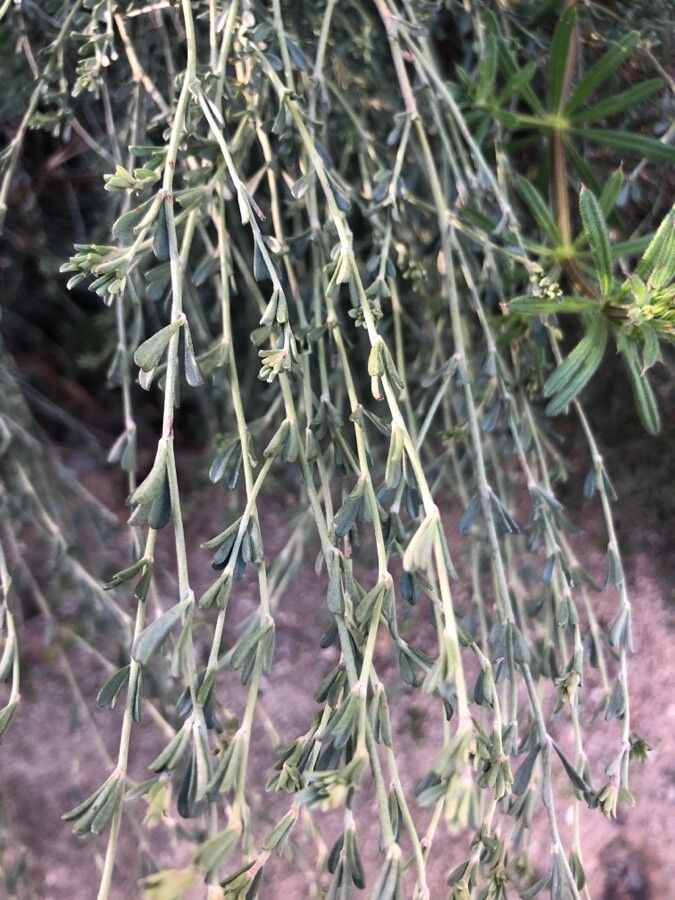
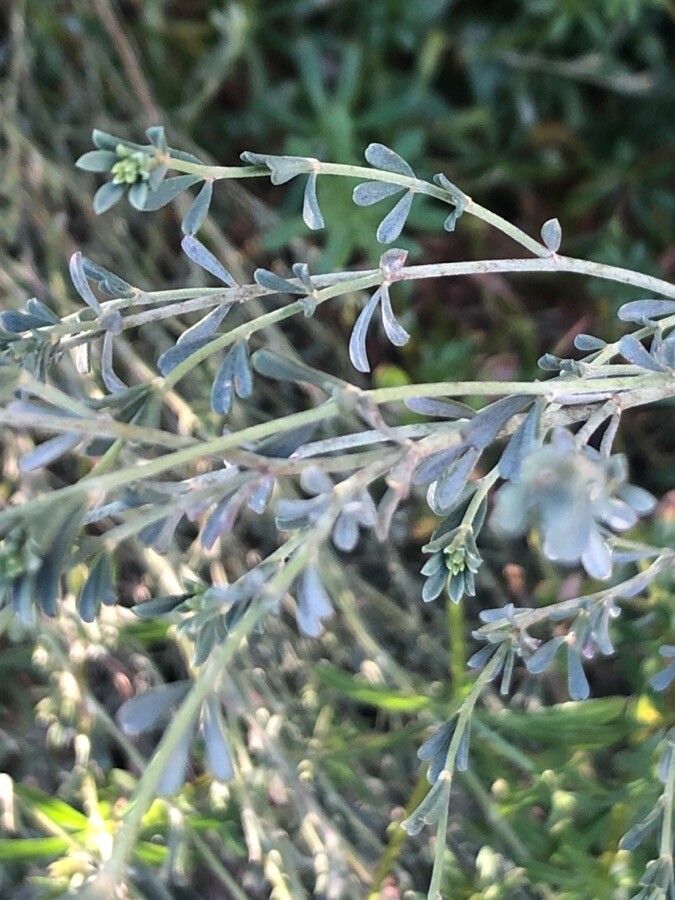
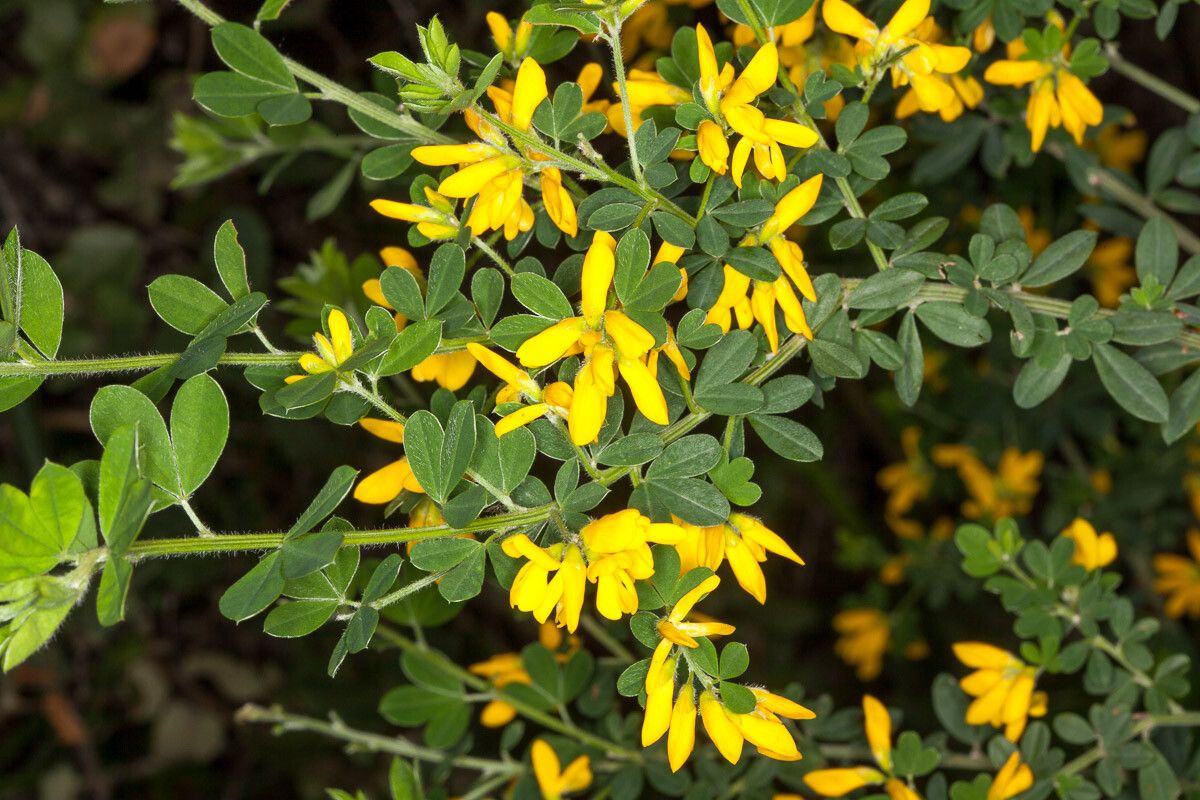
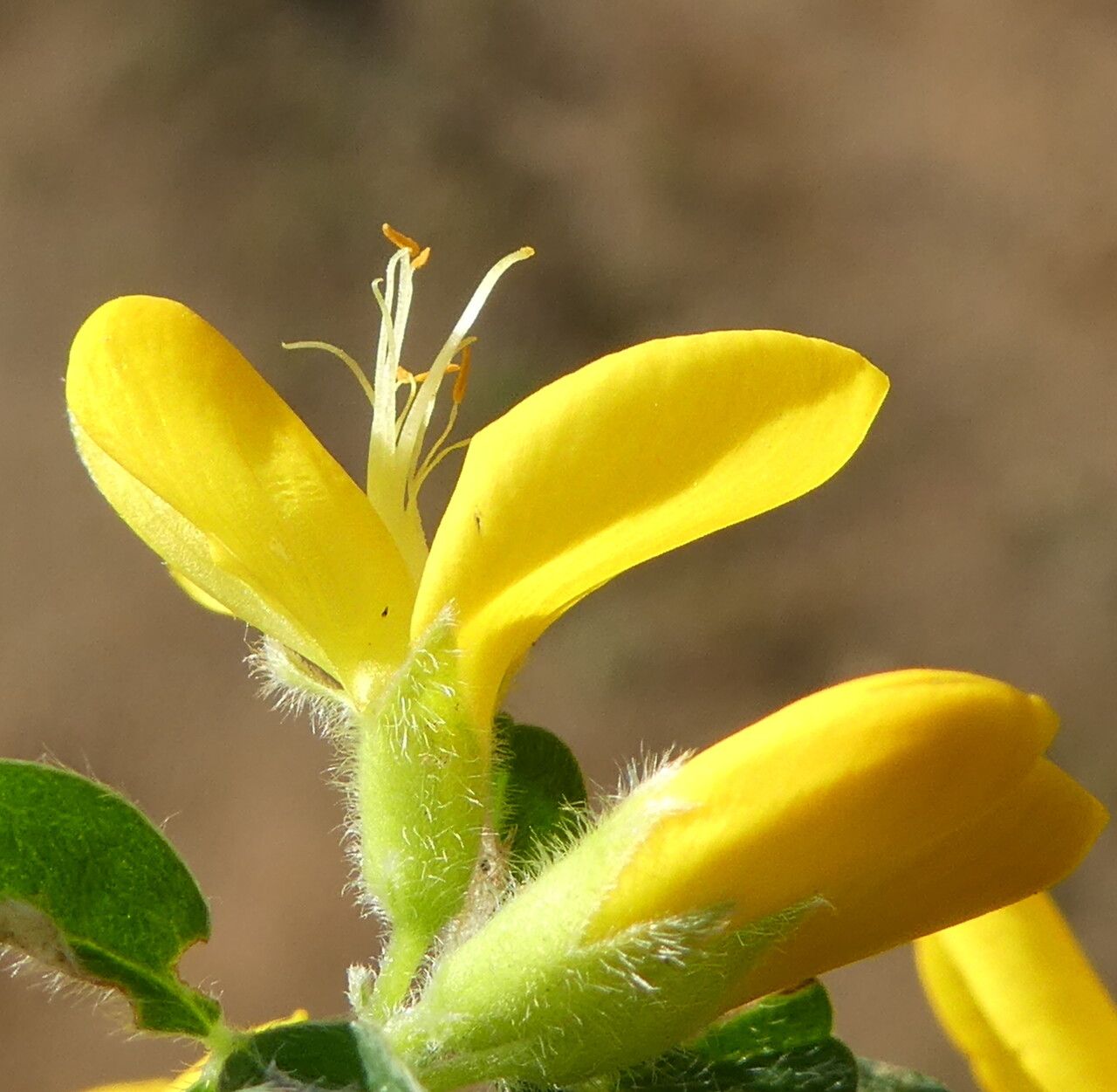
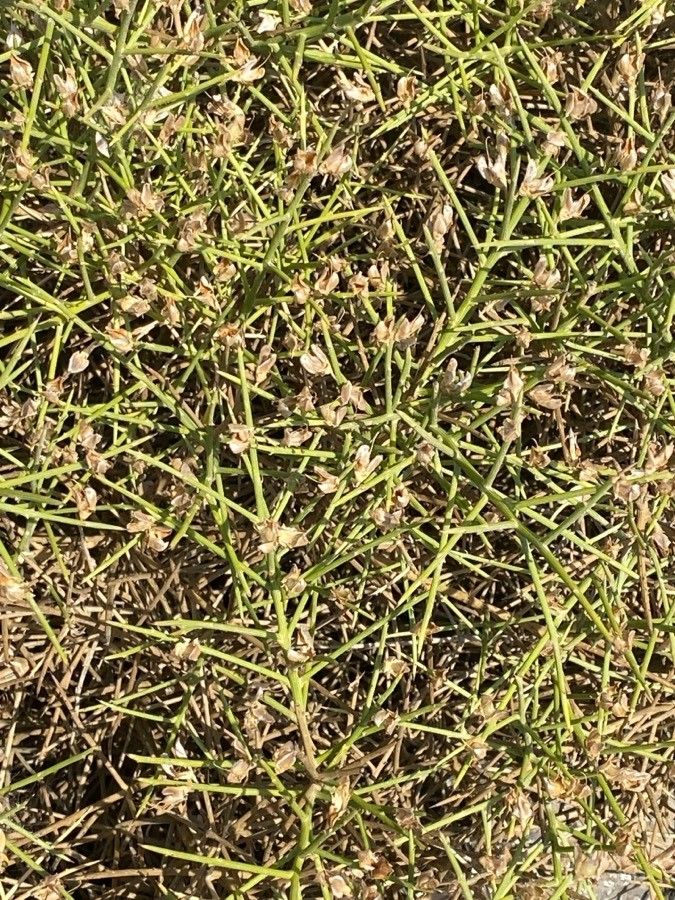
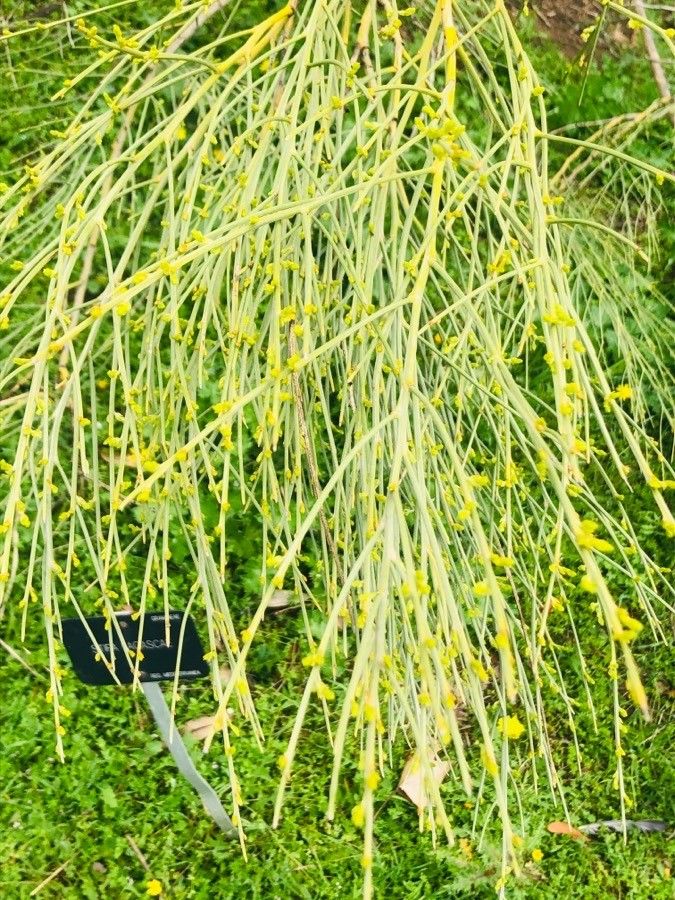
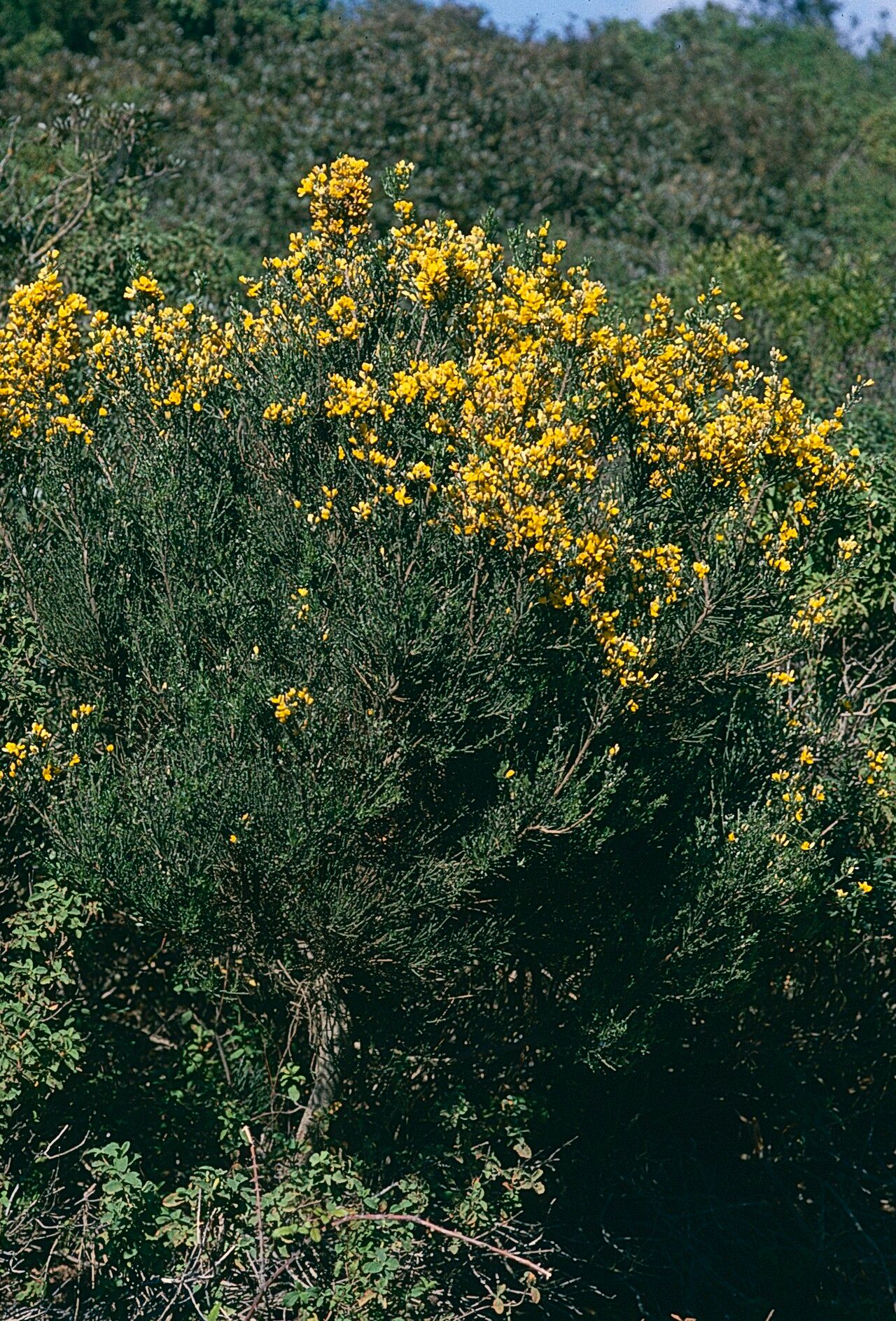
Genista monspessulana, commonly known as French broom or Montpellier broom, is a perennial shrub in the Fabaceae family. Native to the Mediterranean region, it has been introduced in many parts of the world as an ornamental plant. This shrub can grow up to 2-3 meters in height, featuring green, slender stems with small, alternately arranged leaves.
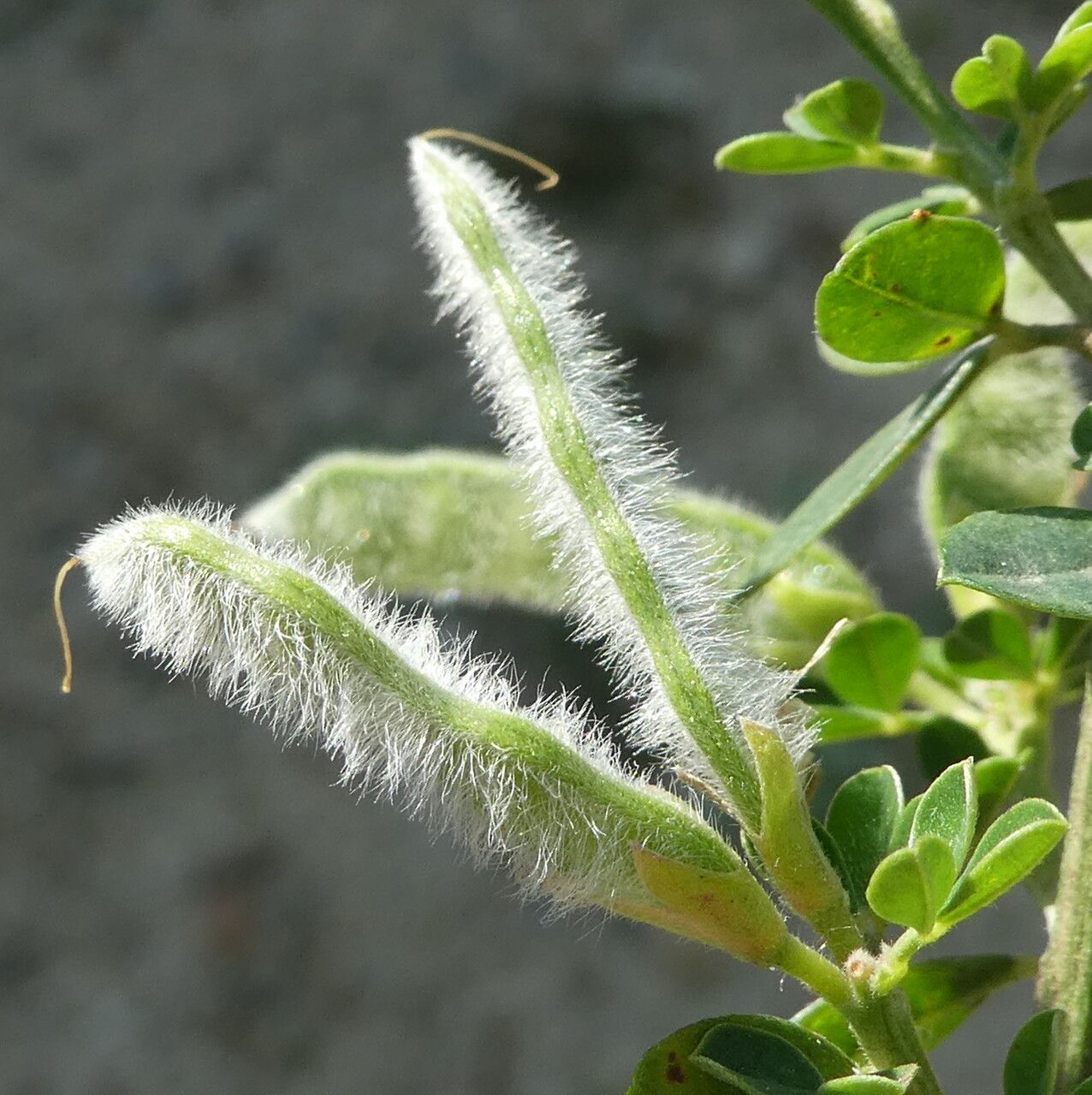
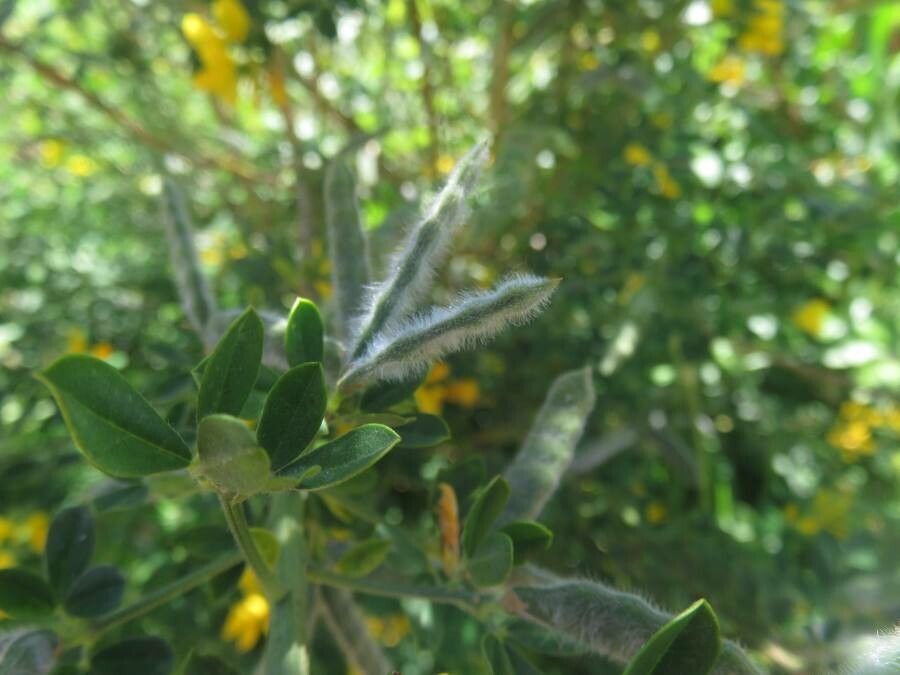
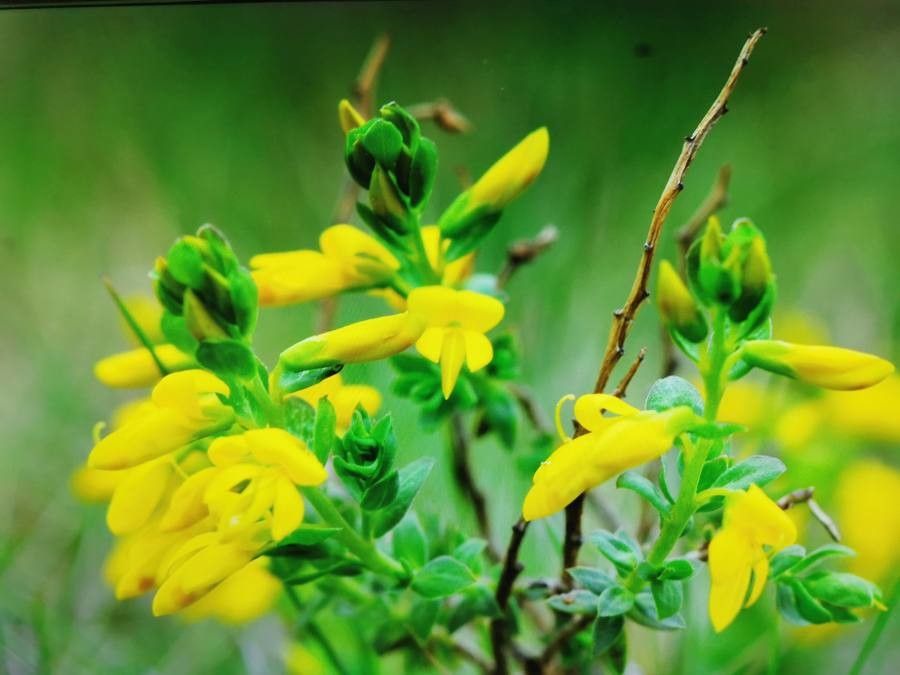
The bright yellow flowers of Genista monspessulana bloom from late spring through summer. These fragrant flowers grow in clusters at the ends of branches and attract bees and other pollinators. The plant produces small pods containing several seeds as its fruit.
French broom thrives in well-drained soils with full sun exposure but can tolerate some shade. While it is drought-tolerant once established, it requires regular watering during its initial growth period.
Despite its ornamental appeal, Genista monspessulana has become an invasive species in many parts of the world. It outcompetes native vegetation for resources such as water and nutrients, and its seeds are easily dispersed by wind or animals, making it difficult to control once established.
In summary, although French broom may enhance gardens or landscapes with its bright yellow flowers and sweet fragrance, it should be planted with caution due to its invasive tendencies outside its native range.
French broom has strong resistance to disease and is generally not susceptible to illnesses. In terms of care, this plant is fairly low-maintenance. When grown outdoors it needs little watering, and larger plants usually do not require pruning. Smaller plants, however, should be pruned after they finish blooming. French broom is suitable for anyone with an outdoor area, such as a garden or deck, and does not demand much gardening experience.
How to keep Genista Monspessulana.
Light
French broom does best with abundant light, nearly full-day sun. This promotes healthy growth. It can tolerate moderate light levels. However, departures from these conditions can affect the plant’s health. It comes from habitats with similar light conditions.
Water
French broom flourishes in a Mediterranean climate, where it benefits from occasional watering. This plant prefers dry soil and needs watering only every 1-2 weeks. Commonly grown outdoors, French broom adjusts well to seasonal rainfall and requires less irrigation during its dormant periods.
Temperature
The french broom is native to the Mediterranean region, where it does well in climates with mild winters and hot summers. It prefers temperatures of 50 to 90 ℉ (10 to 32 ℃), but can endure temperatures as low as 23 ℉ (-5 ℃) and as high as 104 ℉ (40 ℃). In winter, it might benefit from protection if temperatures fall below 23 ℉ (-5 ℃).
Fertilizer
Proper timing is essential when fertilizing French broom. Apply fertilizer in early spring and continue monthly until early summer. Fertilizer encourages attractive blooms and supplies energy both during dormancy and active growth.
Pruning
The French broom is a shrub known for its yellow flowers and its potential to become invasive. To manage this plant, it's best to prune it in late spring after it has finished flowering. Trim back one-third of the old wood to encourage new growth, improve air circulation, and control its spread. This practice also helps reduce pest problems and minimizes fire hazards.
Pot & Repot
When repotting French broom, select a pot 1-2 inches (2.5–5.1 cm) larger with good drainage. Use a well-draining potting mix. Repot in spring or fall, making sure the root ball sits slightly lower than the rim of the flower pot. Water thoroughly after repotting and place it in a warm spot with indirect sunlight.
Botanical profile.
- Plant Type
- Shrub
- Life Cycle
- Perennial
- Genus
- Genista
- Family
- Fabaceae
- Hardiness Zone
- 6-8
- Mature Height
- 0.91 m to 2.44 m
- Mature Spread
- 2.13 m
- Leaf Color
- Green
- Leaf Type
- Evergreen
- Flower Color
- Yellow
- Flower Size
- 1.52 cm to 6.35 cm
- Bloom Time
- Mid spring, Late spring, Early summer
- Planting Time
- Spring, Autumn, Summer
- Harvest Time
- Early summer, Mid summer
- Native Area
- Turkey, Tunisia, Syria, Italy, Spain, Morocco, Serbia, Montenegro, Albania, Lebanon, Greece, Croatia, Slovenia, Algeria, France
Other names.
Reader questions.
What's the best way to water my French broom plant?
Watering your French broom is quite flexible, as it can be watered using various tools like watering cans, hoses, or even cups. It's important to water directly on the soil, ensuring all areas are evenly moistened to meet the water requirements of the root system. It is preferable to use filtered water to avoid any harmful particles that might be present in tap water. Additionally, it's recommended to use water at or slightly above room temperature, as extremely cold or hot water can be a bit shocking for the French broom. However, overall, this plant usually responds well to different types of water.
Why should I add fertilizer to my French broom?
Fertilizing your French broom is important for several reasons. One of the main benefits is that it helps the plant produce beautiful blooms. To ensure your French broom has excellent flowers in the spring, fertilizing it early on is highly recommended. Additionally, fertilizer provides the plant with ample energy to store in the ground during its dormant periods. By giving your French broom extra nutrients in the fall or late spring, you can help it accumulate more energy for when active growth resumes.
What are the sunlight requirements for French Broom (Genista monspessulana)?
French Broom requires full sun exposure, ideally above 6 hours of sunlight daily, to thrive and ensure healthy development. It can also tolerate moderate amounts of light. Observing the way sunlight moves through your garden can help in choosing spots that provide a good balance of light and shade, conducive to the plant's growth.
What is the native region of French broom and its preferred climate?
The French broom, or Genista monspessulana, is native to the Mediterranean region, flourishing in an environment characterized by mild winters and scorching summers. It has a preference for temperatures ranging between 50 to 90°F (10 to 32°C). However, it displays remarkable cold resistance, capable of withstanding temperatures as low as 23°F (-5°C) and as high as 104°F (40°C). Despite its hardiness, providing protection against temperatures below 23°F (-5°C) during winter can be beneficial.
What should I do if I give my French broom too much or too little water?
Outdoor plants, especially newly planted ones or seedlings, are prone to lack of watering. It's important to remember to water them enough for a few months while they are small or newly planted. This is because once the roots are established, they can rely on rain for moisture most of the time. When planting French broom in pots, overwatering is more likely. If you accidentally overwater your French broom, act immediately to fix the situation. Stop watering the plant right away to minimize the impact of overwatering. Then, remove the French broom from its pot to check its roots. If none of the roots show signs of rot, you can return the plant to its pot. However, if you find root rot, trim any affected roots and consider applying a fungicide to prevent further damage. Finally, repot the French broom in well-draining soil. In the case of underwatering, simply water the French broom more frequently. Underwatering is usually an easy fix. If you notice the plant's leaves drooping, drying out, and falling off, and they quickly regain fullness after sufficient watering, adjust your watering frequency accordingly.
When should I fertilize my French broom for the best results?
Timing is crucial when fertilizing French broom. If you apply fertilizer too early, while the French broom is still dormant, it will not be effective and will be washed away by rainwater, causing waste and pollution. The first application of fertilizer should be in early spring and continue once a month until early summer.
How essential is lighting for the growth of French Broom?
Lighting is crucial for the optimal growth of French Broom, almost amounting to day-long exposure in its native environments. In instances where natural light is insufficient, especially during winter or in darker indoor spaces, artificial lighting serves as an essential solution. It promotes healthier and faster plant growth by providing adequate light intensity and duration.
How can French broom be protected during cold temperatures?
To protect French broom in winter, especially if temperatures are expected to plummet below 23°F (-5°C), it's advisable to wrap the plant's trunk and branches with insulative materials like non-woven fabric or cloth. Additionally, watering the plant copiously before the first autumn freeze to engender a moist, frozen soil state can shield it from drought and water scarcity during the colder months and early spring, enhancing its cold resistance.
How frequently should I water my French broom?
Most outdoor plants can rely on rainfall for their water needs. However, if your area lacks rainfall, you should water your plants every 2 weeks in the spring and fall. In the summer, you will need to water more frequently. In the winter, when plants grow slower and require less water, you should water less often or not at all. If you have a young or newly planted French broom, it will need more frequent watering to help it establish and grow. As it matures, it will become more adaptable and drought tolerant. For potted plants, there are two ways to determine how often to water your French broom. One way is to have a fixed watering schedule, such as once a week or every other week. However, this may not always be suitable as it doesn't consider the specific conditions of your French broom's environment. The other method is to base your watering frequency on the moisture of the soil. It is generally best to wait until the top 2 to 4 inches of soil have completely dried out before watering again. This usually represents about ⅓ to ½ depth of the pots. Keep in mind that during the summer, your French broom will require more water than the predetermined schedule suggests. Adjust your watering frequency accordingly to meet its increased water needs.
When is the best time to not use fertilizer on my French broom?
To ensure optimal growth of French broom, it is important to consider a few key points regarding fertilization. Firstly, it is advisable to avoid using fertilizers that have a high nitrogen content, as this can result in an abundance of leaves but few blooms. Instead, opt for fertilizers that have a lower nitrogen level compared to other nutrients. Secondly, it is not recommended to fertilize French broom after early autumn, as this can lead to excessive growth right before the winter season. Additionally, during hot and dry periods, it is best to refrain from fertilizing the plant. Dry soil is not as effective at delivering nutrients, and fertilizing during this time can stimulate growth that requires more water, which may not be readily available. Lastly, it is worth noting that French broom has the ability to absorb fertilizer from nearby plants or lawns. Therefore, it is essential to be cautious and avoid inadvertently providing the plant with a double-dose of fertilizer. Being mindful of these guidelines will help ensure the healthy development of your French broom.
What are the recommendations for artificial lighting for French Broom?
For French Broom and other indoor plants requiring supplemental lighting, LED lights are recommended for their ability to provide specific light wavelengths. Full sun plants need 30-50W/sq ft, partial sun plants 20-30W/sq ft, and full shade plants 10-20W/sq ft of artificial light. The light source should be placed 12-36 inches above the plant, mimicking natural sunlight conditions and ensuring the plant receives 8-12 hours of light per day.
What are the signs of temperature stress in French broom and how can they be addressed?
French broom showcases its resilience by thriving above 50°F (10°C) but shows signs of stress when exposed to extreme temperatures. Low temperatures below 23°F (-5°C) may not immediately affect its appearance, but can lead to brittle and dry branches by spring, with a conspicuous absence of new shoots. In such cases, pruning the dead branches early in spring is recommended. In contrast, when subjected to temperatures exceeding 90°F (32°C), the plant might experience leaf discoloration, dry and withered tips, and heightened susceptibility to sunburn. Addressing this involves trimming the affected parts, relocating the plant to a shaded area or using a shade cloth for protection, and maintaining soil moisture through regular watering in the cooler hours of morning and evening.