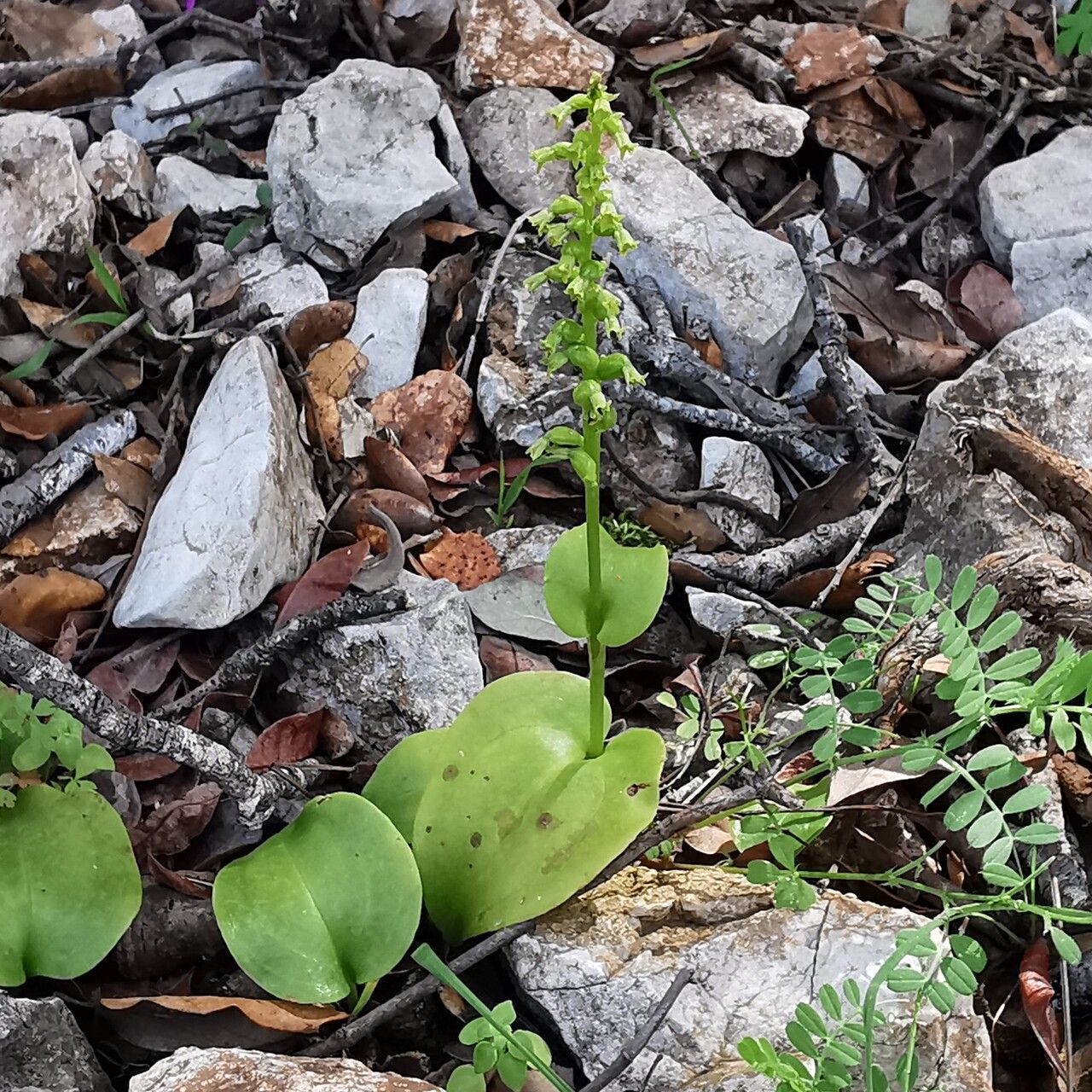
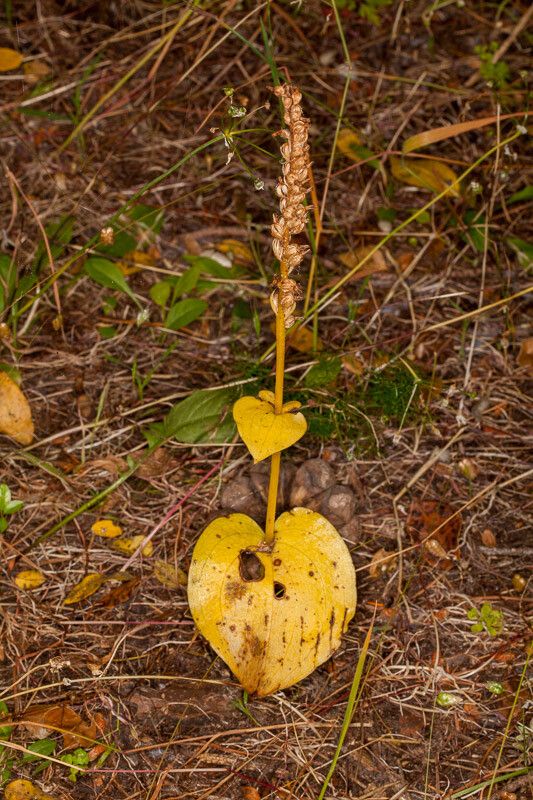
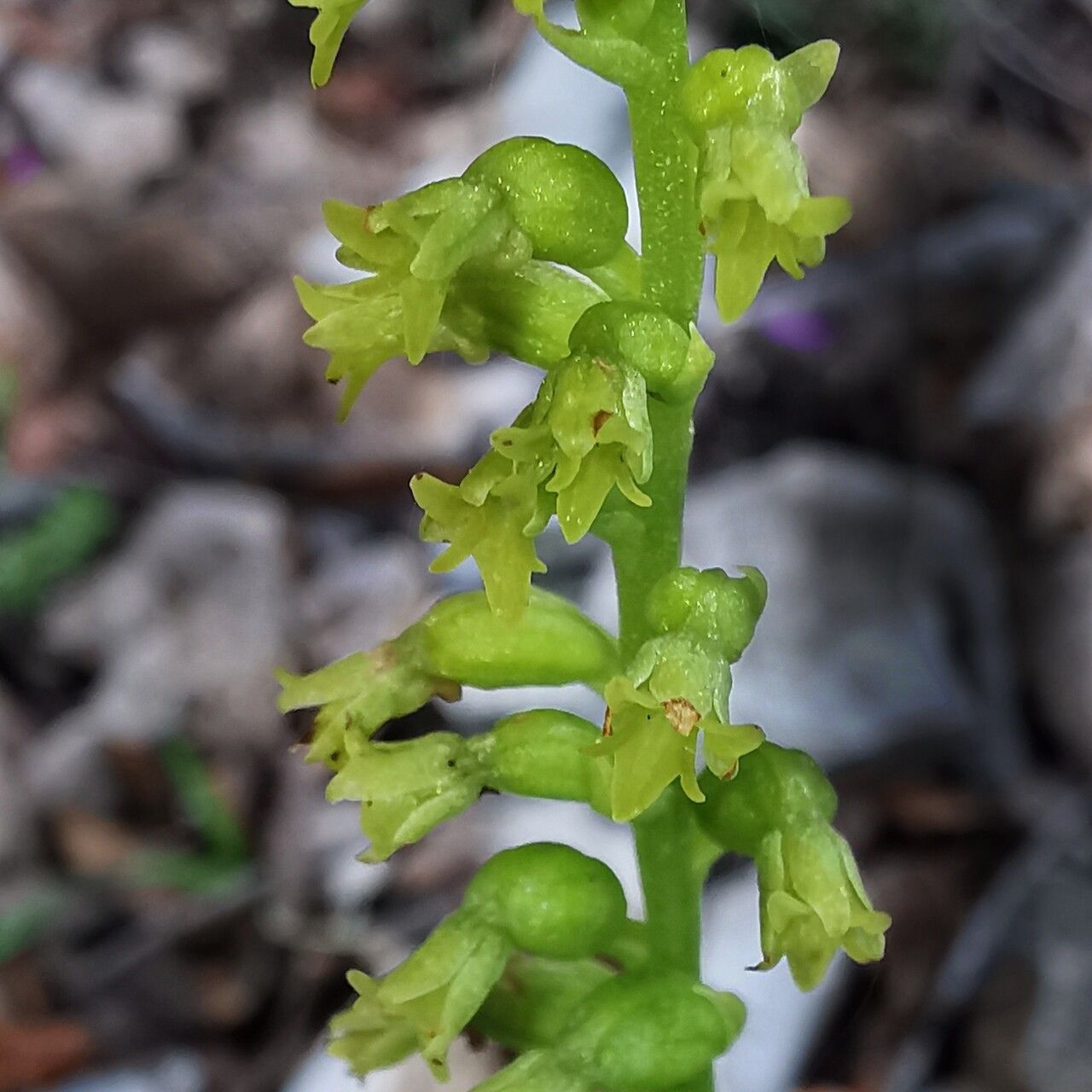
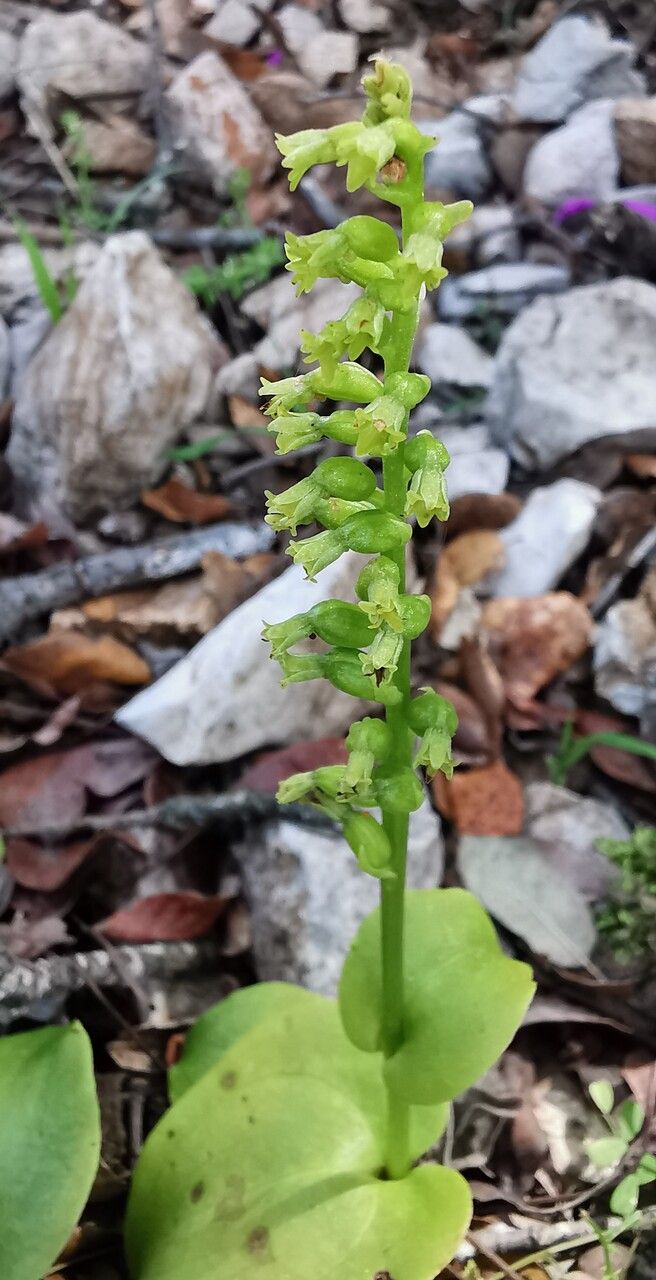
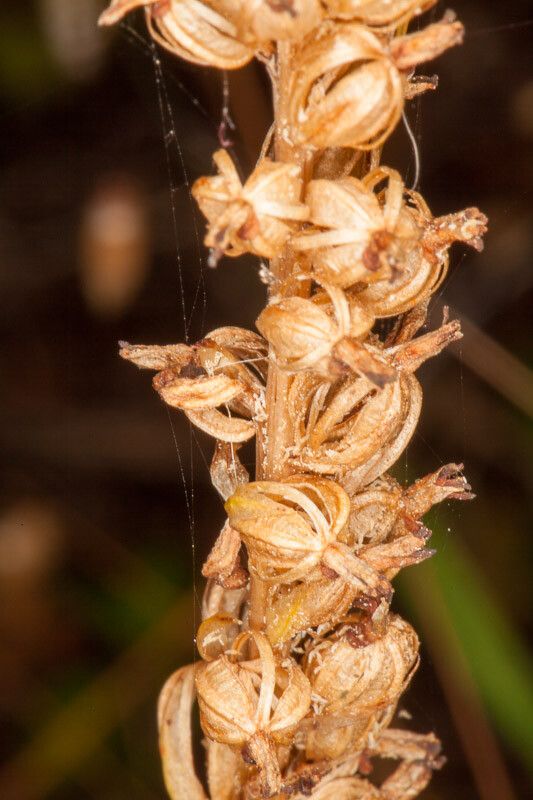
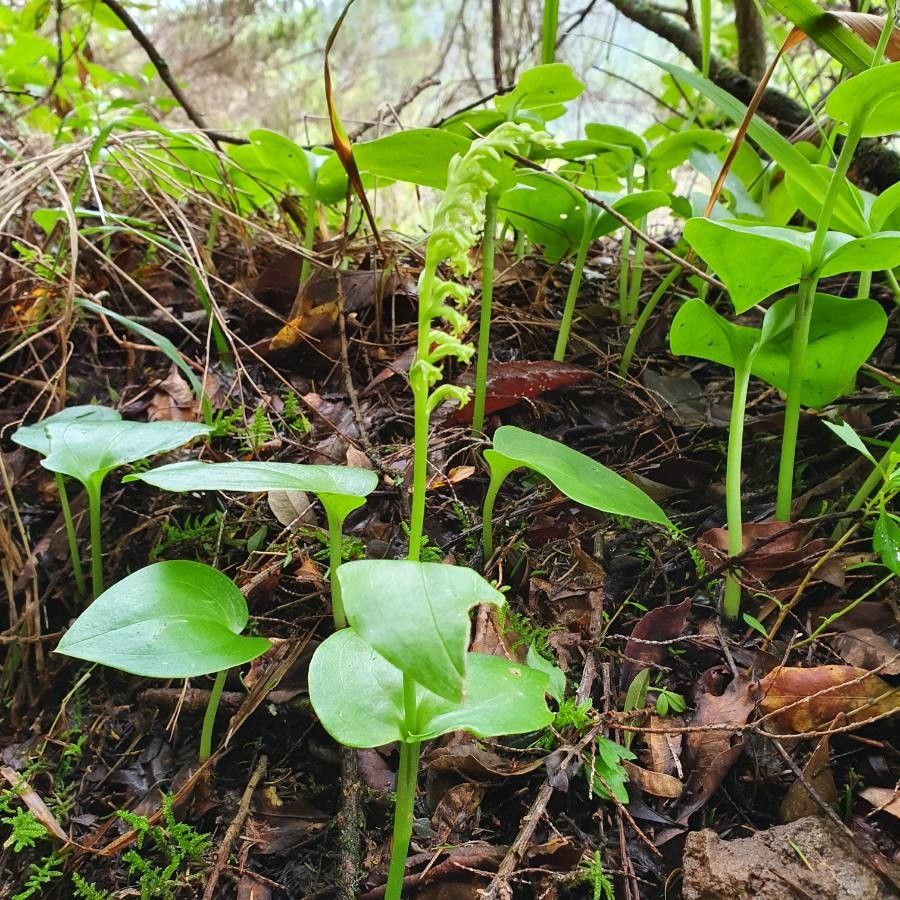
Gennaria diphylla is a species of flowering plant from the orchid family, Orchidaceae, native to the region from the western Mediterranean and Macaronesia (Canary Islands, Madeira, Portugal, Spain, the Balearic Islands, Morocco, Algeria, Tunisia, Sardinia, Tuscany). Gennaria diphylla was illustrated (as Habenaria cordata) in plate 3164 of Curtis' Botanical Magazine, 1832.
Two-leaved gennaria typically has strong resistance to disease and is affected by relatively few insect pests. Its care is considered difficult because it needs an environment with high humidity, good ventilation, and minimal harmful pathogens. Overwatering can cause root rot. While anyone can grow Two-leaved gennaria, keeping it healthy and getting it to flower again requires more growing experience.
How to keep Gennaria Diphylla.
Light
The two-leaved gennaria prefers abundant sunlight and tolerates moderate shade, as it comes from habitats with plentiful light. Too little sunlight inhibits its healthy growth, while overly intense light can harm the leaves. The light required varies through its growth stages, but light is essential for the plant's healthy development.
Water
The Two-leaved Gennaria, native to Mediterranean woodlands, thrives in consistently moist soil but should not be overwatered. It generally requires watering once a week. When grown indoors for its ornamental beauty, maintaining adequate humidity through regular misting is important to enhance its lush foliage and support healthy growth.
Temperature
Two-leaved gennaria is indigenous to temperate regions, where temperatures range from 68 to 100 °F (20 to 38 °C). It favors warmer conditions and therefore is unsuitable for cold, frosty environments. Adjust temperatures as the seasons change to maintain healthy growth.
Fertilizer
Two-leaved gennaria needs the most fertilizer during its active growth period, which occurs mainly in spring, summer, and early fall. Fertilizing supplies essential nutrients the soil may lack, encouraging healthy root and stem development and maintaining the attractive foliage that is a key characteristic of this plant.
Pruning
The two-leaved gennaria is characterized by its two unique leaves and greenish flowers. To encourage new growth, it is best to prune the plant in early to mid-spring. During pruning, remove any dead leaves and thin out dense areas to improve air circulation. Regular pruning increases the plant's vitality and flowering potential, making it a more attractive addition to your garden.
Botanical profile.
- Plant Type
- Herb
- Life Cycle
- Perennial
- Genus
- Gennaria
- Family
- Orchidaceae
- Hardiness Zone
- 11
- Mature Height
- 15 cm to 30 cm
- Mature Spread
- 10 cm to 20 cm
- Leaf Color
- Dark Green
- Leaf Type
- Semi-evergreen
- Flower Color
- Green
- Flower Size
- 10.16 cm
- Bloom Time
- Early spring, Mid spring
- Planting Time
- Spring
- Harvest Time
- Late spring, Early summer
- Native Area
- Tunisia, Italy, Spain, France, Algeria, Morocco, Portugal
Other names.
Reader questions.
How should I water my Two-leaved gennaria plant the most effectively?
The watering needs of your Two-leaved gennaria depend on its growth phase. During active growth, water the soil and occasionally water overhead if it is warm outside. In winter or cool, wet weather, stick to watering the soil directly. Look for signs of dehydration, such as thin, dry leaves or discoloration. Overwatering will make the plant mushy and limp. Use a well-draining potting mix and ensure the pot has good drainage. Water the plant multiple times per week during the growing season, with quick-draining water. Adjust the amount of water based on pot size. Rainwater or distilled water is ideal, and match the water temperature to the air if possible.
Why should I put fertilizer on my Two-leaved gennaria plant?
Plants, including the Two-leaved gennaria, need soil nutrients for growth. However, it's not always guaranteed that the soil will have all the necessary nutrients. Fertilization and soil amendments can help ensure that your garden plants have both the basic and specific nutrients they need. In the case of the Two-leaved gennaria, fertilizer is essential for healthy root and stem development throughout the growing season. Additionally, fertilization will help create visually appealing foliage, which is especially important for this plant's ornamental appeal.
What are the sunlight requirements for Two-leaved gennaria?
Two-leaved gennaria thrives in conditions where it can receive full sun, which is above 6 hours of sunlight daily, but it can also withstand partial sun, approximately 3-6 hours of sunlight per day. It's essential for ensuring the plant's healthy growth and development. Observing how sunlight moves through your garden will help in choosing the best spots that provide a balance of light and shade, conducive to the plant's well-being.
What is the native climate for Two-leaved gennaria?
Two-leaved gennaria, botanically known as Gennaria diphylla, thrives in temperate zones with temperatures ranging between 68 to 100°F (20 to 38°C). This tropical plant prefers warmer surroundings and is not suited to cold, frosty environments. During winter, if the temperature falls below 50°F (10°C), it is advisable to bring the plant indoors to ensure its health, ideally maintaining indoor temperatures above 68°F (20°C) for optimal growth.
What should I do if I give my Two-leaved gennaria plant too much water or too little water?
To avoid killing your Two-leaved gennaria, it is important to not let the soil remain too moist for too long. These plants need frequent watering during active growth, but they also require well-draining soil. Overwatering can lead to mushiness and root rot. If this happens, use sterile pruning shears to remove any rotting roots and then repot the plant in a container with good drainage and fast-draining potting mix. However, excessive repotting may not be beneficial for the plant, so careful watering is important. If the plant starts to shrivel and feel dry, it is likely underwatered. In this case, increase the watering frequency as the soil may be drying out faster than expected.
What time should I fertilize my Two-leaved gennaria?
The Two-leaved gennaria needs the most fertilizer when it is actively growing, which usually happens during spring, summer, and early fall. In winter, you should feed it every two to four weeks until fall comes again. During fall, you can gradually reduce the amount of fertilizer you give until you stop completely in preparation for winter when the plant's growth slows down.
What essentials should be considered for growing Two-leaved gennaria?
Growing Two-leaved gennaria successfully requires abundant solar exposure, as it originates from brightly lit environments and can endure moderate shade. However, too little sun can inhibit its growth, while too much can damage its leaves. During its growth period, the right amount of sunlight is crucial for its development. For indoor plants, adequate lighting is vital, especially when natural sunlight is insufficient. Artificial lights, such as LED lights providing 30-50W/sq ft for full sun plants, 20-30W/sq ft for partial sun plants, and 10-20W/sq ft for full shade plants, can be an effective solution. Placement 12-36 inches above the plant and adjusting the duration to mimic natural daylight, typically 8-12 hours per day, are important considerations.
How should I care for Two-leaved gennaria during winter?
For the Two-leaved gennaria to thrive during winter, especially when indoor temperatures drop below 50°F (10°C), it's essential to bring the plant indoors. Keeping the indoor environment above 68°F (20°C) is beneficial. The plant should be placed near a south-facing window to guarantee enough sunlight. Additionally, to maintain adequate humidity, regularly mist the plant or use a humidifier. If the plant must remain outdoors, ensure it's in a sheltered location receiving sunlight, and consider using a temporary greenhouse or wrapping it with plastic film or fabric during colder temperatures.
How frequently should I water my Two-leaved gennaria plant?
During the spring and summer months, water your Two-leaved gennaria once or twice per week. In hot and dry weather, increase watering to three times per week or more. In winter, water your Two-leaved gennaria, but not as often. Two to three times per month is sufficient during the coldest months. If you keep your Two-leaved gennaria indoors, be aware that indoor growing locations may cause the soil to dry quicker, so you might need to water more frequently. In fall, gradually reduce watering from multiple times per week to your reduced winter schedule.
When is it not a good idea to fertilize my Two-leaved gennaria plant?
For most of the year, including spring, summer, and most of the fall, it's important to regularly feed your Two-leaved gennaria. However, there are a couple of exceptions. If you notice that it has received too much fertilizer or if you have fertilized it incorrectly and caused fertilizer burn or other issues, you'll need to fix that before resuming regular feeding. The only time you should not fertilize it is during winter. If you grow this plant indoors in a cold winter area, it will go into a dormant phase during that time. Feeding it during this dormant phase is not only unnecessary and unhelpful for its growth, but it can also cause fertilizer burn.
What are the symptoms of incorrect lighting for Two-leaved gennaria?
If Two-leaved gennaria does not receive adequate light, it may exhibit symptoms such as smaller new leaves, leggy or sparse growth, faster leaf drop, slowed or halted growth, and lighter-colored new leaves or chlorosis. Excessive sunlight can cause sunscald, leaf curling, wilting, and leaf scorching. These symptoms highlight the plant's struggle with either adapting to low light conditions or suffering from overexposure to intense sunlight.
What are the symptoms of low temperature exposure in Two-leaved gennaria?
Two-leaved gennaria is not tolerant of low temperatures, performing optimally when the environment is above 68°F (20°C). During the winter, keeping the plant above 50°F (10°C) is crucial. Exposure to temperatures below 41°F (5°C) results in leaves showing extensive water-soaked necrosis, wilting, and drooping. Solutions for low temperature exposure include trimming off the frostbitten areas and immediately moving the plant to a warm indoor environment. A location near a south-facing window is ideal, as it ensures the plant receives ample sunlight, but avoid placing it near heaters or air conditioning vents to prevent air dryness.