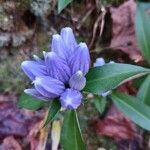
Gentiana andrewsii
Closed gentian · Bottle gentian · Closed Bottle Gentian · Andrews' Bottle Gentian · Andrews' Gentian
Description
Source: leafsnapGentiana andrewsii, the bottle gentian, closed gentian, or closed bottle gentian, is an herbaceous species of flowering plant in the gentian family Gentianaceae. Gentiana andrewsii is native to northeastern North America, from the Dakotas to the East Coast and through eastern Canada. It shares the common name "bottle gentian" with several other species.
🎭 Love and Power
Care Guide
💧 Water
Bottle gentian thrives in consistently moist soil and is moderately tolerant of drought. To keep the soil adequately hydrated without overwatering, water the plant every one to two weeks. This species is commonly grown outdoors and adapts well to temperate climates. During its active growing season, it's important to water carefully to ensure optimal growth.
How should I water my Bottle gentian plant?
To ensure the health of your Bottle gentian while watering, it is recommended to use filtered water at room temperature. This is because tap water may contain harmful particles. Additionally, since the Bottle gentian comes from a warm environment, it is best to avoid using cold water as it can be a shock to the plant. Another important tip is to refrain from overhead watering, as it can lead to issues with the foliage. Instead, focus on thoroughly saturating the soil with your filtered room temperature water. This method helps to moisten the roots and allows them to spread through the soil and absorb essential nutrients.
What should I do if I give my Bottle gentian too much water or too little water?
Overwatering is a common issue for the health of Bottle gentian plants and can cause wilting, yellowing leaves, and diseases like root rot. Underwatering is less common but can result in brittle, brown leaves. It is important to recognize signs of overwatering and take immediate action by reducing watering and improving soil drainage. If underwatering occurs, simply water more regularly until signs improve.
How frequently should I give water to my Bottle gentian?
If your Bottle gentian is in a pot, the best way to determine if it needs water is to check the soil by sticking your finger into it. If the top two to three inches of soil are dry, it's time to water it. If your Bottle gentian is planted outdoors in the ground, you can use the same method to test the soil. Again, if the top few inches of soil are dry, it's time to water. Typically, during spring and early fall, watering this plant once a week should be sufficient. However, during extremely hot weather, you may need to water it twice or more per week. It's worth noting that mature, well-established Bottle gentians are quite resilient and can endure dry conditions.
How much water does my Bottle gentian plant need?
When watering your Bottle gentian, don't be stingy with the amount of water you give it. Wait for the top couple inches of soil to dry out, then give it a good, thorough soaking. Make sure the water goes all the way through the soil and drains out of the bottom of the pot. If you don't see any excess water coming out, you might not have given it enough water. But be careful not to let the water sit and accumulate in the soil, as that can harm the plant. On the other hand, if you're watering the plant outdoors, about 1 inch of rain per week should be enough.
How should I water my Bottle gentian at different times it's growing?
The water needs of the Bottle gentian can vary depending on its growth stages. In the initial few years or when it is recently transplanted, it requires more water than usual. During this time, the plant focuses on developing new roots to support future growth, and these roots need additional moisture. However, as the plant matures over a few seasons, it will require less water. Another stage that may require increased watering is during the bloom period. Flower development utilizes a substantial amount of moisture, so providing extra water during this time may be necessary for your Bottle gentian.
☀️ Light Partial sun
Bottle gentian prefers moderate sunlight and often does well when it is not exposed to constant, intense sun. Its natural environment lets it tolerate periods of stronger sun exposure. Nevertheless, it grows best where sun and shade are mixed. An imbalance in light exposure can disturb its normal growth patterns and overall health.
What are the sunlight requirements for Bottle gentian?
Bottle gentian thrives in conditions offering a balance between sun and shade. It requires partial sun, meaning about 3-6 hours of sunlight daily, and can also flourish under full sun, requiring above 6 hours of sunlight. Being adaptable to different light conditions is essential, but it's important to monitor and adjust the plant's exposure to sunlight to ensure it receives the optimal balance for its growth and health.
How does artificial lighting affect indoor Bottle gentian plants?
Indoor Bottle gentian plants benefit significantly from adequate lighting, especially when natural sunlight is insufficient. Artificial lighting, such as LED lights, can be optimized to provide the necessary wavelengths of light, mimicking natural sunlight. For full sun plants, 30-50W/sq ft of artificial light is recommended, 20-30W/sq ft for partial sun plants, and 10-20W/sq ft for full shade plants. Proper placement (12-36 inches above the plant) and duration (8-12 hours per day) of artificial light are crucial for stimulating healthy growth in Bottle gentian plants.
What symptoms indicate insufficient light for Bottle gentian?
Symptoms of insufficient light in Bottle gentian include smaller new leaves, leggy or sparse growth, accelerated leaf drop, slower or halted new growth, and paler new leaves. Excessive sunlight can also cause problems, such as chlorosis (yellowing of leaves), sunscald, leaf curling, wilting, and leaf scorching. Monitoring these symptoms can help in adjusting light exposure to meet the plant's needs.
What solutions can help manage light exposure for Bottle gentian?
To optimize light exposure for Bottle gentian, gradually increase sunlight exposure by moving the plant to sunnier locations weekly, aiming for 3-6 hours of direct sunlight daily. For indoor plants, artificial lighting can supplement natural light, with at least 8 hours of artificial light recommended daily. Outdoors, it's crucial to avoid abrupt changes in light intensity to prevent sunburn. Reducing obstructions like tree branches can also improve sunlight access. If necessary, transplanting smaller plants during their dormant period to sunnier spots can support better growth and health.
🌡️ Temperature 5–35°C
Bottle gentian is native to temperate regions and prefers temperatures between 41 and 95 °F (5 to 35 °C). Seasonal adjustments may be necessary to replicate this habitat, particularly during extreme temperatures.
What is the native climate for Bottle gentian?
Bottle gentian (Gentiana andrewsii) is native to regions with a moderate climate, thriving in temperatures ranging from 41 to 95 °F (5 to 35 °C). Adapting to seasonal changes is essential for mimicking this plant's natural habitat, especially in locations with extreme temperatures.
Does Bottle gentian need special cold protection?
Bottle gentian possesses strong cold resistance and usually does not require special frost protection measures in winter. However, if temperatures are anticipated to drop below -25°C, it's crucial to safeguard the plant using insulative materials like soil or straw. It is also recommended to water the plant abundantly before the first freeze of autumn to ensure the soil remains moist, preventing drought and water scarcity through the winter and early spring.
How does Bottle gentian respond to low temperatures?
Bottle gentian is highly cold-tolerant and prefers temperatures to remain above 5°C. Despite its resilience, repeated exposure to temperatures below -25°C may result in a decrease or complete absence of sprouting come spring. In such cases, removing parts of the plant that failed to sprout is suggested once warmer spring temperatures arrive.
How should I care for Bottle gentian during high temperatures?
In summer, it's vital to ensure that the Bottle gentian is kept below 35°C. Exposure to temperatures above 38°C can cause the leaves to lighten in color, curl, and become prone to sunburn; in extreme cases, the plant might wilt and dry out entirely. To protect the plant, trim away sunburned and dried-up parts, relocate it to a shadier spot or use a shade cloth for protection from midday and afternoon sun. Also, maintain soil moisture by watering in the morning and evening.
💨 Humidity
🪴 Soil 5-6
🌱 Fertilizer
The best time to fertilize a Bottle gentian is in early spring, as it comes out of dormancy and begins active growth. Fertilization supplies essential nutrients needed for healthy growth. Although Bottle gentian has fairly low fertilizer requirements, applying fertilizer annually can improve its survival and encourage better, longer-lasting flowers.
Why is it necessary to add fertilizer to my Bottle gentian plant?
The main structure of the Bottle gentian is formed by its leaves. Fertilization plays a crucial role in maintaining the health and appearance of these leaves. Proper fertilization ensures that the leaves have a consistent color and a healthy texture. Additionally, fertilization also aids in the growth of new roots and the maintenance of existing roots beneath the soil. This means that not only will fertilization keep your plant healthy in the present, but it will also optimize the plant's ability to absorb nutrients from the soil in the future.
When should I fertilize my Bottle gentian?
If you grow your Bottle gentian outdoors, new growth will appear in early spring. This signals that it's time to start fertilizing. Typically, one application of fertilizer is sufficient. However, if you want to promote maximum growth, you can fertilize multiple times during the spring and early summer. In this case, you can feed your Bottle gentian every month to a month and a half.
When is the best time to not fertilize my Bottle gentian?
During late fall and winter, your Bottle gentian will be dormant and not produce new growth. Therefore, it is best to avoid fertilizing it during this time. In spring and summer, if you choose to fertilize, gradually reduce the amount as summer approaches because the growth rate of your Bottle gentian will slow down. It is important to note that it is not recommended to fertilize your Bottle gentian during abnormally hot weather or when the soil is extremely dry. Fertilizing in these conditions can cause stress and premature death of your Bottle gentian.
What kind of plant food does my Bottle gentian need?
Choosing the best fertilizer for a Bottle gentian is simple. These plants thrive on a general-purpose garden fertilizer with equal amounts of nitrogen, phosphorus, and potassium, such as a 10-10-10 ratio. Avoid fertilizers with high nitrogen content if unsure. The best fertilizers for Bottle gentian typically come in granular form, which are slow-release and easy to apply. Consider feeding them with organic compost as well.
How do I give nutrients to my Bottle gentian?
To ensure the healthy growth of your Bottle gentian, wait until its first leaves emerge in early spring. At this point, apply a balanced slow-release fertilizer to the soil around the plant's base. If needed, you can repeat this process later in the season. Remember to direct the fertilizer to the soil rather than the plant itself, which may involve moving some leaves aside. It's also beneficial to water the Bottle gentian before and after fertilizing.
🪴 Pot & Repot
✂️ Pruning
Prune bottle gentian in early to late spring to remove dead stems and shape the plant, which promotes healthier blooms and dense foliage. Pruning after the plant has flowered helps manage its size and encourages new growth, while also improving air circulation and reducing the risk of disease.
🌿 Propagating
🐛 Diseases & pets
☠️ Toxicity
Characteristics
- Plant Type
- Herb
- Life Cycle
- Perennial
- Genus
- Gentiana
- Family
- Gentianaceae
- Hardiness Zone
- 5-9
- Mature Height
- 30 cm to 61 cm
- Mature Spread
- 30 cm
- Leaf Color
- Dark Green
- Leaf Type
- Deciduous
- Flower Color
- Blue
- Flower Size
- 3.05 cm to 5.08 cm
- Bloom Time
- Late summer, Early fall, Mid fall
- Planting Time
- Spring, Summer, Autumn
- Harvest Time
- Mid fall, Late fall, Early winter