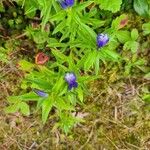
Gentiana linearis
Narrow-Leaf Gentian · Narrowleaf gentian · Narrow-leaved Gentian · Bastard Gentian
Description
Source: leafsnapGentiana linearis, the narrowleaf gentian, is a 1–2 ft (30–61 cm) tall flowering plant in the Gentianaceae family. It is native to northeastern North America from Manitoba to Maine, and to the Appalachian Mountains of West Virginia, Virginia, and Tennessee. Similar to the "bottle gentians" like Gentiana clausa and Gentiana andrewsii, it has paired, lanceolate leaves, usually on unbranched stalks, and blue or purple blooms which remain closed or nearly closed; the leaves are narrower however, as the specific name indicates.
Care Guide
💧 Water
Narrowleaf gentian thrives in cool, moist environments and needs regular watering to maintain consistent moisture without becoming waterlogged. Once the plant is established, it can tolerate moderate drought. To ensure optimal soil moisture, which greatly influences flowering during the growing season, it's important to water the plant weekly.
How should I water my Narrowleaf gentian plant?
To properly water the Narrowleaf gentian, it is best to use filtered water at room temperature. Tap water may contain harmful particles, so filtering is preferable. Since the Narrowleaf gentian is accustomed to warm environments, it is important to avoid using cold water, as it can be a shock to the plant. It is also recommended to avoid overhead watering, as it can cause issues with the foliage. Instead, it is advised to pour the filtered room temperature water directly onto the soil until it is fully saturated. This helps to nourish the roots and encourages their growth and nutrient absorption.
What should I do if I give my Narrowleaf gentian too much or too little water?
Overwatering is a more common problem for Narrowleaf gentian than underwatering. When this plant receives too much water, its stems and leaves may wilt and turn yellow. Overwatering can also lead to diseases like root rot, mold, and mildew, which can be fatal. While underwatering is less common, it can cause the leaves to become brittle and brown. It's important to notice signs of overwatering early on. Some diseases caused by overwatering, like root rot, may not be fixable if left unattended. If you see early signs of overwatering, reduce watering immediately. Check the soil quality, and if it drains poorly, replace it with a loose, well-draining mix. If signs point to underwatering, simply water more regularly until the signs improve.
How frequently should I water my Narrowleaf gentian?
If your Narrowleaf gentian plant is in a pot, the most precise way to determine if it needs water is by sticking your finger into the soil. If the top two to three inches of soil feel dry, it's time to water it. If you have your Narrowleaf gentian planted outdoors in the ground, you can use the same method to test the soil. When the top few inches of soil are dry, it's time to water. Typically, during spring and early fall, watering once a week is sufficient. However, in extremely hot weather, you may need to water twice or more per week. It's worth noting that mature, well-established Narrowleaf gentians can handle drought well.
How much water does my Narrowleaf gentian plant need?
To water your Narrowleaf gentian effectively, don't hold back on the amount of water you provide. Make sure the top two to three inches of soil are dry before watering, and then give the plant a good, deep watering to thoroughly soak the entire soil. You should add enough water that it starts to flow out of the drainage holes at the bottom of the pot. If you don't see any excess water draining, it means you haven't given enough water. However, be careful not to let the water accumulate in the soil, as it can be harmful to the plant. On the other hand, if you see no water draining, it might be a sign that the soil isn't draining well, which is not good for the plant's health. If the plant is outdoors, 1 inch of rainfall per week should be sufficient.
How do I water my Narrowleaf gentian as it grows?
The water needs of the Narrowleaf gentian can vary depending on its growth stages. In the first few years of its life or when it is recently transplanted, you will need to provide more water than usual. During these stages, the plant focuses on growing new roots to support future growth, and these roots need more moisture. As the plant matures over a few seasons, it will require less water. Additionally, during the bloom period, when the flowers are developing, the Narrowleaf gentian may need more water due to the increased moisture demand.
☀️ Light Partial sun
Narrowleaf gentian naturally occurs in habitats like forest understories and rocky sites, where it grows in natural shade. It prefers partial sun but will tolerate both full sun and full shade, illustrating its adaptable, hardy character.
What are the sunlight requirements for Narrowleaf gentian?
Narrowleaf gentian thrives in full sun, requiring above 6 hours of sunlight daily to maintain optimal growth. However, it can also adapt to partial sun conditions. It's important to observe your garden's specific light conditions throughout the day to choose spots that provide the perfect balance of light and shade for your plants. This ensures the plants' well-being by meeting their light necessities.
What essential conditions are vital for the growth of Narrowleaf gentian?
Narrowleaf gentian is a perennial herbaceous plant that prefers full to partial sun conditions for optimal growth. This sun-loving plant originates from open habitats, often thriving in meadows and grasslands. For indoor plants, adequate lighting is crucial, especially when natural sunlight is insufficient. Artificial lighting, such as LED lights, can be utilized, ensuring they provide 30-50W/sq ft for full sun plants, 20-30W/sq ft for partial sun plants, and 10-20W/sq ft for full shade plants. The artificial light source should be placed 12-36 inches above the plant and turned on for 8-12 hours per day to mimic natural daylight hours.
What are the symptoms of light deficiency in Narrowleaf gentian?
Symptoms of light deficiency in Narrowleaf gentian include smaller new leaves compared to mature ones, leggy or sparse growth, early leaf drop to conserve resources, slower or no new growth, and paler new leaves due to insufficient chlorophyll. Excessive sunlight exposure can cause chlorosis, sunscald, leaf curling, wilting, and leaf scorching. These symptoms negatively impact the plant's ability to photosynthesize and maintain its health.
How can you address light deficiency problems in Narrowleaf gentian?
To address light deficiency in Narrowleaf gentian, gradually move plants to sunnier locations, ensuring they receive at least 6 hours of direct sunlight daily. Indoor plants can benefit from artificial light sources, such as desk lamps or professional grow lights, turned on for at least 8 hours daily. When improving outdoor conditions, avoid sudden changes in sunlight exposure to prevent sunburn. Additionally, minimize obstructions like overhanging branches, and consider transplanting smaller plants to sunnier areas during their dormant period. Although parts of the plant affected by insufficient sunlight may not recover, new growth after increasing light exposure should be healthy.
🌡️ Temperature 0–32.2°C
Narrowleaf gentian can tolerate a wide range of temperatures, but its range may still be restricted by various combinations of moisture and heat. It does best in warm summer conditions with sufficient rainfall or watering. Extended periods of cloudy, rainy weather or prolonged high temperatures can raise the chances of Narrowleaf gentian dying. In winter, adequate protection from cold can increase the plant's likelihood of surviving.
What are the essential care requirements for Narrowleaf gentian?
Narrowleaf gentian (Gentiana linearis) adapts well across a wide temperature range but its survival hinges on the right balance of water and temperature conditions. Ideally, it flourishes in warm, summer climates with sufficient rainfall or watering. However, its life can be threatened by long periods of cloudy, rainy weather or sustained high temperatures. In winter, while it possesses strong cold resistance and typically doesn't need special frost protection, careful measures are needed if temperatures are expected to plunge below -40\u00b0C. Shielding the plant with soil or straw and watering it abundantly before the onset of the first frost to keep the soil moist can significantly enhance its winter survival chances.
How does Narrowleaf gentian react to low temperatures?
Narrowleaf gentian demonstrates a robust tolerance to cold and performs best when the temperature stays above 0\u00b0C. Throughout the winter, it is advisable to maintain the temperature above -35\u00b0C. However, once temperatures drop below -40\u00b0C, while there might not be immediate visible damage, there's likely to be a noticeable reduction in springtime sprouting or a complete absence of sprouting. The recommended solution for affected plants in the spring is to remove any parts that fail to sprout, aiding in the recovery and future growth of the Narrowleaf gentian.
How should Narrowleaf gentian be cared for in high temperatures?
Narrowleaf gentian has specific needs when it comes to handling high temperatures, especially during summer. Ideally, it should be kept below 32\u00b0C. Exceeding 35\u00b0C can lead to leaves lightening in color, curling, becoming prone to sunburn, and in extreme cases, the whole plant might wilt and dry out. To mitigate these effects, sunburned or dried parts should be trimmed away. Relocating the plant to a shaded area during the midday and afternoon sun or using a shade cloth can protect it. Additionally, watering the plant during the morning and evening to maintain soil moisture can further help in coping with high temperatures.
💨 Humidity
🪴 Soil 6-7
🌱 Fertilizer
The best time to fertilize a Narrowleaf gentian is in early spring, as it emerges from dormancy and begins active growth. Fertilization supplies essential nutrients needed for healthy development. Although Narrowleaf gentian has relatively low fertilizer requirements, applying fertilizer once a year can improve its survival and encourage better, longer-lasting flowers.
🪴 Pot & Repot
✂️ Pruning
Narrowleaf gentian is known for its slender leaves and striking blue flowers. To encourage growth and flowering, prune the plant from early to late spring. Techniques for pruning include removing dead stems and tip pruning to achieve a bushier appearance. These practices improve air circulation and light penetration, which contribute to the plant's overall health.
🌿 Propagating
🐛 Diseases & pets
☠️ Toxicity
Characteristics
- Plant Type
- Herb
- Life Cycle
- Perennial
- Genus
- Gentiana
- Family
- Gentianaceae
- Hardiness Zone
- 2-8
- Mature Height
- 30 cm to 61 cm
- Mature Spread
- 8 cm to 30 cm
- Leaf Color
- Green, Dark Green
- Leaf Type
- Semi-evergreen
- Flower Color
- Purple, Blue
- Flower Size
- 3.05 cm to 5.08 cm
- Bloom Time
- Mid summer, Late summer, Early fall
- Planting Time
- Spring, Summer
- Harvest Time
- Early fall, Mid fall