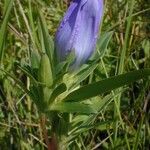
Gentiana saponaria
Harvestbells · Soapwort Gentian
Description
Source: leafsnapGentiana saponaria, the soapwort gentian or harvestbells, is a 1–2 ft (30–61 cm) tall flowering plant in the Gentianaceae family.
🎭 Love and Power
Care Guide
💧 Water
Harvestbells flourish in moist conditions and require regular watering, ideally once a week. While they can withstand short periods of drought, it's important to provide them with consistent hydration, especially during their active growing season, to encourage vibrant flowering. As an herbaceous perennial, careful watering is key to their success.
☀️ Light Partial sun
Bottle gentian prefers moderate sunlight and often does well when it is not exposed to constant, intense sun. Its natural environment lets it tolerate periods of stronger sun exposure. Nevertheless, it grows best where sun and shade are mixed. An imbalance in light exposure can disturb its normal growth patterns and overall health.
What are the sun requirements for Harvestbells?
Harvestbells requires full sun, which is above 6 hours of sunlight, or partial sun, approximately 3-6 hours of sunlight daily. It's crucial to observe how sunlight moves throughout your garden to ensure you choose spots that provide a balance of light and shade, optimizing the plant's growth and well-being. The flexibility in sunlight exposure reflects the plant’s ability to thrive in its native habitat, which includes clearings and shadowy forest edges.
How essential is sunlight for the growth of Harvestbells?
Sunlight is crucial for the optimal growth of Harvestbells, as the plant thrives under an abundance of daylight. However, it is also capable of growing in conditions where sunlight is not constant, thanks to its native habitat that includes both clearings and shadowed forest edges. Despite this adaptability, both inadequate and excessive sunlight can be detrimental to its health. For indoor plants, artificial lighting can supplement natural light, especially in less sunny spaces or during winter, with specific artificial light recommendations such as LED lights and guidelines on wattage per square foot, distance, and duration of exposure.
What are the key symptoms of inadequate or excessive sunlight exposure in Harvestbells?
Harvestbells exposed to inadequate lighting may exhibit symptoms like smaller new leaves, leggy or sparse growth, faster leaf drop, slowed or halted growth, and pale or irregularly colored new leaves. Excessive sunlight can cause chlorosis, sunscald, leaf curling, wilting, and leaf scorching, indicating damage to the plant's ability to photosynthesize and maintain optimal health. These symptoms highlight the importance of monitoring and adjusting light exposure to ensure the plant's well-being.
What solutions are available for Harvestbells suffering from inadequate sunlight?
For indoor Harvestbells suffering from inadequate light, gradually increasing exposure to direct sunlight up to at least 6 hours daily, using south-facing windows, or supplementing with artificial light can be effective solutions. Outdoor plants can benefit from gradual relocation to sunnier spots to avoid sunburn. Additionally, minimizing obstructions like trees can enhance sunlight access. For smaller plants, transplanting during the dormant period can help. It's important to note that while affected parts may not recover, new growth will be healthy once light conditions improve.
🌡️ Temperature 5–35°C
Bottle gentian is native to temperate regions and prefers temperatures between 41 and 95 °F (5 to 35 °C). Seasonal adjustments may be necessary to replicate this habitat, particularly during extreme temperatures.
What are the ideal climate and temperature conditions for growing Harvestbells?
Harvestbells, scientifically known as Gentiana saponaria, is best suited to a temperate climate and thrives within a temperature range of 41 to 89.6 °F (5 to 32 °C). It possesses strong cold resistance, which mitigates the need for special frost protection in most winter conditions. However, in regions where temperatures might drop below -30°C, it's important to take measures to protect the plant, such as covering it with soil or straw. Additionally, watering the plant abundantly before the first freeze can help to ensure the soil stays moist throughout the winter, preventing drought and water scarcity for the plant during the colder months.
How does Harvestbells react to low temperatures?
Harvestbells exhibits strong cold tolerance, optimally growing at temperatures above 5°C but can sustain temperatures down to -25°C. If winter temperatures fall below -30°C, while the plant may not show noticeable changes during the winter, it can lead to decreased sprouting or a complete lack of sprouting in spring. To address this, any parts of the plant that have failed to sprout by spring should be removed to encourage new growth.
What should be done if Harvestbells experiences high temperatures?
During the summer months, it is crucial for the well-being of Harvestbells to keep its surrounding temperature below 32°C. Should the temperature rise above 35°C, the plant's leaves may lighten in color, curl, become sunburned, and in severe instances, the entire plant may wilt and dry. To combat these conditions, trim away the sunburned and dried parts of the plant. Relocate the plant to an area with shade during the midday and afternoon sun, or use a shade cloth for protection. Ensure the soil remains moist by watering in the morning and evening.
💨 Humidity
🪴 Soil 5-6
🌱 Fertilizer
The best time to fertilize a Bottle gentian is in early spring, as it comes out of dormancy and begins active growth. Fertilization supplies essential nutrients needed for healthy growth. Although Bottle gentian has fairly low fertilizer requirements, applying fertilizer annually can improve its survival and encourage better, longer-lasting flowers.
🪴 Pot & Repot
✂️ Pruning
Harvestbells are known for their vibrant blue flowers and medicinal uses. To promote healthy growth, prune the plant from early to late spring by cutting back damaged stems just above a bud. Make sure to use clean tools to prevent the spread of disease. Regular pruning not only improves air circulation but also enhances the overall health of the plant.
🌿 Propagating
🐛 Diseases & pets
☠️ Toxicity
Characteristics
- Plant Type
- Herb
- Life Cycle
- Perennial
- Genus
- Gentiana
- Family
- Gentianaceae
- Hardiness Zone
- 5-9
- Mature Height
- 30 cm to 61 cm
- Mature Spread
- 30 cm
- Leaf Color
- Dark Green
- Leaf Type
- Deciduous
- Flower Color
- Blue
- Flower Size
- 3.05 cm to 5.08 cm
- Bloom Time
- Late summer, Early fall, Mid fall
- Planting Time
- Spring, Summer, Autumn
- Harvest Time
- Mid fall, Late fall, Early winter