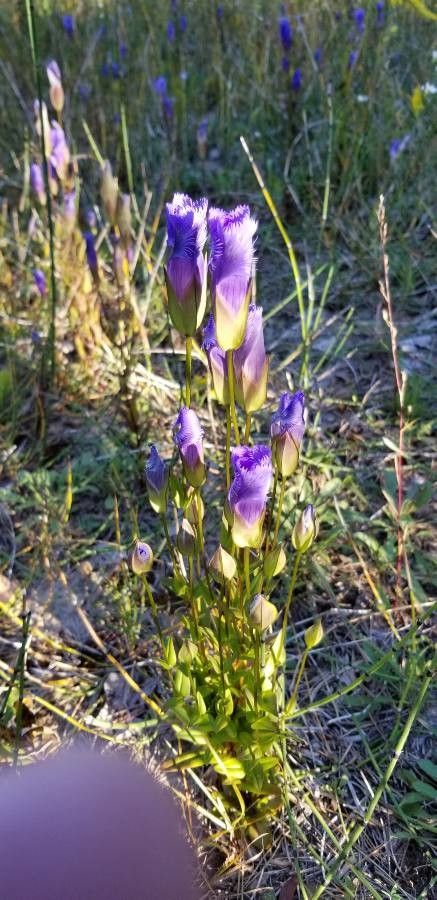
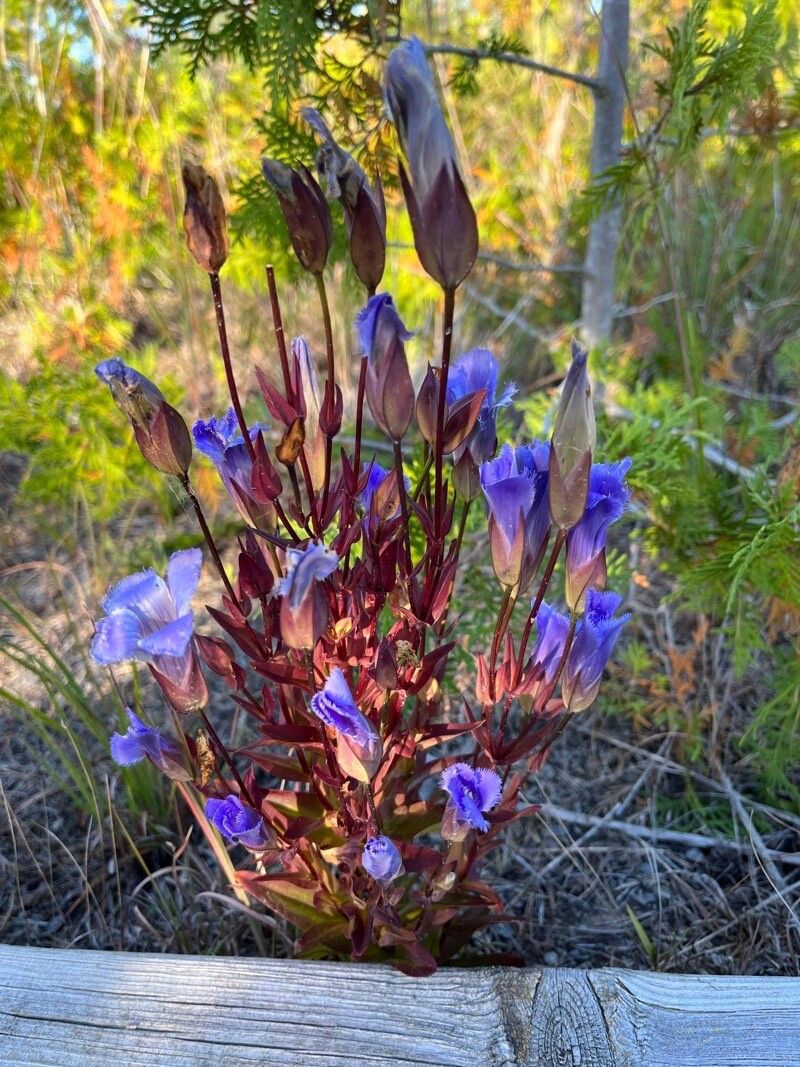
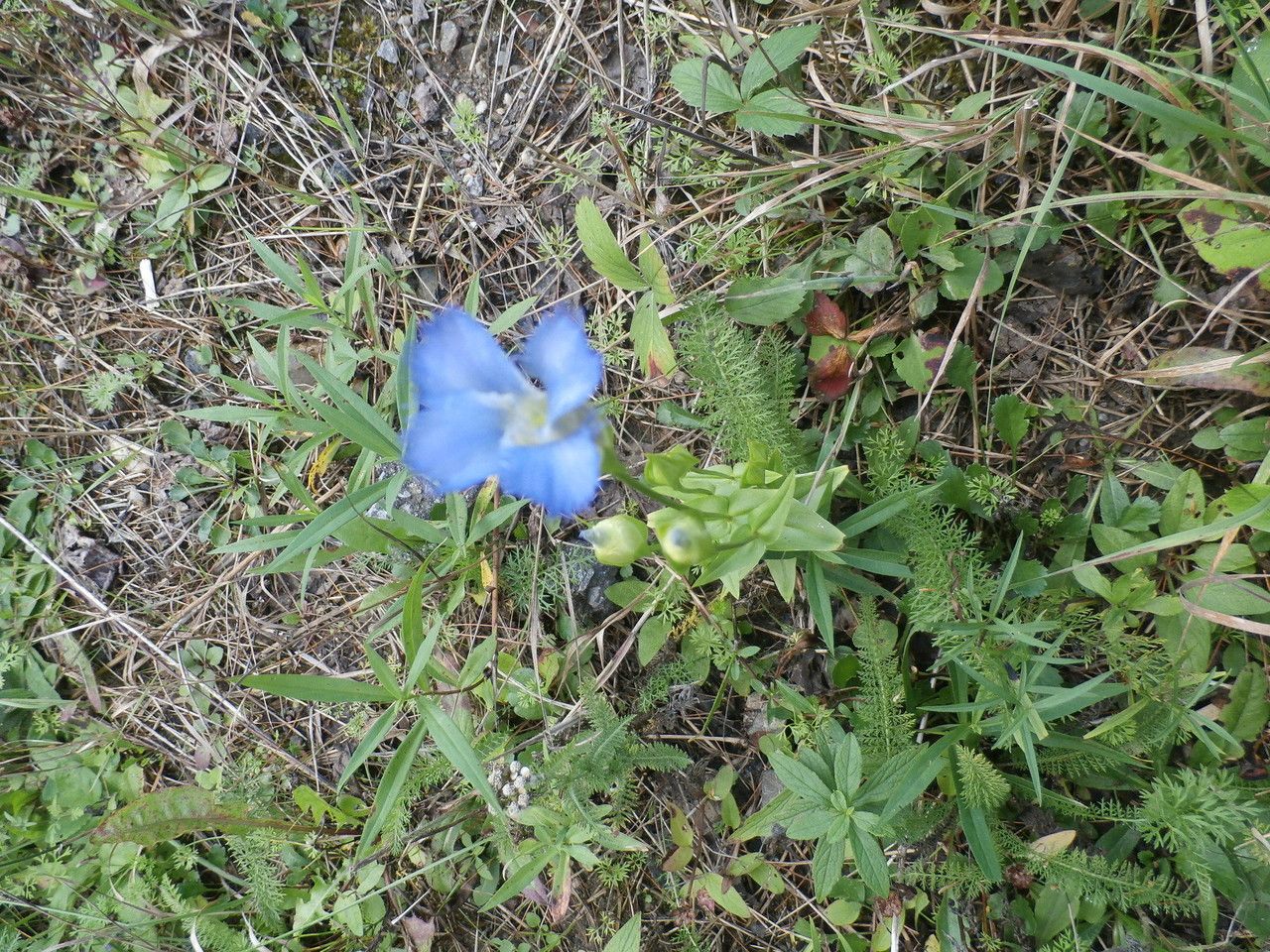
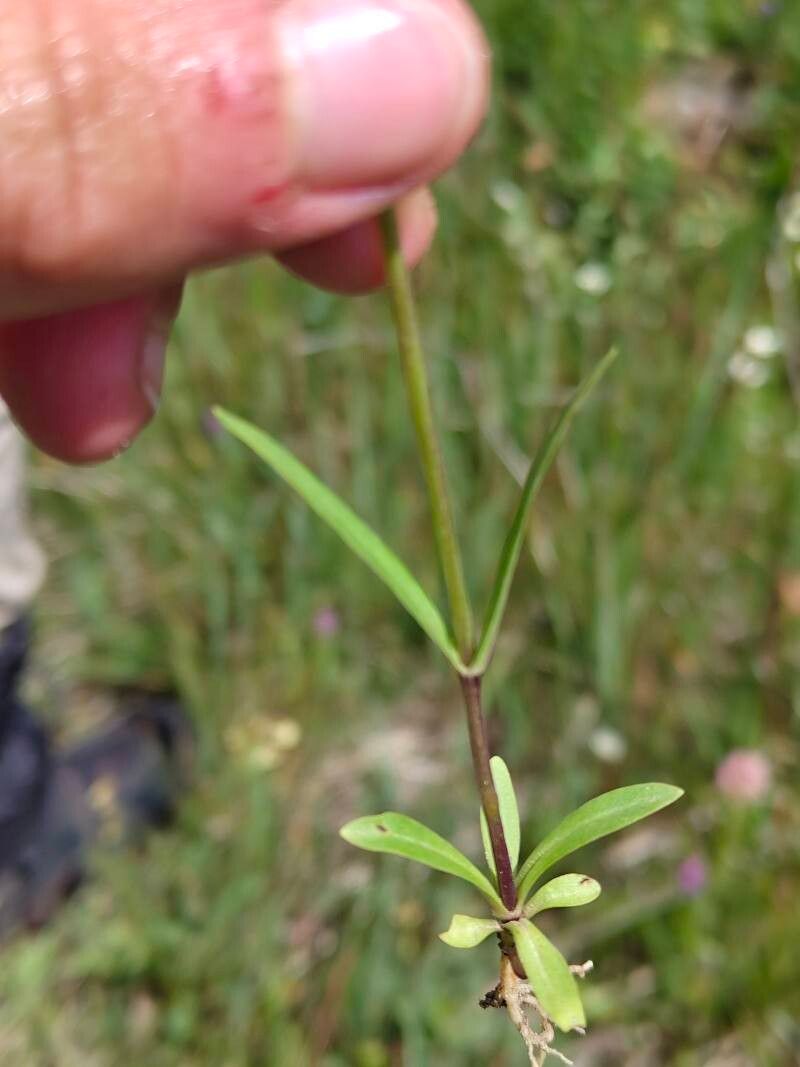
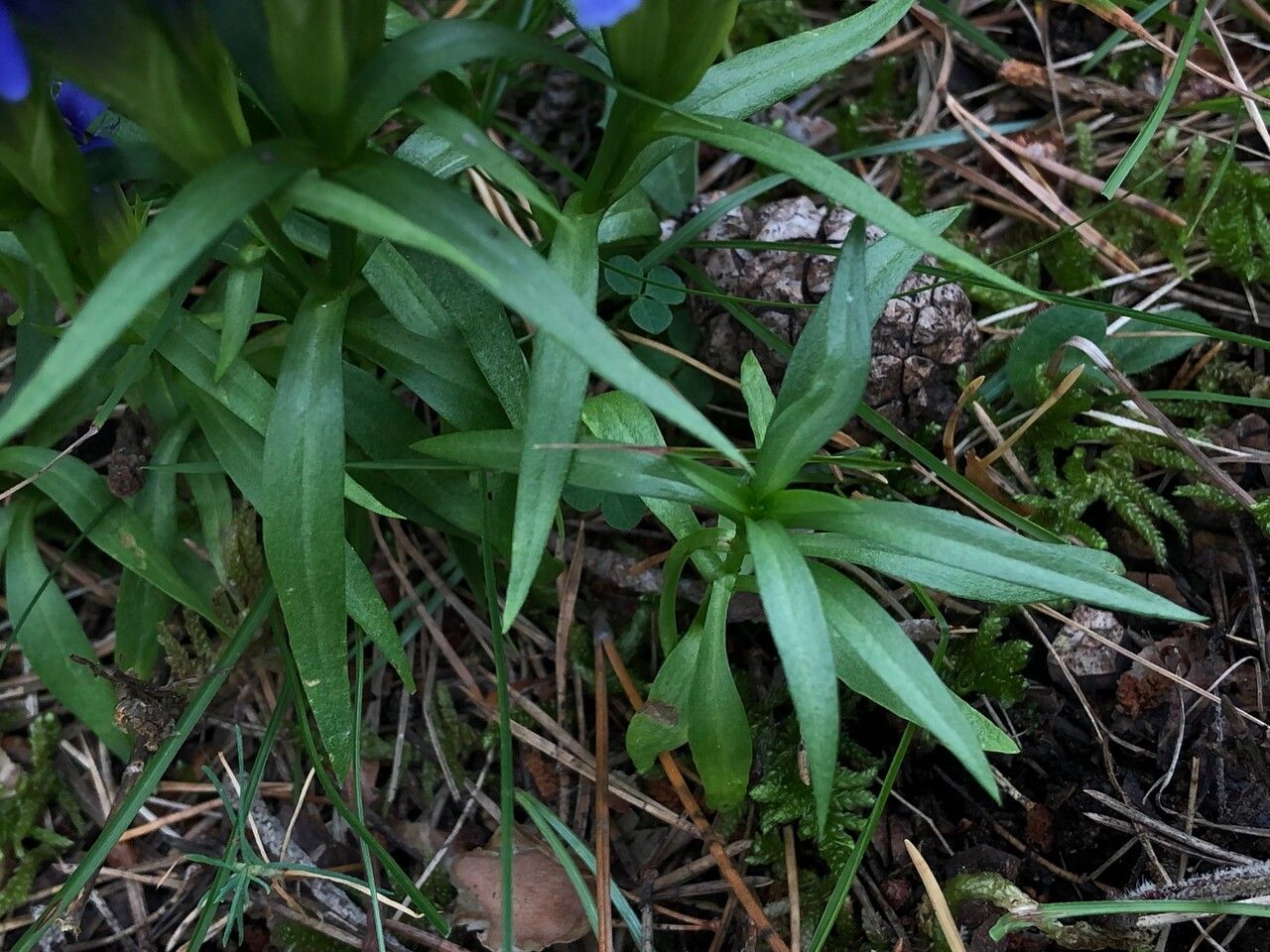
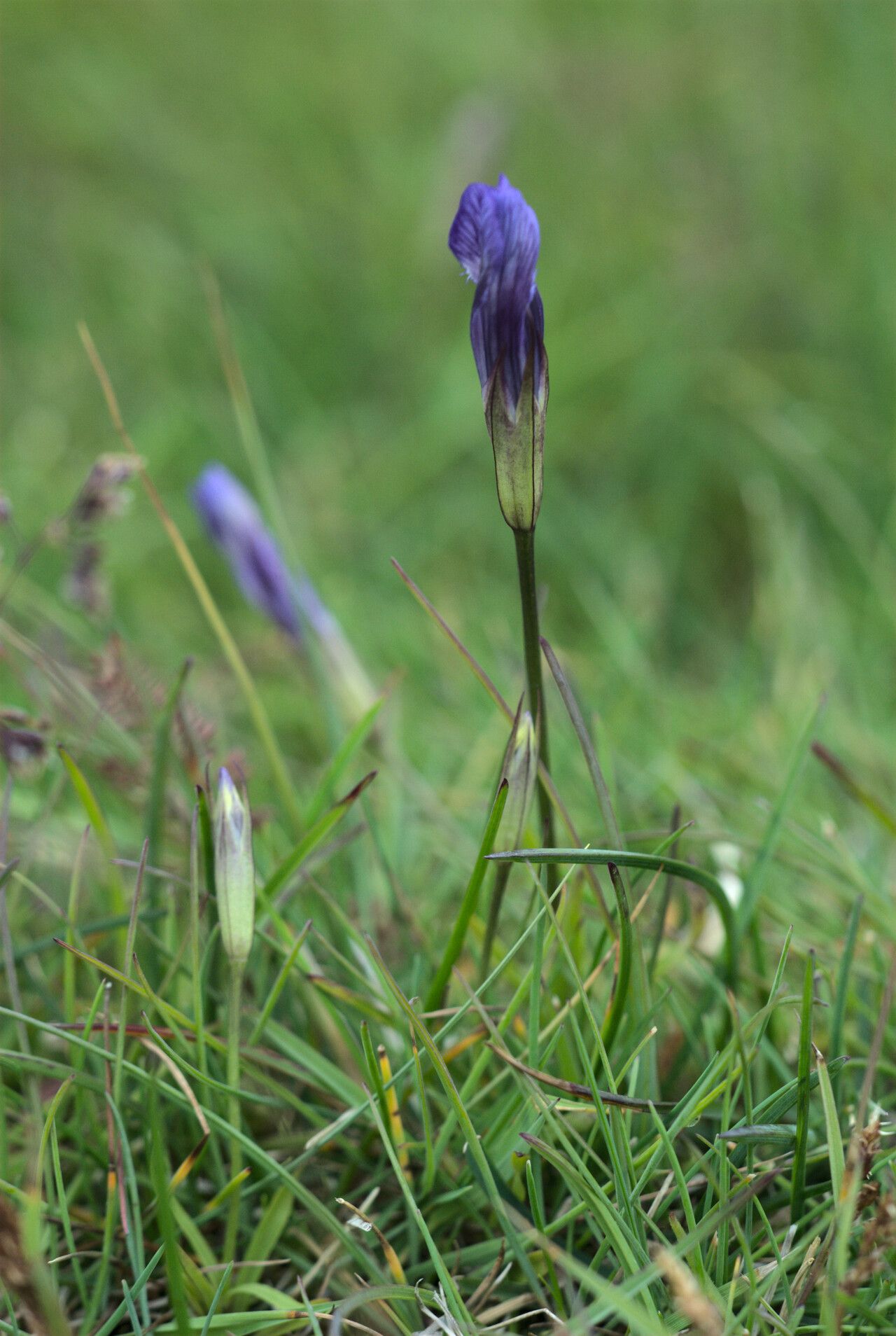
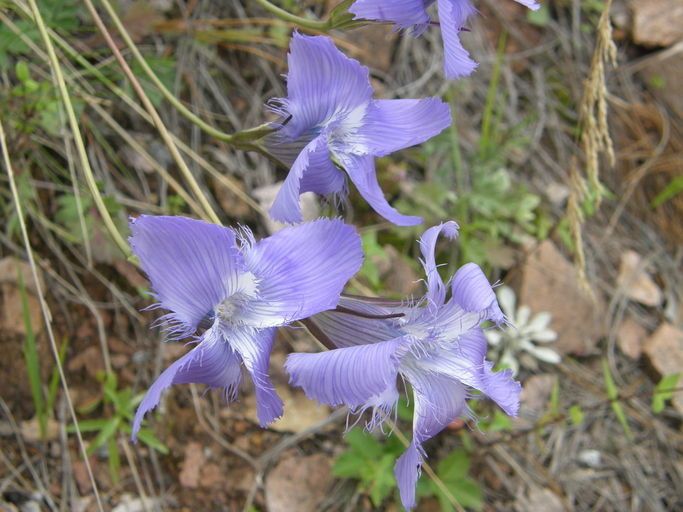
Gentianopsis crinita (sometimes called greater fringed gentian or blue gentian) is a biennial herbaceous species, native to eastern USA and eastern Canada. The flowers of fringed gentian open on sunny days, but generally remain closed on cloudy days. Individual plants live for only one or two years; the plant is noted as having become relatively rare. It grows in moist, limey woods, meadows, and stream banks.In autumn, solitary, iridescent blue flowers develop on naked peduncles approximately 2 to 10 cm (3⁄4 to 4 in) in height. Each finely fringed petal is 3.5 to 6 cm (1+3⁄8 to 2+3⁄8 in) in length. The outermost flower parts are two pairs of green sepals, strongly winged and flared on the basal margins, the outer pair much larger than the inner. It is closely related to Gentianopsis virgata (Raf.) Holub, which is sometimes lumped within a broadly transcribed G. crinita.According to ancient Roman naturalist Pliny, King Gentius of Illyria found that the roots were useful as an emetic, cathartic, and tonic. From him, the plant's name is derived.
Greater fringed gentian has strong resistance to disease and is generally not prone to illnesses. Still, it can be affected by pests and diseases present in its environment. Such infections are generally mild. Regarding care, this plant needs moderate maintenance. It should be pruned regularly to maintain a tidy appearance and support healthy growth. Fertilizing can also help encourage flowering. Greater fringed gentian is suitable for anyone with outdoor space, such as a garden or patio, and does not require extensive gardening experience. It may need more attention if grown indoors.
How to keep Gentianopsis Crinita.
Light
The greater fringed gentian generally flourishes in moderate sunlight but can tolerate locations with stronger sun. The habitat where the plant naturally grows strongly influences its sunlight needs. Insufficient or excessive light can harm its health, causing stunted growth or discoloration, respectively.
Water
The greater fringed gentian thrives in moist, well-drained environments and shows moderate tolerance to drought. It prefers consistent moisture, so it's beneficial to water it every 1-2 weeks. In temperate regions, this plant experiences enhanced growth during the rainy season, making use of the increased water availability to improve its flowering potential.
Temperature
The greater fringed gentian originates from temperate regions and grows best at temperatures between 68 and 95 °F (20 to 35 ℃). Seasonal adjustments in temperature may be necessary for optimal growth.
Fertilizer
Greater fringed gentian requires regular fertilization to encourage flowering but does not tolerate excessive amounts. It needs light doses of fertilizer applied frequently throughout its entire life cycle, especially during the peak period of active growth and while it is flowering. You will feed your Greater fringed gentian until it stops blooming.
Pruning
The Greater Fringed Gentian boasts vibrant blue flowers with uniquely fringed petals. For optimal growth and appearance, prune the plant from early to late spring to eliminate old stems and encourage new growth. This practice not only improves the plant's aesthetics but also prolongs its blooming period, ensuring that the Greater Fringed Gentian remains healthy and vibrant throughout its growth cycle.
Botanical profile.
- Plant Type
- Herb
- Life Cycle
- Biennial, Annual
- Genus
- Gentianopsis
- Family
- Gentianaceae
- Hardiness Zone
- 4-8
- Mature Height
- 30 cm to 76 cm
- Mature Spread
- 15 cm to 30 cm
- Leaf Color
- Green
- Leaf Type
- Semi-evergreen
- Flower Color
- Blue
- Flower Size
- 3.30 cm to 5.08 cm
- Bloom Time
- Late summer, Early fall, Mid fall
- Planting Time
- Spring, Summer, Autumn
- Harvest Time
- Mid fall, Late fall, Early winter
Other names.
Reader questions.
How should I properly water my Greater fringed gentian?
To properly care for the Greater fringed gentian, use filtered water at room temperature or slightly warmer. Tap water may contain harmful particles. The plant is accustomed to warm environments, so avoid using cold water that could shock it. Instead of overhead watering, apply filtered room temperature water to the soil until it is completely saturated. This helps moisten the roots and allows them to spread and gather essential nutrients.
Why should I put fertilizer on my Greater fringed gentian plant?
Greater fringed gentian are known for their vibrant, leafy foliage, which requires nitrogen and potassium for rapid growth. These nutrients not only support the development of strong roots but also encourage taller and fuller plants.
What are the sunlight requirements for the Greater Fringed Gentian?
The Greater fringed gentian typically requires moderate sunlight exposure but can tolerate areas with more generous sun exposure. The environment where it originates deeply influences its sunlight needs. The plant can suffer from hindered growth or discoloration if it receives too little or too much light. It thrives in full sunlight but can adapt to partial shade. Key to its health are the conditions that replicate its natural habitat as closely as possible. Artificial lighting can supplement natural light, especially indoors where natural sunlight may be insufficient.
What is the native environment of Greater Fringed Gentian?
Greater Fringed Gentian, scientifically known as Gentianopsis crinita, is native to temperate environments. It thrives best in a temperature range of 68 to 95 °F (20 to 35 °C). Despite its strong cold resistance, allowing it to endure winters without special frost protection measures in many cases, it requires seasonal temperature adjustments for optimal growth.
What should I do if I give too much or too little water to my Greater fringed gentian?
Overwatering is a more common issue than underwatering when it comes to the health of your Greater fringed gentian. If you give this plant too much water, its stems and leaves may wilt and turn yellow. Overwatering for a long time can also cause diseases like root rot, mold, and mildew, which can be fatal for the plant. Underwatering is less likely, as the Greater fringed gentian can tolerate drought well. However, if it does happen, you will notice that the leaves become brittle and brown. It is important to notice the signs of overwatering early and take action. Some diseases caused by overwatering, like root rot, may not be fixable if you wait too long. If you see early signs of overwatering, reduce your watering right away. Also, check the quality of the soil. If it doesn't drain well, replace it with a loose, well-draining potting mix. If you notice signs of underwatering, simply water more regularly until the signs go away.
When should I fertilize my Greater fringed gentian plant for best results?
Greater fringed gentian are classified as heavy feeders due to their fast growth, large leaves, and high water content. To support their growth, they require a lot of nutrients and should be given fertilizer throughout the growing season, from germination until senescence. Neglecting to provide adequate nutrients can lead to deficiency symptoms and hinder the plant's growth. Previously, it was believed that as the Greater fringed gentian turned colors in the fall, their nutrient requirements significantly decreased, allowing for a reduction or cessation of fertilizer applications. However, research has shown that even after maturity, small amounts of nitrogen fertilizer can be beneficial. This fertilizer does not significantly affect the plant's coloration but helps keep the bottom leaves from turning yellow and falling off.
What are the specific artificial lighting guidelines for indoor plants like the Greater Fringed Gentian?
For indoor plants, when natural sunlight is limited, artificial lighting serves as an essential solution. LED lights are recommended due to their ability to provide specific wavelengths needed by plants. Full sun plants require 30-50W/sq ft, partial sun plants need 20-30W/sq ft, and full shade plants require 10-20W/sq ft of artificial light. The light source should be placed 12-36 inches above the plant, and most plants will need 8-12 hours of light per day to mimic natural daylight hours effectively.
How should Greater Fringed Gentian be protected during extreme winter conditions?
In regions where winter temperatures are expected to drop below -30°C, it is important to provide cold protection for Greater Fringed Gentian to prevent potential damage. Before the first freeze in autumn, the plant should be watered abundantly to ensure the soil is moist as it enters the frozen state. This technique helps in preventing drought and water scarcity for the plant during winter and early spring. Additionally, covering the plant with materials such as soil or straw can offer necessary insulation against extreme cold.
How frequently do I need to water my Greater fringed gentian plant?
To determine if your Greater fringed gentian needs water, there are different methods depending on whether it is in a pot or in the ground. For potted plants, check the soil by sticking your finger into it. If the top two to three inches are dry, it's time to water. The same goes for plants in the ground, where you can use the same method to test the soil. Generally, in spring and early fall, watering once a week is sufficient. However, during hot weather, you may need to water twice or more per week. It's worth noting that mature, well-established Greater fringed gentians are quite resilient to drought.
When is the best time to not use fertilizer on my Greater fringed gentian?
Fertilizer can sometimes harm Greater fringed gentian instead of helping it, especially if the plant is already stressed. If the plant is struggling with diseases or insect problems, it's best to avoid fertilizing. The addition of fertilizer can weaken the plant's defenses, making it more susceptible to other pest problems or diseases. Additionally, it's important to avoid fertilizing when the soil surface is hardened or too dry, as this can lead to fertilizer burn on the roots. It's recommended to water the potting soil slightly before applying fertilizer.
What symptoms indicate inadequate light exposure in Greater Fringed Gentian, and how do they affect the plant?
Symptoms of inadequate light in Greater Fringed Gentian include smaller new leaf sizes, leggy or sparse growth, faster leaf drop, slower or halted new growth, and lighter-colored or chlorotic new leaves. Excessive sunlight can cause sunscald, leaf curling, wilting, leaf scorching, and the breakdown of chlorophyll leading to chlorosis. These symptoms impact the plant's health by either reducing its growth potential or damaging its ability to perform photosynthesis efficiently.
What are the signs of temperature distress in Greater Fringed Gentian and how can they be mitigated?
Greater Fringed Gentian shows different symptoms under low and high temperature stress. When temperatures fall below -30°C, the plant might experience a decrease in sprouting or fail to sprout during spring, even though it is cold-tolerant and generally thrives above 20°C. In such cases, removing the parts that failed to sprout in spring is advisable. Conversely, during summer, if temperatures exceed 35°C, signs such as lighter leaf color, curling, susceptibility to sunburn, and in severe cases, wilting and drying of the entire plant can occur. To mitigate these issues, trim away the sunburned and dried up parts of the plant. It is also beneficial to move the plant to a location with shade or use a shade cloth to protect it from midday and afternoon sun. Ensuring the soil remains moist by watering in the morning and evening is crucial.