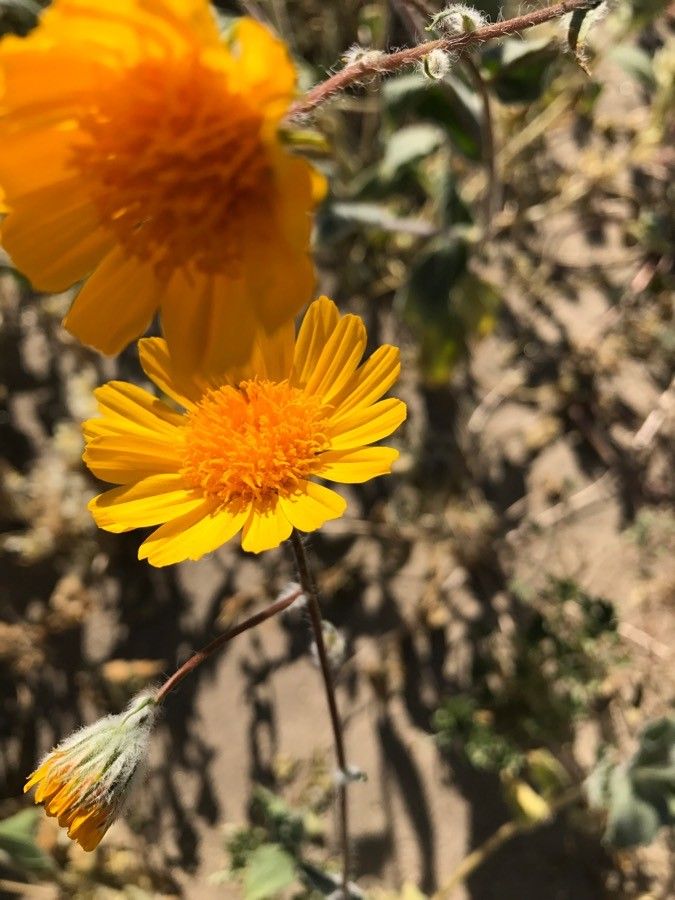
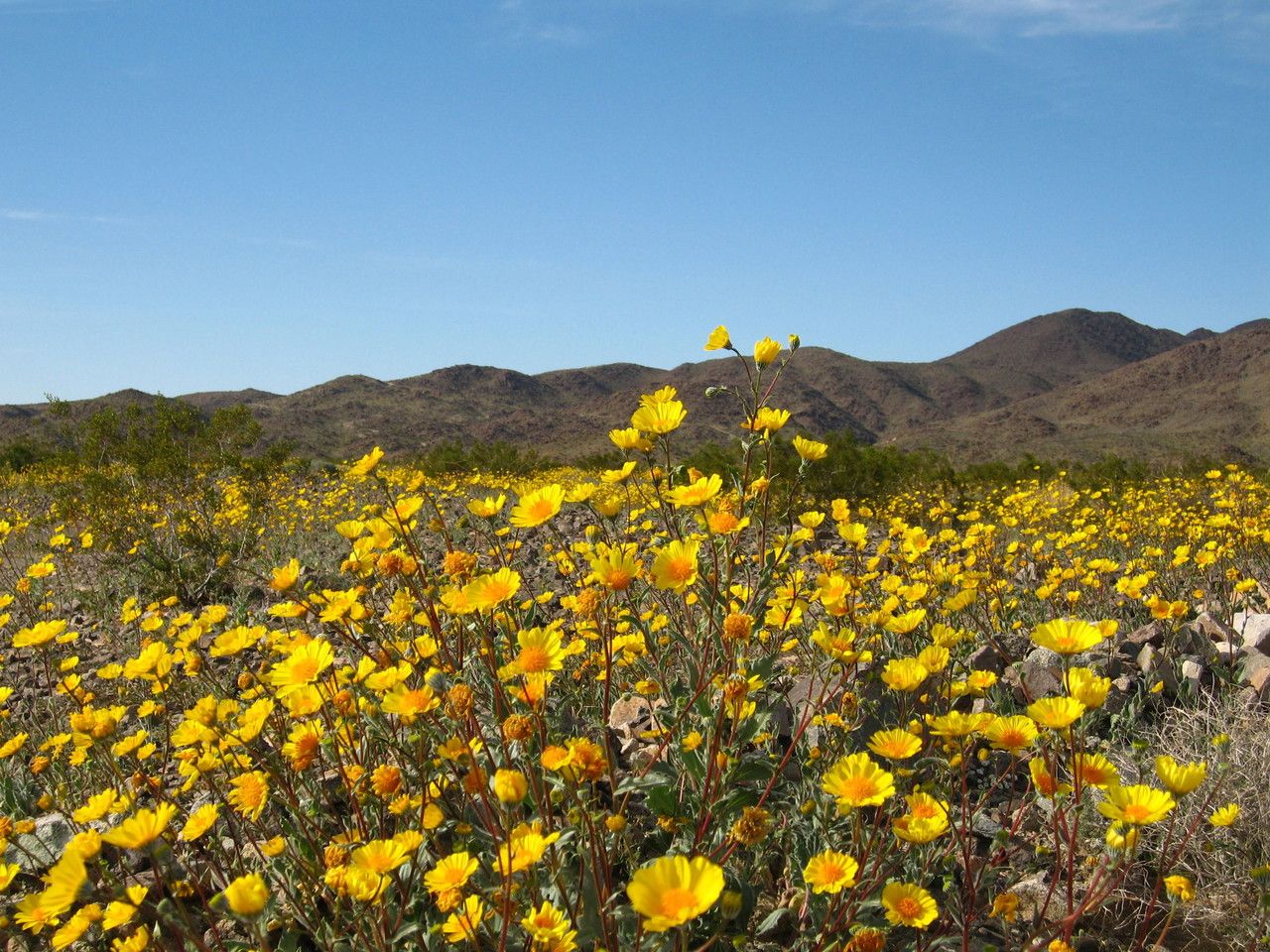
Geraea canescens, commonly known as the desert sunflower, is a perennial plant in the Asteraceae family. Native to the southwestern United States and northern Mexico, this plant thrives in arid regions such as deserts, dry washes, and rocky slopes.
The desert sunflower can grow up to 3 feet tall, featuring a woody base and numerous branches adorned with yellow flowers that have dark centers. Its grayish-green leaves have a hairy texture, which aids in moisture retention in dry desert environments.
Geraea canescens serves as a crucial food source for various animals, including bees, butterflies, birds, rodents, and rabbits. Additionally, its roots have been used in traditional Native American medicine to treat ailments such as fever.
For optimal growth, the plant requires full sun exposure and well-drained soil. Although it is drought-tolerant, occasional watering is necessary during extended dry periods.
Overall, Geraea canescens plays a vital role in maintaining ecological balance by providing nourishment for wildlife and adding aesthetic value with its bright yellow blooms against the desert landscape.
Desert gold has strong disease resistance and generally does not develop illnesses. It can, however, be affected by pests and diseases present in its environment. These problems are usually mild. Care requirements are moderate. The plant should be pruned regularly to maintain an attractive look and healthy growth. Fertilizing can also encourage flowering. Desert gold is suitable for anyone with outdoor space, such as a garden or patio, and does not need extensive care experience. It may need extra attention when cultivated indoors.
How to keep Geraea Canescens.
Light
Desert gold does best in full, intense sunlight, a characteristic it inherits from its desert habitat. Sunlight significantly supports its healthy growth. It has little tolerance for moderate light conditions. Insufficient light can result in stunted growth, while excessive light does not seem to be an issue.
Water
Desert gold thrives in arid conditions, demonstrating exceptional drought tolerance. It requires only minimal water to stay healthy. To mimic its natural environment's sparse rainfall, it should be watered once a week. This plant is resilient, effectively using infrequent rain to support its growth cycles.
Temperature
Desert gold is naturally found in environments where average temperatures range from 68 to 105.8 °F (20 to 41 ℃). It grows best within that range. During seasons when temperatures fall outside these limits, measures such as providing shade or adding heat should be considered.
Fertilizer
After most of the Desert gold's blooms have opened to full size, resume fertilizing. When flowering is at its peak, fertilize every three to four weeks, as the weather allows. Once the Desert gold begins producing fewer new blooms, cease fertilizing; there is no need to feed the plant when it can no longer produce additional blooms.
Pruning
To keep your desert gold plant thriving, start pruning selectively from early to late spring. Focus on removing any dead stems, and always prune just above the leaf nodes to encourage healthy growth and fullness. Regular maintenance not only boosts flowering but also prevents the plant from becoming too leggy, enhancing both its vitality and visual appeal.
Botanical profile.
- Plant Type
- Herb
- Life Cycle
- Annual
- Genus
- Geraea
- Family
- Asteraceae
- Hardiness Zone
- 1-13
- Mature Height
- 30 cm to 91 cm
- Mature Spread
- 30 cm to 61 cm
- Leaf Color
- Gray, Green
- Leaf Type
- Deciduous
- Flower Color
- Yellow
- Flower Size
- 2.54 cm to 5.08 cm
- Bloom Time
- Early spring, Mid spring
- Planting Time
- Autumn
- Harvest Time
- Late spring, Early summer
- Native Area
- Mexico
Other names.
Reader questions.
How should I water my Desert gold plant?
To water Desert gold, you have several options like using a garden hose with a spray nozzle, a watering can, or any other common watering tool. It's not too picky about the source of water, so you can use rainwater, tap water, or even filtered water. However, it's best to avoid watering this plant from overhead as it can damage the leaves and flowers and may lead to disease. Setting up a drip irrigation system is often the most effective method as it ensures even and direct application of water to the soil. If you have a container-grown Desert gold, you can use a cup, watering can, or tap water to directly water the soil.
What are the sunlight requirements for Geraea canescens (Desert Gold)?
Geraea canescens, commonly known as Desert Gold, thrives in full sunlight conditions, requiring above 6 hours of direct sunlight each day for optimal growth. Originating from desert habitats, it inherits a strong preference for the intense sun but shows minimal tolerance to moderate sunlight conditions. Insufficient sunlight may lead to stunted growth, but there is no concern for excessive sunlight exposure. It's beneficial to observe the sunlight movement through your garden to choose locations that offer a balance of light and shade, ensuring the plants' well-being.
What is the optimal temperature range for Desert Gold's growth?
Desert gold (Geraea canescens) thrives in environments with average temperatures ranging from 68 to 105.8 °F (20 to 41 °C). The plant's optimal growth occurs within this temperature range. To ensure the health and productivity of Desert gold, it's crucial to maintain conditions that fall within this specified range, particularly in seasons where external temperatures may deviate significantly.
What do I do if I give my Desert gold plant too much or too little water?
When your Desert gold plant lacks moisture, the remedy is simple: water it more regularly. However, overwatering can be a more severe problem if not addressed promptly. Overwatered Desert gold plants can become susceptible to diseases that can cause their decline and eventual death. To prevent this, it's important to choose a suitable location for your plant, one that receives ample sunlight to dry the soil and has good drainage to prevent water from pooling and causing soaked soil. If you've overwatered a Desert gold plant in a pot, you may need to consider repotting it. The previous container may not have had adequate drainage or may have contained soil that retained too much water. When repotting the overwatered plant, make sure to use loose soil and a pot with efficient drainage.
How can artificial lighting benefit Desert Gold plants grown indoors?
Artificial lighting is vital for indoor Desert Gold plants, especially when natural sunlight is insufficient, like in winter or less sunny locations. It supports optimal growth by providing essential wavelengths of light. LED lights are recommended for their customization options to meet plant needs. Full sun plants require 30-50W/sq ft, partial sun plants need 20-30W/sq ft, and full shade plants need 10-20W/sq ft of artificial light. The light source should be placed 12-36 inches above the plants, mimicking natural sunlight for 8-12 hours per day to promote healthier, faster growth.
Is Desert Gold resistant to cold temperatures?
Yes, Desert Gold is known for its strong cold resistance, meaning it usually does not require special frost protection measures during winter. However, in extreme conditions where winter temperatures are expected to drop below -45°C, it becomes important to provide additional cold protection. This can be done by covering the plant with insulating materials such as soil or straw. Additionally, watering the plant abundantly before the first freeze of autumn to ensure the soil remains moist helps in preventing drought and water scarcity throughout the winter and into early spring.
How often should I give water to my Desert gold plant?
To keep your Desert gold healthy, it is important to provide regular water throughout the growing season. In the spring, watering once a week should be sufficient. However, as the weather gets hotter, you might need to increase the frequency to two or three times per week. Going beyond this can harm the plant, so be careful not to overwater. Additionally, make sure the soil is consistently moist, but not soaked, regardless of how often you water. When it comes to potted Desert gold, you'll have to water more frequently compared to plants in the ground, as the soil in pots tends to dry out faster. In most cases, watering a container-grown Desert gold a few times per week should be enough, whereas an in-ground plant only needs watering once per week.
What are the symptoms of insufficient sunlight in Desert Gold plants?
Desert Gold plants show various symptoms when exposed to inadequate light, including smaller new leaves, leggy or sparse growth, and premature leaf drop, indicating a struggle in low light conditions. The plant might also exhibit slower or halted growth, paler new leaves due to insufficient chlorophyll, and conditions such as chlorosis (yellowing leaves) or sunscald from intense light exposure. Additional symptoms like leaf curling, wilting, and leaf scorching indicate excessive sunlight exposure, highlighting the plant's need for an optimal amount of sunlight.
How should Desert Gold be cared for during low temperatures?
Desert Gold is cold-tolerant and performs best when temperatures are maintained above 20°C. Protection measures should be considered during winter to keep temperatures above 0°C. In cases where temperatures fall below -45°C, the plant may not show immediate damage but could experience decreased sprouting or failure to sprout during the spring. In spring, it is advised to remove any parts of the plant that have failed to sprout as part of managing the aftermath of exposure to extreme low temperatures.
How much water does my Desert gold plant need?
There are a few different ways to determine how much water to give to your Desert gold. Some gardeners prefer to assess the moisture level of the soil by feeling it. This method suggests watering until the first six inches of soil feel moist. Another option is to use a specific measurement. Generally, giving your Desert gold about two gallons of water per week is recommended, adjusting based on temperature and how quickly the soil dries. However, strictly following these guidelines may lead to overwatering if your plant requires less water. When growing Desert gold in a container, a different method is needed. In this case, you should water enough to moisten all dry layers of soil. You can test if this is achieved by sticking your finger in the soil. Another indicator is to water until you observe a slight trickle of excess water coming out of the pot's drainage holes.
How can I address sunlight-related issues for Desert Gold plants?
To optimize growth for Desert Gold plants, gradually expose them to more sunlight, aiming for at least 6 hours of direct light daily. For indoor plants, use a south-facing window and consider artificial lighting if the plant is too large to move, keeping lights on for at least 8 hours daily. Outdoor plants should be moved to sunnier spots gradually to avoid shock. Minimize obstructions like branches for ground plants, and consider transplanting smaller plants during dormant periods to sunnier locations with good drainage. Note, parts of the plant damaged by sunlight deficiencies may not recover, but new growth will be healthy with improved light exposure.
What are the implications of high temperatures on Desert Gold and how can they be mitigated?
During the summertime, it is crucial to ensure that the temperature surrounding Desert Gold does not exceed 41°C. Exposure to temperatures above 45°C could result in the leaves becoming lighter in color, curling, and becoming susceptible to sunburn. In severe cases, the entire plant may wilt and dry out. To mitigate these issues, remove the sunburned and dried-out parts of the plant and relocate it to a shaded area or utilize a shade cloth to protect it from the midday and afternoon sun. Additionally, watering the plant during the cooler morning and evening hours can help maintain soil moisture and support the plant's overall well-being in high temperatures.