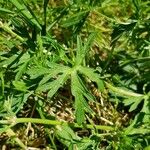
Geranium dissectum
Cut-leaved Crane's-bill · Cut-leaf crane's-bill · Cut-leaf geranium · Cutleaf geranium · Cut-leaved cranesbill
Description
Source: leafsnapGeranium dissectum or Cut-leaved Crane's-bill is a plant species of the genus Geranium. It is native to Europe. It can be found on other continents as well, in some instances as an introduced species. It can be found in North America, where it is known as the cutleaf geranium.Extracts of Geranium dissectum are reported to improve germination rates of Hemp seeds.
🌳 Cutleaf geranium is an excellent groundcover, featuring tiny, vibrant dark-pink flowers that bloom abundantly from late spring to early fall. For a burst of color and effective weed control, consider planting it in sunny spots in front of hedgerows.
🎭 Companionship, joy and positive feelings
Care Guide
💧 Water Every 7 days
Cutleaf geranium thrives in moist conditions, requiring consistent hydration to maintain evenly moist soil. It has low drought tolerance, so weekly watering is essential for keeping the soil at optimal moisture levels. This plant is typically grown outdoors, where natural rainfall patterns support its growth cycles and water uptake during active periods.
How should I water my Cutleaf geranium plant?
To water Cutleaf geraniums, you have several options. A garden hose with a spray nozzle or a watering can are common tools you can use. These plants are not too particular about the type of water they receive, so rainwater, tap water, or filtered water will all work. However, try to avoid watering from above as it can harm the leaves and flowers and potentially cause diseases. For best results, consider using a drip irrigation system as it delivers water evenly and directly to the soil. If you have a Cutleaf geranium in a container, you can follow a similar watering approach but using a cup, watering can, or tap to apply water directly to the soil.
What should I do if I give my Cutleaf geranium too much water or too little?
The solution to underwatering Cutleaf geranium is straightforward: if you notice your plant is lacking moisture, start watering it more regularly. However, overwatering can be a more serious problem if not caught early. When your Cutleaf geranium is overwatered, it can develop diseases that ultimately lead to its decline and death. To avoid this outcome, it is essential to choose the right growing location. This includes selecting an area with ample sunlight to help dry the soil and ensuring good drainage to prevent water from pooling and causing waterlogged soil. If you have overwatered your potted Cutleaf geranium, you may need to transfer it to a new pot. This could be because the previous container did not have good drainage or sufficient drainage holes. When repotting an overwatered Cutleaf geranium, be sure to use loose soil and a container that drains efficiently.
How frequently should I water my Cutleaf geranium?
Cutleaf geranium requires regular watering throughout the growing season. In spring, water it once a week, but as the season gets hotter, increase watering to two to three times a week. However, be careful not to overwater, as this can harm the plant. Regardless of the watering frequency, make sure the soil remains moist but not wet. Watering a Cutleaf geranium in a pot is a bit different. Potted soil can dry out faster than ground soil, so you'll need to water it more frequently. Typically, water a container-grown Cutleaf geranium a few times per week, whereas an in-ground plant only needs watering once a week.
How much water should I give my Cutleaf geranium?
Determining how much water to give your Cutleaf geranium can be approached in a few different ways. Some gardeners prefer to gauge the soil moisture by feel, suggesting that you should water until the top six inches of soil feels moist. Another option is to use a specific measurement, such as giving your plant around two gallons of water per week, adjusting based on temperature and soil dryness. However, rigid guidelines might result in overwatering if your plant needs less water. For container-grown Cutleaf geraniums, a different method is needed. You should aim to moisten all the dry soil layers by either sticking your finger in the soil to check for moisture or watering until you see a slight trickle of excess water from the drainage holes.
How can I know if I am giving enough water to my Cutleaf geranium?
Cutleaf geranium can be tricky to water properly. While their deep roots require weekly soil moistening, they are also highly prone to root rot and browning if overwatered. Underwatering is less common, as these plants can survive without extra watering for a while. Nevertheless, if you neglect to water them for too long, they will begin to wilt and develop dry leaves.
☀️ Light Partial sun
The cutleaf geranium does best with abundant light for healthy growth. Native to well-lit environments, it does not tolerate being shaded. Its health can decline if light is inadequate, while excessive light causes no harm.
What are the sunlight requirements for Cutleaf Geranium?
Cutleaf Geranium requires full sun, which means it needs above 6 hours of sunlight daily, but it can also thrive in partial sun, getting about 3-6 hours of sunlight. Observing how sunlight moves through your garden helps in choosing spots that offer a perfect balance of light and shade, ensuring the plants' wellbeing.
What are the essential care tips for Cutleaf Geranium regarding light exposure?
The Cutleaf Geranium thrives best with abundant light for optimal health and growth. When natural sunlight is insufficient, especially in winter or less sunny spaces, artificial lighting can be a vital solution. LED lights are advisable for their ability to provide specific wavelengths needed by the plants. For full sun plants, aim for 30-50W/sq ft of light, 20-30W/sq ft for partial sun plants, and 10-20W/sq ft for full shade plants. Place the artificial light source 12-36 inches above the plant, mimicking natural sunlight as closely as possible. Most plants will need 8-12 hours of light per day.
What are the symptoms of light deficiency in Cutleaf Geranium?
When Cutleaf Geranium is grown indoors or in conditions of inadequate light, it may show symptoms such as small leaves, leggy or sparse growth, faster leaf drop, slower or no new growth, and lighter-colored new leaves. These signs indicate the plant is struggling with the light availability, impacting its overall health and development.
How can you address light deficiency and overexposure issues in Cutleaf Geranium?
To optimize growth and address light issues, gradually move your Cutleaf Geranium to sunnier spots to ensure at least 6 hours of sunlight daily. For indoor plants, consider using artificial light for a minimum of 8 hours each day. Avoid sudden changes in light exposure to prevent sunburn. If outdoor plants suffer from insufficient sunlight, gradually move them to better-lit locations. For obstructions like trees, pruning can help increase sunlight exposure. In case of insufficient outdoor light, transplanting during the dormant period (late winter or early spring) to a sunnier location with good drainage is recommended. Note that parts of the plant affected by inadequate light may not recover, but new growth should be healthy with improved light exposure.
🌡️ Temperature 5–35°C
Cutleaf geranium naturally occurs in mild climates and prefers temperatures of 68 to 95 °F (20 to 35 ℃). In colder months, typical indoor warmth can be sufficient. By contrast, in hotter periods, providing shade may be necessary to preserve optimal growth conditions.
What are the ideal growing conditions for Cutleaf geranium?
Cutleaf geranium thrives in mild climates, with an optimal temperature range between 68 to 95 °F (20 to 35 °C). It has strong cold resistance, so it generally doesn't need special frost protection measures. However, in colder months, indoor heating may be sufficient to keep it warm, and in hotter periods, providing shade can help maintain the right growth conditions. If winter temperatures are expected to drop below -30°C, it's important to protect the plant using materials such as soil or straw and water abundantly before the first freeze to keep the soil moist. This helps prevent drought and water scarcity during winter and early spring.
How does Cutleaf geranium react to low temperatures and how can it be protected?
Cutleaf geranium is cold-tolerant and best maintained above 20°C, requiring protection when temperatures fall below 0°C. It may not show noticeable changes when temperatures drop below -30°C during winter, but a decrease in sprouting or a complete lack of sprouting may occur in spring. To manage this, remove parts of the plant that have failed to sprout in spring as part of the plant's care routine to encourage healthy growth.
What should be done if Cutleaf geranium experiences high temperatures?
During the summer, it's crucial to ensure that Cutleaf geranium does not exceed temperatures of 35°C. Exposure to temperatures above 38°C can lead to leaves becoming lighter in color, prone to curling, and susceptible to sunburn, with severe cases resulting in the plant wilting and drying out. To prevent this, trim away the sunburned and dried-up parts of the plant, relocate it to a shaded area or use a shade cloth to protect it from midday and afternoon sun. Additionally, keeping the soil moist by watering in the morning and evening can help alleviate stress from high temperatures.
💨 Humidity
🪴 Soil 6-7
🌱 Fertilizer
When most of the Cutleaf geranium's blooms have opened to full size, resume fertilizing. At the time of peak bloom, feed it every three to four weeks, as weather allows. Once the Cutleaf geranium begins to produce fewer new blooms, discontinue fertilizing; there's no reason to feed it when it can no longer produce additional flowers.
🪴 Pot & Repot
✂️ Pruning
The cutleaf geranium is a slow-growing plant that requires minimal trimming. Avoid major pruning, as it can harm the plant's growth and may even cause it to die.
🌿 Propagating
🐛 Diseases & pets
☠️ Toxicity
Geranium dissectum has no toxic effects reported.
Characteristics
- Plant Type
- Herb
- Life Cycle
- Annual, Biennial
- Genus
- Geranium
- Family
- Geraniaceae
- Hardiness Zone
- 4-9
- Mature Height
- 30 cm to 61 cm
- Mature Spread
- 20 cm
- Leaf Color
- Green
- Leaf Type
- Deciduous
- Flower Color
- Pink
- Flower Size
- 1.27 cm to 1.78 cm
- Bloom Time
- Late spring, Early summer, Mid summer
- Planting Time
- Spring, Autumn
- Harvest Time
- Early summer, Mid summer
- Native Area
- Libya, Egypt, Turkey, Austria, Sweden, Slovakia, Montenegro, Croatia, Slovenia, Morocco, Belarus, Uzbekistan, Russia, Iraq, Germany, Romania, Latvia, Moldova, Portugal, Netherlands, France, Tajikistan, Tunisia, Czech Republic, Cyprus, Bulgaria, Poland, Armenia, Greece, Serbia, Lebanon, Lithuania, Norway, Afghanistan, Syria, Italy, Spain, Switzerland, Denmark, Finland, Iran, Albania, Ireland, United Kingdom, Hungary, Algeria