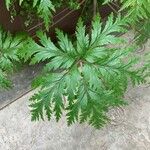
Geranium maderense
Giant herb-robert · Madiera cranesbill · Madeira Cranesbill · Madeira Island Geranium · Madeira geranium
Description
Source: leafsnapGeranium maderense, commonly known as the Madeira cranesbill or giant herb-Robert, is a stunning perennial plant native to the island of Madeira in Portugal. This plant belongs to the Geraniaceae family and can reach up to 1.5 meters in height with a spread of 1 meter. It features large, deeply lobed dark green leaves that can grow up to 30 centimeters wide. The flowers appear on tall spikes that can reach up to 2 meters in height and consist of clusters of small pink or purple blooms. Geranium maderense thrives in well-drained soil and partial shade but can also tolerate full sun if given enough water. It is relatively easy to care for, though it does require protection from frost during the winter months. This beautiful plant has become popular among gardeners for its striking appearance and its ability to attract pollinators such as bees, butterflies, and hummingbirds. It is often used as an ornamental feature in gardens or grown indoors as a houseplant. Overall, Geranium maderense is an impressive addition to any garden. Its towering spikes of colorful blooms make it an eye-catching focal point wherever it is planted.
Care Guide
💧 Water Every 7 days
Giant Herb-Robert thrives in subtropical climates and prefers moist, well-drained soil with consistent moisture. Once established, it can tolerate moderate drought conditions. To keep the plant hydrated, weekly watering is essential. Additionally, mulching helps retain moisture during the active growing season.
How should I water my big herb-robert plant?
To care for the Giant herb-robert plant, there are a few important steps to follow. First, it is recommended to use filtered water at room temperature rather than tap water. This is because tap water may have harmful particles that can affect the plant's health. Additionally, it is important to remember that the Giant herb-robert comes from a warm environment, so using cold water can be a shock to its system. It is best to completely avoid overhead watering for this plant as it can lead to complications with the foliage. Instead, focus on applying filtered room temperature water directly to the soil until it is fully soaked. This helps moisturize the roots and enables them to spread and absorb necessary nutrients from the soil.
What should I do if I give my Giant herb-robert plant too much or too little water?
Overwatering and underwatering can both harm the health of your Giant herb-robert, but overwatering is more common. Excessive water can cause wilting, yellowing, and diseases like root rot, mold, and mildew, which can be fatal. Underwatering is less likely because this plant can tolerate drought. However, it can still happen, resulting in brittle, brown leaves. It's crucial to detect signs of overwatering early and reduce watering immediately. Check the soil drainage and replace it with a well-draining mix if necessary. If your plant lacks water, simply increase watering until the signs disappear.
How frequently should I water my Giant herb-robert?
If your Giant herb-robert plant is in a pot, the best way to check if it needs water is by sticking your finger in the soil. If the top two to three inches of soil are dry, it's time to water it. If you have your Giant herb-robert planted outdoors in the ground, you can use a similar method to test the soil. When the top few inches of soil have dried out, it's time to water. Usually, during spring and early fall, you'll need to water this plant about once a week using this method. But during extremely hot weather, you may need to water it twice or more per week. However, it's worth noting that mature, well-established Giant herb-robert is quite resilient and can tolerate drought quite well.
How much water does my Giant herb-robert plant need?
When watering your Giant herb-robert, don't hold back on the amount of water you give. Make sure the first two to three inches of soil are dry before watering thoroughly. Water enough to saturate the soil completely, causing excess water to drain through the pot's drainage holes. If you don't see excess water draining, you may have underwatered the plant. Avoid letting water accumulate in the soil, as this can harm the plant. On the other hand, if water doesn't drain well through the pot, it could indicate poorly draining soil, which is bad for the plant's health. If the plant is outside, 1 inch of rain per week should be enough.
How do I water my Giant herb-robert when it's growing at different stages?
The water requirements of the Giant herb-robert vary depending on its growth stages. In the first few years or after transplanting, more water is needed because the plant is focused on developing new roots for future growth. These roots require extra moisture to thrive. As the plant matures, it will require less water. Additionally, during the blooming period, the Giant herb-robert may need additional water due to the increased moisture demands for flower development.
☀️ Light Full sun
Giant herb-robert prefers steady sunlight throughout the day, though it can tolerate lower light for part of the day. Its capacity to do well in these conditions comes from the natural light regime of its native habitat. Too much or too little exposure can damage the plant, causing discoloration or stunted growth, respectively.
What are the sunlight requirements for Giant herb-robert?
Giant herb-robert thrives when exposed to steady sunlight throughout the day, preferring full sun conditions of above 6 hours of sunlight but can also manage in partial sun conditions with about 3-6 hours of sunlight. It's essential to watch how sunlight moves through your garden to place your plants in spots that offer the right balance of light and shade, ensuring their health and happiness.
How important is sunlight for the health of Giant herb-robert?
Sunlight is crucial for the health of Giant herb-robert, which savors steady exposure throughout the day due to its native environment's natural solar regime. Both overexposure and underexposure to sunlight can harm the plant, potentially causing discoloration, stunted growth, or other health issues. Adequate sunlight is necessary for the plant to perform photosynthesis, grow properly, and maintain vibrant foliage.
Can artificial lighting be used for growing Giant herb-robert indoors?
Yes, artificial lighting can be a vital solution for growing Giant herb-robert indoors, especially when natural sunlight is insufficient. It is recommended to use LED lights as they can be customized to provide specific wavelengths of light needed by plants. Full sun plants require 30-50W/sq ft of artificial light, partial sun plants need 20-30W/sq ft, and full shade plants need 10-20W/sq ft. The light source should be placed 12-36 inches above the plant and kept on for 8-12 hours per day to mimic natural sunlight and promote healthy growth.
What are the symptoms of inadequate lighting in Giant herb-robert?
Symptoms of inadequate lighting in Giant herb-robert include smaller new leaves, leggy or sparse growth, faster leaf drop, slower or no new growth, and lighter-colored new leaves. These indicate that the plant is not receiving enough sunlight, leading to a lack of essential nutrients and chlorophyll. Additionally, excessive sunlight can cause chlorosis, sunscald, leaf curling, wilting, and leaf scorching, highlighting the importance of balanced light exposure.
How can I solve lighting issues for my Giant herb-robert?
To solve lighting issues for Giant herb-robert, gradually increase its exposure to direct sunlight daily until it receives at least 6 hours for indoor plants. This can be done by using a south-facing window or artificial lighting, like desk lamps or professional plant grow lights, for at least 8 hours daily. For outdoor plants, move them to a sunnier location each week to avoid sunburn. If the plant is blocked by obstructions like trees, consider pruning or transplanting to a spot with ample sunlight and good drainage. Remember, parts of the plant affected by poor lighting may not recover, but new growth will be healthier with proper light exposure.
🌡️ Temperature 20–37.8°C
Giant herb-robert is fairly adaptable to temperature, capable of withstanding higher heat and wide temperature fluctuations. In hot conditions, attention should be paid to watering and appropriate shading should be provided to avoid sunburn. Conversely, Giant herb-robert has relatively limited cold tolerance. While it can endure some cold, overly low temperatures can cause frost damage.
What is the botanical name of Giant herb-robert?
The botanical name of Giant Herb-Robert is Geranium maderense. It is a specific species within the Geranium genus known for its distinct characteristics.
💨 Humidity dry (<40%)
This plant prefers dry conditions, so don't mist it. However, watering it less often can also thrive in higher humidity.
🪴 Soil 6-7
🌱 Fertilizer
The best time to fertilize a Giant herb-robert is in early spring, as it is coming out of dormancy and beginning active growth. Fertilizing supplies essential nutrients needed for healthy development. Although Giant herb-robert requires relatively little fertilizer, applying it once a year can improve its survival and encourage better, longer-lasting flowers.
Why should I add fertilizer to my Giant herb-robert plant?
Fertilization is important for the Giant herb-robert because it provides essential nutrients for the plant's growth both above and below ground. Although the overall fertilization needs of the Giant herb-robert are low, annual fertilization can be highly beneficial. It helps to keep the plant alive and may also improve the longevity and quality of its flowers. Therefore, if you want your Giant herb-robert to thrive and look its best, it is recommended to regularly fertilize it.
When should I fertilize my Giant herb-robert plant?
The best time to fertilize a Giant herb-robert is in the late winter to early spring when it is transitioning from dormancy to active growth. Fertilizing at this time promotes healthy growth and sets the plant up for a successful season. While fertilizing in the early spring is generally the most beneficial, it is also acceptable to fertilize in the fall. However, it is not recommended to fertilize during summer or winter.
When is the best time to not fertilize my Giant herb-robert?
To best care for your Giant herb-robert, it's important to know when and how often to fertilize. In general, it should only be fertilized once a year, specifically during late winter or early spring. Fertilizing during other seasons, such as spring, summer, and fall, can easily lead to overfertilization, causing potential problems. However, if you happened to miss fertilizing in the spring, it is acceptable to feed the plant during the fall. Moreover, it's crucial to note that there is no need to fertilize the plant during winter. During this time, the Giant herb-robert enters a dormant growth phase, meaning it does not produce new growth. Consequently, fertilizing during most of the winter is not advisable.
What kind of fertilizer does my Giant herb-robert plant need?
For a Giant herb-robert, any general-purpose fertilizer with a balanced amount of the three main plant nutrients will work well. However, there are specific nutrient blends that can be even more beneficial. Some gardeners prefer higher phosphorus levels for stronger roots and better flowers. So, using a phosphorus-rich fertilizer may be the best approach. Whether you choose a granular or liquid form, make sure there are plenty of nutrients. In addition to manufactured fertilizers, you can also use organic methods like compost, manure, and similar materials to improve the soil for your Giant herb-robert.
How can I provide nutrients to my Giant herb-robert plant?
To fertilize a Giant herb-robert, the easiest way is to use a granular or pellet fertilizer. Apply the fertilizer to the soil around the plant when it starts to actively grow after coming out of its winter dormant phase. If you prefer, you can use a liquid fertilizer, but make sure to dilute it with water first. No matter which type of fertilizer you choose, it's important to moisten the soil before, during, and after application.
🪴 Pot & Repot 2-3 years
Repot the "giant herb-robert" every 2 to 3 years in early spring, using a container that is one size larger than the current one. After repotting, provide care by shielding it from direct sunlight and maintaining consistent moisture levels. This will support its lush foliage and vigorous growth. By following these guidelines, your "giant herb-robert" will thrive beautifully.
✂️ Pruning
Giant Herb-Robert benefits greatly from pruning, which is best done from early spring to late winter. To promote healthy growth, trim away any dead or damaged stems. Removing spent flowers will also encourage new blooms. Regular pruning not only enhances air circulation and reduces the risk of disease but also helps maintain the plant's attractive appearance. These techniques are in line with reputable horticultural practices.
🌿 Propagating
🐛 Diseases & pets
☠️ Toxicity
Characteristics
- Plant Type
- Herb
- Life Cycle
- Perennial, Biennial
- Genus
- Geranium
- Family
- Geraniaceae
- Hardiness Zone
- 9-11
- Mature Height
- 30 cm
- Mature Spread
- 20 cm
- Leaf Color
- Green, Blue
- Leaf Type
- Evergreen
- Flower Color
- Pink
- Flower Size
- 2.54 cm to 5.08 cm
- Bloom Time
- Mid spring, Late spring, Early summer
- Planting Time
- Spring, Summer
- Harvest Time
- Summer