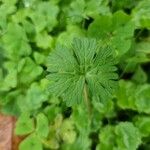
Geranium molle
Αγριογεράνι (Greek) · Dove's-foot Crane's-bill · Wild geranium · Crane's-bill geranium · Dovefoot crane's-bill
Description
Source: leafsnapGeranium molle, commonly known as Dove's-foot Crane's-bill, is a herbaceous perennial plant belonging to the Geraniaceae family. Native to Europe and Asia, it has been introduced and naturalized in many parts of the world. This plant can grow up to 50 cm in height and has a spreading habit with hairy, reddish-brown stems. The leaves of Geranium molle are deeply lobed with toothed edges, giving them a fern-like appearance. They are also hairy on both sides and emit a distinctive odor when crushed. The flowers bloom from May to September, producing small pink or purple blooms with five petals. Geranium molle prefers well-drained soils but can tolerate some moisture as long as it is not waterlogged. It can grow in full sun or partial shade and is often found on roadsides, waste ground, meadows, or woodland edges. This plant has a long history of medicinal use due to its anti-inflammatory properties, which make it useful for treating skin conditions such as eczema and psoriasis. It also contains tannins, which have an astringent effect, making it helpful for treating diarrhea. Overall, Geranium molle is an attractive perennial herb that offers both ornamental beauty and medicinal benefits. It is popular among gardeners who appreciate its aesthetic appeal and therapeutic properties.
💡 Dove's-foot crane's-bill is a weedy wild geranium that often invades lawns and turf. It is easy to remove by hand, especially when the ground is wet. However, some people choose to keep it because of its charming pink flowers and soft, hairy red stems. Although these plants can easily reseed themselves, they are usually considered annuals.
🌳 One of the main advantages of planting Dove's-foot Crane's-bill in gardens is its winter hardiness, which ensures year-round appeal. It works well as a background plant and can be used in wildlife gardens and meadows. Additionally, it is resistant to rabbits and deer.
🎭 Refinement, resolve
Care Guide
💧 Water Every 7 days
Native to temperate regions, dove's-foot crane's-bill thrives outdoors in environments with consistent moisture and stable humidity. To maintain soil hydration, water it weekly. Although it is moderately drought-tolerant and can benefit from natural rainfall, it requires a balance of sunlight and moisture during the active growing season.
How should I water my Dove's-foot crane's-bill plant?
Watering Dove's-foot crane's-bill is simple and can be done using various tools like a garden hose with a spray nozzle or a watering can. This plant is not too particular about the type of water it receives, whether it's rainwater, tap water, or filtered water. However, it's important to avoid watering from overhead to prevent damage to the leaves and flowers, as well as potential disease. Setting up a drip irrigation system is often the best way to water this plant, ensuring even and direct watering to the soil. For container-grown Dove's-foot crane's-bill, you can use a cup, watering can, or tap to water the soil directly.
What should I do if I give my Dove's-foot crane's-bill plant too much or too little water?
To remedy underwatering Dove's-foot crane's-bill, simply water it more regularly when you notice it lacks moisture. Overwatering, on the other hand, can be more serious as it can lead to diseases and the plant's decline. To prevent overwatering, choose a sunny location with good soil drainage. If you overwater a potted Dove's-foot crane's-bill, consider repotting it in a container with better drainage and loose soil.
How frequently should I give water to my Dove's-foot crane's-bill plant?
Watering the Dove's-foot crane's-bill regularly is important during the growing season. In spring, water it once a week and as the season gets warmer, increase watering to two to three times a week. Overwatering can harm the plant. Regardless of the frequency of watering, make sure the soil is moist but not wet. When watering a potted Dove's-foot crane's-bill, increase the frequency to a few times per week compared to once a week for plants in the ground. This is because the soil in pots can dry out faster.
How much water does my Dove's-foot crane's-bill plant need?
To determine how much water your Dove's-foot crane's-bill needs, you have a few options. Some gardeners prefer to gauge the soil moisture by touching it. For this method, water until the top six inches of soil feels moist. Alternatively, you can use a fixed measurement. Generally, giving your Dove's-foot crane's-bill around two gallons of water per week should suffice, but this may vary based on temperature and how quickly the soil dries. Be cautious with strict guidelines, as your plant may require less water. When growing Dove's-foot crane's-bill in a container, the watering approach is different. Ensure all layers of dry soil are moisturized, which can be checked by inserting your finger into the soil. You can also water until you observe a slight trickle of excess water coming out of the pot's drainage holes.
How do I know if I'm watering my Dove's-foot crane's-bill plant enough?
Avoiding overwatering your Dove's-foot crane's-bill can be tricky due to conflicting needs. While their deep roots require weekly soil moistening, these plants are highly vulnerable to root rot and may develop browning if overwatered. Underwatering is less of a concern as they can endure periods without supplemental watering. However, if you wait too long to give them water, they may wilt and display dry leaves.
☀️ Light Full sun
Dove's-foot crane's-bill does best when exposed to bright light for most of the day, though it can also maintain growth in moderate light. Because it comes from regions with frequently strong sunlight, inadequate light can cause poor plant health. Conversely, prolonged exposure to very intense light can also be harmful.
What are the sunlight requirements for Dove's-foot crane's-bill?
Dove's-foot crane's-bill requires full sun exposure, which means it should receive above 6 hours of sunlight daily to thrive optimally. However, it can also grow in partial sun conditions, which is about 3-6 hours of sunlight. It's important to observe how sunlight moves through your garden to find the perfect balance of light and shade for your plants, ensuring their health and happiness.
How essential is light for the growth of Dove's-foot crane's-bill?
Light is crucial for the growth of Dove's-foot crane's-bill, as it thrives in strong light levels for the majority of the day. Originating from environments where the sun is often intense, it requires similar conditions to develop healthily. Insufficient light can lead to unhealthy plant development, while too much direct light can also be harmful. When natural light is not enough, especially during winter or in less sunny locations, artificial lighting can be a vital solution to ensure optimal growth. This includes using LED lights, which can be adjusted to provide specific light wavelengths needed by plants. Full sun plants typically need 30-50W per square foot of artificial light, partial sun plants 20-30W, and full shade plants 10-20W.
What symptoms indicate that Dove's-foot crane's-bill is not receiving enough light?
When Dove's-foot crane's-bill doesn't receive adequate light, it may exhibit symptoms such as smaller new leaves, leggy or sparse growth, faster leaf drop, slower or halted growth, and lighter-colored or new leaves. These symptoms reflect the plant's struggle in inadequate light conditions, showcasing its need for more sunlight or artificial lighting solutions to thrive.
What damage can excessive sunlight cause to Dove's-foot crane's-bill?
Excessive sunlight can harm Dove's-foot crane's-bill in several ways. It can lead to chlorosis, where leaves lose their green color and turn yellow due to the breakdown of chlorophyll, affecting the plant's ability to photosynthesize. Sunscald, leaf curling, wilting, and leaf scorching are other problems that intense sunlight exposure can cause, leading to reduced plant health and vitality. These symptoms indicate that the plant is receiving too much direct sunlight and may benefit from shaded or less intense light environments.
How can I ensure optimal growth for my Dove's-foot crane's-bill both indoors and outdoors?
To ensure your Dove's-foot crane's-bill thrives, gradually increase its exposure to sunlight by moving it to a sunnier location each week, aiming for at least 6 hours of direct sunlight daily. For indoor plants, large or not easily movable, consider using artificial light sources, keeping them on for at least 8 hours daily or investing in professional plant grow lights. Outdoors, it's crucial to move your plants gradually to prevent sunburn and enable adaptation to the increased light. Removing obstructions that block sunlight and, for smaller plants, considering transplanting during dormant periods to a location with ample sunlight and good drainage will promote healthy growth.
🌡️ Temperature 5–35°C
Dove's-foot crane's-bill originates in temperate regions. It does best at temperatures between 68 and 95 °F (20 to 35 ℃). Depending on the season, its surroundings may need to be adjusted to reproduce its preferred temperature range.
What is the native climate for Dove's-foot crane's-bill?
Dove's-foot crane's-bill, also known by its botanical name Geranium molle, is native to moderate climates. It flourishes in temperatures ranging from 68 to 95°F (20 to 35°C). To ensure the plant thrives, adjustments might be necessary depending on the season to keep its environment within this preferred temperature range.
How does Dove's-foot crane's-bill handle cold temperatures?
Dove's-foot crane's-bill exhibits strong cold resistance, so special frost protection measures are usually not required during winter. However, in conditions where winter temperatures are expected to plummet below -30°C, it's crucial to provide cold protection. This can be done by covering the plant with soil, straw, or similar materials. It's also advisable to water the plant abundantly before the first freeze of autumn to maintain moist soil, which helps prevent drought and water scarcity during winter and early spring.
What should I do if the Dove's-foot crane's-bill experiences temperatures below -30°C?
If Dove's-foot crane's-bill experiences temperatures below -30°C, it might endure cold without noticeable changes during winter; however, you may observe a reduction in sprouting or even a complete lack of sprouting in spring. The recommended solution for this situation is to remove any parts of the plant that have failed to sprout in spring.
How does high temperature affect Dove's-foot crane's-bill and what should I do?
During the summer, it's crucial to ensure that Dove's-foot crane's-bill's environment remains below 35°C. Exposure to temperatures exceeding 38°C may result in the leaves becoming lighter in color, prone to curling, susceptible to sunburn, and, in severe cases, may cause the entire plant to wilt and dry out. To mitigate these effects, trim away the sunburned and dried-up parts of the plant. Additionally, move the plant to a location that offers shade during the midday and afternoon sun or utilize a shade cloth. Ensure the plant is watered in the morning and evening to keep the soil moist.
💨 Humidity
🪴 Soil 6-7
🌱 Fertilizer
Dove's-foot crane's-bill benefits from regular, light applications of fertilizer to encourage healthy leaf growth. You should feed Dove's-foot crane's-bill about once a month throughout the summer. Nitrogen is essential for foliage, and providing nitrogen-rich sources helps Dove's-foot crane's-bill thrive.
Why should I put fertilizer on my Dove's-foot crane's-bill plant?
Not all plants require fertilizer supplements because they are able to obtain the necessary nutrients on their own. Dove's-foot crane's-bill, like other plants, rely on nutrients to support growth and internal processes. The main nutrients that plants need, such as nitrogen, phosphorus, and potassium, contribute to various essential functions. In the case of foliage growth, nitrogen plays a vital role. However, Dove's-foot crane's-bill often struggles to acquire enough nitrogen from the soil. This is why many gardeners choose to provide additional nitrogen through feeding.
When should I fertilize my Dove's-foot crane's-bill plant?
Dove's-foot crane's-bill generally grows well and can benefit from monthly fertilization during its active growth period in spring and summer. However, it is important to refrain from fertilizing during fall and winter when the plant is less active and requires fewer nutrients. Look out for new growth as an indication that it is time to start fertilizing. Whether grown outdoors or indoors in a container, the fertilization schedule remains the same. If your Dove's-foot crane's-bill is in a container, you can delay fertilization for the first one to two months as the potting soil typically contains sufficient nutrients. Once the plant has been in the same soil for a while, then you can begin fertilizing.
When should I not put fertilizer on my Dove's-foot crane's-bill plant?
To maintain a healthy Dove's-foot crane's-bill, avoid fertilizing it if it's already experiencing issues like diseases or insect pests. Additionally, refrain from fertilizing dehydrated plants as it can worsen the problem. It's best to only fertilize healthy plants. When watering, be cautious not to splash fertilizer onto the leaves or stem, as this can result in burned spots. Unless you have a specialized foliage fertilizer, avoid direct contact with the plant.
What kind of fertilizer does my Dove's-foot crane's-bill plant need?
Fertilizers contain important nutrients like nitrogen, potassium, phosphorus, iron, manganese, and zinc that help Dove's-foot crane's-bill grow. A balanced fertilizer, like one with a 10-10-10 NPK number, is effective for this plant. Natural fertilizers such as blood meal or worm castings also work well. If you want to focus on promoting leaf growth, you can choose a fertilizer with higher nitrogen content, like fish fertilizer. It's important to consider your purpose in growing the plant, as providing excessive supplements for flowers or seeds may not be necessary.
How do I feed my Dove's-foot crane's-bill?
To properly fertilize your Dove's-foot crane's-bill, follow the instructions on the fertilizer you have purchased. To avoid over-fertilizing, start with half-strength fertilizer. This plant often gets over-fertilized due to its frequent need for fertilization. It's important to note that it's easier to add more fertilizer than to rescue an over-fertilized plant. Make sure the soil is already somewhat moist before applying fertilizer, as applying it to dry soil can hinder absorption and cause fertilizer burn. After applying dry fertilizers, water the soil. Different fertilizers require different application methods - some need to be mixed into the soil during planting, while others can be applied on top and then watered in. For most Dove's-foot crane's-bill varieties, a water soluble fertilizer is a convenient choice. Simply mix the recommended dosage into your watering can and water the plant as usual. If you prefer not to remember monthly fertilization, slow-release granules or fertilizer spikes can also be effective.
🪴 Pot & Repot
✂️ Pruning
To ensure your Dove's-foot crane's-bill thrives, it's important to prune it from early to late spring. Focus on removing dead or damaged stems to promote healthy growth and improve airflow. Light shaping can enhance blooming, but be careful to avoid the stress caused by heavy pruning. Regular maintenance helps you manage its spread and maintain its ornamental value. Always use clean, sharp tools to prevent disease.
🌿 Propagating
🐛 Diseases & pets
☠️ Toxicity
Characteristics
- Plant Type
- Herb
- Life Cycle
- Annual, Biennial, Perennial
- Genus
- Geranium
- Family
- Geraniaceae
- Hardiness Zone
- 4-9
- Mature Height
- 5 cm to 30 cm
- Mature Spread
- 10 cm to 49 cm
- Leaf Color
- Green, Silver, Blue, Gray
- Leaf Type
- Deciduous
- Flower Color
- Pink
- Flower Size
- 0.76 cm to 1.27 cm
- Bloom Time
- Mid spring, Late spring, Early summer
- Planting Time
- Spring
- Harvest Time
- Early summer, Mid summer
- Native Area
- Libya, Egypt, India, Turkey, Sweden, Austria, United Arab Emirates, Slovakia, Montenegro, Croatia, Slovenia, Morocco, Belarus, Russia, Iraq, Germany, Estonia, Romania, Qatar, Latvia, Moldova, Portugal, Netherlands, Saudi Arabia, France, Tunisia, Czech Republic, Cyprus, Bulgaria, Poland, Armenia, Greece, Serbia, Lebanon, Lithuania, Norway, Syria, Italy, Spain, Switzerland, Denmark, Finland, Iran, Albania, Ireland, United Kingdom, Hungary, Algeria