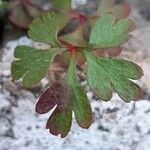
Geranium purpureum
Little Robin · Herb Robert · Small herb Robert · Lesser Herb Robert · Stinking Robin
Description
Source: leafsnapGeranium purpureum, commonly known as Purple Geranium or Purple Cranesbill, is a perennial flowering plant belonging to the Geraniaceae family. Native to Europe and Asia, it has also been introduced to North America. The plant can grow up to 60 cm tall and features deeply lobed, green leaves with a slightly hairy texture. The flowers of Geranium purpureum are purple-pink with five petals, blooming from May to August. Their distinctive shape resembles a crane's beak, thus earning the name "Cranesbill." The plant thrives in well-drained soil and partial shade but can also tolerate full sun. For centuries, Geranium purpureum has been valued for its medicinal properties, particularly its anti-inflammatory effects. It has been used as an herbal remedy for diarrhea, dysentery, hemorrhoids, and other ailments. Beyond its medicinal uses, Geranium purpureum is also popular as an ornamental plant due to its attractive foliage and beautiful flowers. It can be grown in gardens or containers with minimal care. Overall, Geranium purpureum is a visually appealing perennial flowering plant with both ornamental and medicinal benefits, making it a favorite among gardeners worldwide.
Care Guide
💧 Water Every 7 days
Little Robin, a plant native to temperate regions, thrives best with consistent soil moisture, though it doesn't tolerate waterlogging. Watering it once a week is usually sufficient to keep it well-hydrated. Outdoors, Little Robin can adapt to natural rainfall patterns, making it easier to care for during the growing season. It flourishes in conditions that mimic the moisture levels of its native habitat.
How should I water my Little robin?
To water Little Robin, there are various options available such as a garden hose with a spray nozzle, a watering can, or any common watering tool. Little Robin is not too selective about the source of water, as they can thrive on rainwater, tap water, or filtered water. However, it is recommended to avoid overhead watering as it could harm the leaves, flowers, and potentially lead to disease. Instead, a drip irrigation system is often the best method, as it applies water evenly and directly to the soil. For container-grown Little Robin, the watering approach remains similar, but you can use a cup, watering can, or tap to water the soil directly.
What should I do if I give my Little robin too much water or too little water?
The solution for underwatering Little robin is straightforward. When you notice your plant is dry, start watering it more regularly. However, overwatering can be a more serious issue if not caught early. When Little robin gets too much water, it can get sick and eventually die. To prevent this, choose a sunny location with well-draining soil. If it's in a pot, consider changing it to one with better drainage. When repotting, use loose soil and a pot that drains well.
How frequently should I water my Little robin?
Little robin needs regular watering throughout the growing season. In spring, water the plant once a week. As the season progresses and it gets warmer, you may need to water two to three times a week. However, be careful not to overwater as it can harm Little robin. Regardless of watering frequency, ensure that the soil remains moist but not wet. Watering Little robin in a pot is slightly different. Potted soil tends to dry out faster, so increase the watering frequency to a few times per week compared to just once a week for an in-ground plant.
How much water does my small robin need?
Determining how much water to give to your Little robin can be approached in different ways. Some gardeners prefer to assess the soil moisture by feeling it. This method suggests watering until the top six inches of soil feel moist. Alternatively, you can use a specific measurement as a guide. Generally, providing about two gallons of water per week to your Little robin is sufficient, taking into account factors such as temperature and soil dryness. However, be cautious as strictly following this guideline may cause overwatering if your plant requires less water. For container-grown Little robins, a different approach is necessary. In this case, you should water enough to moisten the dry layers of soil. To check for moisture, you can test by inserting your finger into the soil or watering until you notice a slight excess of water draining from the pot's drainage holes.
How do I know if I'm giving enough water to my Little robin?
Avoiding overwatering your Little robin can be somewhat difficult due to a few factors. These plants have deep roots that need weekly moistening, but at the same time, they are highly susceptible to root rot and browning from excessive water. Underwatering is less likely, as Little robin can survive without additional watering for some time. However, if the plant goes too long without water, it will begin to wilt and develop dry leaves.
☀️ Light Full sun
To grow optimally, little robin prefers full sun exposure, though it tolerates moderate levels of light well. Its native habitat points to a preference for open areas. Excessive shade can impede its growth, while an abundance of sunlight does not harm it.
What are the sun requirements for Little Robin (Geranium purpureum)?
Little Robin thrives best in full sun exposure, ideally receiving more than 6 hours of sunlight daily, although it can also tolerate partial sun conditions, with about 3-6 hours of sunlight. Its original habitat suggests a preference for open, sun-drenched spaces. To ensure the plant's health and happiness, observe your garden's sunlight patterns and choose locations that offer a suitable balance of light and shade.
How can artificial lighting be used for Little Robin grown indoors?
For indoor Little Robin plants, adequate lighting is crucial, especially when natural sunlight is scarce, such as in winter or less sunny spaces. Artificial lighting, like LED lights, is effective, providing customized wavelengths required for plant growth. For full sun plants, 30-50W/sq ft is recommended; partial sun plants need 20-30W/sq ft; and full shade plants require 10-20W/sq ft. The light source should be placed 12-36 inches above the plant, simulating natural daylight for 8-12 hours per day, depending on the plant species.
What are common symptoms of inadequate light for indoor Little Robin plants?
Indoor Little Robin plants not receiving enough light may show several symptoms: smaller new leaves, leggy or sparse growth, premature leaf drop, slower or halted growth, and new leaves appearing lighter or discolored. Excessive sunlight exposure can cause chlorosis, sunscald, leaf curling, wilting, and leaf scorching. These symptoms indicate the plant's distress and the need for corrective measures in light exposure.
How can I address light deficiency symptoms in Little Robin plants?
To combat light deficiency in Little Robin, gradually increase sunlight exposure to at least 6 hours daily by moving the plant to sunnier spots each week. For indoor plants, open curtains or use desk, ceiling lamps, or professional grow lights for 8 hours daily. Outdoors, avoid abrupt light changes to prevent sunburn. If sunlight is blocked by trees or buildings, consider pruning or transplanting to better-lit areas. Note that parts of the plant already damaged by light deficiency may not recover, but new growth will be healthy with improved light conditions.
🌡️ Temperature 10–35°C
Little robin originates from habitats where temperatures usually range from 68 to 95 °F (20 to 35 ℃). The plant prefers cooler conditions but nonetheless adapts well to seasonal changes. Moderate temperatures keep the plant thriving.
What is the native environment for Little Robin?
Little Robin, also known as Geranium purpureum, thrives in environments that typically range from 68 to 95 °F (20 to 35 °C). This plant favors cooler climates but is adaptable to seasonal changes. A moderate temperature range helps keep Little Robin flourishing.
Does Little Robin need protection from frost?
Thanks to its strong cold resistance, Little Robin usually does not require special frost protection measures during winter. However, if temperatures are expected to drop below -25°C, it's important to provide cold protection by covering the plant with soil or straw. Additionally, watering the plant abundantly before the first freeze in autumn helps keep the soil moist, providing protection against drought and water scarcity during the colder months.
How does Little Robin react to low temperatures?
Little Robin is quite tolerant of cold and performs best when temperatures are above 20°C. During winter, it is advisable to keep the temperature above 0°C. If temperatures fall below -25°C, you might not notice any immediate change, but there could be a decrease in sprouting or even no sprouting at all come springtime. In such cases, any parts of the plant that have failed to sprout should be removed in the spring.
What should I do if Little Robin experiences high temperatures?
In the summer, it's essential to ensure that Little Robin's surroundings stay below 35°C. Exposure to temperatures over 38°C can cause the plant's leaves to lighten in color, curl, become prone to sunburn, and in severe cases, cause the entire plant to wilt and dry up. To mitigate this, sunburned and dried-up parts should be trimmed away. Moving the plant to a shaded area during the midday and afternoon sun or using a shade cloth can provide relief. Additionally, watering in the morning and evening to keep the soil moist can help the plant cope with high temperatures.
💨 Humidity
🪴 Soil 6-7
🌱 Fertilizer
When most of Little robin's blooms have opened to full size, it's time to resume fertilizing. Around the period when blooms are at peak output, begin fertilizing every three to four weeks, weather permitting. Once Little robin starts producing fewer new blooms, stop fertilizing; there is no need to fertilize the plant when it can no longer produce additional blooms.
🪴 Pot & Repot
✂️ Pruning
Pruning a Little Robin from early to late spring encourages healthy growth by removing any dead or damaged stems and faded blooms. This process helps maintain its shape, control its size, and improve air circulation, which reduces the risk of diseases. For specific guidelines tailored to your local climate and conditions, consult reliable horticultural sources.
🌿 Propagating
🐛 Diseases & pets
☠️ Toxicity
Geranium purpureum has no toxic effects reported.
Characteristics
- Plant Type
- Herb
- Life Cycle
- Annual
- Genus
- Geranium
- Family
- Geraniaceae
- Hardiness Zone
- 6-9
- Mature Height
- 10 cm to 34 cm
- Mature Spread
- 20 cm to 40 cm
- Leaf Color
- Green, Dark Green
- Leaf Type
- Deciduous
- Flower Color
- Pink, Purple, Red
- Flower Size
- 0.51 cm to 1.02 cm
- Bloom Time
- Spring, Summer
- Planting Time
- Spring, Summer, Autumn
- Harvest Time
- Late spring, Summer, Early fall, Mid fall
- Native Area
- Libya, Turkey, Eritrea, Croatia, Slovenia, Morocco, Kenya, Tanzania, Russia, Iraq, Romania, France, Portugal, Tunisia, Sudan, Cyprus, Bulgaria, Greece, Serbia, Lebanon, Syria, Italy, Spain, Switzerland, Iran, Albania, Ireland, United Kingdom, Hungary, Algeria, Congo (DRC)