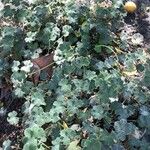
Geranium renardii
Cranesbill · Hardy geranium · Renard's geranium · Crane's-Bill
Description
Source: leafsnapGeranium renardii is a species of hardy flowering herbaceous perennial plant in the genus Geranium, in the family Geraniaceae. It is native to the Caucasus region between Europe and Asia. Growing to 30 cm (12 in) tall and broad, it has palmate leaves and pale pink flowers striped violet. This plant has gained the Royal Horticultural Society's Award of Garden Merit.The Latin specific epithet renardii honours the Russian naturalist Charles Claude Renard (1809-1886).
Care Guide
💧 Water
Renard's geranium comes from the Caucasus region and thrives in moderate climates. It needs consistent moisture and well-draining soil to prevent waterlogging, with watering required once a week. Usually grown outdoors, applying a layer of mulch can help retain moisture and protect the plant from extreme temperatures.
☀️ Light Partial sun
Renard's geranium originates in habitats such as forest understories or rocky areas, where it grows in natural shade. It prefers partial sun but can adapt to full sun or full shade, demonstrating its versatile and hardy nature.
What are the sunlight requirements for Renard's geranium (Geranium renardii)?
Renard's geranium (Geranium renardii) thrives in conditions where it can receive full sun to partial sun. Full sun exposure means the plant should get above 6 hours of sunlight daily, while partial sun refers to receiving about 3-6 hours of sunlight. It's essential to observe how sunlight moves through your garden throughout the day to choose spots that offer an ideal balance of light and shade, ensuring the best growth and happiness of your Renard's geranium.
🌡️ Temperature 5–35°C
Renard's geranium can tolerate a wide range of temperatures, but its distribution may still be restricted by particular combinations of moisture and heat. It does best in warm summer climates with sufficient rainfall or watering. Extended periods of cloudy, rainy weather or prolonged high temperatures increase the chance of the geranium dying. In winter, adequate protection from cold can raise the plant's survival rate.
What is Renard's geranium?
Renard's geranium, also known by its botanical name, Geranium renardii, is a plant species without further provided details on its characteristics, care, or uses.
💨 Humidity
🪴 Soil 6-8
🌱 Fertilizer
The best time to fertilize a Renard's geranium is in early spring, as it emerges from dormancy and starts active growth. Fertilizer supplies essential nutrients for healthy development. Although this geranium has relatively low feeding requirements, an annual application can improve its survival and encourage better, longer-lasting blooms.
🪴 Pot & Repot 2-3 years
Repot Renard's geranium every 2 to 3 years in early spring, using a container that is one size larger than the current one. Make sure to use well-draining soil and water moderately after repotting to avoid root problems. Proper care is crucial for the healthy growth of Renard's geranium.
✂️ Pruning
Renard's geranium is known for its unique foliage and robust growth. To promote new growth, maintain the plant’s shape, and improve air circulation—thereby reducing the risk of disease—it's best to prune old stems from early to late spring. This seasonal pruning not only encourages healthy development but also enhances flowering, ensuring the plant remains vigorous and in good health.
🌿 Propagating
🐛 Diseases & pets
☠️ Toxicity
Characteristics
- Plant Type
- Herb
- Life Cycle
- Perennial
- Genus
- Geranium
- Family
- Geraniaceae
- Hardiness Zone
- 5-9
- Mature Height
- 15 cm to 30 cm
- Mature Spread
- 40 cm
- Leaf Color
- Green
- Leaf Type
- Deciduous
- Flower Color
- White, Purple
- Flower Size
- 2.03 cm to 3.05 cm
- Bloom Time
- Mid spring, Late spring, Early summer
- Planting Time
- Spring, Summer, Autumn
- Harvest Time
- Summer