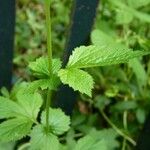
Geum urbanum
علف مبارک، · Wood Avens · Blessed Herb · Herb Bennet · Bennet's-root
Description
Source: leafsnapGeum urbanum, commonly known as wood avens or herb bennet, is a perennial herbaceous plant in the Rosaceae family. Native to Europe and Asia, it thrives in woodlands, hedgerows, and meadows. The plant can reach up to 60 cm in height and features a basal rosette of serrated, hairy leaves. Its hairy stem supports small yellow flowers that bloom from May to August. Traditionally, the root of Geum urbanum has been used for its anti-inflammatory properties and its ability to treat digestive issues such as diarrhea. Additionally, the leaves have served in traditional medicine as an herbal tea or poultice for skin irritations like eczema and insect bites. Overall, Geum urbanum is both medicinally valuable and aesthetically pleasing, thanks to its bright yellow flowers. Its versatility makes it a great addition to gardens and natural areas.
💡 Wood avens is steeped in folklore, with many tales suggesting that the plant possesses special powers. It is widely believed that its strong, clove-like scent can ward off evil spirits and protect against threats, such as aggressive dogs and venomous snakes. In Christian tradition, the plant is considered sacred. This is because its leaves grow in groups of three, and its flowers have five petals, symbolizing the Holy Trinity and the Five Wounds of Christ.
🎭 Cleanliness
Care Guide
💧 Water Every 3 days
Wood avens thrive in moist woodland environments, preferring soils that remain consistently damp, though they can withstand moderate drought. To maintain healthy growth, it's best to water them weekly. Indoors, higher humidity levels are advantageous. When planting in containers, choose a potting mix that retains moisture while allowing for proper drainage to support healthy roots.
How many times should I water my Wood avens?
If your Wood avens plant is in a pot, the most precise way to check if it needs water is by putting your finger in the soil. If the top two to three inches of soil are dry, it's time to water it. The same method applies if you have the plant planted in the ground outdoors. Once the top few inches of soil have dried out, it's time to water it. This method usually results in watering the plant about once a week during spring and early fall. However, in extremely hot weather, you may need to water it twice or more per week. It's worth noting that mature, well-established Wood avens plants have a good ability to withstand drought.
How should I water my Wood avens at different times when they are growing?
The water needs of the Wood avens can vary at different growth stages. For example, when your Wood avens is in its early years or if you have recently moved it to a new location, you will need to water it more than usual. During these stages, the plant focuses on developing new roots to support future growth, requiring extra moisture. As the Wood avens matures, it will require less water. Additionally, during the bloom period, the plant may need more water to support flower development.
How should I water my Wood avens plant?
To properly water the Wood avens plant, there are a few important steps to follow. Firstly, it is recommended to use filtered water at room temperature. Tap water may contain harmful particles that could affect the plant's health. Additionally, since the Wood avens originates from a warm environment, it is best to avoid using cold water as it may shock the plant. Instead of watering from above, it is better to apply the filtered room temperature water directly to the soil until it is completely soaked. This method allows the roots to benefit from the moisture, enabling them to spread and absorb the necessary nutrients.
What should I do if I give too much or too little water to my Wood avens?
Overwatering can cause significant harm to your Wood avens, and it is a more common issue compared to underwatering. When your Wood avens receives excessive water, its stems and leaves may wilt and turn yellow. Additionally, prolonged overwatering can lead to severe diseases such as root rot, mold, and mildew, which can be deadly for your plant. On the other hand, underwatering is less common for the Wood avens due to its decent drought tolerance. However, it is still possible, and if it happens, you will notice brittle and brown leaves. To care for your Wood avens effectively, it is crucial to identify signs of overwatering early on. Some diseases caused by overwatering, like root rot, may be impossible to correct if action is delayed. If you spot early signs of overwatering, reduce your watering immediately. Additionally, assess the soil quality where your Wood avens grows. If drainage is poor, replace the soil with loose, well-draining potting mix. On the other hand, if signs point to insufficient water, increase your watering frequency until the symptoms improve.
How much water does my Wood avens plant require?
To properly water your Wood avens plant, make sure the top two to three inches of soil are dry before watering. Give it a thorough watering by adding enough water to soak the soil completely. You'll know you've added enough water when you see excess water flowing through the drainage holes at the bottom of the pot. If no excess water drains out, you've likely underwatered the plant. However, be careful not to let water accumulate in the soil, as this can harm the plant. If there is no water draining through the pot, it may indicate that the soil doesn't drain well, which is not good for the plant. For outdoor plants, one inch of rain per week is enough.
☀️ Light Partial sun
Wood avens grows well with moderate sun exposure. Although it can tolerate full sun, it performs best when the sunlight is somewhat softened. Unfiltered, intense sun may overexpose the plant, while too little light can cause suboptimal growth.
What are the sunlight requirements for Wood Avens (Geum urbanum)?
Wood Avens thrives under moderate sun exposure but can endure environments with full sun exposure, although it performs best when the sun's intensity is somewhat tempered. It requires about 3-6 hours of sunlight per day to be categorized under partial sun, whereas full sun exposure constitutes above 6 hours of sunlight daily. It's crucial to observe how sunlight moves through your garden to ensure plants receive the ideal balance of light and shade, promoting their health and happiness.
How does artificial lighting benefit indoor Wood Avens plants, and what are the guidelines for using artificial light?
Indoor Wood Avens plants require sufficient lighting for optimal growth, especially when natural sunlight is inadequate, like during winter or in less sunny spaces. Artificial lights, particularly LED lights, are effective as they can be customized to provide specific wavelengths needed by plants. For full sun plants, 30-50W/sq ft of artificial light is necessary, partial sun plants need 20-30W/sq ft, and full shade plants should get 10-20W/sq ft. The light source should be placed 12-36 inches above the plant to mimic natural sunlight, and the duration should replicate the length of natural daylight hours, typically 8-12 hours per day.
What are the symptoms of insufficient light exposure in Wood Avens, and how can it affect the plant?
When Wood Avens is grown indoors and exposed to insufficient light, several subtle symptoms may indicate light deficiency. These include new leaves growing smaller in size compared to previous ones, a leggy or sparse growth pattern with longer spaces between leaves or stems, faster leaf drop to conserve resources, and either slower or no new growth as the plant enters survival mode. Additionally, lighter-colored new leaves, indicating a lack of chlorophyll and essential nutrients, may develop alongside symptoms like chlorosis (leaves turning yellow), sunscald (damage from intense sunlight), leaf curling (to minimize water loss), wilting (due to excessive transpiration), and leaf scorching (showing brown, dry edges on leaves due to excessive sunlight).
What solutions can be implemented for managing light for Wood Avens both indoors and outdoors?
To optimize light exposure for Wood Avens, gradual adaptation is key. For indoor plants, start by shifting them to increasingly sunnier spots each week until they receive the necessary 3-6 hours of direct sunlight daily. If the plant is large or not easily movable, consider using artificial light, keeping a desk or ceiling lamp on for at least 8 hours daily, or invest in professional grow lights. For outdoor plants, gradually move them to sunnier locations each week to avoid sunburn from sudden changes in light intensity. If the location is fixed and light is obstructed, reduce obstructions by pruning trees or transplanting smaller plants during their dormant period, usually late winter or early spring, to a spot with ample sunlight and good drainage. Note that parts of the plant affected by insufficient sunlight may not recover, but new growth should be healthy with improved light conditions.
🌡️ Temperature 5–35°C
Wood avens is indigenous to temperate regions where temperatures range from 41 to 95 °F (5 to 35 ℃), and it does well in both cool and mildly warm conditions. Seasonal shifts may necessitate particular micro-climatic adjustments to attain optimal growth.
What temperature range does Wood avens thrive in?
Wood avens, also known as Geum urbanum, thrives in temperate climates with temperatures ranging from 41 to 95 °F (5 to 35 °C). It adapts well to both chilly and mildly warm conditions, displaying strong cold resistance. This resilience means that special frost protection measures are not generally required, although, in extreme cases where winter temperatures are expected to fall below -25°C, some form of cold protection using soil or straw coverings is advisable. Additionally, watering the plant abundantly before the first freeze of autumn helps to ensure the soil remains moist, aiding in the plant's winter survival and promoting healthy growth into early spring.
How does Wood avens react to low temperatures?
Wood avens is notably cold-tolerant, with optimal growth when temperatures stay above 5°C. Throughout winter, it is important to ensure temperatures do not drop below -20°C. If temperatures fall below -25°C, Wood avens may not show immediate signs of stress, but its ability to sprout in the spring could be reduced or completely inhibited. To manage this, any parts of the plant that have failed to sprout with the arrival of spring should be removed to encourage new growth.
What should be done if Wood avens is exposed to high temperatures?
During the summer, it is crucial to maintain temperatures below 35°C for Wood avens. Exposure to temperatures above 38°C can result in the leaves becoming lighter, curling, sunburn, and, in severe cases, the entire plant may wilt and dry out. To mitigate these effects, sunburned and dried parts should be trimmed away. Relocating the plant to a shadier spot or using a shade cloth can also protect it from harsh midday and afternoon sun. Additionally, watering the plant in the morning and evening ensures the soil remains moist, which is vital for the plant's health during hot periods.
💨 Humidity
🪴 Soil 6-7
🌱 Fertilizer
The ideal time to fertilize a Wood avens is in early spring, when it comes out of dormancy and starts active growth. Fertilizing supplies essential nutrients for healthy development. Although Wood avens needs relatively little fertilizer, feeding it once a year can improve its survival and encourage better, longer-lasting flowers.
What will happen if I give my Wood avens too much fertilizer?
The Wood avens can be overfertilized if given too much fertilizer each year, even though it doesn't necessarily require a lot. If you've overfertilized your Wood avens, the first sign might be brown leaves. This is more likely to happen if you use a fertilizer with high nitrogen content. The leaves may become discolored, lose moisture, and curl at the edges. To avoid these issues, some gardeners only fertilize their Wood avens once a year in early spring.
Why should I put fertilizer on my Wood avens plants?
The leaves of the Wood avens are important for its structure. Fertilization is crucial for keeping the leaves healthy and vibrant. It not only improves the appearance of the leaves but also their function. Fertilization goes beyond the surface and helps with root development. By fertilizing, you are not only maintaining the plant's current health but also ensuring its ability to absorb nutrients from the soil in the future.
When should I fertilize my Wood avens plant?
If you consistently grow your Wood avens plant outdoors each year, it will start growing new leaves in early spring. When you see these leaves, it's a good indication that it's time to start fertilizing for the year. Normally, a single application of fertilizer in the spring is enough for your Wood avens to thrive. However, if you want to enhance its growth, you can fertilize it multiple times during the spring and early summer. If you opt for this, you can feed your Wood avens approximately once a month to once every month and a half.
When is the best time to not add fertilizer to my Wood avens plant?
During late fall and winter, Wood avens enter a dormant phase and stop producing new growth. Therefore, it is advisable to refrain from fertilizing them during this time. In spring and summer, if you opt to fertilize multiple times, gradually reduce the amount of fertilizer as summer draws near, since the growth rate of Wood avens also slows down. It is important to note that fertilizing your Wood avens during excessively hot weather or extremely dry soil is never a good idea. Such conditions can cause stress on the plant and lead to premature death.
What kind of plant food should I use for my Wood avens?
Choosing the right fertilizer for Wood avens is not difficult. These plants do well with a general-purpose garden fertilizer that has equal amounts of nitrogen, phosphorus, and potassium, such as a 10-10-10 ratio. Avoid fertilizers with high levels of nitrogen if you are unsure. Granular fertilizers that are slow-release are usually the best for Wood avens and easy to apply. Additionally, using an organic soil amendment like compost can be beneficial for feeding Wood avens.
🪴 Pot & Repot Every 12 months
✂️ Pruning
Prune wood avens from early to late spring to promote growth and flowering. Remove any dead stems and trim overgrown areas to maintain their shape, improve air circulation, and lower the risk of disease. Regular pruning encourages vigor and fullness. For the best results, consult horticultural guides for effective techniques.
🌿 Propagating
🐛 Diseases & pets
☠️ Toxicity
Mild intestinal problems may occur, as diarrhea and dysentery.
Characteristics
- Plant Type
- Herb
- Life Cycle
- Perennial
- Genus
- Geum
- Family
- Rosaceae
- Hardiness Zone
- 5-9
- Mature Height
- 49 cm
- Mature Spread
- 49 cm
- Leaf Color
- Green
- Leaf Type
- Evergreen
- Flower Color
- Yellow
- Flower Size
- 1.02 cm to 2.03 cm
- Bloom Time
- Late spring, Early summer, Mid summer
- Planting Time
- Autumn
- Harvest Time
- Early summer, Mid summer
- Native Area
- India, Austria, Turkey, Sweden, Slovakia, Montenegro, Pakistan, Croatia, Slovenia, Morocco, Belarus, Uzbekistan, Russia, Iraq, Germany, Estonia, Romania, Latvia, Belgium, Portugal, Netherlands, France, Tajikistan, Tunisia, Czech Republic, Bulgaria, Armenia, Poland, Greece, Ukraine, Serbia, Lebanon, Lithuania, Norway, Syria, Kyrgyzstan, Kazakhstan, Italy, Spain, Switzerland, Denmark, Finland, Iran, Albania, Ireland, United Kingdom, Hungary, Algeria, Azerbaijan, Turkmenistan