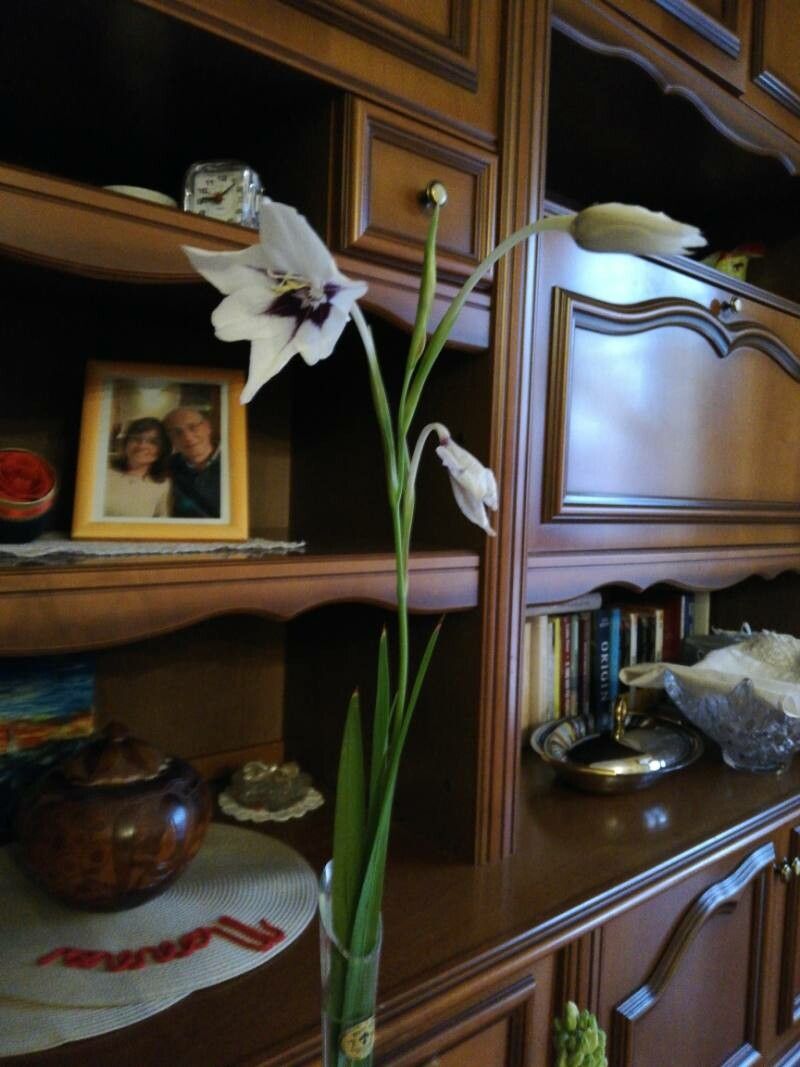
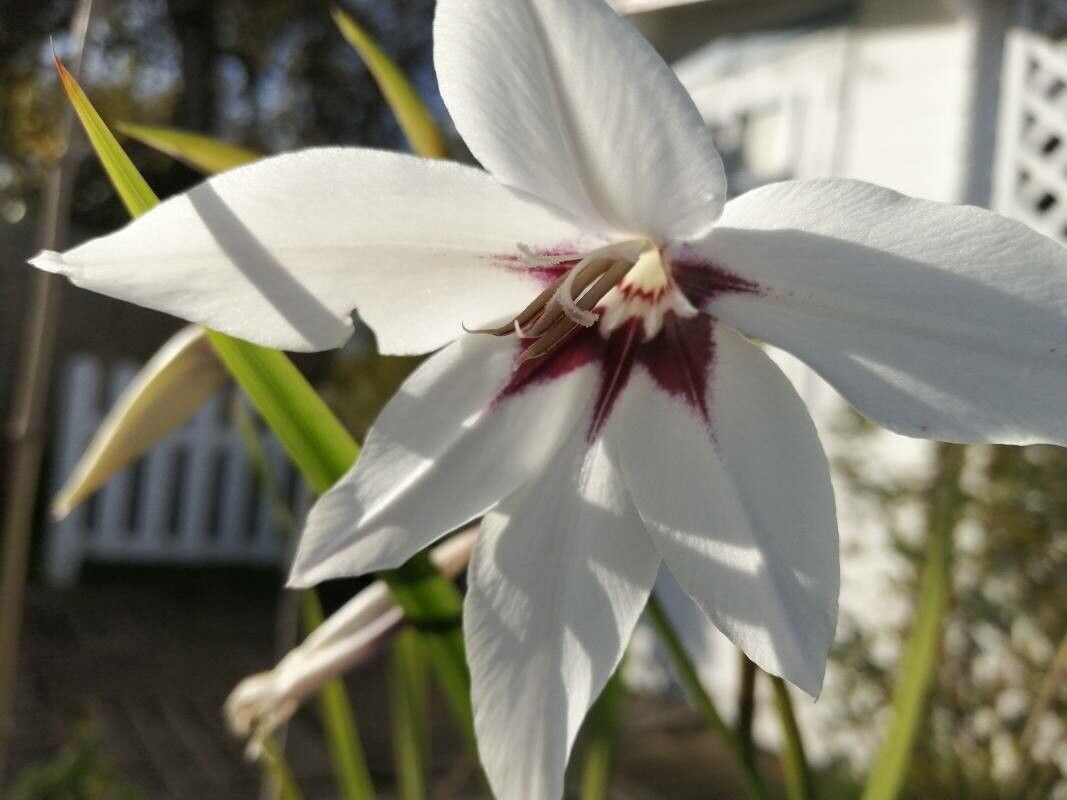
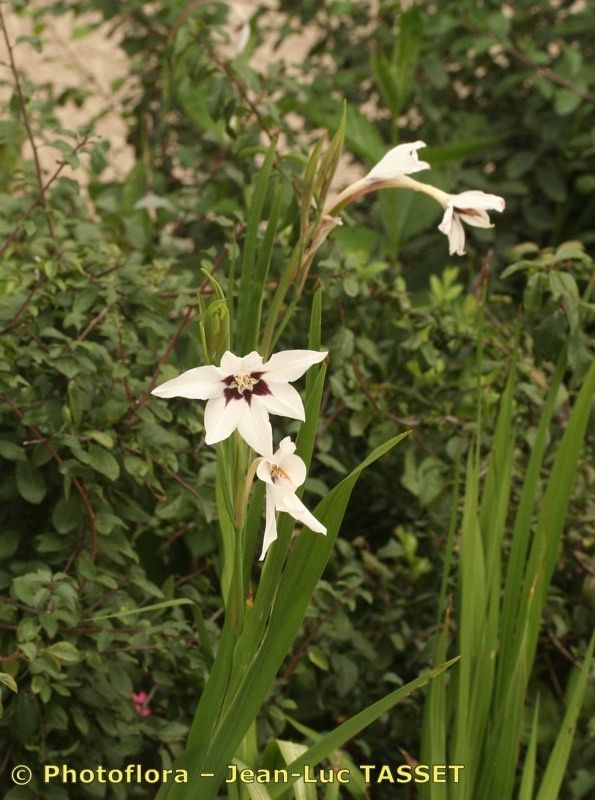
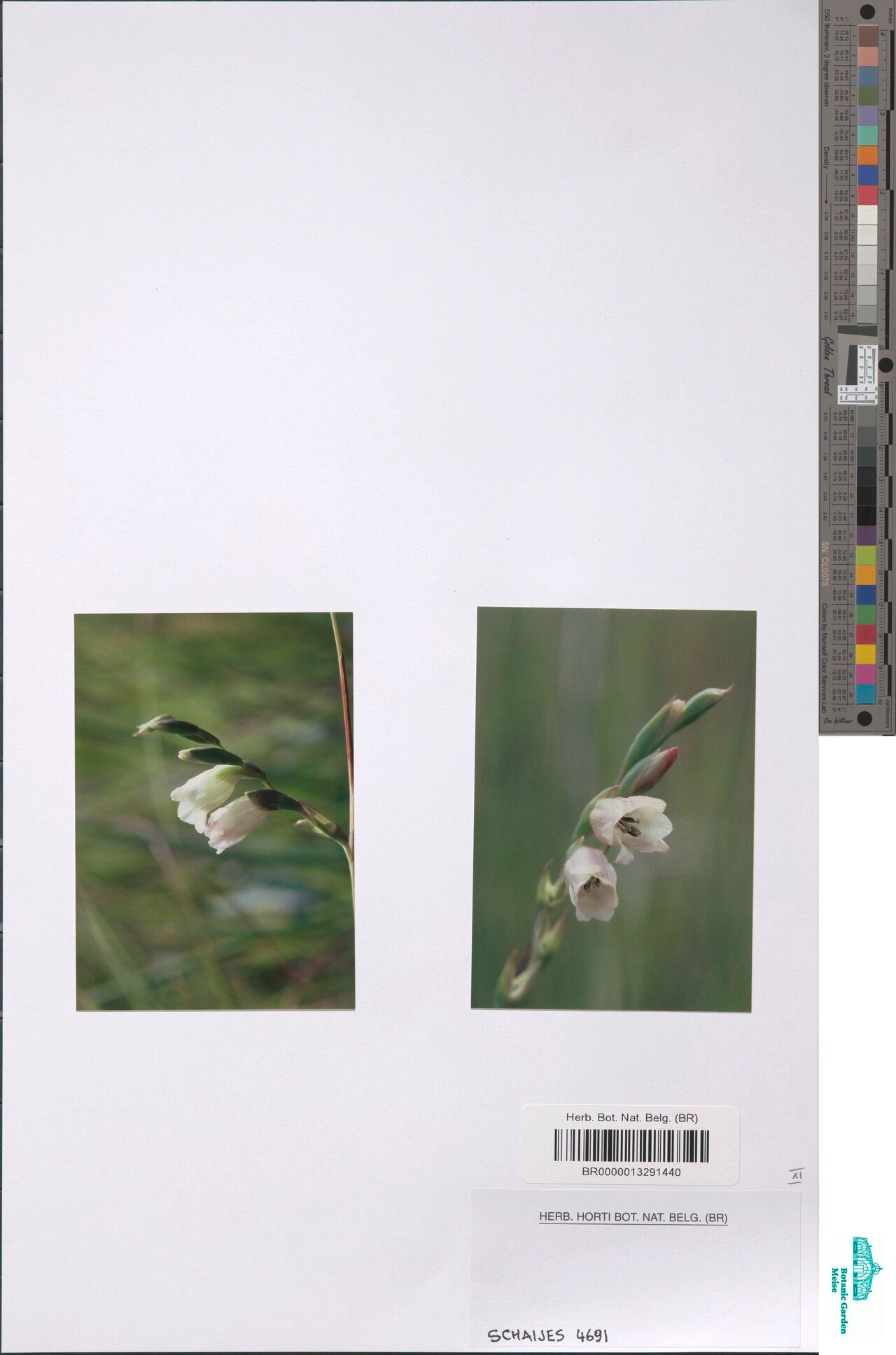
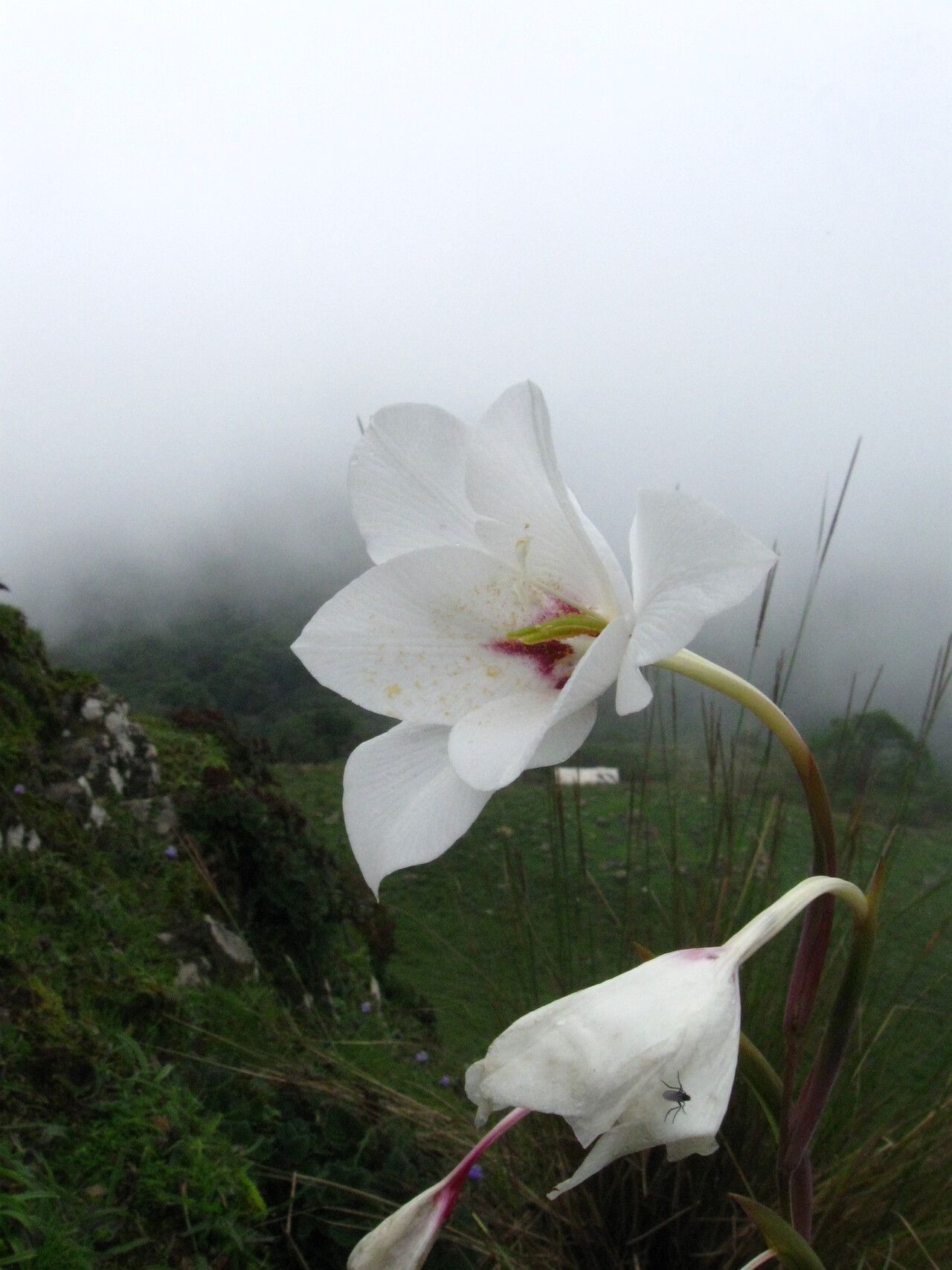
Gladiolus murielae is a species of flowering plant in the family Iridaceae, native to eastern Africa, from Ethiopia to Malawi. It has been given a number of English names, including Abyssinian gladiolus and fragrant gladiolus. It was formerly placed in the genus Acidanthera.It is a cormous perennial growing to 70–100 cm (28–39 in) tall, with linear leaves and in late summer, numerous fragrant white flowers with a maroon (occasionally orange) blotch in the throat, on slender nodding stems. Widely cultivated, it is a common subject in western and southern European gardens, where the corms are lifted every year and stored in frost-free conditions.This plant has gained the Royal Horticultural Society's Award of Garden Merit.Hardiness: Zones 7–10 (6b with deep planting and mulching)
Acidanthera shows good resistance to disease and is generally not prone to illnesses. However, it can be vulnerable to pests and diseases present in its environment. These infections are typically not serious. Regarding care, this plant requires moderate maintenance. It should be pruned regularly to keep a good appearance and support healthy growth. Fertilizing can also help encourage flowering. Acidanthera is suitable for anyone with an outdoor area, like a garden or patio, and does not demand extensive care experience. It may need more attention when grown indoors.
How to keep Gladiolus Callianthus.
Light
Acidanthera does best when it gets abundant sunlight all day long. The sun's energy is essential for its healthy growth and development. Insufficient sunlight can slow its growth, while too much may damage its foliage. In its natural habitat it grows with plenty of sun exposure.
Temperature
Acidanthera tolerates temperature well, able to endure high heat and considerable temperature fluctuations. In hot weather, attention should be paid to watering and providing adequate shade to avoid sunburn. Conversely, Acidanthera is not very resistant to low temperatures. It can handle some cold, but very low temperatures may cause frost damage.
Fertilizer
The best time to fertilize an Acidanthera is in early spring, when it is coming out of dormancy and starting active growth. Fertilizing supplies important nutrients needed for healthy growth. Although Acidanthera has relatively low fertilizer requirements, applying fertilizer annually can improve its survival and encourage better, longer-lasting flowers.
Botanical profile.
- Plant Type
- Herb
- Life Cycle
- Perennial
- Genus
- Gladiolus
- Family
- Iridaceae
- Hardiness Zone
- 6-9
- Mature Height
- 91 cm
- Mature Spread
- 40 cm
- Leaf Color
- Green
- Leaf Type
- Deciduous
- Flower Color
- White
- Flower Size
- 2.54 cm to 7.62 cm
- Bloom Time
- Mid summer, Late summer
- Planting Time
- Spring, Summer
- Harvest Time
- Early fall, Mid fall
- Native Area
- Malawi, Burundi, Mozambique, Ethiopia, Tanzania