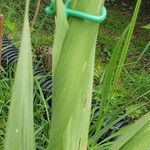
Gladiolus communis
گلایل · Common Gladiolus · Eastern gladiolus · Cornflag · Gladiola
Description
Source: leafsnapGladiolus communis, commonly known as the common gladiolus or sword lily, is a perennial flowering plant belonging to the family Iridaceae. Native to Europe and North Africa, it has been cultivated for centuries for its showy flowers, which bloom in a wide range of colors, including pink, red, orange, yellow, and white. The plant grows from corms, which are underground storage organs similar to bulbs. Its leaves are long, sword-shaped, and feature parallel veins. The flowers grow on tall spikes that can reach up to 4 feet in height, with each spike capable of producing up to 20 individual blooms. Gladiolus communis prefers well-drained soil with full sun exposure but can also tolerate partial shade. It typically blooms from late spring through early summer, depending on the climate zone. In traditional medicine, the plant has been used for its anti-inflammatory properties. However, it is important to note that it contains toxic compounds, which may cause skin irritation or gastrointestinal distress if ingested. Overall, Gladiolus communis is a beautiful addition to any garden or landscape due to its vibrant colors and tall spikes of blooms during the summer months.
🎭 Moral fortitude, liberality, a crush
Care Guide
💧 Water Every 7 days
Common corn-flag, native to Mediterranean climates, thrives in dry summers and wet winters. Although it is drought-tolerant, it prefers moderate humidity. For best results, water it once a week, and increase irrigation during the growing season to encourage more flowering.
What should I do if I give my Common corn-flag too much or too little water?
Common corn-flag is a plant that doesn't need a lot of water, so overwatering it can cause bulb rot. Symptoms of overwatering include mushy bulbs, flopping stems with spots, droopy flowers, and yellowed stalks. If the leaves turn yellow before blooming, it's a sign of overwatering. Unfortunately, bulb rot can't be reversed, but if caught early, you can dig up the bulb, remove the rotten parts, and disinfect the pot and tools. It's not as much of an issue to underwater this plant, but signs of underwatering include no blooms, sagging stalks, and browning around the edges of petals. If you've underwatered your plant, give it a good drink without saturating the soil. Be careful not to overwater, as extended periods in water can cause root rot and fungus growth on the bulb, leading to damage in the form of spots on leaves and buds, as well as discoloration and death of leaf tips.
How frequently should I water my Common corn-flag plant?
Common corn-flag is a low-maintenance plant that thrives best when grown directly in the ground in the sunniest spot of your garden. It's important not to overwater this bulb plant as it can lead to rotting. After planting, water the Common corn-flag thoroughly and then let it be until you see shoots appear. To ensure optimal growth, check the soil moisture after new leaves have emerged by inserting your finger about 2-3 inches below the surface. If it's still wet, there's no need to water. Potted plants should have their water collection tray checked for any standing water before watering. For a more accurate reading, you can use a moisture sensor inserted into the soil. The ideal moisture level is in the middle of the 'moist' category. It is generally recommended to water your Common corn-flag once a week.
How should I change how much I water my Common corn-flag depending on the conditions?
The Common corn-flag is a resilient plant that can survive in harsh conditions. If you plant it outdoors, you can let nature take care of watering as it requires minimal maintenance and can tolerate drought. Just ensure the soil has good drainage. However, if you're growing it in a pot, be cautious with watering. Overwatering can lead to bulb rot. Water your potted plant less frequently and ensure the pot has drainage holes. Use well-drained soil and consider adding sand or rocks to improve drainage. During the growing phase, you can water the Common corn-flag about one inch per week to encourage blooming. The amount of watering needed depends on humidity and temperature. Hot and dry climates may require more frequent watering, while humid climates may need less. Always check soil moisture to avoid overwatering. These plants prefer moist, well-drained soil.
☀️ Light Full sun
The common corn-flag mainly thrives in full sun, yet it can still grow in areas with limited light. Full sun encourages healthy growth, while reduced light can stunt the plant's growth and development. Its origin is tied to habitats that are considerably exposed to sunlight.
What are the sunlight requirements for Common Corn-flag?
The Common Corn-flag requires full sun exposure, meaning it thrives best with more than 6 hours of sunlight daily. However, it can still grow in partial sun, which is about 3-6 hours of sunlight. It's important to observe the movement of sunlight through your garden to find spots that offer the right balance of light and shade, ensuring your plants grow healthy.
How does sunlight affect the growth of Common Corn-flag?
Sunlight plays a crucial role in the health and development of the Common Corn-flag. Optimal growth is achieved under full sun exposure, while limited sunlight can stunt its growth. Originating from habitats with significant sun exposure, this plant relies on ample sunlight to flourish. Inadequate lighting conditions, especially indoors, can be mitigated by using artificial lights, such as LED, to provide the necessary wavelengths for healthy growth. The amount of artificial light required varies depending on the type of plant, with full sun plants needing 30-50W/sq ft, partial sun plants 20-30W/sq ft, and full shade plants 10-20W/sq ft.
What are the symptoms of inadequate sunlight for Common Corn-flag?
Inadequate sunlight can lead to several symptoms in Common Corn-flag, including smaller new leaves, leggy or sparse growth, faster leaf drop, and slower or halted new growth. Leaves may also develop lighter colors, a condition known as chlorosis, due to insufficient chlorophyll. Excessive sunlight, on the other hand, can cause sunscald, leaf curling, wilting, and leaf scorching, indicating damage to the plant's tissues and a reduction in its overall health.
How can I address inadequate sunlight for my Common Corn-flag?
To remedy inadequate sunlight for your Common Corn-flag, gradually increase its sun exposure by moving it to sunnier locations each week until it receives at least 6 hours of direct sunlight daily. For indoor plants, consider utilizing artificial light if moving them isn't feasible, ensuring they receive at least 8 hours of light daily. For outdoor plants, similarly, move them gradually to prevent shock and sunburn. If your plant is affected by obstructions like trees, consider pruning to allow more sunlight through. For smaller plants, transplanting them during their dormant period to a sunnier location with good drainage can also be beneficial.
🌡️ Temperature 5–35°C
The common corn-flag needs temperatures between 41 to 95 ℉ (5 to 35 ℃) for ideal growth. It originates from habitats where temperatures fall within that range and can withstand cold temperatures in winter. During summer, partial shade and regular watering are recommended to prevent overheating.
What are the optimal growth temperatures for Common corn-flag?
The Common corn-flag thrives in temperatures ranging from 41 to 95°F (5 to 35°C). It is well-adapted to these temperature conditions in its native environment. To ensure its growth throughout the seasons, it's recommended to provide partial shade during the hotter months to prevent overheating and ensure regular watering. Despite its strong cold resistance, which typically negates the need for special frost protection, measures should be taken when winter temperatures are expected to fall below -25°C. This includes covering the plant with soil or straw and watering it abundantly before the first freeze of autumn to keep the soil moist and well-prepared for the cold season.
How does low temperature affect Common corn-flag and what are the solution?
Common corn-flag is remarkably cold-tolerant and exhibits optimal growth when temperatures remain above 5°C. In winters, it's essential to ensure that the temperature does not fall below -20°C. At temperatures dropping below -25°C, the plant may not show immediate damage, but you might observe a reduction in sprouting or a complete lack of sprouting come spring. As a solution, in spring, you should remove any parts of the plant that have failed to sprout to promote new growth and maintain the plant's health.
How does high temperature affect Common corn-flag and what are the solutions?
During the summer, it's crucial to ensure that the temperature around the Common corn-flag does not exceed 35°C. Exposure to temperatures above 38°C can lead to symptoms such as leaves becoming lighter in color, curling, being prone to sunburn, and in severe cases, the plant might wilt and dry completely. To mitigate these effects, trim away any sunburned or dried parts of the plant. Moving the plant to a shaded location during the midday and afternoon sun or using a shade cloth can protect it from excessive sunlight. Additionally, watering the plant in the mornings and evenings helps keep the soil moist and supports the plant's needs during high temperature periods.
💨 Humidity normal (40-60%)
This plant will thrive in moderate humidity, which is probably the level in your home. However, misting it a few times a week can be very beneficial. Make sure the room has good ventilation.
🪴 Soil 6-7
🌱 Fertilizer
One fertilizer application in spring is generally enough for Common corn-flag, but repeated feedings can enhance growth. Feed every four to six weeks. Fertilization improves the leaves' appearance and function, helping maintain uniform color and a healthy texture. It also promotes root development and nutrient uptake for long-term plant health.
Why should I add plant food to my Common corn-flag?
The Common corn-flag's leaves are a crucial part of its structure, and proper fertilization is key to maintaining their appearance and function. By fertilizing correctly, you can ensure that the leaves stay consistently colored and have a healthy texture. Additionally, fertilization also benefits the plant's root system. It helps generate new roots and maintains the existing ones, enabling the plant to absorb soil nutrients more effectively both now and in the future.
When should I fertilize my Common corn-flag plant?
If you grow your Common corn-flag outdoors every year, it will start growing new leaves in early spring. When these leaves appear, it is a sign that it's time to start fertilizing for the year. Usually, a Common corn-flag will be fine with just one round of fertilizer in the spring. But if you want to promote maximum growth, you can fertilize it multiple times during the spring and early summer. In this case, you can feed it about once every month to a month and a half.
When is it not a good idea to put fertilizer on my Common corn-flag plant?
During the late fall and winter, your Common corn-flag will go dormant and stop growing. It's best to avoid fertilizing during this time. As spring and summer approach, if you choose to fertilize, start reducing the rate of fertilization because the growth rate of your Common corn-flag will also slow down. It's important to note that it's not recommended to fertilize your Common corn-flag during extremely hot weather or when the soil is excessively dry. Fertilizing in those conditions can cause stress and premature death of your Common corn-flag.
What kind of fertilizer does my Common corn-flag plant need?
Luckily, choosing the ideal fertilizer for a Common corn-flag is quite simple. These plants thrive on a general-purpose garden fertilizer that contains equal amounts of nitrogen, phosphorus, and potassium. A fertilizer with a ratio of 10-10-10 or something similar will be highly efficient. To be safe, avoid fertilizers with high nitrogen levels. The majority of preferred fertilizers for Common corn-flags are available in a granular form. These slow-release fertilizers are easy to apply to the soil. Additionally, it can be beneficial to nourish your Common corn-flag by using organic soil amendments like compost.
How can I make my Common corn-flag plant grow better?
To ensure optimal growth for your Common corn-flag, wait until its first leaves emerge in early spring. Once you see this sign, apply a balanced granular slow-release fertilizer to the soil surrounding the base of the plant. You can repeat this process later in the season if desired. Remember to apply the fertilizer to the soil at the base of the plant, not directly onto the plant itself, which may require moving some leaves aside. Additionally, watering your Common corn-flag before and after fertilization is recommended.
🪴 Pot & Repot Every 12 months
Repot Common corn-flag in early spring. Choose a container that is wider than it is deep and has good drainage. Use a loamy, well-draining potting mix enriched with compost. Gently remove old soil from the bulb and plant it at a depth equal to the bulb's height. Water thoroughly after repotting and put it in a sunny spot. Avoid overwatering to prevent bulb rot.
✂️ Pruning
The common corn-flag thrives with its tall, blooming spikes. To promote optimal growth and prolong its blooming period, prune old flowers and remove dying leaves from early to late spring. Regular pruning boosts the plant's vigor, but be sure to only remove dead or damaged parts to maintain the plant's health and appearance.
🌿 Propagating
🐛 Diseases & pets
☠️ Toxicity
Characteristics
- Plant Type
- Herb
- Life Cycle
- Perennial
- Genus
- Gladiolus
- Family
- Iridaceae
- Hardiness Zone
- 5-9
- Mature Height
- 91 cm
- Mature Spread
- 10 cm to 15 cm
- Leaf Color
- Green, Blue
- Leaf Type
- Deciduous
- Flower Color
- Pink, White, Yellow, Purple, Red, Mauve
- Flower Size
- 5.08 cm
- Bloom Time
- Late spring, Early summer, Mid summer
- Planting Time
- Spring
- Harvest Time
- Mid summer
- Native Area
- Russia, Portugal, Italy, Spain, Serbia, Montenegro, Bulgaria, Albania, Croatia, Slovenia, France