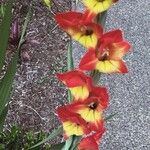
Gladiolus dalenii
Maid-of-the-mist · Dragon's-head-lily · Natal-lily · Sword-lily · Parrot-lily
Description
Source: leafsnapGladiolus dalenii, commonly known as the parrot gladiolus, is a species of flowering plant in the Iridaceae family. Native to southern Africa, it is widely cultivated as an ornamental plant for its vibrant and striking flowers. The parrot gladiolus typically grows up to 1 meter tall and produces spikes bearing up to 20 flowers. These flowers come in shades of orange, red, yellow, or pink, and feature distinctive markings that resemble a parrot's beak. The plant thrives in well-drained soil and requires full sun exposure but can tolerate partial shade. It blooms from late spring through summer and needs regular watering during its growing season. However, it should be allowed to dry out during its dormancy periods. Traditionally, Gladiolus dalenii has been used for medicinal purposes, such as treating fever, coughs, colds, and respiratory infections, due to its antibacterial properties found in the corms (underground storage organs). Overall, this beautiful flowering plant adds color and vibrancy wherever it is planted, making it a popular choice among gardeners worldwide.
Care Guide
💧 Water Every 7 days
The African parrot gladiola thrives in moderate climates with evenly moist soil, ideally watered once a week without causing waterlogging. While it is somewhat drought-tolerant, it flourishes in humid conditions similar to its native environment. To achieve optimal blooms, adjust the watering schedule based on natural rainfall, especially during the active growing season.
How should I water my African parrot gladiola for the best results?
To ensure the health of your African parrot gladiola, it's best to use filtered water at room temperature. Tap water may have harmful particles, so filtered water is preferable. Since the gladiola comes from warm climates, using cold water can be a shock to its system. Additionally, overhead watering can cause problems with the foliage. Instead, focus on thoroughly soaking the soil with filtered room temperature water. This helps the roots absorb nutrients and spread through the soil effectively.
What should I do if I give my African parrot gladiola too much or too little water?
Overwatering and underwatering can harm your African parrot gladiola. However, overwatering is more common and can cause wilting, yellowing of leaves, root rot, mold, and mildew. African parrot gladiolas can handle drought but may still face underwatering, which leads to brittle, brown leaves. It's important to notice signs of overwatering early to prevent irreversible damage like root rot. Reduce watering if you see early signs and check the soil's drainage. Replace poorly-draining soil with a loose, well-draining mix. If your African parrot gladiola lacks water, increase waterings until signs improve.
How often do I need to water my African parrot gladiola?
If your African parrot gladiola is in a pot, the most accurate way to determine if it needs water is by checking the soil with your finger. If you find that the top two to three inches of soil are dry, it's time to water the plant. For those growing African parrot gladiolas outdoors in the ground, you can use a similar method to test the soil. Once again, if the top few inches of soil have dried out, it's time to add water. Typically, during the spring and early fall, this plant should be watered about once a week using this method. However, in very hot weather, you may need to water it twice a week or more frequently. It's worth noting that mature, well-established African parrot gladiolas can withstand drought quite well.
How much water does my parrot Gladiola need?
To effectively water your African parrot gladiola, you need to give it an ample amount of water. Make sure the first two to three inches of soil are dry before watering. It's best to give the plant a thorough watering, making sure the soil is completely soaked. You should add enough water so that it flows through the drainage holes in the pot. If you don't see any excess water draining, it means you haven't watered enough. However, be careful not to let water accumulate in the soil as it can harm the plant. On the other hand, if water doesn't drain well from the pot, it may mean the soil is poorly draining, which is not good for the plant's health. If the plant is outdoors, it should receive about 1 inch of rainfall per week.
How do I give water to my African parrot gladiola plant as it grows?
The water needs of the African parrot gladiola vary depending on its growth stages. In the early years and when newly transplanted, it requires more water due to the sprouting of new roots for future growth. These roots need extra moisture to thrive. As the plant matures, it requires less water. Additionally, during the bloom period, the flower development requires a significant amount of moisture, necessitating increased watering.
☀️ Light Full sun
African parrot gladiola originates from habitats characterized by very high sun exposure, which allows it to thrive in those conditions. The amount of sunlight it receives strongly affects its health, and its hardiness often counteracts excessive sun. At every stage of growth it needs light as intense as direct, unshaded sun, and insufficient light can hinder its development.
What are the sunlight requirements for African parrot gladiola?
African parrot gladiola thrives in environments with maximal sun exposure, typically needing light intensity equivalent to unobstructed sun during all its growth stages. For successful growth, it requires more than 6 hours of sunlight daily, classified as 'Full sun'. In cases where natural light conditions are inadequate, particularly for indoor settings or during winter, the use of artificial lights becomes essential. LED lights are recommended for indoor plants, with varying wattage requirements based on the plant's sunlight needs: 30-50W/sq ft for full sun plants, 20-30W/sq ft for partial sun, and 10-20W/sq ft for full shade plants. The artificial light should mimic natural sunlight in terms of both distance from the plant (12-36 inches) and duration (8-12 hours per day).
What are the signs of inadequate sunlight for African parrot gladiola?
When African parrot gladiola does not receive sufficient sunlight, several symptoms may appear. These include smaller new leaves, leggy or sparse growth, faster leaf drop, slower or halted growth, and lighter-colored new leaves indicating a lack of chlorophyll. Additionally, excessive sunlight can cause chlorosis (yellowing of leaves), sunscald (pale, bleached areas on leaves or stems), leaf curling as a defense mechanism against water loss, wilting due to excessive transpiration, and leaf scorching, showing as brown, dry edges or patches on leaves due to overexposure to sunlight.
What solutions can improve sunlight exposure for African parrot gladiola?
To optimize sunlight exposure for African parrot gladiola, here are some strategies: Indoors, gradually relocate plants to sunnier spots, reaching at least 6 hours of direct sunlight, and utilize south-facing windows. Artificial lighting, such as desk or grow lights, can supplement light for plants that are large or not easily moved, for at least 8 hours daily. Outdoors, incrementally move plants to areas with better sunlight, avoid abrupt light intensity changes to prevent sunburn. Removing obstructions like trees or relocating smaller plants to sunnier locations can also help. Note, parts of the plant damaged by insufficient light might not recover, but new growth should be healthy with better light exposure.
🌡️ Temperature 0–37.8°C
The African parrot gladiola comes from warm habitats with temperatures ranging from 32 to 100 °F (0 to 38 ℃). It prospers in moderate to high temperatures. Seasonal adjustments could involve supplying extra heat during cooler periods.
What is the native environment of the African parrot gladiola?
The African parrot gladiola, botanically known as Gladiolus dalenii, thrives in warmer environments. It is native to regions where temperatures range between 32 to 100 °F (0 to 38 °C), indicating it flourishes in moderate to high temperatures. The plant demonstrates strong cold resistance, implying that it usually does not require special frost protection measures during winter, making it remarkably adaptable to varying climatic conditions.
How should I protect African parrot gladiola in extremely cold temperatures?
While African parrot gladiola is known for its cold resistance, it is still crucial to provide it with cold protection if winter temperatures are forecasted to drop below -40°C. This can be accomplished by covering the plant with insulating materials such as soil or straw. Additionally, before the arrival of the first freezing temperatures in autumn, it's advisable to water the plant generously to ensure the soil stays moist and freezes in that state, aiding in the prevention of drought and water scarcity for the plant during the colder months and into early spring.
What should I do if the African parrot gladiola experiences extreme temperatures?
The African parrot gladiola has specific temperature thresholds for optimal growth. During winter, it should be kept above -35°C to avoid damage, but if temperatures fall below -40°C, there might not be immediate visible damage; however, a decrease in sprouting or complete lack of sprouting may occur in spring. In such cases, removing the parts that failed to sprout is recommended. On the other hand, in summer, the plant should be kept below 38°C to prevent heat stress. Exceeding 43°C can cause the leaves to lighten in color, curl, become prone to sunburn, or, in extreme cases, cause the plant to wilt and dry out. To mitigate these effects, trim away sunburned or dried-up parts, relocate the plant to a shadier location, or use a shade cloth to protect it from the midday and afternoon sun. Additionally, watering the plant in the morning and evening helps keep the soil moist and supports the plant's health during high temperatures.
💨 Humidity dry (<40%)
This plant prefers dry conditions, so don't mist it. However, watering it less often can also thrive in higher humidity.
🪴 Soil 6-6
🌱 Fertilizer
The best time to fertilize an African parrot gladiola is in early spring, as it comes out of dormancy and starts active growth. Fertilizing supplies essential nutrients for healthy development. Although the African parrot gladiola has relatively low fertilizer requirements, applying fertilizer annually can improve its survival and encourage better, longer-lasting flowers.
Why do I need to feed my African parrot gladiola?
Fertilization is important for the African parrot gladiola because it provides necessary nutrients for growth. While the fertilization needs for this plant are generally low, annual fertilization can greatly benefit the plant's overall health and flower quality. Therefore, those wanting to ensure their African parrot gladiola looks its best should consider regular fertilization.
When should I fertilize my African parrot gladiola plant?
The best time to fertilize an African parrot gladiola is in late winter to early spring. This is when the plant is coming out of its dormant phase and starting to grow actively. Fertilizing at this time promotes healthy growth and gives the plant a good start for the season. Although it is recommended to fertilize during early spring, it is also acceptable to fertilize in the fall. However, it is not advised to feed the plant during summer and winter.
When should I not put fertilizer on my African parrot gladiola?
To properly care for your African parrot gladiola, it is important to understand when to fertilize. The recommended time for fertilization is during late winter and early spring. Due to the plant's low fertilization needs, a single annual feeding is sufficient. Fertilizing during spring, summer, and fall can lead to overfertilization and its associated complications. However, if you missed fertilizing in the spring, it is acceptable to feed the plant in the fall. It is also important to note that fertilization is not necessary during the winter when the African parrot gladiola is in a dormant phase and does not experience new growth.
What kind of fertilizer does my African parrot gladiola plant need?
When it comes to fertilizing African parrot gladiola, almost any general-purpose fertilizer with a good balance of the three main plant nutrients will work fine. However, there are a few nutrient blends that may provide even better results. Some gardeners suggest using a fertilizer with more phosphorus for stronger roots and better flowers, which is particularly beneficial for African parrot gladiola as a flowering plant. You can opt for either granular or liquid fertilizer as long as it contains sufficient nutrients. Additionally, aside from manufactured fertilizers, you can also improve the soil for your African parrot gladiola using organic methods such as compost, manure, or similar materials. These organic materials are great for creating a healthy growing environment for your African parrot gladiola.
How can I give my African parrot gladiola plant the nutrients it needs?
The best way to fertilize an African parrot gladiola is by applying granular or pellet fertilizer to the soil around the plant. It's important to remember that the ideal time to fertilize is when the plant is transitioning from winter dormancy to active growth. In early spring, wait for shoots to emerge from the soil before applying fertilizer. Alternatively, some people prefer using liquid fertilizer, in which case it should be diluted with water before application. Regardless of the type of fertilizer used, it's recommended to moisten the soil before, during, and after fertilization.
🪴 Pot & Repot
✂️ Pruning
The African parrot gladiola, known for its vibrant flowers, benefits greatly from regular pruning to improve bloom quality. Key methods involve deadheading and cutting back foliage after the plant finishes blooming, typically from early to late spring. This practice encourages strong stems and abundant flowers, while also preventing disease and improving air circulation, thereby promoting overall plant health.
🌿 Propagating
🐛 Diseases & pets
☠️ Toxicity
Characteristics
- Plant Type
- Herb
- Life Cycle
- Perennial
- Genus
- Gladiolus
- Family
- Iridaceae
- Hardiness Zone
- 2-11
- Mature Height
- 61 cm to 91 cm
- Mature Spread
- 61 cm to 91 cm
- Leaf Color
- Green
- Leaf Type
- Deciduous
- Flower Color
- Red, Orange, Yellow
- Flower Size
- 91.44 cm
- Bloom Time
- Summer, Early fall, Mid fall
- Planting Time
- Spring, Autumn
- Harvest Time
- Late summer, Fall, Early winter