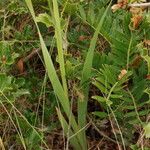
Gladiolus dubius
Care Guide
💧 Water
☀️ Light Full sun
Field gladiolus grows best in abundant sunlight, absorbing plenty of light that drives its development. Native to areas with unobstructed sun, it is adapted to bright, sunlit environments. Too little light can inhibit growth, while too much can cause leaf discoloration and burning. It does not tolerate shade well and does not require gradual exposure to sunlight.
🌡️ Temperature 0–37.8°C
Field gladiolus originates from temperate regions and needs temperatures between 32 and 100 °F (0 to 38 ℃) to grow well. Optimal conditions are maintained by giving warmer temperatures in summer and cooler temperatures in winter.
💨 Humidity
🪴 Soil 6-7
🌱 Fertilizer
The best time to fertilize a Field gladiolus is in early spring, when it is coming out of dormancy and starting active growth. Fertilization supplies essential nutrients for healthy development. Although Field gladiolus has relatively low fertilizer requirements, applying fertilizer annually can improve its survival and encourage better, longer-lasting flowers.
🪴 Pot & Repot
✂️ Pruning
🌿 Propagating
🐛 Diseases & pets
☠️ Toxicity
Characteristics
- Plant Type
- Herb
- Life Cycle
- Perennial
- Genus
- Gladiolus
- Family
- Iridaceae
- Hardiness Zone
- 2-11
- Mature Height
- 49 cm to 91 cm
- Mature Spread
- 10 cm to 15 cm
- Leaf Color
- Green, Blue
- Leaf Type
- Deciduous
- Flower Color
- Pink, Red, Purple
- Flower Size
- 1.02 cm to 1.27 cm
- Bloom Time
- Late spring, Early summer
- Planting Time
- Spring, Summer
- Harvest Time
- Mid summer
- Native Area
- Libya, Egypt, Turkey, Montenegro, Pakistan, Slovenia, Morocco, Croatia, Uzbekistan, Russia, Iraq, Romania, Portugal, France, Saudi Arabia, Tajikistan, Tunisia, Cyprus, Bulgaria, Armenia, Greece, Lebanon, Serbia, Afghanistan, Syria, Italy, Spain, Switzerland, Iran, Albania, Azerbaijan, Algeria, Kuwait, Turkmenistan