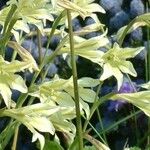
Gladiolus tristis
Avon-flower · Evening-flower gladiolus · Large gladiolus · Marsh Afrikaner · Trompetters
Description
Source: leafsnapGladiolus tristis is a species of gladiolus known by several common names, including ever-flowering gladiolus and marsh Afrikaner. It is native to southern Africa, especially South Africa. It is known in parts of Australia and coastal California as an introduced species. It is sometimes grown as a garden plant. This gladiolus typically grows one half to one metre in height, but has been known to approach 1.5 metres tall. It grows from a corm one or two centimetres wide. It produces three narrow, sheathing leaves. The inflorescence is a spike of two to eight large, fragrant blooms. Each flower has six white or cream tepals with greenish or purplish midlines. The flowers are said to have a scent similar to carnations and cloves. Not all individuals possess scent because the allele for its presence is recessive in relation to the allele for its absence.
Care Guide
💧 Water Every week
The ever-flowering gladiolus thrives in conditions of moderate moisture, needing well-drained soil and weekly watering that avoids waterlogging. Originally from regions with alternating wet and dry seasons, this plant flourishes outdoors in full sunlight. This exposure significantly affects its irrigation requirements during the growing season.
How should I water my Ever-flowering gladiolus plant?
To care for the Ever-flowering gladiolus, it is best to use filtered water at room temperature. Tap water may have harmful particles, so filtering it is recommended. It's important to note that this plant prefers warm water because it comes from a warm environment. Cold water can be a shock to its system. Avoid overhead watering to prevent foliage problems. Instead, thoroughly water the soil with filtered room temperature water until it is completely soaked. This will benefit the plant by keeping the roots moist and helping them spread and absorb nutrients from the soil.
What should I do if I give my Ever-flowering gladiolus too much water or too little water?
Both overwatering and underwatering can harm the health of your Ever-flowering gladiolus, but overwatering is more common. When this plant receives too much water, its stems and leaves may wilt and turn yellow. Overwatering for a long time can also cause root rot, mold, and mildew, which can kill the plant. Underwatering is less common because Ever-flowering gladiolus can tolerate drought. However, it is still possible, and in that case, the leaves may become brittle and brown. It's important to notice signs of overwatering early and take action. Some diseases caused by overwatering, like root rot, are irreversible if not addressed promptly. If you see early signs, reduce watering and check the soil. If it drains poorly, replace it with a loose, well-draining potting mix. If signs of underwatering appear, simply water more often until they go away.
How much water does my Ever-flowering gladiolus need?
If your Ever-flowering gladiolus is potted, the most precise way to know if it needs water is to stick your finger into the soil. If the top two to three inches of soil are dry, then it's time to water it. If you have your Ever-flowering gladiolus planted in the ground outside, you can use a similar method to test the soil. Again, if the top few inches of soil are dry, it's time to water. Usually, during spring and early fall, you'll need to water this plant about once a week using this method. However, during extremely hot weather, you may need to water it twice or more per week. It's worth noting that mature, well-established Ever-flowering gladiolus plants have a strong tolerance for drought.
How much water do my Ever-flowering gladiolus plants need?
When watering your Ever-flowering gladiolus, it's important not to hold back on the amount of water you give. Make sure the top two to three inches of soil are dry before watering, and when you do, give it a good, thorough soaking. The water should be enough to completely saturate the soil and drain out of the pot's drainage holes. If you don't see excess water coming out, you may not have given enough water. However, be careful not to let the water accumulate in the soil, as this can harm the plant. Additionally, if the water doesn't drain well, it could be a sign of poorly draining soil, which is not good for the health of the plant and should be avoided. If the plant is outside, it generally needs about 1 inch of rain per week.
How do I water my Ever-flowering gladiolus when it is growing at different stages?
The water needs of the Ever-flowering gladiolus can change depending on its growth stages. When it is in its early years or has just been transplanted, it requires more water than usual. This is because during these stages, it is focused on developing new roots, which need extra moisture. As the plant matures, it will require less water. Another stage that requires more water is the blooming period, as flower development requires a significant amount of moisture.
☀️ Light Full sun
Ever-flowering gladiolus is a plant that does best with plenty of sunlight. The sun is vital to its healthy growth, and it is adapted to a sun-up-to-sun-down rhythm. However, if light exposure goes beyond its tolerance, the plant can be damaged. Its native habitat is made up of environments with abundant solar exposure.
What kind of sunlight does Ever-flowering gladiolus require?
The ever-flowering gladiolus requires full sun every day, which means it needs at least six hours of sunlight for its leaves, roots, and blooms to stay healthy. Other perennials like the Orange Daylily and Giant Coreopsis can survive with only three hours of sunlight each day, but they won't grow as well as they would in brighter conditions.
Can the sun harm Ever-flowering gladiolus? How can I keep Ever-flowering gladiolus safe from the sun and heat?
In warm climates, some Perennial Flowering Plants may struggle with excessive heat and suffer from sun damage. They can wilt, dry out, or even experience growth problems if they are consistently exposed to the intense afternoon sun. However, not all plants require protection from the light afternoon sun. For those that are harmed by intense afternoon exposure, it is recommended to provide them with some shade in warmer climates. Gardeners can achieve this by planting these plants in areas that do not receive direct heat during the afternoon, such as under trees or behind bushes.
Should I keep Ever-flowering gladiolus away from the sun?
Certain perennial plants require ample sunlight to reach their maximum bloom. However, in warmer climates, some of these plants actually benefit from less sun. For instance, individuals residing in hotter regions might find it beneficial to shade their flowering perennials during the intense afternoon sun, especially during summer months. Although many perennial flowering plants prefer partial shade in the hottest climates, there are exceptions. Take the Giant Coreopsis, for example, as it is not bothered by excessive sun exposure. These plants can flourish even when placed in the full sun during scorching weather.
What will happen if the Ever-flowering gladiolus doesn't get enough sunlight?
If your Ever-flowering gladiolus is not receiving enough sunlight, you will see signs that indicate insufficient conditions for your plants. They won't produce as many blooms as they would with full sun exposure. Some plants may develop dry spots on their leaves, but even in inadequate sun, most of them will still flower. However, these blossoms will be smaller and less vibrant.
Does the Ever-flowering gladiolus need specific sunlight care as it grows?
Ever-flowering gladiolus is a wonderful addition to any garden, but it requires six hours of sunlight each day for optimal blooming. However, to help the flowers last longer, it is sometimes beneficial to provide partial shade during the hottest parts of the day. For young Ever-flowering gladiolus plants, it is essential to ensure they receive ample sunlight while avoiding intense afternoon heat. On the other hand, fully mature plants should be provided with plenty of sun to support their growth.
🌡️ Temperature 0–37.8°C
Ever-flowering gladiolus originates from mild climates and performs best when temperatures range from 32 to 100 °F (0 to 38 ℃). For best results, keep temperatures within this range year-round. Seasonal weather changes may require adjustments.
What is the best temperature for Ever-flowering gladiolus?
The ideal temperature for Ever-flowering gladiolus depends on the time of year. There are two main seasons to consider: the growing season and the dormancy season. During the growing season, when the gladiolus is sprouting, the temperature should be between 65-80℉(18-27℃). If it gets colder than 15℉(-10℃), the plant may suffer and its leaves could turn brown and wilt. However, if it's just a short cold snap, the gladiolus may survive with some assistance. In the warmer months, the gladiolus should also be protected from excessive heat. Temperatures above 95-105℉ (35-40℃) can harm the foliage and blooms, leading to wilting, drooping, and even sunburn on the leaves. It can be difficult for the gladiolus to recover from this damage. Fortunately, there are various easy ways to address this issue.
The needed temperature for the first year or young Ever-flowering gladiolus plant.
If you are planting Ever-flowering gladiolus outside for the first time, it may require special care during the coldest months. Frost can be particularly damaging to new plants and may prevent them from growing back in the spring. To protect your gladiolus, keep it at a temperature of 40℉(5℃) or above until it becomes established. This can be achieved by either bringing the plant indoors for a month or two, or by using mulch or fabric barriers to shield it from frost. Additionally, it is advisable to plant the gladiolus in a shadier location during the first year or two, as smaller and weaker plants struggle to regulate their temperature in the heat. Limit direct sunlight exposure to no more than five hours per day, especially if the temperature exceeds 80℉(27℃). To cope with summer heat, use shadecloth and make sure to water or mist the gladiolus frequently.
How can I keep Ever-flowering gladiolus safe from very hot or very cold weather?
If the temperature goes below 15℉(-10℃) during the growing season, there are ways to protect Ever-flowering gladiolus from frost or cold damage. If you are growing them in a container, bring the container inside in bright, indirect light until the temperature rises above the lower threshold again. For ground-planted gladiolus, you can use mulch or horticultural fabric to create an insulated barrier around the plant, which will protect it from frost and cold wind. On the other hand, if the temperature exceeds 80℉(27℃) in the shade during the day, it's important to limit the exposure of Ever-flowering gladiolus to six or fewer hours of sunlight per day, especially during the hottest parts of the day. You can put up shade cloth or a fine plastic mesh to reduce direct sunlight. Additionally, installing a misting system that releases cooling mist around the base of the plant during the day can help lower ground temperatures.
Temperature recommendations for Ever-flowering gladiolus during the dormant season.
During the cold winter months, Ever-flowering gladiolus needs cold to remain dormant until it's time to sprout. Sprouting too early, before the last frost has passed, can be fatal to Ever-flowering gladiolus, especially if it has already started growing when the frost hits. Ideally, winter temperatures should be below 32℉(0℃), but if they reach 40℉(5℃), it's still okay. In more temperate climates like woodland rainforests, an unexpected warm spell can cause Ever-flowering gladiolus to sprout prematurely. If there's still a risk of frost, covering it with clear plastic on stakes can protect the new sprout. This covering can be removed when the danger of frost is gone. Sometimes, Ever-flowering gladiolus can sprout correctly without any assistance, but using this method increases the chances of successful second sprouting.
💨 Humidity
🪴 Soil 6-7
🌱 Fertilizer
For Ever-flowering gladiolus, the primary time to apply fertilizer is in early spring when the flowers are beginning to form. The proper fertilizer promotes improved blooms and helps Ever-flowering gladiolus produce attractive flowers. Fertilizing in early spring ensures strong flowers throughout the season and supplies energy for dormant growth phases.
Why should I fertilize my Ever-flowering gladiolus?
Fertilization is important for the Ever-flowering gladiolus because it provides essential nutrients for the plant's growth both above and below ground. Although the overall fertilization needs for this plant are relatively low, annual fertilization can greatly benefit the Ever-flowering gladiolus by keeping it alive and promoting the production of better and longer-lasting flowers. Therefore, those who want their Ever-flowering gladiolus to thrive should make sure to fertilize it annually.
When should I fertilize my Ever-flowering gladiolus?
The best time to fertilize an Ever-flowering gladiolus is in late winter to early spring when it is transitioning from dormancy to active growth. Fertilizing at this time promotes healthy growth and sets the plant up for a successful season. While early spring is ideal, fall fertilization is also acceptable, but avoid feeding the gladiolus in summer and winter seasons.
When is it best to not fertilize my Ever-flowering gladiolus?
To avoid overfertilization and its potential complications, it is best to only fertilize your Ever-flowering gladiolus in late winter and early spring. This plant has low fertilization needs and a single annual feeding is sufficient. However, if you missed fertilizing in spring, it is acceptable to feed it in fall. Avoid fertilizing during spring, summer, and fall to prevent overfertilization. Additionally, during the winter when the plant is in a dormant phase and not growing, fertilization is unnecessary.
What kind of fertilizer should I use for my Ever-flowering gladiolus?
To successfully nourish your Ever-flowering gladiolus, a general-purpose fertilizer with a balanced mix of the three main plant nutrients will do the job. However, there are nutrient blends that can provide even more benefits. Many gardeners find that higher phosphorus levels improve root strength and flower quality. As an Ever-flowering gladiolus is primarily a flowering plant, using a phosphorus-rich fertilizer may be the best approach. Whether in granular or liquid form, the fertilizer should contain an ample amount of nutrients. Additionally, you can enhance the soil using organic methods such as compost, manure, and similar materials to create a healthy environment for your Ever-flowering gladiolus.
How can I give my Ever-flowering gladiolus plant fertilizer?
To fertilize an Ever-flowering gladiolus, the most common method is to use granular or pellet fertilizer and apply it to the soil around the plant. It is important to fertilize when the plant is transitioning from its winter dormant phase to active growth. In early spring, wait for the plant to start sending shoots through the soil before applying the fertilizer. Alternatively, some people may prefer to use liquid fertilizer. If using liquid fertilizer, dilute it with water before applying. Regardless of the type of fertilizer chosen, it is recommended to moisten the soil before, during, and after application.
🪴 Pot & Repot
✂️ Pruning
The ever-flowering gladiolus is known for its tall flower spikes and delicate fragrance. To encourage healthy growth, prune the spent stems from early to late spring, removing any dead leaves. Pruning after the flowers have bloomed helps maintain the plant's vigor and promotes more prolific blooms in future seasons.
🌿 Propagating
🐛 Diseases & pets
☠️ Toxicity
Characteristics
- Plant Type
- Herb
- Life Cycle
- Perennial
- Genus
- Gladiolus
- Family
- Iridaceae
- Hardiness Zone
- 2-11
- Mature Height
- 61 cm
- Mature Spread
- 20 cm
- Leaf Color
- Green
- Leaf Type
- Deciduous
- Flower Color
- White
- Flower Size
- 6.35 cm to 10.16 cm
- Bloom Time
- Mid spring, Late spring
- Planting Time
- Autumn
- Harvest Time
- Early summer, Mid summer
- Native Area
- South Africa