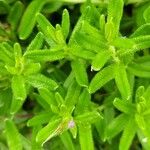
Glandora prostrata
Scrambling Gromwell
Description
Source: leafsnapGlandora prostrata, commonly known as creeping snowberry or creeping wintergreen, is a low-growing, evergreen plant belonging to the family Ericaceae. Native to North America, this plant is admired for its prostrate growth habit, with stems that can extend up to 30 cm in length. The leaves are glossy and dark green, featuring a leathery texture and serrated edges. From May to July, Glandora prostrata produces small flowers that are white or pinkish in color. These blossoms are followed by bright red berries, which persist through the winter, providing a valuable food source for birds and other wildlife. Glandora prostrata thrives in moist soils with good drainage but can also tolerate dry conditions once established. It performs well in both partial shade and full sun, although it requires protection from the hot afternoon sun. Native American tribes have used this plant for centuries for its medicinal properties, employing it as an antiseptic for wounds and as a treatment for respiratory ailments such as coughs and colds. Overall, Glandora prostrata is an attractive groundcover option that offers year-round interest with its glossy foliage, delicate flowers, and vibrant berries. Its medicinal properties further enhance its value, making it an excellent addition to any garden or landscape design project.
Care Guide
💧 Water Every 7 days
Scrambling gromwell thrives in rocky, well-drained environments and is adapted to infrequent watering, needing hydration only every 2-3 weeks. As a drought-tolerant evergreen, it is best suited for outdoor cultivation. This plant retains its foliage year-round and requires even less water during the cooler months.
How should I water my Scrambling gromwell plant?
Your Scrambling gromwell is not picky about how you water it. You can use common watering tools like watering cans, hoses, or cups. Regardless of the tool, water the soil directly and make sure all areas are evenly moistened to provide water to the entire root system. It's good to use filtered water to avoid harmful particles in tap water. It's also better to use water at or slightly above room temperature, as extreme temperatures can shock the plant. However, the Scrambling gromwell generally responds well to any kind of water.
What should I do if I give too much or too little water to my Scrambling gromwell?
For outdoor plants, especially newly planted ones or seedlings, lack of watering can be a problem. Remember to consistently water them enough for a few months while they are small or recently planted. Once the roots are established, Scrambling gromwell can rely on rain most of the time. When growing Scrambling gromwell in pots, overwatering is often more likely. If you accidentally overwater your plant, take immediate action to correct the situation. First, stop watering your plant to minimize the effects of overwatering. Then, check the roots by removing the plant from its pot. If no root rot is present, you can return the plant to its container. However, if you notice signs of root rot, trim any affected roots and consider applying a fungicide. Lastly, repot the Scrambling gromwell in well-draining soil. In the case of underwatering, simply increase the frequency of watering. Underwatering is usually easy to remedy. If you notice the plant's leaves drooping, drying out, or falling off, water it more frequently. Adjust your watering schedule as soon as you realize the plant is underwatered.
How regularly should I water my Scrambling gromwell?
Most plants can grow naturally outdoors with rainfall. However, if your area doesn't get much rain, you should water your plants every 2 weeks in the spring and fall, and more frequently in the summer. In the winter, when plants need less water, you can water them less frequently or not at all. If your Scrambling gromwell is young or newly planted, it's important to water it more often to help it establish and grow. For potted plants, there are two main ways to determine how often to water your Scrambling gromwell. One way is to have a set watering schedule, such as once a week or every other week. However, this may not always work as it doesn't consider the specific conditions of your growing environment. Another option is to water based on soil moisture. Wait until the top two to four inches of soil have dried out completely before watering again. This method is especially important during the summer when the plant's water needs are highest.
How much water does my Scrambling gromwell plant need?
When watering your Scrambling gromwell, you may be surprised to learn that it does not always require a large amount of water. If only a few inches of soil have dried since the last watering, it is sufficient to give the plant about five to ten ounces of water each time. Another option is to gauge the soil moisture and adjust the water volume accordingly. Keep track of how many inches of soil have dried out between waterings. To ensure the plant receives enough moisture, water until all the layers of soil that were dry have been moistened. If more than half of the soil is dry, consider giving additional water until excess water drains from the pot's holes. If your Scrambling gromwell is planted outdoors in a rainy area, it may not need extra watering. When the plant is young or establishing, it should receive 1-2 inches of rain per week. As it grows and becomes more established, it can rely solely on rainwater. Only in hot weather with no rainfall for 2-3 weeks should you consider giving a full watering to prevent stress to the plant.
How do I know if I'm watering my Scrambling gromwell enough?
The Scrambling gromwell is often overwatered, which can be identified by yellowing leaves, leaf dropping, and a shriveled plant structure. Overwatering can also lead to root rot. On the other hand, an underwatered Scrambling gromwell will wilt, have brown or brittle leaves, and require intervention for restoration. Regardless of the issue, it is important to take action to maintain the health of your Scrambling gromwell.
☀️ Light Partial sun
Scrambling gromwell prefers places that receive some sunlight during the day, indicating it can tolerate a range of light intensities, from shadier spots to full sun. However, excessive or insufficient sunlight may affect its healthy growth.
What are the sunlight requirements for Scrambling gromwell?
Scrambling gromwell flourishes in environments that offer partial to full sunlight exposure, with partial sun classified as about 3-6 hours of sunlight per day and full sun or shade requiring more than 6 hours of sunlight daily. For optimal growth, observing how sunlight moves through your garden is crucial in determining the ideal spot that provides a perfect balance between light and shade, accommodating the plant’s needs effectively.
How can artificial lighting benefit indoor plants including Scrambling gromwell?
When natural sunlight is limited, especially during winter or in less sunny spaces, artificial lighting becomes essential for the growth of indoor plants like Scrambling gromwell. Artificial lights, such as LEDs, can be customized to provide the specific wavelengths needed by plants. For full sun plants, 30-50W/sq ft of light is recommended, partial sun plants require 20-30W/sq ft, and full shade plants need 10-20W/sq ft. Positioning the light source 12-36 inches above the plant mimics natural sunlight. Moreover, mimicking natural daylight hours, which typically ranges from 8-12 hours per day, is pivotal for their health and growth.
What are the signs of inadequate light exposure in Scrambling gromwell?
Scrambling gromwell displays several symptoms under poor light conditions, including the development of smaller new leaves, leggy or sparse growth, faster leaf drop, halted or no new growth, and the appearance of lighter-colored or chlorotic leaves. Overexposure to sunlight can also cause issues such as sunscald, leaf curling, wilting, and leaf scorching. These symptoms are indicators of the plant's struggle to adapt to its lighting environment, highlighting the importance of providing the appropriate amount of sunlight or artificial lighting.
What solutions can counteract the effects of inadequate sunlight on Scrambling gromwell?
To combat inadequate sunlight for Scrambling gromwell, gradually acclimating the plant to more sun by moving it to sunnier spots weekly is recommended for both indoor and outdoor plants, ensuring they eventually receive 3-6 hours of direct sunlight daily. For indoor plants or those not easily moved, supplementing with artificial light for at least 8 hours daily or utilizing professional grow lights can be beneficial. It's important to minimize sudden, drastic changes in light exposure to prevent sunburn. Additionally, practical steps like reducing obstructions, possibly through pruning, or transplanting smaller plants to more sunlit locations with ample drainage can significantly improve their growth and health.
🌡️ Temperature 15–35°C
Scrambling gromwell shows considerable adaptability to different climate conditions, from blazing summers to frosty winters. Still, it has a preferred temperature range for growth. If temperatures become too high, the plant is vulnerable to heat and humidity stress, which can lead to its death. In locations where temperatures get close to the lower limit of its cold tolerance, taking insulation steps to protect the plant is important.
💨 Humidity
🪴 Soil 6-7
🌱 Fertilizer
Timing matters when fertilizing Scrambling gromwell. Apply fertilizer in early spring and continue monthly until early summer. Fertilizer aids in producing attractive blooms and supplies energy during dormant and active growth phases.
Why is it important to add fertilizer to my Scrambling gromwell plant?
Fertilizing a Scrambling gromwell is important for several reasons. Firstly, it helps the plant produce beautiful blooms. For optimal results, it is recommended to fertilize the plant in early spring. This ensures that the Scrambling gromwell will have excellent flowers during that season. Secondly, fertilizer provides the plant with additional energy that it can store in the ground during its dormant growth phases. By giving the Scrambling gromwell extra nutrients during fall planting or late spring, it will be able to store more energy to use once active growth resumes.
When should I fertilize my Scrambling gromwell for the best results?
Timing is crucial when fertilizing Scrambling gromwell. Applying fertilizer too early, when the plant is dormant, would result in ineffective use and possible wash away by rainwater, causing waste and pollution. It is best to apply the first round of fertilizer in early spring and continue monthly applications until early summer.
When is the best time to not fertilize my Scrambling gromwell plant?
To ensure healthy growth and blooming, it is important to be mindful of the fertilizer you use for Scrambling gromwell. Avoid high levels of nitrogen in the fertilizer, as this can result in an abundance of leaves but few blooms. Instead, opt for a fertilizer with a lower nitrogen content and a balanced mix of other nutrients. It's best to avoid fertilizing the plant after early autumn, as this can lead to excessive growth right before winter. Additionally, avoid fertilizing during hot and dry periods, as dry soil doesn't effectively deliver the fertilizer and the plant may not have sufficient water to support the stimulated growth. Ideally, apply fertilizer when temperatures are cooler. Lastly, be cautious about unintentionally giving the plant a double-dose of fertilizer, as Scrambling gromwell can absorb fertilizer from nearby plants or lawns.
What kind of fertilizer does my Scrambling gromwell plant need?
To provide the Scrambling gromwell with the best fertilizer, it is recommended to use a balanced mix of the three main plant nutrients, with slightly more phosphorus. Alternatively, organic materials like compost, worm castings, and manure can be added to improve the soil. When the flower buds appear, experienced gardeners may opt to supplement 1-2 times with water-soluble fertilizers that contain phosphorus. This promotes better flower development, resulting in larger and longer-lasting blooms. Fertilizers can come in various forms, with liquid or powdered options being some of the best choices for Scrambling gromwell. Regardless of the type chosen, it is essential to dilute the fertilizer and apply it while watering the plant.
How can I give my Scrambling gromwell plant the nutrients it needs to grow well?
To properly fertilize your Scrambling gromwell, make sure to carefully follow the instructions for the specific fertilizer you are using. It is crucial that you don't use too much fertilizer, so determining the correct amount is important. A general guideline is to use the age of the tree or the trunk diameter to estimate the amount of fertilizer to use. A good rule of thumb is to use one-tenth of a pound of fertilizer per year or per inch of trunk, with a maximum of one pound. When applying granular or organic fertilizers like blood meal, sprinkle it around the base of the tree, extending it to the drip line (the area beneath the farthest-reaching branches). Take care to avoid any fertilizer coming into contact with the trunk. Over time, the granules will break down and filter into the soil, where the roots can absorb them. After fertilizing, spread a one-inch layer of compost around the base of the tree and water it thoroughly.
🪴 Pot & Repot
✂️ Pruning
Scrambling gromwell, known for its sprawling growth and beautiful blue flowers, benefits from early spring pruning. This process removes old stems and encourages new growth. Regular thinning is also important, as it improves air circulation and reduces the risk of disease. Additionally, removing spent flowers can extend the blooming period. These practices align with the natural growth cycle of scrambling gromwell, promoting healthy development.
🌿 Propagating
🐛 Diseases & pets
☠️ Toxicity
Characteristics
- Plant Type
- Shrub
- Life Cycle
- Perennial
- Genus
- Glandora
- Family
- Boraginaceae
- Hardiness Zone
- 7-9
- Mature Height
- 15 cm to 30 cm
- Mature Spread
- 30 cm to 46 cm
- Leaf Color
- Dark Green
- Leaf Type
- Evergreen
- Flower Color
- Blue, Purple
- Flower Size
- 2.54 cm
- Bloom Time
- Spring
- Planting Time
- Spring, Summer
- Harvest Time
- Early summer, Mid summer